
Is English Heritage membership worth it? On paper, it looks like a simple calculation: pay once, visit enough castles and ruins, and eventually the free admission and parking should recover the cost.
After using my membership at Stonehenge, Kenilworth Castle, Old Wardour Castle, Portland Castle, Old Sarum and several smaller sites, my answer is more specific.
English Heritage membership is excellent value if ruined castles, archaeology and ancient monuments genuinely interest you. It is much harder to recommend if you prefer furnished houses, gardens and attractions that can comfortably fill an entire day.
An individual adult membership currently costs £84 a year, so the important question is not whether English Heritage looks after hundreds of places. It does. The important question is how many of its paid sites you will realistically visit—and whether you will enjoy what remains when you get there.
For me, the answer is yes. The membership has saved me money, encouraged spontaneous detours and given me an excuse to walk through a great many ruined doorways. That last benefit may not appear in the official brochure, but it is surprisingly persuasive.
What Do You Actually Get With English Heritage Membership?
The main benefit is unlimited admission to more than 400 historic places, ranging from prehistoric monuments and Roman forts to medieval castles, ruined abbeys and grand houses.
Membership currently includes:
- Unlimited visits to participating English Heritage sites.
- Free parking at most English Heritage-managed car parks.
- Entry for up to six children or grandchildren under 18 per adult member, provided they are within the family group.
- Free or reduced-price entry to many events.
- A members’ handbook and three magazines a year.
- Free entry for an assisting companion of a disabled visitor.
- The knowledge that your membership helps fund conservation.
There’s an additional benefit worth knowing about this October. English Heritage Members’ Appreciation Week runs from 17–25 October 2026, with free guest admission and other limited-time offers. I’ve covered the details and where I’m planning to go in my Members’ Appreciation Week guide.
Current annual prices, checked in September 2026, include:
| Membership | Annual price |
|---|---|
| Individual adult, aged 26+ | £84 |
| Young adult or student | £44 |
| Senior, aged 65+ | £72 |
| Joint adult | £149 |
| Adult and senior | £130 |
| Joint senior | £116 |
| Family, one adult and up to six children | £84 |
| Family, two adults and up to twelve children | £149 |
Monthly Direct Debit payments are also available for most annual memberships, although they still form a twelve-month commitment and are not available for gift memberships. Prices can change, so check the current English Heritage membership options before joining.
There are two useful caveats. Parking is free at most sites, not every site, and some larger events still carry an additional charge—although members normally receive a reduced rate.
For me, the most valuable benefit is freedom. Once the membership has been paid for, a castle no longer needs to justify an individual admission price or occupy an entire day. It can simply become one more stop on the journey.
That suits me rather well. 😆
Is English Heritage Membership Good Value for Money?
English Heritage membership is good value when the admission and parking charges you would otherwise pay exceed the membership fee.
For an £84 individual membership, the basic calculation looks like this:
- Four paid visits effectively cost £21 each.
- Five visits bring the average down to £16.80.
- Six visits bring it down to £14.
- Eight visits bring it down to £10.50.
Free parking can lower the effective cost further.
The honest way to test the value is to list the paid properties you are genuinely likely to visit during the next twelve months. Add their admission prices and likely parking costs, but do not include places you would never have visited without the membership simply to make the figures look better.
Also exclude free sites such as Knowlton Church from your savings calculation. They may be wonderful places to visit, but they cannot help a membership pay for itself.
Membership Changes the Way the Admission Price Feels
Without membership, every visit carries a small negotiation.
Is there enough left to see? How long will it take? Is an hour inside worth the ticket price? Should we simply admire it from the car park and pretend that was the plan?
Membership removes most of that hesitation.
If a site takes only an hour to explore, I do not feel that I have wasted an admission fee. I can photograph the ruins, read the information boards and continue my journey whenever I am ready.
Stonehenge demonstrates this difference particularly well. Its historical importance is enormous, but a standard visit involves following a protected route around the monument rather than walking freely between the stones. Someone buying a single ticket may judge that experience very differently from a member who can include it among several visits throughout the year.
Historical significance and visitor value are not always the same question. Membership makes that distinction much easier to accept.
Some Ruins Give You Much More to Explore
The amount of surviving structure varies enormously.
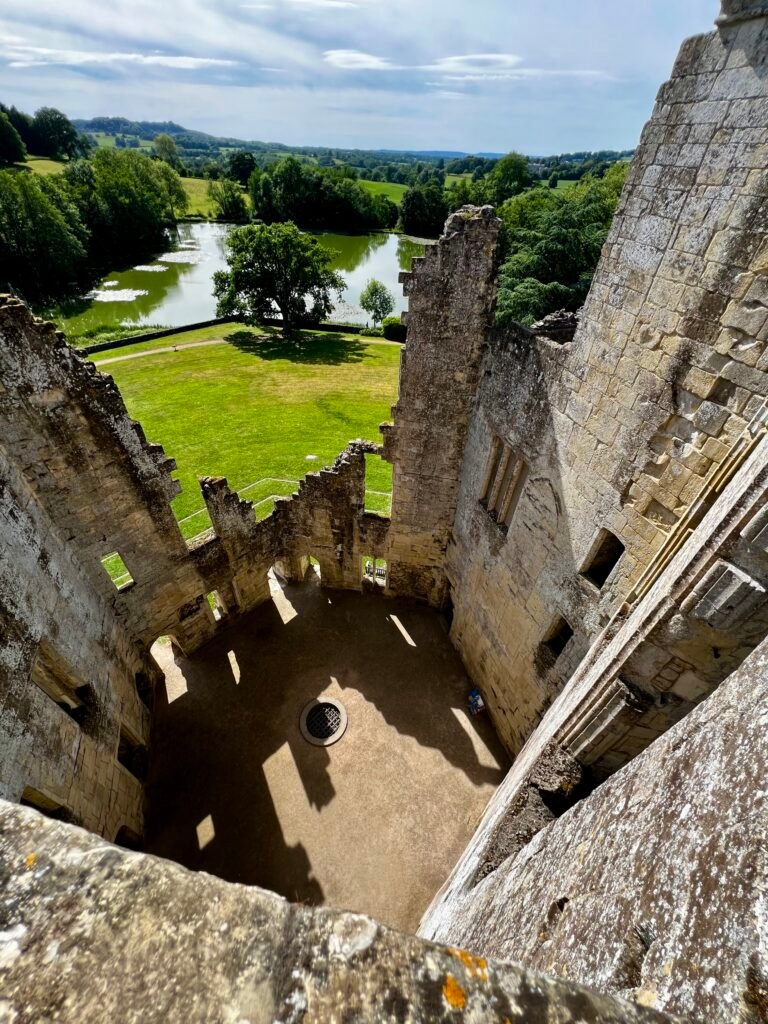
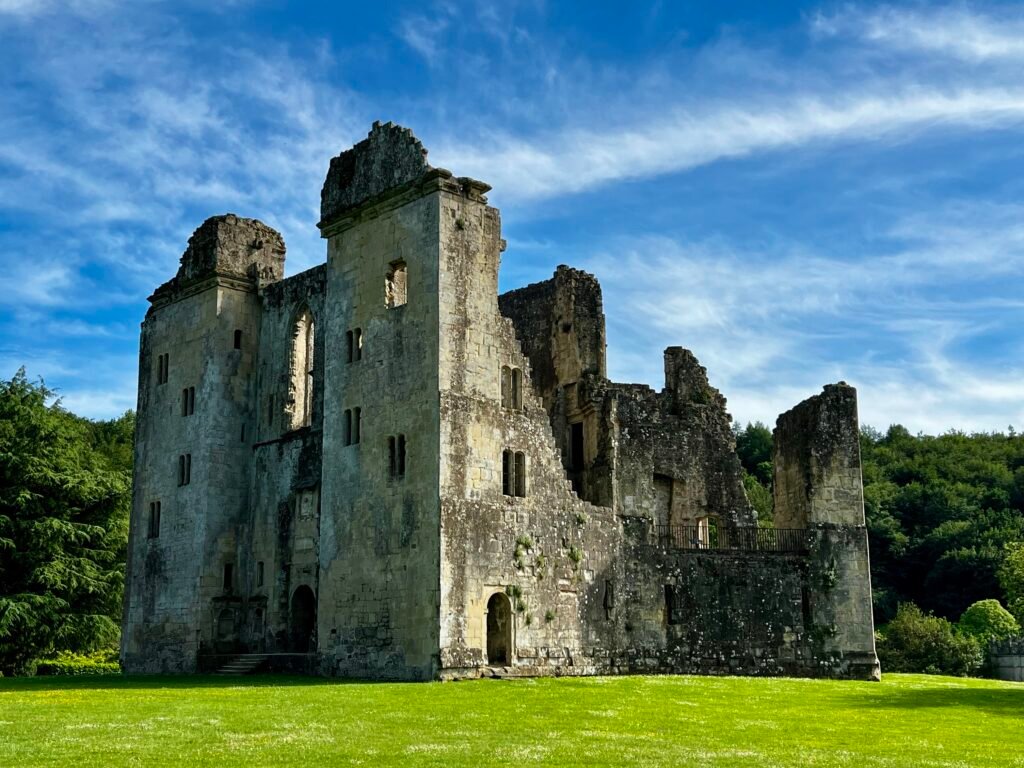
At Old Wardour Castle, enough of the medieval building remains for you to enter rooms, follow stairways and look through windows towards the surrounding countryside.
You are not merely being told that a castle once stood there. You are standing inside it.
Doorways, walls and fireplaces provide clues to the original layout, while the unusual hexagonal design makes the building feel very different from the stereotypical fortress. It is the sort of place where the admission benefit feels tangible because there is so much to explore.
Other Sites Require Much More Imagination
Old Sarum offers a very different experience.
Its hilltop setting, enormous earthworks and layered history are fascinating, but comparatively little of the later buildings survives above ground. Information boards and foundations have to do more of the storytelling.
I enjoy mentally reconstructing a place from the evidence left behind. My friend is less convinced. Where I see a vanished cathedral, royal castle and centuries of strategic importance, she may see several low walls in an extremely windy field. 😂
Neither reaction is wrong.
This is the single most important test before buying English Heritage membership: does discovering what used to stand somewhere interest you, even when much of it has disappeared?
If the answer is yes, apparently modest ruins can be absorbing. If the answer is no, membership may leave you feeling that you have paid to inspect an ambitious collection of old stones.
What Kind of Places Can You Visit With English Heritage Membership?
English Heritage is not limited to one period or one type of building. Its collection covers thousands of years, including prehistoric landscapes, Roman sites, medieval castles, monastic ruins, coastal forts and a smaller number of historic houses.
That variety is one of its strengths, but castles, ruins and archaeology remain at the heart of the experience. You can see some of that variety in my English Heritage visits and guides, from substantial castles to smaller, atmospheric ruins.
Castles You Can Actually Explore
Castles are where English Heritage membership works best for me.
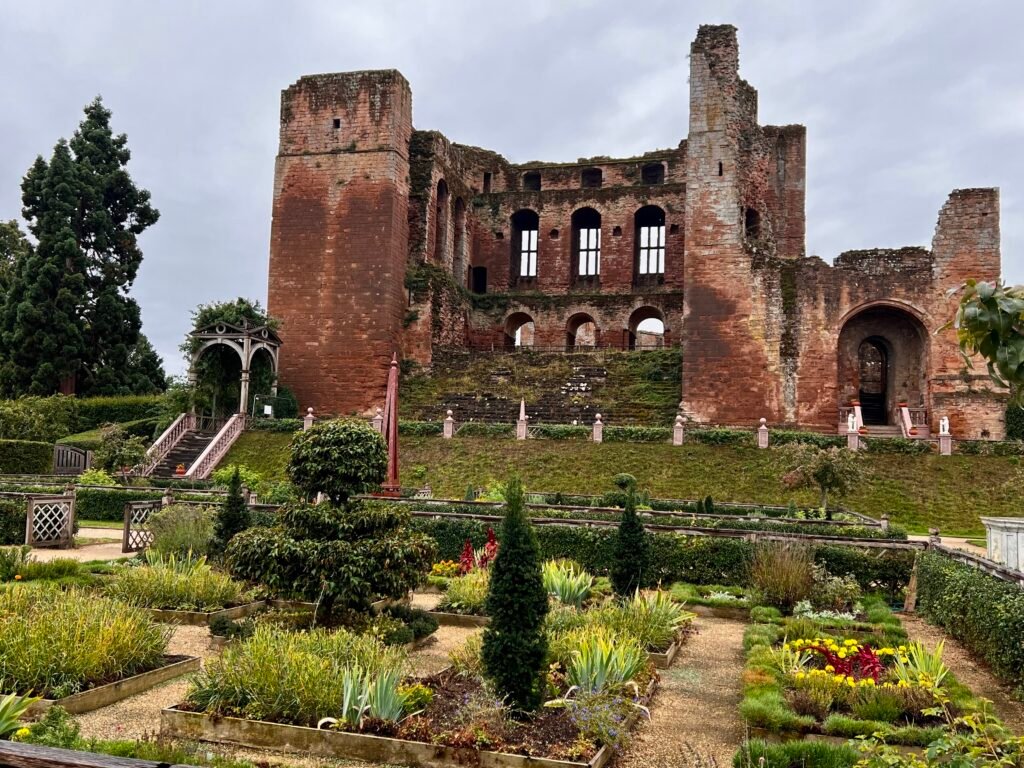
Kenilworth Castle offers substantial ruins, towers, viewpoints and the recreated Elizabethan Garden. Portland Castle is compact but unusually complete, giving a clearer impression of how a Tudor coastal fort functioned. Old Wardour provides rooms, stairs and surviving details that make its former appearance relatively easy to picture.
These are not interchangeable castle-shaped attractions. Their scale, purpose and state of survival are completely different.
That makes visiting several worthwhile. Instead of repeatedly seeing the same type of building, you begin to notice how defensive needs, wealth, geography and fashion changed what was built.
Abbeys and Monastic Ruins
English Heritage also cares for many ruined abbeys and religious sites.
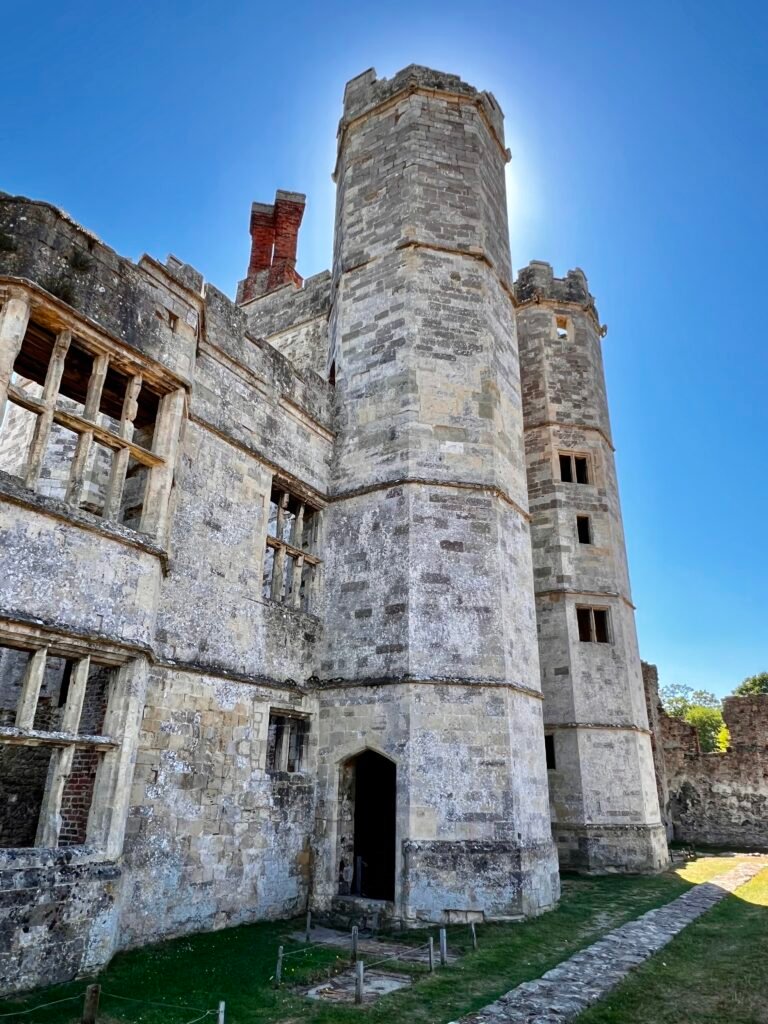
Titchfield Abbey is particularly interesting because it had two very different lives. It began as a medieval monastery before being converted into a grand Tudor mansion after the Dissolution of the Monasteries.
The impressive gatehouse belonged to the later house, while other surviving features reveal the earlier monastic buildings. Once you know this, the site becomes less like one ruin and more like two buildings occupying the same space.
It rewards a slower visit. Look for blocked doorways, fireplaces and changes in the stonework rather than immediately walking to the largest surviving feature and declaring the investigation complete.
The Smaller Ruins Can Be Just as Atmospheric
Not every English Heritage site needs several hours or even an admission desk.
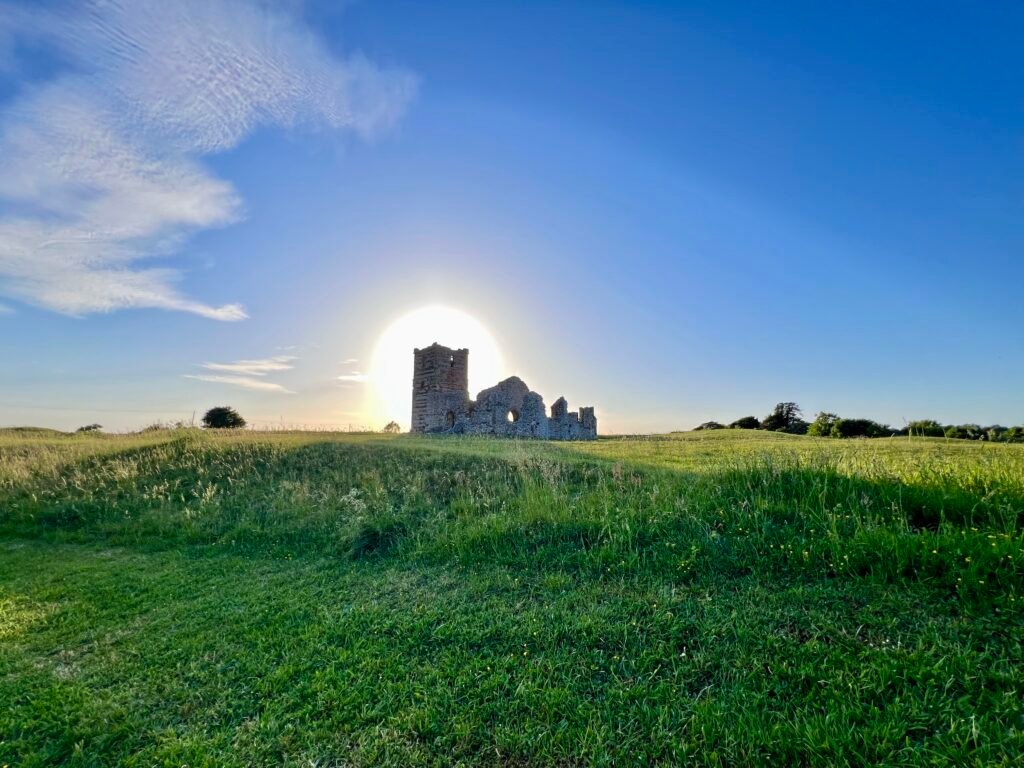
Knowlton Church stands inside a much older prehistoric earthwork in the Dorset countryside. There is no grand visitor centre and no extensive building to explore. Its appeal comes from the unusual setting, the layers of history and the atmosphere created by a ruined medieval church occupying a prehistoric ceremonial landscape.
It is also free to visit, so it should not be counted when deciding whether membership will save you money.
That does not make it irrelevant. Smaller places demonstrate the range of sites English Heritage cares for, and they work beautifully as additions to a journey rather than destinations that must occupy the whole day.
And Then There Are the Famous Ones
At the opposite end of the scale is Stonehenge.
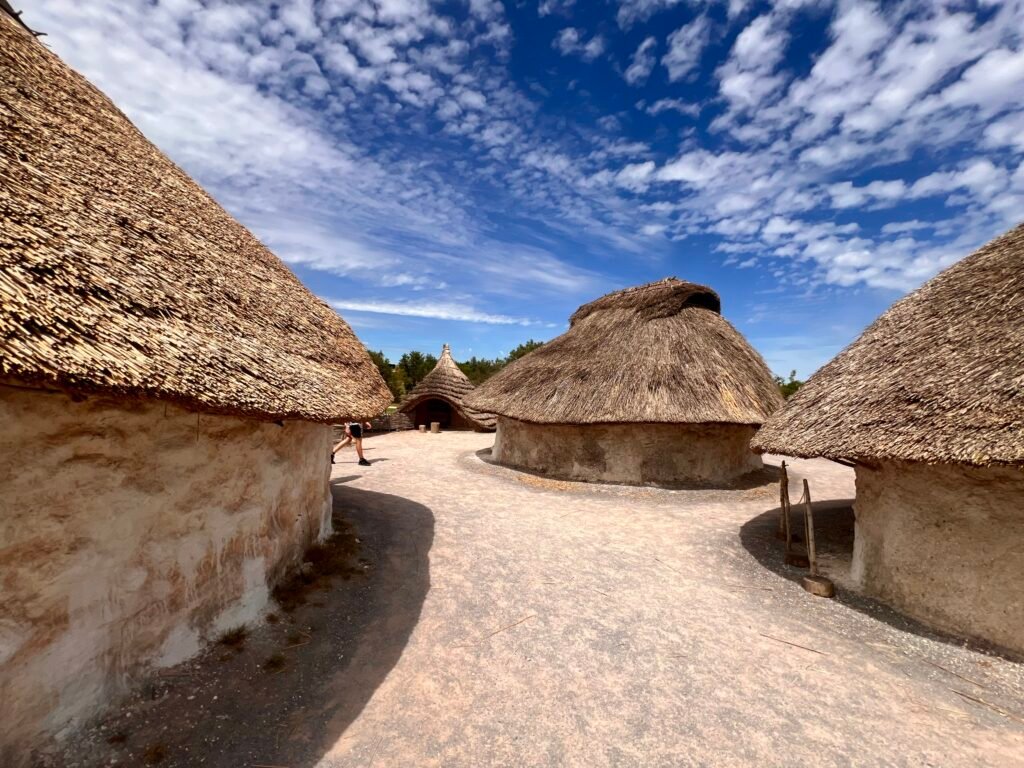
The stone circle is the headline attraction, but I found the reconstructed Neolithic houses near the visitor centre almost as helpful. Based on archaeological discoveries at nearby Durrington Walls, they provide human context for a monument that can otherwise feel remote and mysterious.
Suddenly, the story is not only about enormous stones. It is also about the people who lived, worked, ate and travelled through this landscape thousands of years ago.
The museum and reconstructions made the monument easier to understand, which is precisely why interpretation matters so much at ancient sites.
What I Like About English Heritage Membership
The membership does more than remove admission charges. Its greatest advantage is that it makes historical places easier to incorporate into ordinary journeys.
Free Parking Is a Surprisingly Good Perk
Free parking sounds like a minor benefit until you begin making regular road trips.
Admission may be the largest expense, but repeated parking charges quietly attach themselves to every day out. Removing both costs makes a spontaneous visit much easier to justify.
If I discover that an English Heritage property is five minutes from my route, I can stop without calculating whether the diversion, ticket and parking are collectively worth it.
This is dangerous knowledge for anyone whose travel philosophy is already “one more stop.” 😂
Parking is only free at most English Heritage sites, so always check the individual property page before travelling.
I Like Knowing the Money Helps Preserve the Sites
Not every benefit needs to be recovered through discounted admission.
English Heritage is a charity, and membership income contributes towards maintaining more than 400 historic places. That includes stabilising stonework, protecting archaeological remains and conserving buildings that have already survived for centuries.
These ruins are not renewable.
Once original stonework or archaeology is lost, an authentic replacement cannot be ordered and delivered next Tuesday. Part of my membership fee helps keep these places standing, and I am comfortable including that in my idea of value.
It Encourages Me to Visit Places I Might Otherwise Skip
This is where membership changes my behaviour most.
If every visit required another ticket, I would naturally concentrate on the famous properties and ignore many smaller or unfamiliar ones. Membership allows curiosity to win.
A site does not need to promise five hours of entertainment. I can visit, learn its story, take photographs and continue the journey.
Occasionally, those unplanned stops become more memorable than the attraction I originally set out to see.
What I Don’t Like About English Heritage Membership
I enjoy being a member, but the experience has weaknesses that are worth understanding before joining.
Some Sites Require a Lot of Imagination
The quality of the history is not the problem. The challenge is how much of the physical site survives.
A nearly complete castle and a set of grass-covered foundations may both have extraordinary stories, but they produce very different days out. Someone expecting furnished rooms, exhibitions or extensive buildings could reasonably be disappointed by the latter.
Before visiting, look beyond the dramatic banner photograph. Check the property description, site map, access information and recent visitor photographs. That will usually reveal whether you are visiting a substantial building, an archaeological landscape or a handful of important—but visually modest—remains.
Setting the right expectation can be the difference between finding a place fascinating and wondering where the rest of it has gone.
I’d Love to See More Interactive Interpretation
The surviving buildings should remain the focus, but some sites would benefit from stronger interpretation.
Models, carefully designed reconstructions, before-and-after images and digital visualisations can reveal the scale and appearance of a lost building without turning the site into a theme park.
Stonehenge’s reconstructed houses show how effective this can be. Even a well-positioned illustration showing the former building from the visitor’s exact viewpoint can transform an unexplained foundation into a room, hall or defensive wall.
Good interpretation does not replace imagination. It gives imagination something accurate to work with.
Stonehenge Is a Complicated One for Me
I have had two very different experiences at Stonehenge.
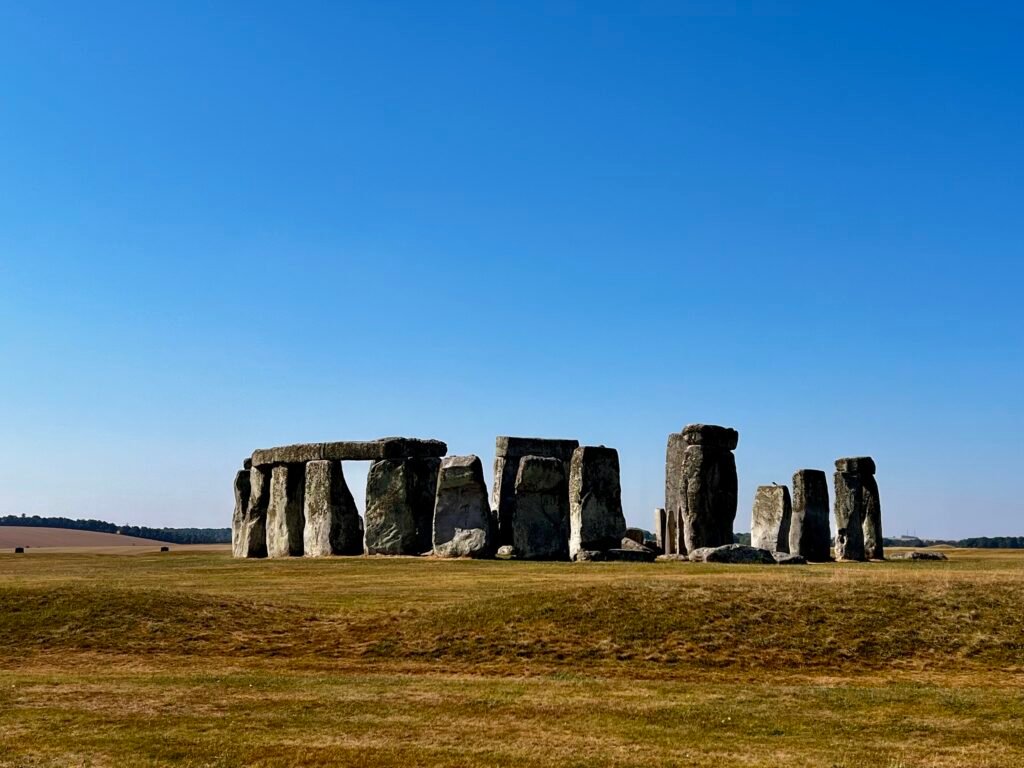
During a standard visit, access is understandably controlled. Visitors follow a designated route and normally view the monument from a distance. Its archaeological importance and vulnerability make protection essential.
However, that distance also affects how the individual admission price feels. Visitors expecting to walk among the stones may be surprised by the normal experience.
My visit during the Summer Solstice made the contrast more difficult to understand. I personally witnessed heavy drinking, apparent drug use and people touching the stones—behaviour that felt inconsistent with the protection applied during ordinary visits.
I found that frustrating.
The experience did not reduce Stonehenge’s significance or make me regret joining English Heritage, but it left me questioning how access to such a sensitive monument is balanced during major gatherings.
None of This Makes Me Regret Joining
The disadvantages are mostly about expectations.
English Heritage membership does not promise that every site will contain complete buildings, furnished rooms or enough activity to occupy an entire day. Sometimes you will explore a major castle. Sometimes the history beneath your feet is more substantial than the walls in front of you.
I am comfortable with both.
The mixture of free admission, parking, historical discovery and support for conservation still outweighs the things I would change.
Who Is English Heritage Membership Worth It For?
English Heritage membership is best suited to people who enjoy the story of a place, not only the quantity of building that remains.
You do not need specialist knowledge. Curiosity is far more useful than being able to identify a Norman doorway from twenty metres away.
It’s Particularly Good for People Who Love Castles and Ruins
You are likely to enjoy the membership if any of these sound familiar:
- A ruined staircase immediately makes you want to know where it once led.
- You enjoy castles, abbeys, Roman sites and prehistoric monuments.
- You are happy to read interpretation boards rather than race past them.
- You like photography, architecture or archaeology.
- You regularly plan road trips around historic places.
- You can enjoy a one-hour historical stop without demanding a full day of entertainment.
If both substantial castles and fragmentary ruins interest you, English Heritage is probably aimed directly at you.
You’ll Get More Value If You Travel Regularly
The economics improve every time you use the membership.
It works particularly well for road trips because you can search for properties near your destination or along your route. Free parking at many locations makes these additional visits even easier.
Before joining, create a realistic twelve-month list. If you can identify five or six paid sites you genuinely want to visit, the £84 individual membership may already compare favourably with buying separate tickets.
Families may reach the break-even point much sooner because each adult member can bring up to six children or grandchildren under 18 within the family group.
It May Not Suit Everyone Who Enjoys Days Out
English Heritage, the National Trust and Historic Houses overlap, but they do not provide identical experiences.
English Heritage has a particularly strong concentration of castles, ruins, ancient monuments and archaeological sites.
The National Trust generally offers a broader mixture of furnished houses, gardens, coast and countryside. You can read my separate review of whether National Trust membership is worth it.
Historic Houses is centred on independently owned houses, castles and gardens, many of which are still privately occupied. I have also reviewed whether Historic Houses membership is worth it.
For a direct comparison, read my guide to National Trust vs English Heritage vs Historic Houses.
If your ideal day involves complete interiors, landscaped gardens and a substantial café lunch, English Heritage alone may not be your perfect match. If it involves battlements, archaeology and wondering what happened to the roof, it probably is.
Check What’s Around You Before Joining
Do not be persuaded by the national total alone.
Open the official English Heritage property map and answer four questions:
- Which paid properties are within comfortable driving distance?
- Which sites lie near journeys you already expect to make?
- How many would you honestly visit within twelve months?
- Would their combined admission and parking costs exceed the membership price?
Count real intentions, not optimistic possibilities.
If you find five or six paid places that genuinely excite you, membership should be relatively easy to use. If you struggle to find two, the fact that hundreds exist elsewhere in England will not make the card better value.
So, Is English Heritage Membership Worth It?
For me, yes—English Heritage membership has been worth the money.
It has saved me admission and parking costs, but its greater value is behavioural. It makes me stop at unfamiliar ruins, visit places that would otherwise remain names on a road sign and spend longer understanding what survives.
The simplest decision rule is this:
If you can name five or six paid English Heritage sites you genuinely want to visit—and ruined castles make you curious rather than disappointed—the membership is likely to be good value.
If you prefer furnished interiors, gardens and attractions that reliably fill an entire day, compare English Heritage with the National Trust or Historic Houses before joining.
Some English Heritage properties contain enormous buildings and hours of exploration. Others offer foundations, earthworks and stories that need more effort from the visitor. Knowing which experience you enjoy matters more than the impressive number printed on the membership page.
I would still welcome more visual reconstruction and interactive interpretation at sites where little remains above ground. I also retain concerns about the contrast between ordinary access and my Summer Solstice experience at Stonehenge.
But neither point has made me regret joining.
Membership has given me a practical reason to stop, walk through another ruined doorway and discover what happened there. It may have started as a calculation about admission fees, but it has become a passport to hundreds of possible detours.
And for somebody who can rarely resist one more historical stop, that is both extremely useful and mildly dangerous.
One journey. One story. One more stop.