
Titchfield Abbey has a slight identity problem.
You arrive expecting an abbey, walk towards a huge turreted gatehouse and immediately wonder whether somebody has sent you to a ruined castle instead.
They haven’t. The confusion is actually the best part of the story.
Titchfield Abbey began as a medieval monastery in the 13th century, but after Henry VIII’s Suppression of the Monasteries it was transformed into an impressive Tudor mansion called Place House. What survives today is a strangely beautiful mixture of both.
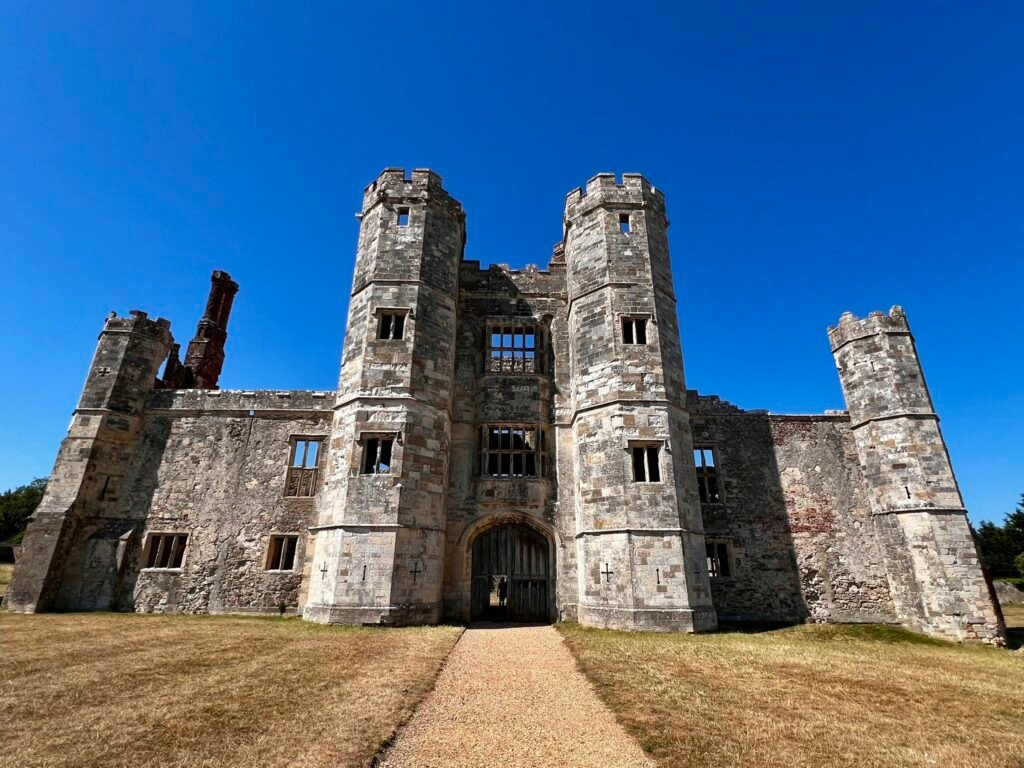
Titchfield Abbey began with the “White Canons”
The abbey of St Mary and St John the Evangelist was founded in 1231/32 by Peter des Roches, Bishop of Winchester. It was home to Premonstratensian canons, an order originating at Prémontré in France and sometimes known as the White Canons because of their white habits.
They lived communally under religious vows, but unlike completely enclosed monastic communities, the canons also worked beyond the abbey. English Heritage records that two of Titchfield’s roughly 14 or 15 canons served as vicars in nearby parish churches.
The monastery also controlled extensive estates, farm buildings and fishponds. Its location near England’s south coast made it a useful stopping point for important travellers heading towards the Continent. Henry V stayed here before campaigning in France.
So even before anyone added the enormous Tudor towers, this was not exactly a quiet little backwater.
Then Henry VIII changed everything
Titchfield Abbey survived for roughly three centuries before the Suppression of the Monasteries brought religious life here to an end.
In 1537, the estate was granted to Thomas Wriothesley, later 1st Earl of Southampton. Wriothesley had been closely involved in the suppression itself and received substantial former monastic lands.
Rather than simply knocking the abbey down, he did something much more interesting: he converted much of it into a grand Tudor residence called Place House.
And this is where Titchfield Abbey becomes wonderfully strange.
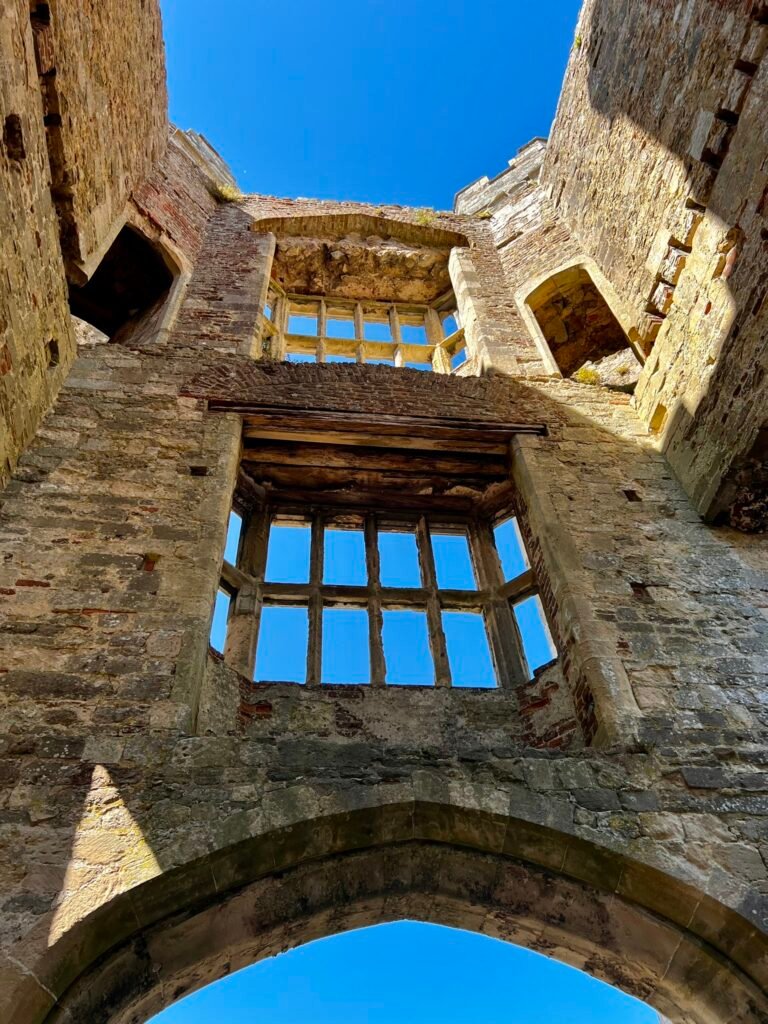
The gatehouse was built through the old church
The huge façade that dominates the site today was created between 1537 and 1542 by converting the west end of the medieval abbey church.
The Tudor gatehouse was literally constructed across the nave.
Parts of the original church were incorporated into the mansion, while medieval lancet windows were replaced with larger square Tudor windows. Corner towers were heightened, fireplaces were inserted and elaborate chimneys appeared above the old religious buildings.
That explains why the architecture can feel slightly confusing when you walk through it. You are not looking at one building from one period. You are seeing a medieval monastery that has been physically rewritten as somebody’s Tudor country house.
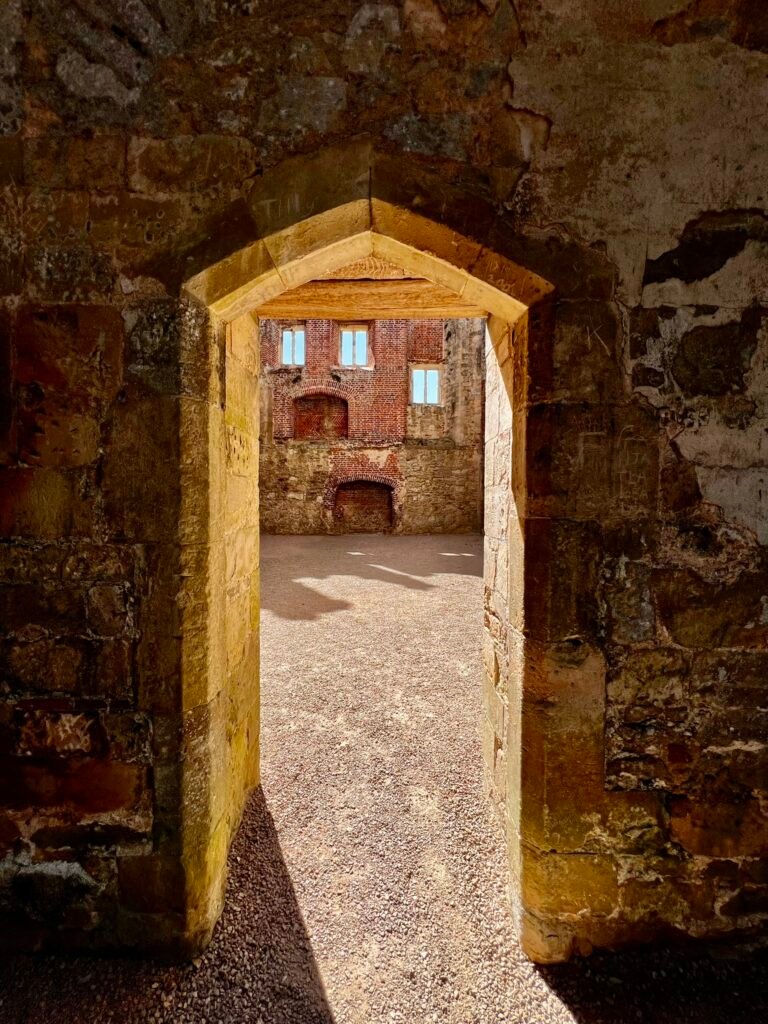
The contrast is what makes exploring the ruins fun. Medieval stonework suddenly meets Tudor brick. Doorways lead into roofless rooms. Windows that once belonged to comfortable apartments now frame nothing but blue sky.
It feels less like looking at a single ruin and more like peeling back two buildings at once.
Shakespeare may even have entered the story
Place House went on to receive some seriously impressive visitors, including Edward VI, Elizabeth I, Charles I and Queen Henrietta Maria.
There is also a Shakespeare connection.
Thomas Wriothesley’s grandson, Henry Wriothesley, 3rd Earl of Southampton, was a major patron of William Shakespeare. English Heritage says it is believed that some of Shakespeare’s plays may have received early performances at Place House.
Notice the careful wording there: believed, not proven.
Still, wandering around the ruined Tudor rooms while imagining an early Shakespeare performance taking place here certainly adds something to the atmosphere.
There is more here than the famous façade
The gatehouse understandably gets most of the photographs, but Titchfield Abbey spreads further than that first dramatic view suggests.
The medieval monastery originally stood around a cloister, surrounded by buildings including the chapter house, dormitory, kitchen and refectory. Archaeological investigation has identified their positions, and surviving walls and foundations still reveal parts of the original plan.
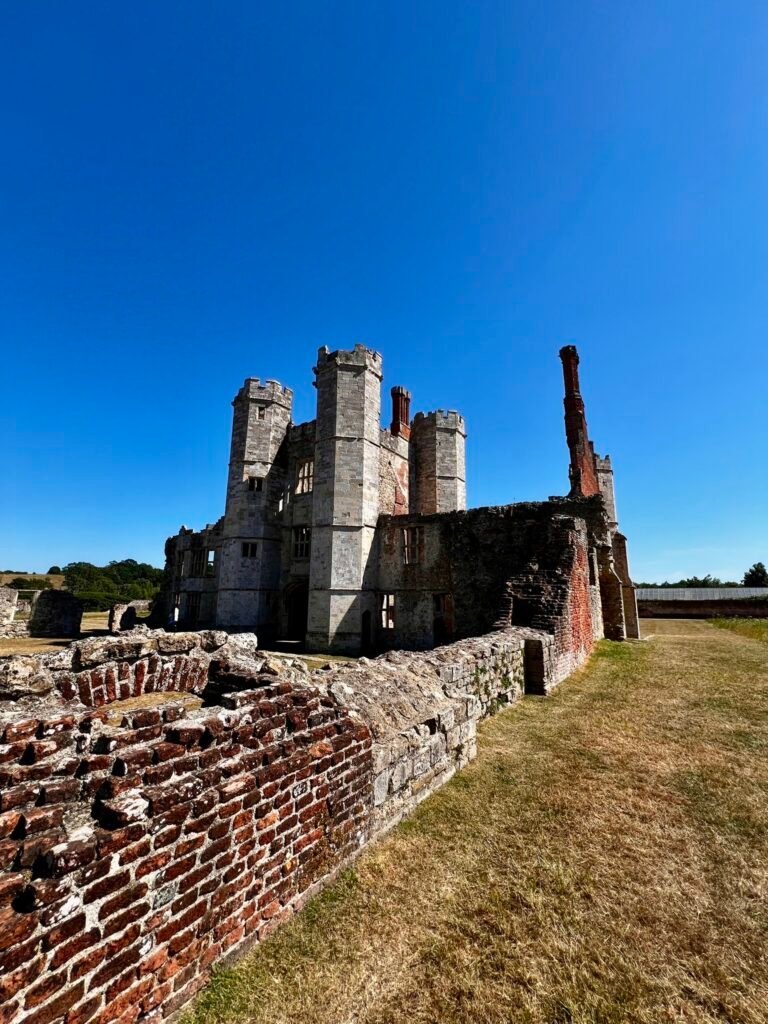
The wider archaeological site, including medieval fishponds, is protected as a scheduled monument. Historic England records that the ponds began to be constructed soon after the abbey was founded and continued in use even after the Dissolution.
Most of Place House eventually disappeared too. In 1781, much of the mansion was demolished and its stone reused elsewhere. What survives is therefore a ruin of a mansion that was itself built out of an abbey.
History apparently decided one architectural plot twist was insufficient.
Is Titchfield Abbey good for a quick stop?
Very much so.
Unlike some major heritage properties that can consume half a day before you realise what happened, Titchfield Abbey is compact and straightforward to explore.
For a relaxed visit, I’d allow roughly 45 minutes to an hour. That gives enough time to walk through the main ruins, examine the gatehouse, explore the surviving monastic remains and take photographs without treating the place like an archaeological drive-through.
If you enjoy studying architectural details, you could easily linger longer.
Another reason it works so well as a spontaneous stop is the price:
entry to Titchfield Abbey is currently free.
English Heritage currently charges £2 for parking for non-members, while parking is free for English Heritage members displaying a valid car sticker. The small car park is reached through a narrow gateway opposite the Fishermans Rest pub.
The site is currently open daily, with longer hours from April to September and shorter winter hours. Dogs on leads are welcome, although some surfaces are uneven. Check the official Titchfield Abbey visitor page before travelling for the latest opening and parking information.
For the deeper history and architectural details, English Heritage also has an excellent history of Titchfield Abbey and Place House, while the Historic England scheduled monument record covers the wider archaeological remains.
One more easy English Heritage stop
If you like ruins where several completely different periods of history occupy the same place, Titchfield Abbey is an excellent little stop.
It also pairs nicely with Old Sarum, another site where the surviving walls make much more sense once you understand the layers underneath them.
And although entry to Titchfield Abbey itself is free, if you visit larger paid English Heritage properties regularly, you can also read my English Heritage membership review before deciding whether membership makes sense for your travels.
Titchfield Abbey is compact, free to enter, visually impressive and just odd enough to stick in your memory.
You arrive looking for a monastery.
You leave having explored a medieval abbey, a Tudor mansion and a building that somehow manages to look like a castle without really being one.
That is a lot of history for an hour.
One journey. One story. One more stop.