
National Trust membership can be a brilliant way to explore historic houses, gardens, castles and countryside across the UK — but is it actually worth the money? At £100.80 a year for an individual adult membership, I wanted to know whether I would genuinely use it enough to justify the cost.
I joined because I was already spending more and more of my free time exploring historic places around the UK. Since then, the little National Trust card in my wallet has changed the way I plan trips more than I expected. Instead of asking whether somewhere is worth paying the admission price, I can simply see what is nearby and make one more stop.
And that is probably the most important thing I’ve discovered about membership: its value isn’t just about calculating admission fees. I’ve used it for grand country houses, gardens, ruins and countryside stops, sometimes building several National Trust places into the same journey. Free parking at most National Trust car parks has been surprisingly useful too. The National Trust currently gives members free entry to more than 500 places across England, Wales and Northern Ireland.
This isn’t a sponsored post, and I’m not going to pretend membership makes sense for everybody. This is simply what I’ve found from actually using mine — what you get, how much it costs, where the value comes from, and the situations where I think you might struggle to get your money’s worth.
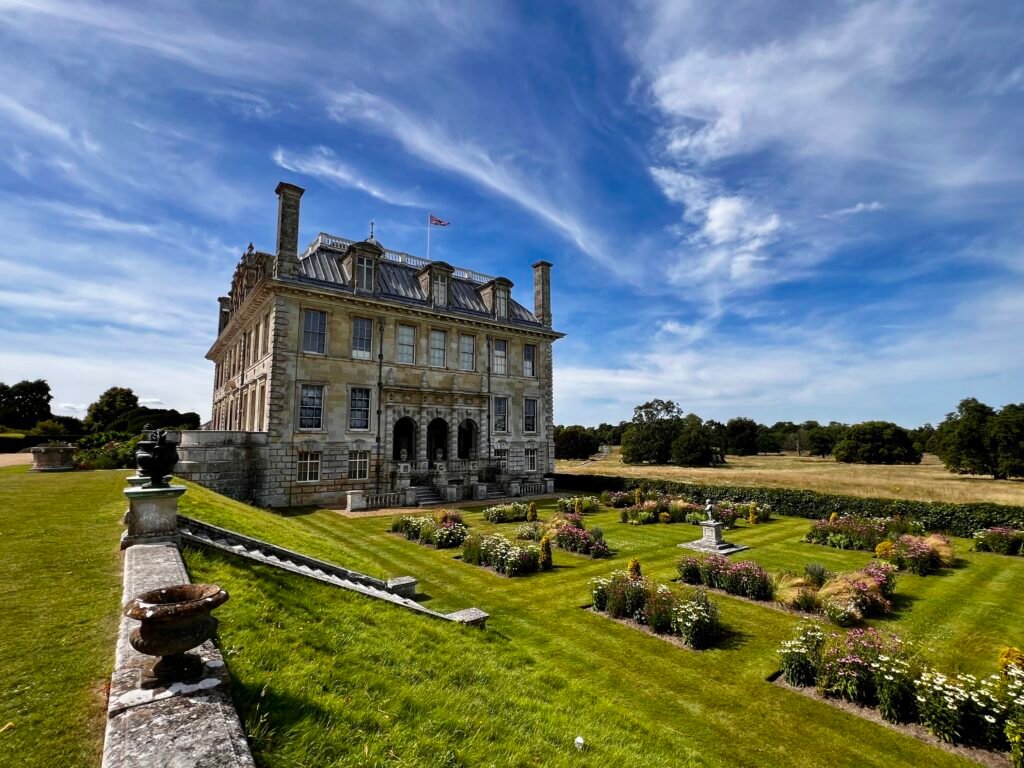
What Do You Get With National Trust Membership?
The headline benefit is straightforward: National Trust members receive free entry to more than 500 places cared for by the organisation across England, Wales and Northern Ireland. That includes a much broader mixture than I initially associated with the National Trust — historic houses, castles, gardens, parkland, coast and countryside are all part of it.
You also get free parking at most National Trust car parks, which is easy to overlook when comparing the membership price with individual admission tickets. There are exceptions — particularly where a car park isn’t operated by the National Trust — so it’s still worth checking the individual property page before travelling.
Membership also includes the National Trust Handbook, the National Trust Magazine three times a year and access to the online Members’ Area. The handbook is actually quite useful for discovering places you didn’t know existed, although the National Trust recommends checking its website for the latest opening information before travelling.
For me, though, the biggest benefit is much simpler: freedom. Once admission is already covered, a National Trust property doesn’t have to become the main event of the day. I can stop somewhere for a couple of hours, combine two places in one trip, or add somewhere I’d never have paid a separate admission fee to visit.
That has made me explore considerably more — and discover some places I probably would have driven straight past otherwise.
How Much Does National Trust Membership Cost?
As of September 2026, an individual National Trust membership for an adult aged 26 or over costs £100.80 a year, or £8.40 a month by Direct Debit. If you’re aged 18–25, the young person membership is considerably cheaper at £50.40 a year.
There are also options for couples and families. Joint membership for two adults living at the same address costs £168 a year, while family membership currently costs £176.40 for two adults and their children or grandchildren, or £109.20 for one adult and their children or grandchildren. Under-fives can visit for free.
On paper, £100.80 can sound like quite a lot for another annual membership. But I think looking at the yearly price alone misses the point. The better question is how often are you actually going to use it?
For me, membership changed the calculation completely. If I’m already travelling somewhere and notice a National Trust property nearby, I don’t have to decide whether I want to spend another £10, £15 or £20 just to have a look. Admission is already covered, so even a relatively short visit can become worthwhile. Add the free parking available at most National Trust car parks, and those smaller savings start accumulating too.
That flexibility is where I think National Trust membership starts to feel genuinely valuable. You don’t necessarily need twelve carefully planned National Trust days out every year. You can visit somewhere because you’re passing, return to a favourite garden in a different season, or use a property as an extra stop during a longer journey.
And, of course, there’s another side to the membership fee: the National Trust is a charity, so membership income also supports its work caring for historic places, landscapes and nature. Whether that matters to you personally is separate from the pounds-and-pence calculation, but it is part of what you’re paying for.
How Quickly Can National Trust Membership Pay for Itself?
This is where the maths gets interesting.
At £100.80 a year for an individual adult membership, you don’t necessarily need to spend every weekend at a National Trust property to recover the cost. Admission to some of the larger houses and estates can already represent a substantial chunk of the annual membership price, particularly once parking is included.
But I don’t think the fairest way to calculate the value is to choose a few of the most expensive National Trust properties and declare that the membership has “paid for itself”. Your own travel habits matter far more.
In my case, I use National Trust places as part of wider days out and road trips. Sometimes the property is the main reason for travelling; other times I spot somewhere along my route and think, why not stop? I’m already a member. That second type of visit is where I’ve probably gained the most value from membership.
It also means I don’t feel pressured to squeeze absolutely everything out of a property in one visit. If the weather turns miserable, I’m running late or I simply want to spend two hours wandering around the gardens, I can leave without feeling that I’ve wasted an expensive admission ticket. I can always come back.
It’s not only about stately homes
One thing I hadn’t fully appreciated before joining was just how varied National Trust places can be.
Yes, there are the grand historic houses that immediately come to mind. But membership can also take you to gardens, castles and ruins, stretches of coastline, countryside and unusual historic landscapes. That variety makes it much easier to use the membership regularly rather than saving it exclusively for occasional big days out.
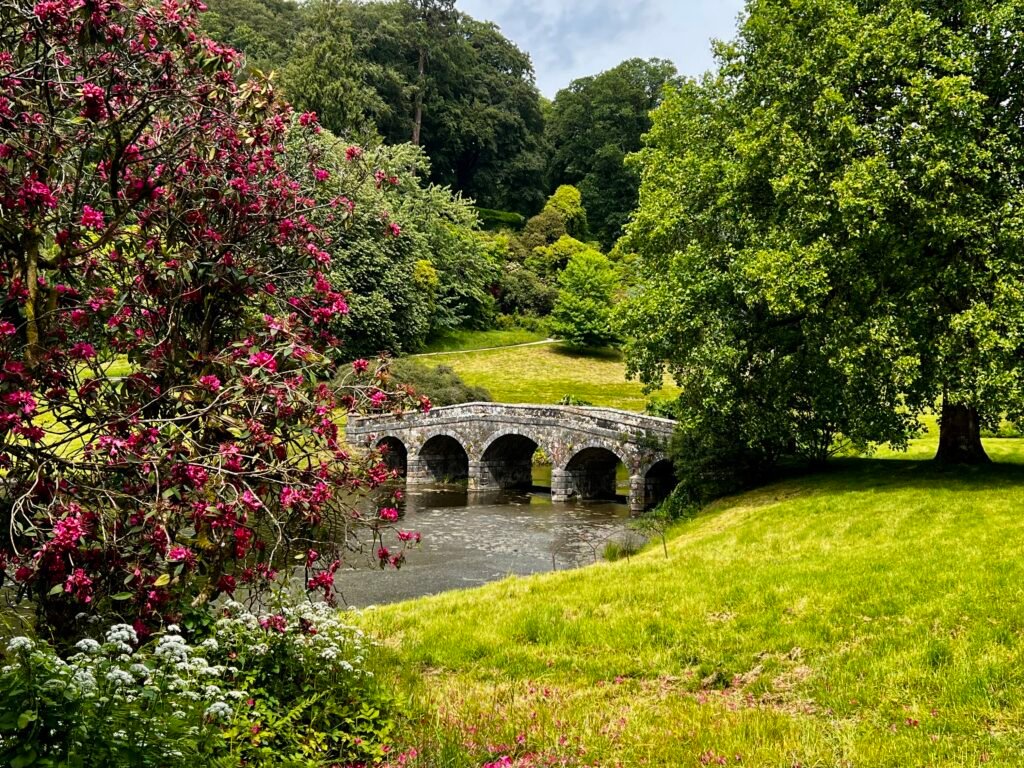
That variety matters to me because I don’t always want the same type of day out. Sometimes I want to explore a historic house; sometimes I’d rather walk around a garden or spend a few hours outdoors. Having all of those possibilities under the same membership makes spontaneous trips considerably easier.
And that’s really the calculation I’d suggest making before joining. Don’t ask only, “How many visits will it take to recover £100.80?” Ask yourself how often National Trust places realistically fit into the kinds of days out you already enjoy.
If the answer is regularly, reaching the break-even point may happen surprisingly quickly. If you’d only visit one or two properties in an entire year, buying individual admission tickets could make more sense.
What Can You Actually Visit With National Trust Membership?
Probably more than you might expect.
When people think of the National Trust, the obvious image is a grand country house surrounded by immaculate gardens. There are plenty of those — and I enjoy visiting them — but National Trust membership covers a much wider range of places.
You can find historic houses and estates, castles and ruins, landscaped gardens, ancient monuments, countryside, woodland and stretches of coastline. That variety has become one of my favourite things about being a member because two National Trust days out can feel completely different.
Castles, ruins and historic sites
Corfe Castle is a perfect example. Rather than furnished rooms and formal interiors, you’re exploring the remains of a thousand-year-old castle high above one of Dorset’s most distinctive villages.
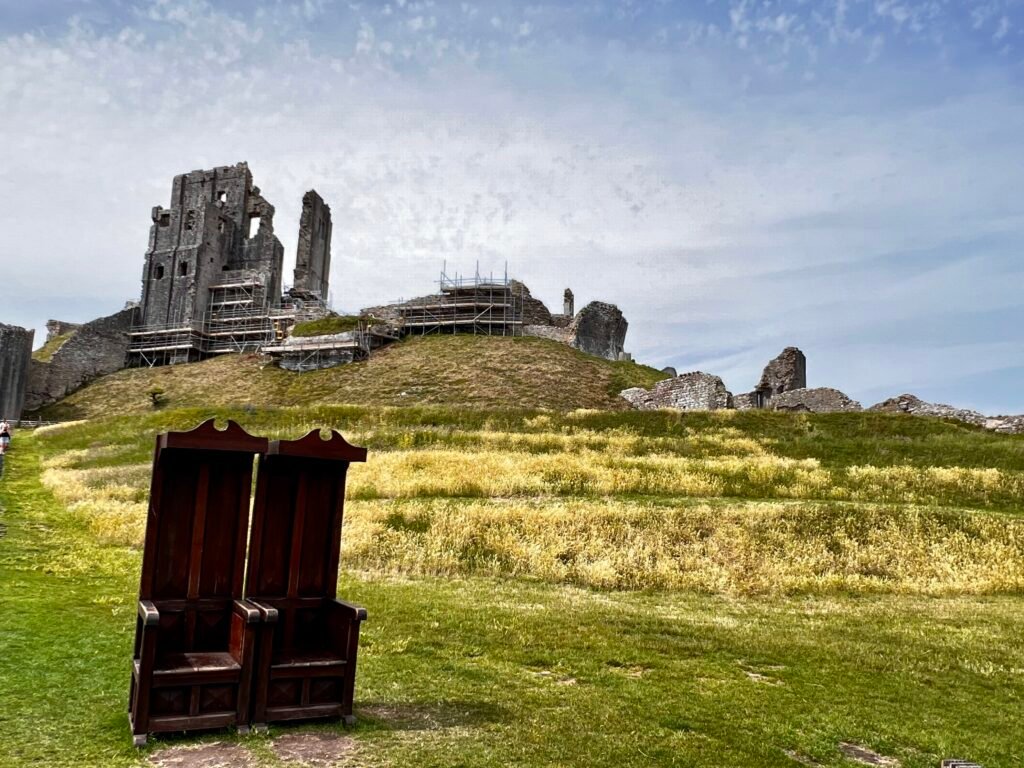
The castle is particularly useful for showing why I wouldn’t describe National Trust membership simply as a pass for country houses. Places like this offer a completely different experience — and for someone interested in British history, they considerably broaden what you can do with the membership.
Countryside can be the attraction
Then there are places where there isn’t really a traditional property to visit at all.
The Cerne Giant, carved into the chalk hillside above Cerne Abbas in Dorset, is a good example. Here, the historic landscape itself is the reason to stop.
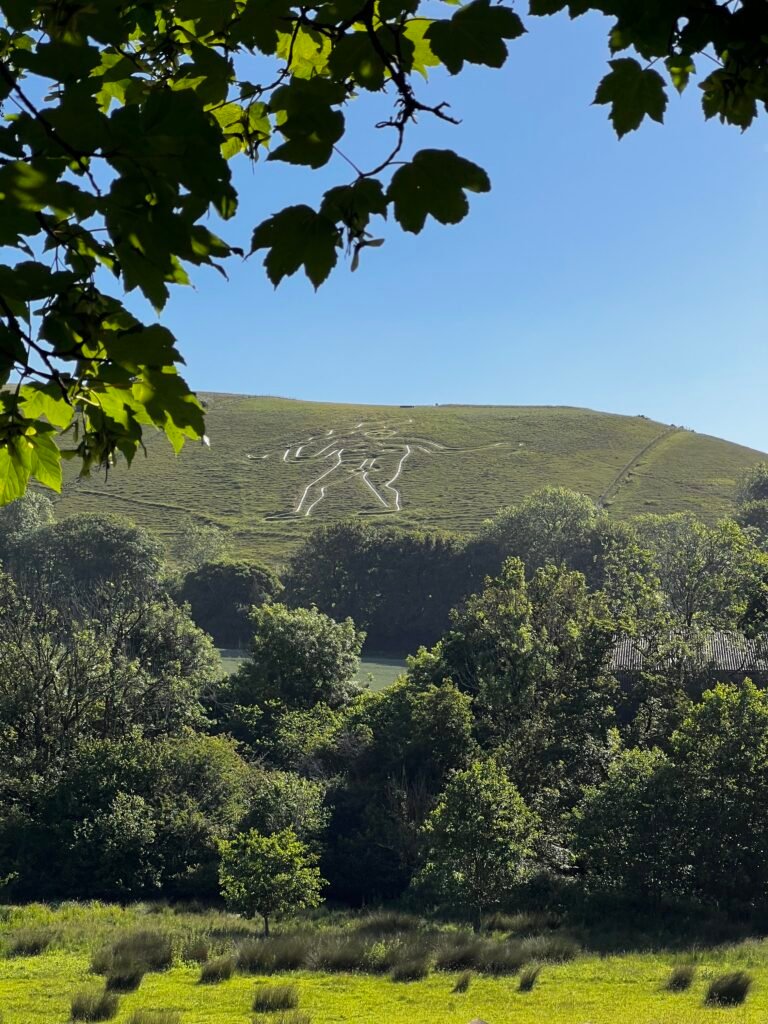
That distinction matters when deciding whether National Trust membership is worth it for you. If you’re interested only in touring historic house interiors, you’ll naturally use the membership differently from someone who also enjoys gardens, countryside walks, ruins and outdoor heritage.
I’m firmly in the second group. A property doesn’t need to occupy an entire day for me to consider it worthwhile. Sometimes the appeal is simply having an interesting historic place to explore while I’m already travelling through the area.
Houses and gardens are still a huge part of it
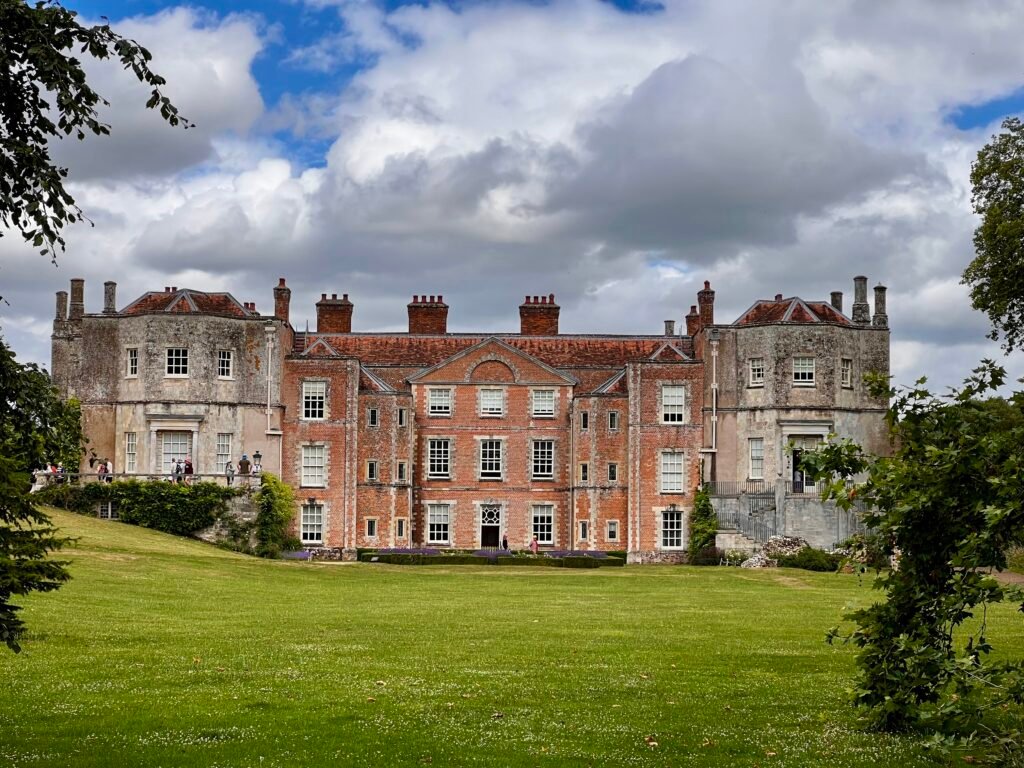
Of course, the classic National Trust experience is still there too: beautiful historic houses surrounded by gardens and parkland.
And there’s a surprising amount of variation even within that category. Some places are primarily about the house and its interiors; at others, I can easily spend more time exploring the gardens, grounds and wider estate.
That means membership works particularly well if you like mixing history with being outdoors, rather than treating every visit as another house tour.
What I Like About National Trust Membership
For me, the biggest advantage of National Trust membership isn’t any single house, garden or castle. It’s how easy the membership makes it to explore.
Before buying National Trust membership, every attraction involved a small calculation: How much is admission? How long will I actually spend there? Is it worth paying that much if I only have a couple of hours? Once you’re a member, much of that disappears.
It Makes Spontaneous Stops Much Easier
This is probably the part that fits my travelling style best.
If I’m driving somewhere and discover a National Trust property nearby, I can add it to the journey without turning it into another expense. Some of my visits have been deliberately planned days out, while others have simply become an extra stop because I happened to be in the area.
That freedom encourages me to explore places I might otherwise have skipped — which feels particularly appropriate for a travel blog called One More Stop.
You Don’t Have to Rush
National Trust membership also changes how I behave once I’m there.
When I’ve paid a substantial admission price for a single attraction, there’s always a slight temptation to make sure I’ve seen absolutely everything before leaving. As a member, I don’t feel the same pressure.
I can spend an afternoon wandering through the gardens, visit only part of an estate, or return another time. I can also revisit somewhere in a different season without paying admission all over again.
That makes the experience feel much more relaxed.
Free Parking Is More Useful Than It Sounds
Free parking at most National Trust car parks isn’t the most exciting membership benefit to advertise, but if you travel around the UK by car, it can become surprisingly valuable.
Parking charges that might look insignificant individually can add up over a year — particularly if you’re regularly visiting countryside locations, coastal areas and National Trust properties.
It also makes some shorter stops more appealing. If I’m passing somewhere and only have an hour or two, paying separately for both admission and parking might make me continue driving. With membership, there’s much less reason not to stop.
There Is Enough Variety to Keep It Interesting
This may be the biggest reason I’ve continued to use the membership rather than forgetting I have it.
One weekend can involve exploring castle ruins; another might mean a country house and formal gardens. On another trip, the National Trust stop might simply be a walk through a historic landscape or countryside.
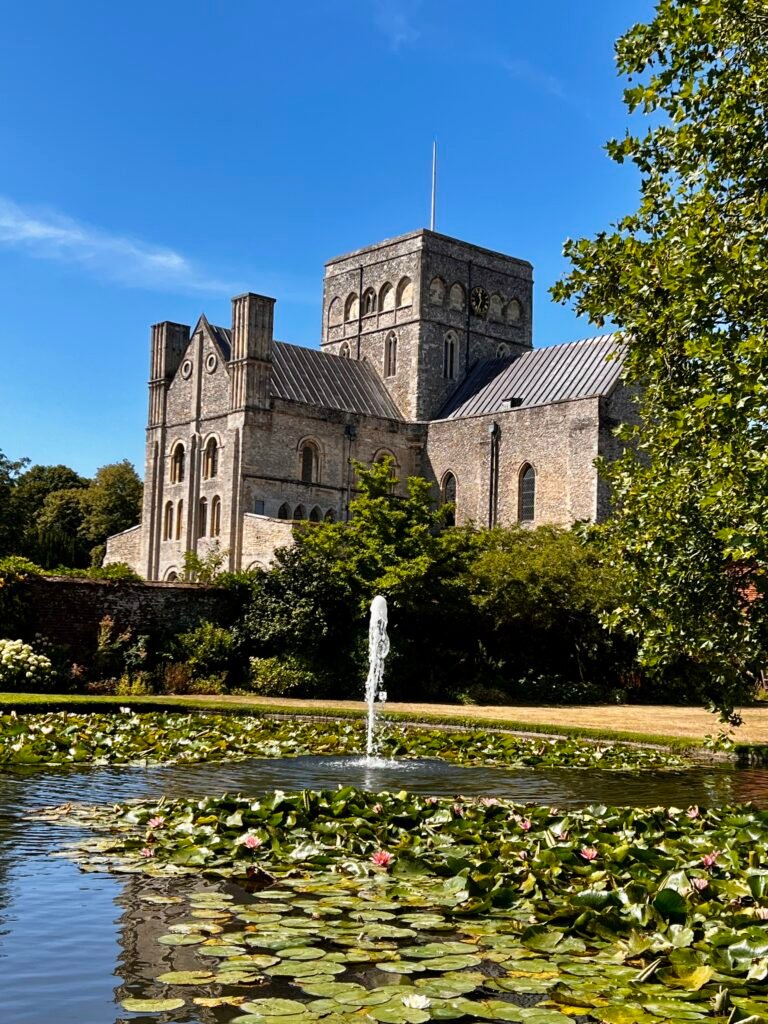
That variety prevents the membership from feeling repetitive. And because National Trust places are spread across the country, I’ve also found it useful when travelling further from home — I can look at what’s near my route and sometimes discover somewhere I hadn’t originally planned to visit.
For me, that’s ultimately where much of the value lies. National Trust membership doesn’t just give me access to places I already wanted to see. It gives me reasons to discover places I didn’t know I wanted to see.
What I Don’t Like About National Trust Membership
I’ve got a lot of use from my National Trust membership, but there are a few limitations worth knowing about before joining. None of them would make me give up my membership, but they could make a difference depending on how you like to travel.
Opening Times Can Limit Spontaneous Visits
One frustration is that having membership doesn’t necessarily mean you can turn up whenever you like.
Historic houses often have more restricted opening hours than their surrounding estates and gardens, and opening days can vary throughout the year. If you’re adding a National Trust property to a road trip later in the afternoon, you might arrive with plenty of daylight left but find that the house itself is already closed.
I’ve learned to check the individual property page before setting off, particularly if seeing the interior is important to me.
Not Everything Is Included
Membership covers a huge number of places, but it doesn’t mean that absolutely everything connected with a National Trust visit is free.
Certain events, activities and experiences can carry an additional charge, and parking isn’t free everywhere. The National Trust itself advises members to check the relevant property information because parking arrangements differ between locations.
That isn’t necessarily unreasonable, but it’s worth understanding before assuming your membership card makes every National Trust day out completely free.
You Still Have to Use It
This sounds obvious, but it’s probably the biggest potential drawback of any annual membership.
Paying for National Trust membership only saves money if you actually visit the places.
If you love the idea of historic houses but realistically visit one every six months, the numbers may not work in your favour. The same £100.80 that represents excellent value to someone regularly exploring National Trust places could be poor value to someone who uses their card twice.
That’s why I wouldn’t recommend judging membership purely by the number of properties available. Your own travel habits matter much more.
It Can Become Very Easy to Say “One More Stop”
This one might technically be my own fault. 😆
Once admission is already covered, seeing that familiar National Trust sign somewhere along a journey makes it dangerously easy to think, well… we’re here now.
A quick stop becomes a walk around the garden. The walk becomes a look inside the house. And suddenly the carefully planned journey home has acquired another two hours.
For a website called One More Stop, perhaps I shouldn’t complain too much.
Who Is National Trust Membership Worth It For?
Whether National Trust membership is worth it ultimately depends less on how many properties the organisation looks after and more on how you actually spend your free time.
If historic places and days out are already something you enjoy, it’s relatively easy to make use of the membership. If you’re buying it because you hope it will suddenly turn you into someone who spends every weekend exploring country houses, that’s a rather different calculation.
You’ll Probably Get Good Value If You Like Regular Days Out
Membership makes the most sense if you already enjoy visiting historic houses, gardens, castles, ruins, countryside or coastal places.
You don’t necessarily need to be obsessed with stately homes. In fact, I’d argue that the broader your interests are, the easier it becomes to use the membership because you’re not limiting yourself to one type of National Trust property.
It’s particularly useful if you travel around the UK regularly. Instead of only looking for National Trust places near home, you can use them as stops on longer journeys, which is exactly how I’ve ended up using my membership quite often.
It Works Particularly Well If You Travel by Car
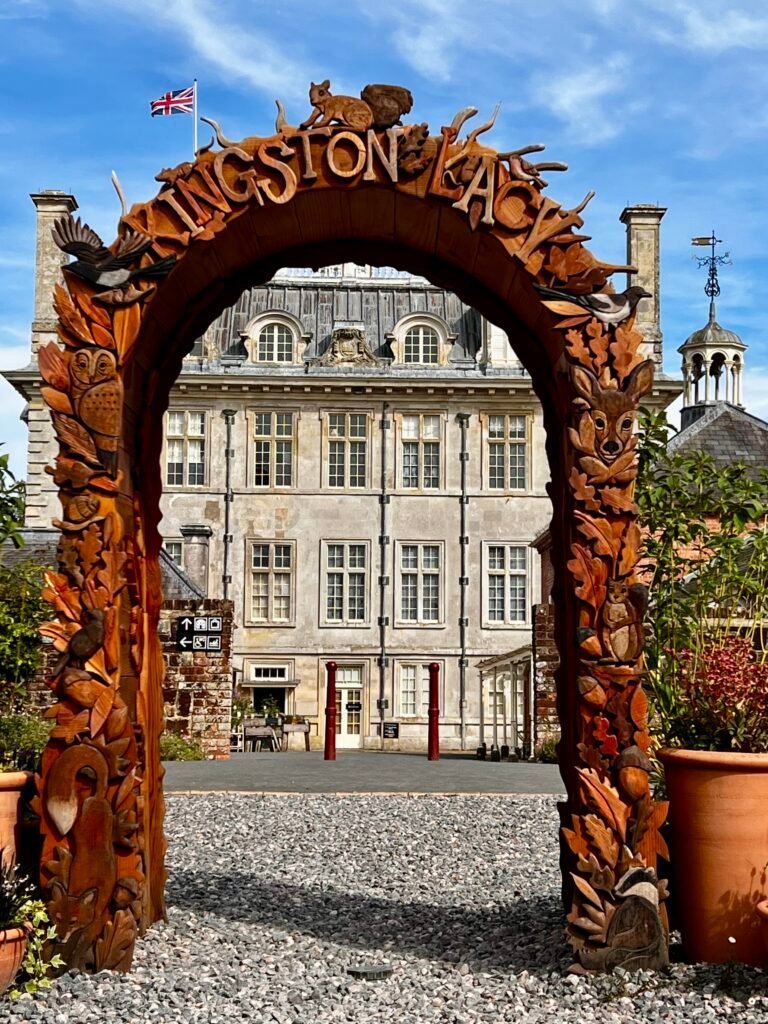
For drivers, National Trust membership can be particularly useful, the combination of admission and free parking at most National Trust car parks can make membership more useful than the headline admission benefit suggests.
That’s certainly been part of its appeal for me. I can look at a route, see what’s nearby and decide whether there’s time for an extra stop.
And sometimes that unplanned stop ends up being one of the best parts of the journey.
It Might Not Be Worth It If You Only Visit Occasionally
On the other hand, if you normally visit one or two heritage attractions a year, paying individually may be cheaper.
The same applies if most of the places you’re interested in aren’t National Trust properties. Britain has several major heritage organisations as well as independently operated historic attractions, and a National Trust card obviously doesn’t cover all of them.
That’s particularly worth remembering if your main interest is castles, abbeys and ancient ruins. The National Trust has some fantastic examples, but many other major historic sites are cared for by English Heritage. If that sounds more like your kind of day out, I’ve also looked at whether English Heritage membership is worth it based on my own experience.
For a different kind of heritage experience, I’ve also shared my thoughts on whether Historic Houses membership is worth it, with its network of independently owned houses, castles and gardens.
You can also read my National Trust vs English Heritage vs Historic Houses comparison, which brings all three memberships together and looks at what makes each one different.
Think About Where You Live Too
It’s worth opening the National Trust map before joining and looking at what’s realistically within travelling distance.
Having hundreds of properties available nationally sounds impressive, but ten places that you would genuinely visit are more valuable than hundreds that you probably never will.
The same applies if you frequently travel around Britain. In that case, your potential pool of places becomes much larger, and membership can become useful both close to home and while you’re away.
So before buying, I’d spend five minutes looking at the National Trust places near you and asking a very simple question:
How many of these would I realistically visit during the next twelve months?
If you’re already mentally planning the first few trips, that’s probably telling you something.
So, Is National Trust Membership Worth It?
For me, yes — National Trust membership has been worth it.
Not simply because I can add up admission prices until they exceed the annual membership fee, but because I’ve actually used it. It has become part of how I explore the UK, particularly when I’m planning road trips and looking for interesting places to add along the way.
I’ve visited grand historic houses and formal gardens, wandered around castle ruins, explored countryside and stopped at places I probably wouldn’t have considered if I’d had to decide whether each individual admission price was worth paying.
And that’s where I think the real value lies.
Membership removes that little financial decision from every visit. If I’ve only got two hours, I can still go in. If I don’t manage to see everything, I can come back. If there’s another National Trust place twenty minutes away… well, apparently I’m very easily persuaded into making one more stop. 😆
But that doesn’t automatically make it good value for everyone.
If you rarely visit heritage attractions, don’t have many National Trust places within reach, or know that you’ll probably use the card only once or twice a year, buying individual tickets may make more financial sense. Before joining, I’d look at the National Trust map, find the places you would genuinely like to visit and compare that with the current membership price.
If, however, historic houses, gardens, castles, countryside and spontaneous days out already sound like your kind of weekend, National Trust membership can offer far more than simply cheaper admission. For me, it has given me an excuse to explore more of the UK — including plenty of places I didn’t originally intend to visit.
And considering the name of this website, that’s worked out rather well.
One journey. One story. One more stop.