
English Heritage membership can look like a simple calculation: pay once for the year, visit enough castles, ruins and historic sites, and eventually the free admission and parking should make the numbers work.
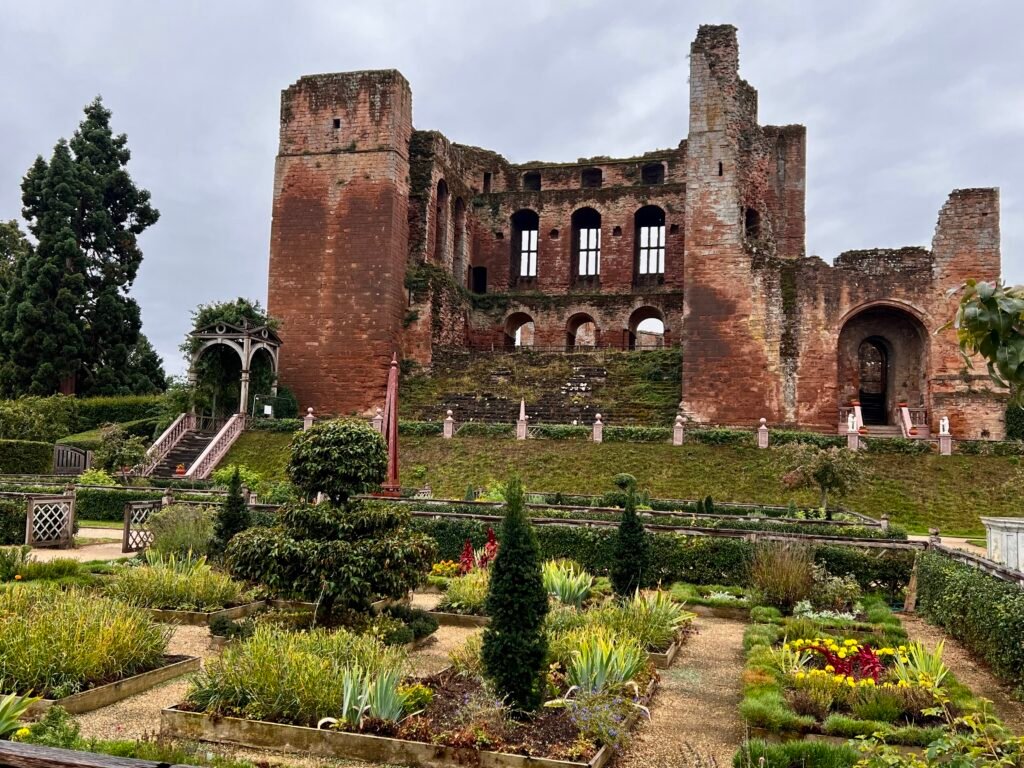
But after using mine to explore places including Stonehenge, Kenilworth Castle, Old Wardour Castle, Portland Castle, Old Sarum and smaller ruins such as Knowlton Church, I think there is more to the question than simply adding up entrance fees.
For me, visiting these places is partly about stepping away from the modern world. I like walking through the ruins, reading the information boards and trying to mentally rebuild what is missing. What would this room have looked like? Who walked through that doorway? How did people construct something this enormous and precise centuries before modern machinery and technology?
Sometimes that requires quite a lot of imagination. At some sites there are substantial buildings to enter and explore; at others, little more than foundations remain. And that difference matters when you’re deciding whether English Heritage membership — or an individual admission ticket — represents good value.
I also don’t mind that part of my membership fee supports the preservation of these places. English Heritage is a charity, and it says membership income helps care for more than 400 historic sites spanning thousands of years of history.
So, after actually using the membership, is English Heritage membership worth it? For me, yes — but I definitely don’t think it is a membership for everyone.
What Do You Actually Get With English Heritage Membership?
The headline benefit is straightforward: members get unlimited admission to more than 400 historic places. English Heritage also includes free parking at most of its sites, free admission for up to six children under 18 with each adult member, and free or reduced-price admission to many events.
For me, free entry and parking are the benefits I notice most.
Once I’ve paid for the membership, I don’t have to stand outside a castle wondering whether there is enough inside to justify another admission fee. I can simply go in, explore it at my own pace, take photographs, read the interpretation boards and move on when I’m ready.
That changes how I travel.
A historic site doesn’t necessarily have to become the main destination for the day. It can simply become one more stop along the way — which, rather conveniently, fits the philosophy of this website rather well. 😆
It also encourages me to visit places I might otherwise have driven past. A relatively small ruin becomes much easier to justify when admission and, in many cases, parking aren’t additional expenses every time.
English Heritage says membership fees also contribute directly towards caring for its historic places. That matters to me. These castles, abbeys, prehistoric monuments and ruins have survived for centuries, and preserving what remains means future generations will still have the opportunity to stand among them and imagine the people who were there before us.
Is English Heritage Membership Good Value for Money?
Whether English Heritage membership represents good value depends heavily on how often you visit — and, perhaps even more importantly, how interested you are in the places English Heritage looks after.
This is where my friend and I have very different opinions. 😆
I can happily spend an hour walking around a ruined castle, reading the information boards, photographing what remains and trying to reconstruct the missing pieces in my head. My friend is much less interested in ruins, so from her perspective some individual admission prices can feel expensive for what you actually get to see.
And I can understand that argument.
Membership Changes the Way the Admission Price Feels
As a member, I don’t really think about the individual ticket price anymore. If somewhere looks interesting, I can visit. If it only takes an hour to explore, that doesn’t bother me because I haven’t just paid another admission fee at the gate.
Without membership, the calculation can feel very different.
Stonehenge is probably the most obvious example. It is one of the most famous prehistoric monuments in the world, but the main experience at the monument itself is essentially walking around it from a protected distance. You cannot normally wander between the stones on a standard visit, so someone expecting a highly interactive attraction could reasonably come away feeling that the individual ticket price was high for the experience they received.
That doesn’t mean Stonehenge lacks value. Quite the opposite: its archaeological and cultural significance is precisely why it is protected. But historical importance and value for money as a visitor attraction aren’t necessarily the same question.
This is one of the reasons I find membership much easier to justify than repeatedly buying individual tickets.
Some Ruins Give You Much More to Explore
The experience can also vary enormously between English Heritage properties.
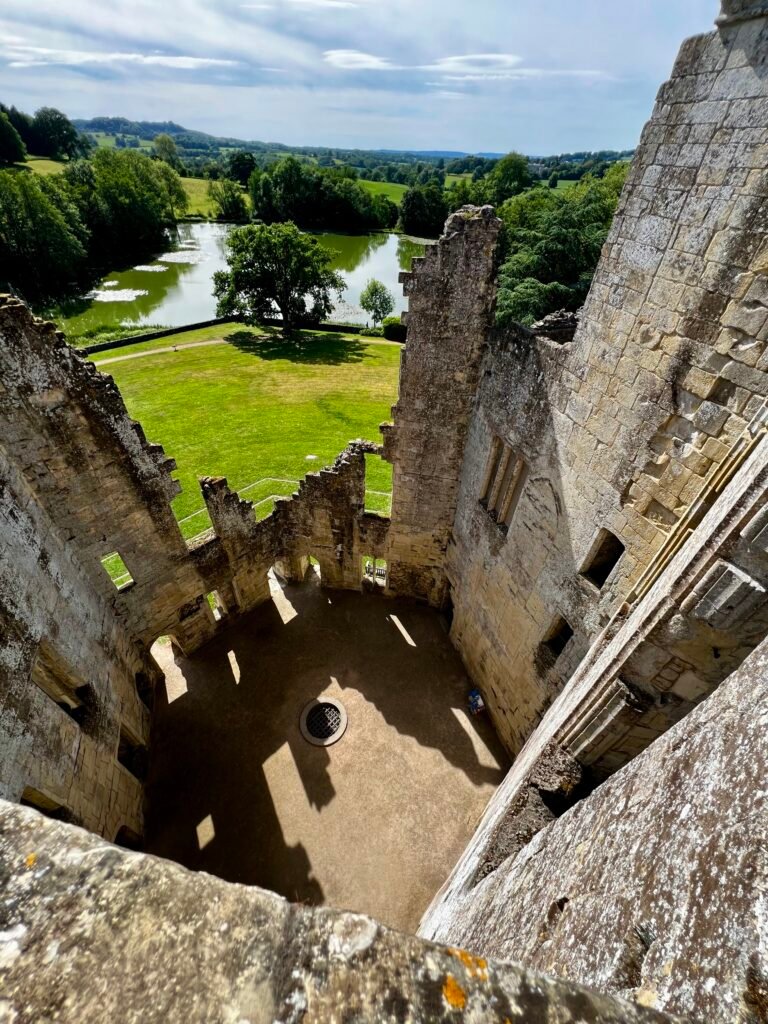
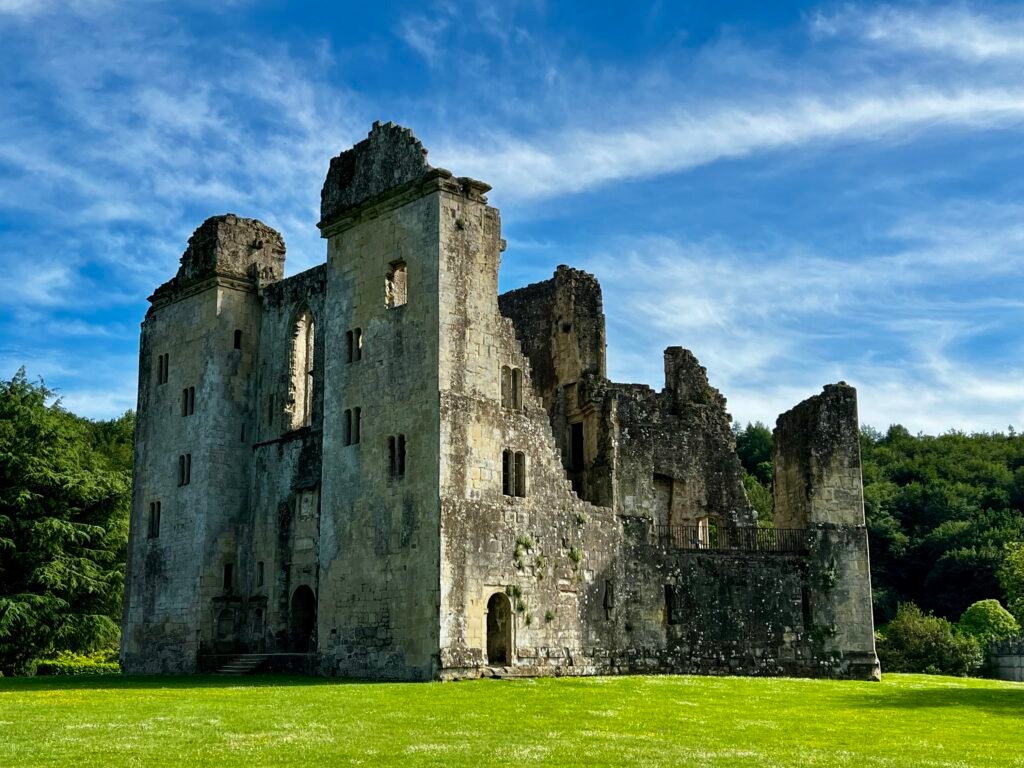
At places such as Old Wardour Castle, substantial parts of the building survive. You can actually enter the ruins, move through spaces that once formed part of the castle and see the surrounding landscape from within the structure.
For me, that makes history considerably easier to visualise.
Instead of looking at a line of stones and being told that a building once stood there, you’re standing inside what remains of one. Doorways, windows, walls and stairways provide clues about the scale and layout of the original building.
Other Sites Require Much More Imagination
Then there are places such as Old Sarum, where the experience is different again.
The location itself is fascinating, the elevated setting gives you impressive views, and the site has an extraordinary amount of history beneath your feet. But much less of the original architecture survives above ground.
That’s where enjoying ruins becomes quite personal.
I like reading what used to stand there and then trying to put the pieces back together mentally. If you enjoy doing that, a collection of foundations and surviving walls can become surprisingly interesting.
If you don’t, you may simply see… a collection of foundations and surviving walls. 😂
And I think that’s important to acknowledge when asking whether English Heritage membership is worth paying for. The membership becomes considerably more valuable if you’re genuinely interested in history rather than expecting every property to function like a conventional visitor attraction.
What Kind of Places Can You Visit With English Heritage Membership?
One of the things I like most about English Heritage membership is that the collection isn’t limited to one particular period of history.
I’ve used mine to visit prehistoric sites, medieval castles, ruined abbeys and Tudor fortifications. Some are major attractions where you could easily spend several hours; others are small ruins where the appeal comes from the setting, the history and simply being able to stand where something happened centuries ago.
That variety keeps the membership interesting — although ruins, castles and archaeology are definitely at the heart of the experience.
Castles You Can Actually Explore
For me, castles are probably where English Heritage is at its best.
Old Wardour Castle is a good example. Enough of the medieval structure survives that you aren’t simply looking at a ruin from outside. You can move through it, look through its windows, explore different levels and begin to understand how the building fitted together.
That’s the kind of place where my imagination really starts working.
When I’m standing inside walls that have survived for centuries, I find myself thinking about the people who built them without modern machinery, computer modelling or the technology we take for granted today.
Some of the craftsmanship is extraordinary.
We can build enormously tall structures today, of course, but many modern buildings are comparatively simple in appearance. Put a glass-and-steel tower beside the intricate stonework of a medieval castle, Norman building or Gothic cathedral and the contrast is fascinating.
These historic buildings were created in a completely different world — and yet so much of them is still standing.
Abbeys and Monastic Ruins
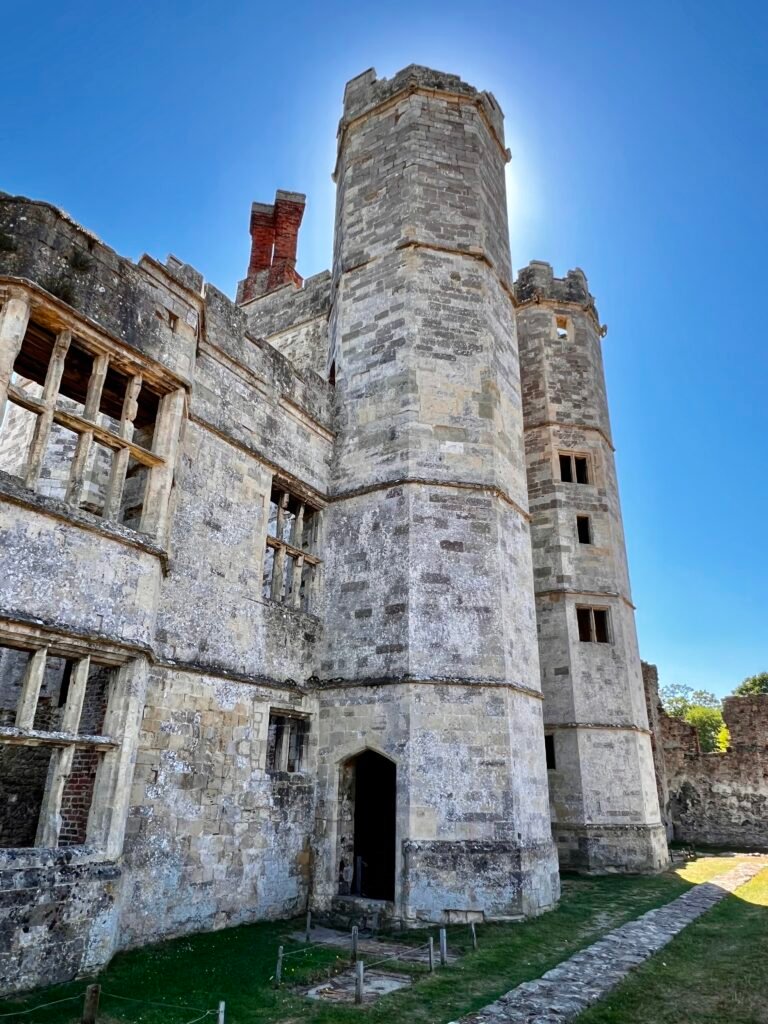
Castles aren’t the only substantial ruins you can explore with English Heritage membership. Titchfield Abbey in Hampshire gives a very different glimpse into the past.
The abbey was founded in the 13th century for Premonstratensian canons, but after the Dissolution of the Monasteries it was transformed into a grand Tudor mansion known as Place House. That combination of medieval religious history and later domestic use makes the surviving ruins particularly interesting to explore.
This is exactly the sort of place where I enjoy slowing down and looking for clues. Rather than simply seeing old stone walls, you can walk through the surviving spaces, notice fireplaces, doorways and architectural details, read the information provided and start imagining how the building changed over the centuries.
For me, that’s a large part of the appeal of English Heritage. The building may be ruined, but enough survives to give your imagination something to work with.
The Smaller Ruins Can Be Just as Atmospheric
Not every English Heritage property needs several hours.
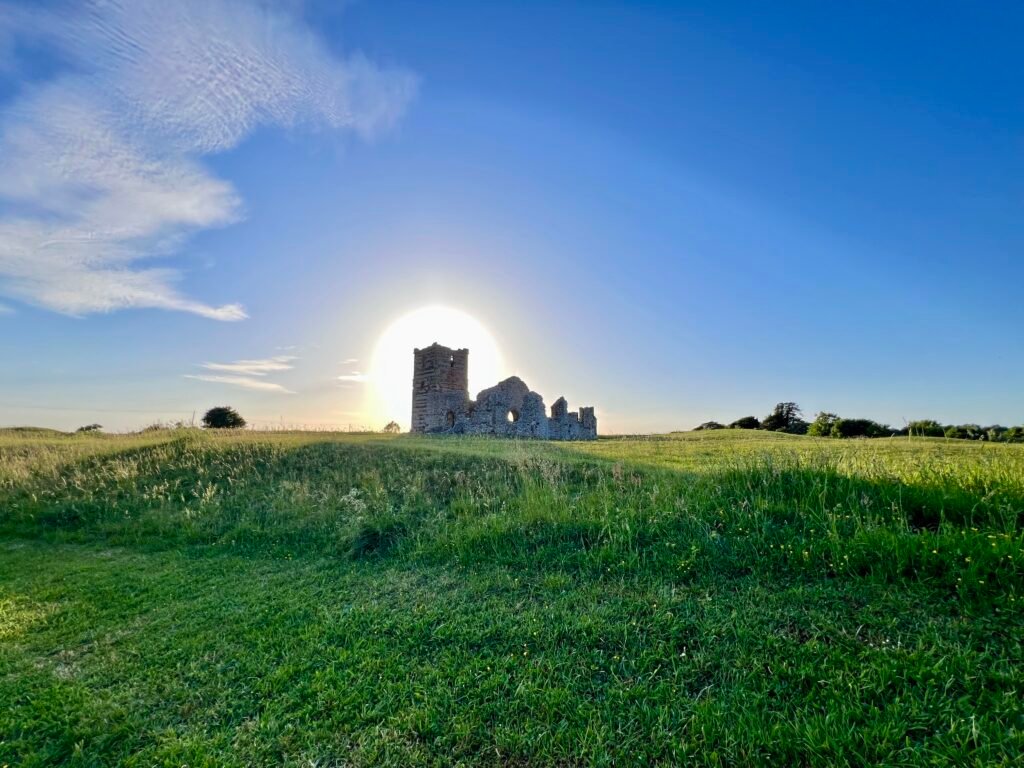
Knowlton Church in Dorset is almost the opposite of somewhere like Kenilworth Castle. There isn’t a visitor centre packed with exhibits or an enormous building to explore. Instead, you find the ruins of a medieval church standing within a much older prehistoric earthwork in the countryside.
It’s quiet, unusual and incredibly atmospheric.
Places like this are another reason I enjoy having membership. I’m already looking for historic stops when I’m travelling, and smaller sites can fit naturally into a journey without needing to become the entire day’s destination.
Some English Heritage sites are also free to visit regardless of membership, including Knowlton Church, so obviously those don’t help you recover the cost of your membership directly. But they demonstrate just how varied the collection of places cared for by English Heritage actually is.
And Then There Are the Famous Ones
At the other end of the scale is Stonehenge.
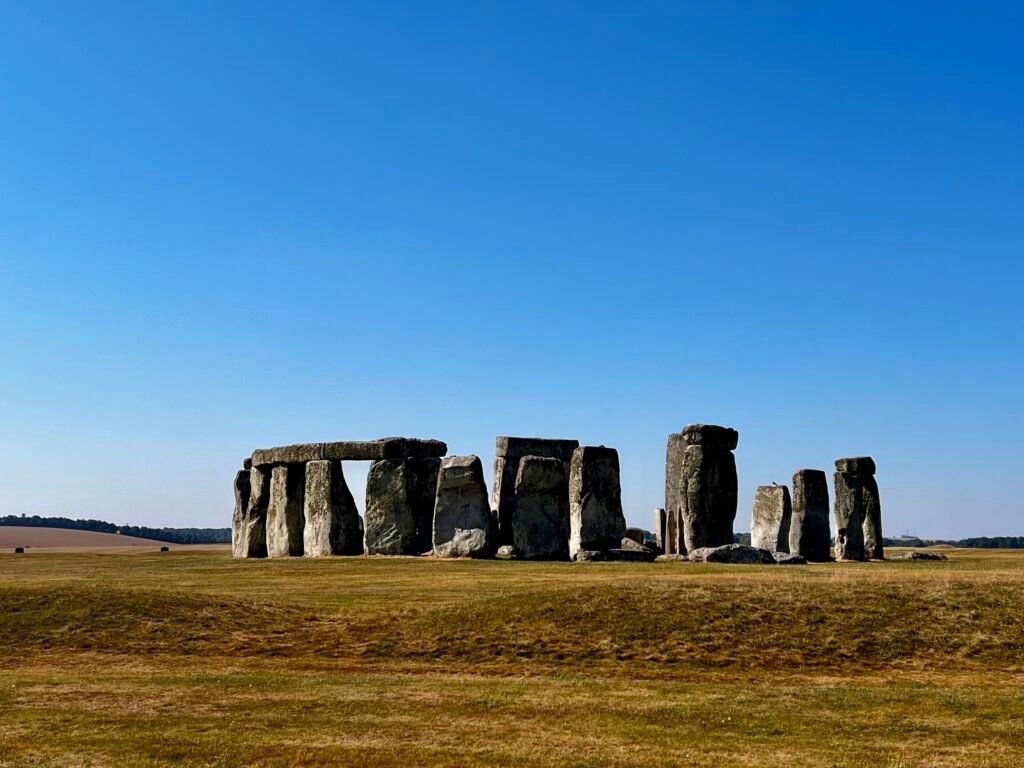
Whatever you think about its admission price or the experience of seeing the stones from a distance, there’s no denying that visiting such a famous prehistoric monument feels very different from discovering a small ruin in the countryside.
But one of the parts I found particularly interesting wasn’t actually the stone circle itself.
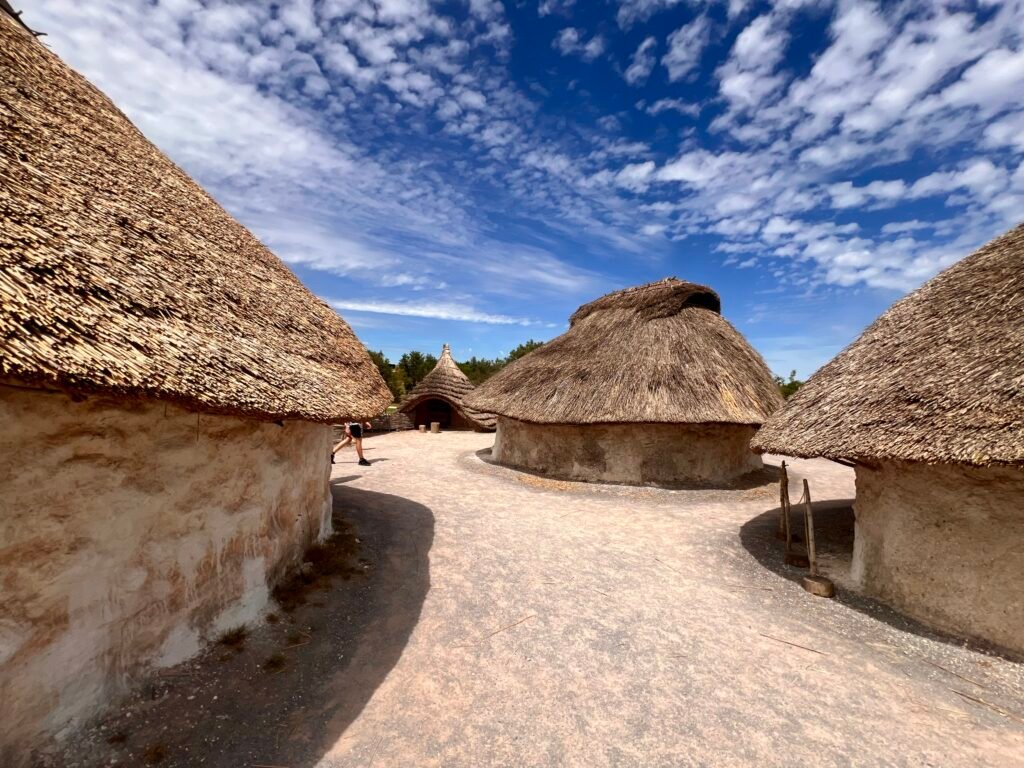
Near the visitor centre are reconstructed Neolithic houses based on archaeological evidence from nearby Durrington Walls. They help give some human context to the monument and make it easier to imagine the lives of the people associated with this landscape thousands of years ago.
I’d actually like to see more interpretation like this at English Heritage sites.
Information boards are useful, but reconstructed spaces, exhibitions and other interactive interpretation can bridge the enormous gap between looking at a ruin and understanding what once happened there. When only foundations or fragments survive, that additional context can completely change the experience.
What I Like About English Heritage Membership
A ruin obviously can’t recreate the world that existed around it hundreds or thousands of years ago. You have to bring some imagination with you.
That’s actually something I enjoy.
I find myself looking at surviving windows, fireplaces, staircases and sections of wall and mentally filling in everything that’s disappeared. Information boards and reconstructions help enormously because suddenly a pile of stone has context: this was a hall, this was a doorway, people ate here, slept here, worked here or defended this place.
It’s also difficult not to admire what earlier societies were capable of building.
They didn’t have cranes, computers or modern construction equipment, yet they produced enormous castles, abbeys and other structures with extraordinary craftsmanship. Centuries later, parts of those buildings are still standing.
For me, that connection with a world completely removed from modern life is one of the main reasons I keep visiting.
Free Parking Is a Surprisingly Good Perk
The free parking benefit for members isn’t particularly exciting on paper, but in practice I really appreciate it.
When you’re regularly driving around the UK, parking charges become another small expense attached to every day out. English Heritage members can park free at many of its managed car parks, although there are exceptions, so it’s always worth checking the individual property’s information before travelling.
For me, combining free admission with free parking makes spontaneous visits much easier. If I notice an English Heritage property near my route, there’s much less reason not to stop.
That’s probably dangerous information for somebody whose travel philosophy is essentially one more stop. 😂
I Like Knowing the Money Helps Preserve the Sites
There’s another part of the membership calculation that can’t really be measured by asking how many entrance tickets I’ve saved.
English Heritage is a charity, and I don’t mind paying for membership knowing that the organisation is responsible for caring for hundreds of historic places.
These ruins aren’t renewable.
Once surviving stonework, archaeological remains or historic structures are lost, we can’t simply manufacture another authentic medieval castle or abbey to replace them. Conservation allows people decades from now to stand in the same places, learn about the same history and hopefully experience some of the fascination I get from them today.
So although I certainly want to get good value from my membership, I don’t look at the entire fee as money that I personally need to recover through free admission.
Part of it is also my contribution towards keeping these places standing.
It Encourages Me to Visit Places I Might Otherwise Skip
This is probably where membership changes my behaviour the most.
If I had to buy a separate ticket every time, I’d naturally become more selective. I’d probably prioritise the famous castles and major attractions and drive past some of the smaller or less familiar places.
With membership, curiosity can win instead.
A place doesn’t have to promise half a day’s entertainment. Sometimes I just want to see what’s there, learn something about it, take a few photographs and continue the journey.
And occasionally those unplanned stops turn out to be the ones I remember most.
What I Don’t Like About English Heritage Membership
I don’t regret buying English Heritage membership, but there are parts of the experience that I think could be better.
The biggest issue for me isn’t really the membership fee itself. Once you’re a member and regularly visiting places, the cost becomes relatively easy to justify. It’s the individual admission prices that can sometimes be harder to understand — particularly if you’re visiting with somebody who isn’t a member or isn’t naturally fascinated by ruins.
My friend is a good example. She enjoys travelling with me, but she doesn’t have the same enthusiasm for spending an hour examining old walls and imagining what used to be there. 😂 From her perspective, some English Heritage admission prices feel expensive for the amount there is physically left to see.
And sometimes I can understand why.
Some Sites Require a Lot of Imagination
The amount of surviving structure varies enormously between English Heritage sites.
At somewhere like Old Wardour Castle, there is enough remaining to walk through rooms, climb through the building and get a real sense of its scale.
Other places can be much harder to interpret.
At Old Sarum, for example, the history is extraordinary and the elevated location offers impressive views, but comparatively little of the buildings themselves survives. Much of the experience relies on information and your own imagination to reconstruct what once stood there.
I enjoy doing that.
Someone who doesn’t particularly like history might look at exactly the same remains and wonder what they’ve paid to see.
That’s why I think English Heritage membership suits a fairly specific type of visitor. If you enjoy history, archaeology and ruins — and you’re prepared to read about what you’re seeing — there’s considerably more to discover than the surviving stones alone.
I’d Love to See More Interactive Interpretation
This is one area where I think English Heritage could make some sites even better.
The reconstructed Neolithic houses and museum at Stonehenge are good examples of what interpretation can add. They provide context that the monument alone can’t necessarily give you.
I’d love to encounter more of that across English Heritage properties.
That doesn’t mean rebuilding ancient castles or turning historic sites into theme parks. The ruins themselves should remain the focus. But carefully designed reconstructions, models, exhibitions or interactive interpretation can help visitors understand what they’re actually looking at.
When only foundations survive, even a good visual reconstruction showing the original building in exactly the place you’re standing can make an enormous difference.
For people who don’t naturally have the patience — or imagination — to mentally rebuild a ruined site, that could make history much more accessible.
Stonehenge Is a Complicated One for Me
Stonehenge deserves a separate mention because I’ve had two very different experiences there.
During a normal visit, the monument is understandably heavily protected. Visitors follow the designated route around the stone circle and generally see the stones from a distance. Given Stonehenge’s archaeological importance and vulnerability, I can understand why access has to be controlled.
But that also affects how the admission price feels. If someone pays a substantial amount specifically to see Stonehenge, they may be surprised by how limited their physical interaction with the monument actually is.
My experience at the Summer Solstice made that contrast much harder for me to understand.
During the solstice gathering I saw people drinking heavily and using drugs around the monument, and I witnessed behaviour that I felt was completely incompatible with the level of protection normally given to the site. Visitors were able to get among and touch the stones in a way that isn’t permitted during an ordinary visit.
I found that frustrating.
If Stonehenge is protected so carefully throughout the year because of its archaeological and cultural importance, I personally found it difficult to reconcile those restrictions with what I witnessed during that event.
That experience didn’t make me regret my English Heritage membership, and it certainly didn’t diminish the importance of Stonehenge itself. But it did change how I feel about the way access to such an important monument is managed.
None of This Makes Me Regret Joining
Despite those criticisms, I still enjoy being an English Heritage member.
For me, the combination of free admission, parking at many sites, learning about British history and supporting the preservation of historic places outweighs the things I would change.
But I think it’s important to be realistic about what you’re buying.
English Heritage isn’t a collection of conventional attractions where every visit gives you rooms full of exhibits and several hours of entertainment. Sometimes you’ll find an enormous castle to explore. Sometimes you’ll find a handful of surviving walls.
And sometimes the most important part of the attraction exists mainly in your imagination.
For me, that’s part of the appeal. For somebody like my friend, it can be exactly the reason English Heritage membership isn’t necessarily the right membership for them.
Who Is English Heritage Membership Worth It For?
I think English Heritage membership works best when you’re genuinely interested in the history behind the places you’re visiting.
You don’t necessarily need to be somebody who already knows the difference between every architectural period or can identify a Norman doorway from twenty metres away. I’m certainly not travelling around Britain conducting archaeological surveys. 😂
But curiosity helps.
If you enjoy castles, abbeys, ancient monuments, archaeology and ruined buildings — and you’re happy to read the information provided and imagine how these places once looked — there’s an enormous amount to discover.
It’s Particularly Good for People Who Love Castles and Ruins
This is probably the clearest distinction for me.
English Heritage has given me access to exactly the kind of places where I can wander through centuries-old ruins, photograph surviving architecture and learn what happened there.
Sometimes you’re exploring substantial remains such as Kenilworth or Old Wardour Castle. Sometimes there is considerably less left and the history has to do more of the work.
If both of those sound interesting rather than disappointing, you’re probably much closer to the target audience for membership.
You’ll Get More Value If You Travel Regularly
Like most annual memberships, the economics improve considerably when you actually use it.
For me, English Heritage works particularly well with road trips because I can check what historic places are near my route and add another stop without buying another admission ticket.
Free parking at many of the sites makes that even easier.
If you’re likely to visit several paid English Heritage properties during the year, it’s worth comparing their individual admission prices with the current membership fee rather than judging the membership price in isolation.
It May Not Suit Everyone Who Enjoys Days Out
This is where I think the distinction between English Heritage and the National Trust becomes useful.
There is plenty of overlap — both organisations care for historic places — but the experience can feel very different.
My National Trust days often involve country houses, furnished interiors, landscaped gardens and countryside as well as ruins and castles. English Heritage has generally given me a much stronger concentration of castles, archaeological sites, ancient monuments and ruins.
Neither approach is inherently better. They simply appeal to different interests.
If country houses, gardens and broader countryside days sound more like your thing, I’ve written separately about my experience in “Is National Trust Membership Worth It?”
If independently owned historic houses, private estates and gardens sound more appealing, I’ve also written about whether Historic Houses membership is worth it based on my experience so far.
For help choosing between them, read my National Trust vs English Heritage vs Historic Houses comparison, looking at the differences between all three memberships and the kinds of days out each one offers.
Check What’s Around You Before Joining
Before paying for a membership, I’d look at the English Heritage map and make a realistic list of places you would actually visit.
Having hundreds of historic sites available nationally sounds impressive, but the important number is how many you genuinely want to see.
If you discover several castles, ruins or historic sites within easy driving distance — plus others around destinations you’re already planning to visit — membership becomes much easier to use.
If you look at the map and struggle to find places that excite you, that probably tells you something too.
So, Is English Heritage Membership Worth It?
For me, yes — English Heritage membership has been worth the fee.
I’ve saved money on admission and parking, but that isn’t the only reason I don’t regret joining. Membership has encouraged me to visit places I might otherwise have driven past, learn more about periods of history I knew relatively little about and spend time exploring buildings and landscapes that have survived for centuries.
I also like knowing that part of what I’m paying helps preserve those places for the future.
But I wouldn’t recommend judging the membership purely by the number of properties English Heritage looks after. What matters is whether you actually enjoy the kind of places in its collection.
If you see a ruined castle and immediately want to know what it looked like when it was complete, who lived there and what happened within those walls, you’ll probably find plenty to keep you interested.
If you see the same castle and think, “It’s £15 to look at some old stones?” then you may have considerably more in common with my friend. 😂
And that’s completely fair.
Some English Heritage sites give you substantial buildings to explore. Others require information boards, historical context and quite a lot of imagination before the remains begin to make sense. I would still like to see more reconstruction, exhibitions and interactive interpretation at some locations, particularly where very little survives above ground.
My experience at Stonehenge’s Summer Solstice also left me with questions about how access to particularly sensitive historic sites is managed. Membership doesn’t mean I have to agree with everything English Heritage does.
But none of that has made me regret joining.
Standing inside a ruined abbey or castle and trying to mentally strip away the modern world is precisely why I enjoy these places. No phones, cars, computers or modern machinery — yet people were capable of creating buildings of extraordinary scale, detail and craftsmanship.
Centuries later, we’re still walking through what remains of them.
So before buying English Heritage membership, I’d do something very simple: open the map, find the places near you and ask yourself whether you genuinely want to explore them.
If the answer is yes — and castles, ruins, archaeology and thousands of years of history sound like your kind of day out — the membership can become much more than a way of saving on entrance fees.
For me, it has become another reason to stop, walk through the ruins and imagine what stood there before.
One journey. One story. One more stop.