
On 8 August 2026, a summer visit to Mompesson House in Salisbury came with an unexpected soundtrack: music, moving feet and a garden full of people dressed as though Jane Austen might arrive at any moment. The Hampshire Regency Dancers were performing among the flowers, and suddenly Regency life at Mompesson House wasn’t just something to read about on an information board. It was happening a few steps in front of me.
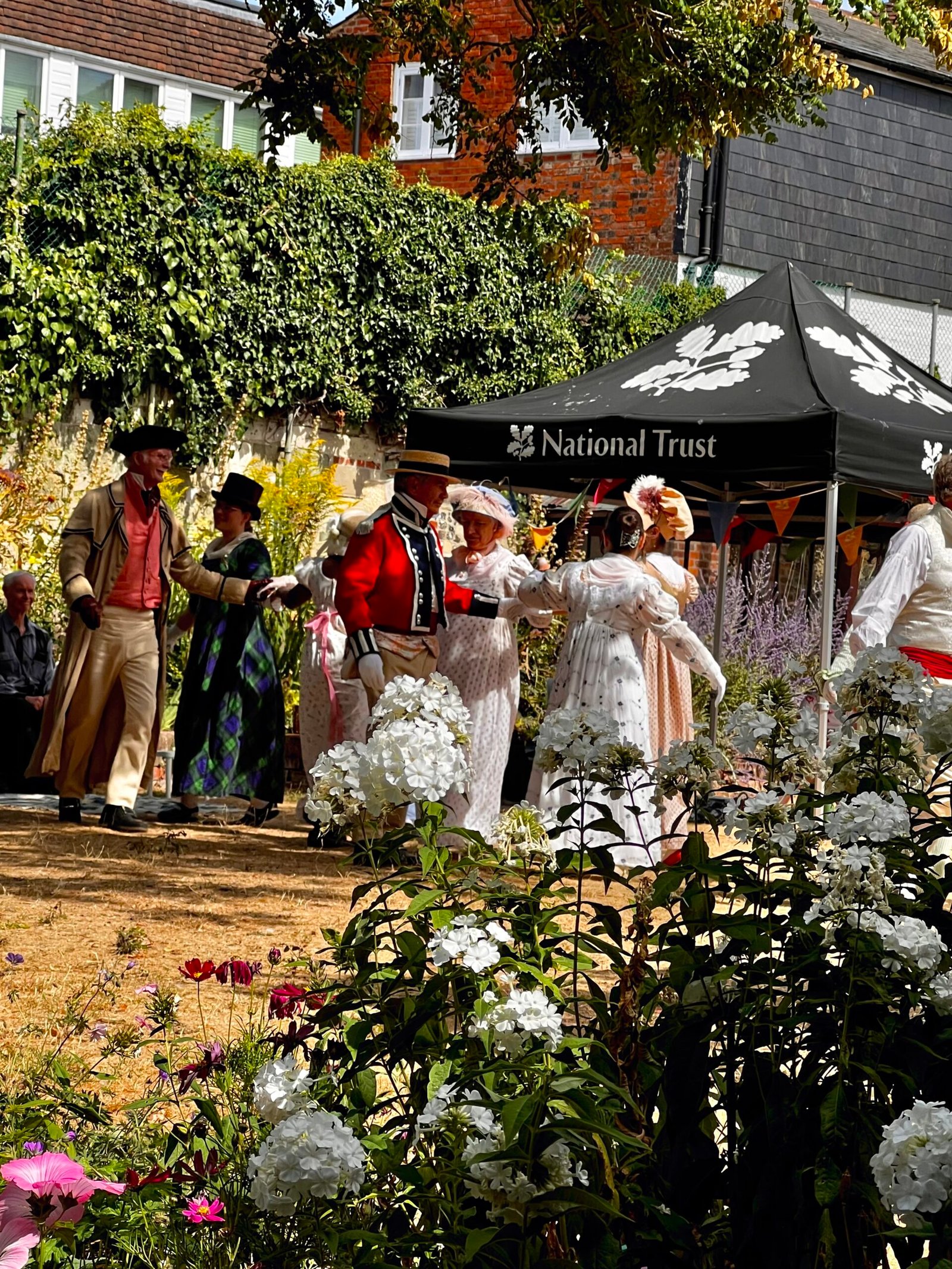
On 8 August 2026, performers in period-inspired clothes danced among the garden flowers, giving visitors a glimpse of Regency social entertainment.
The dancers turned and changed places in coordinated patterns as spectators watched. The clothes were period-inspired; the people, thankfully, were from 2026. It made the house feel less like a collection of furniture and more like somewhere people once worried about their manners and tried not to tread on anyone’s shoes.
The Hampshire Regency Dancers turn a garden into a ballroom
Based in Winchester, the group performs country dances, cotillions and quadrilles from roughly 1775–1830. A dance could be entertainment and a social test at once. Their official Hampshire Regency Dancers website explores the historical patterns and manners behind those elegant turns.
The National Trust’s event listing confirms their Mompesson House appearance on Saturday 8 August 2026, from 11am to 3pm, with performances at intervals. Watching was included with the normal admission to the house; it wasn’t a separately ticketed grand ball. Crucially, this was a 2026 demonstration, not proof of a particular dance being performed at Mompesson in the 1800s.
Mrs Portman’s Ball: the pressure of being delightfully respectable
The summer displays used the fictional invitation to Mrs Portman’s Ball to explore a real family’s world. Ann Portman, widowed by the time she arrived in 1798, lived at Mompesson House with her three unmarried daughters: Ann Mary, Henrietta and Wyndham. Their prospects and reputation mattered in an age when connections could shape social and financial security. A ball was not merely a nice evening out; it was somewhere to be seen, assessed and, potentially, courted.

Decorative urns, shells, nuts and silhouette cards formed part of the house’s Regency-themed visitor displays in summer 2026.
The mask, urns and silhouette cards in my photograph belong to the 2026 interpretation, not an original Portman party. They introduce the demands of fashionable society: suitable clothing, conversation, introductions and knowing who could dance with whom. Romantic misunderstandings were hardly helped by everyone having an opinion about your next partner.
The National Trust’s Mrs Portman’s Ball programme also explored manners, fan gestures, invitations and children’s activities. It’s fun to imagine gossip travelling by fluttering fan, though the familiar idea of a rigid, universally understood ‘language of the fan’ is best treated as part of the playful interpretation, rather than a rulebook every Regency guest truly followed.
Music before the playlist: accomplished or embarrassed?
A social gathering needed music, and playing an instrument could be a valuable accomplishment in a genteel household. The rectangular keyboard instrument photographed in the house is a square pianoforte, smaller in footprint than the grand pianos familiar today. Imagine being expected to entertain your guests without being able to ask a smart speaker to rescue you with a playlist. Suddenly, practising scales seems less optional.
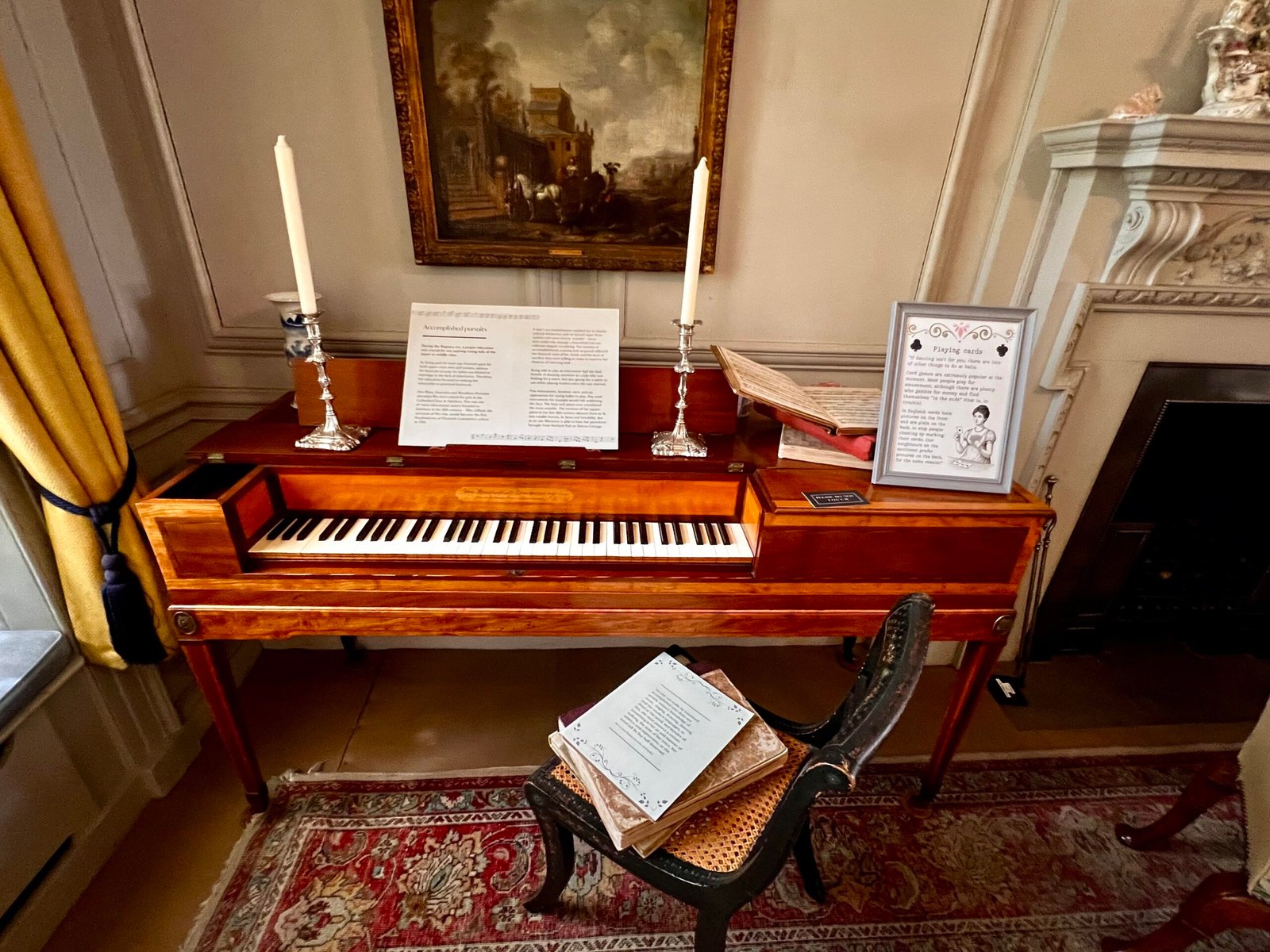
A rectangular pianoforte, candles and printed interpretation introduce the musical accomplishments expected in genteel Regency society.
The National Trust Collections catalogue lists a 1797 John Broadwood & Sons square pianoforte at Mompesson House. It’s a fascinating survival from the period, although the maker’s inscription isn’t readable in my photograph, so I won’t pretend to have independently identified that exact instrument. What’s beyond doubt is the role music played in drawing-room entertainment: it let people demonstrate skill, and gave gatherings a soundtrack long before records existed.
Whist, cards and the dangers of a bad evening
Not everyone needed to dance. At the red-covered whist table, playing cards and an interpretation sheet offered another look at genteel recreation — including an explanation of how to cheat at whist. It’s comforting to learn that a room full of beautifully dressed people could still develop a competitive streak. Whist, a trick-taking game that grew into modern bridge, gave guests a chance to socialise while exercising memory, partnership and perhaps a little strategic suspicion.
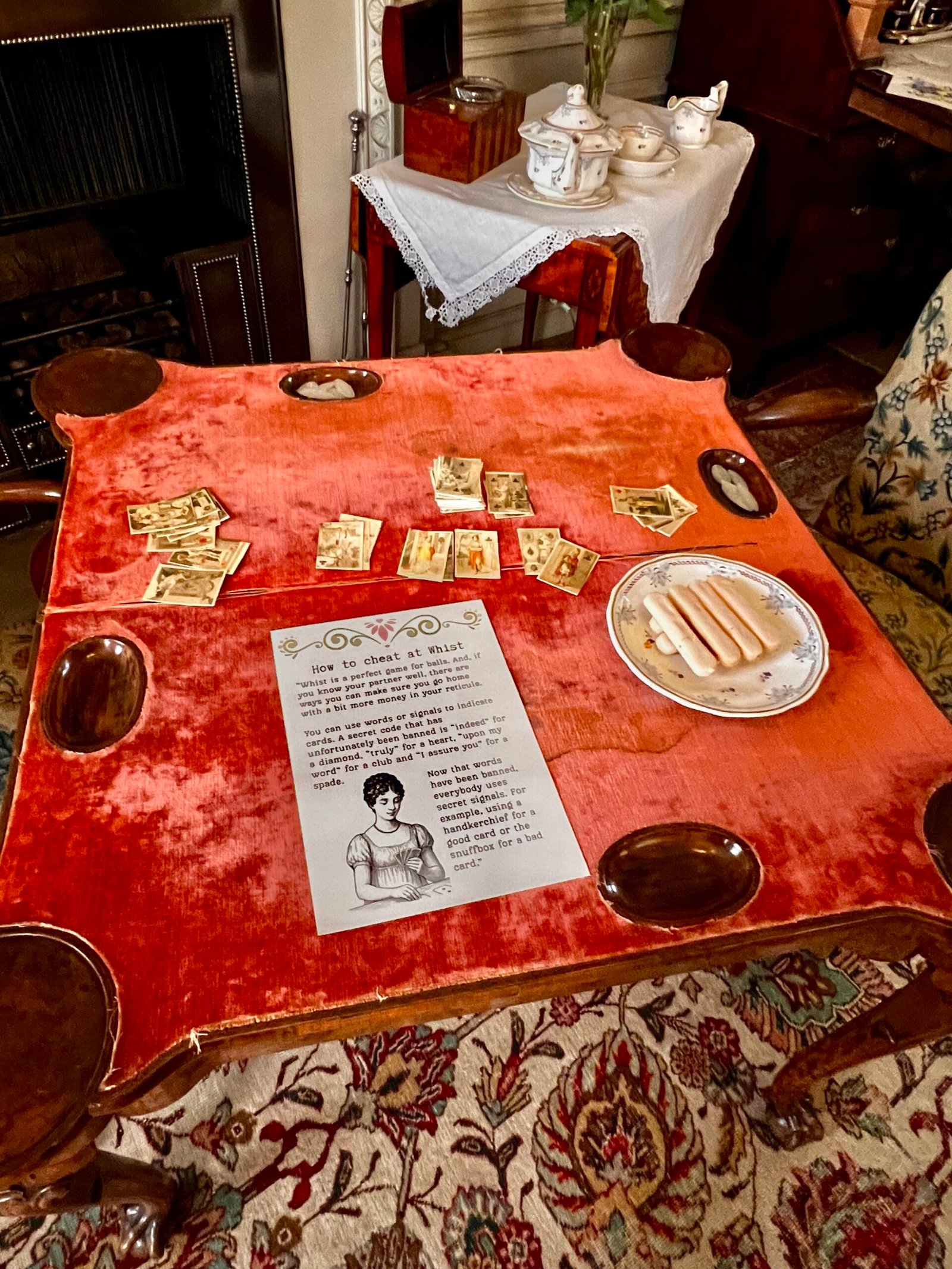
Playing cards and a humorous visitor guide sit on the red-covered gaming table, recreating one of the sociable diversions of the Regency era.
Dance etiquette could be just as demanding. In 1815, dancing master Thomas Wilson advised that gentlemen should not enter a full-dress ballroom in boots or with sticks, that partners should bow or curtsey at the proper moments, and that people should not disrupt proceedings with hissing or clapping. The Hampshire Regency Dancers’ historical etiquette notes reproduce those rules. In other words, the quickest way to cause a scene was simply to forget how not to cause one.
Tea, dinner and the art of appearing effortlessly wealthy
The cups, serving tray and refreshments looked almost suspiciously civilised. Tea was part of social life, while fine porcelain also advertised a household’s taste and means. The display mixes period-inspired pieces with modern props, including a contemporary sparkling-wine bottle: an interpretation, not Ann Portman’s actual menu.
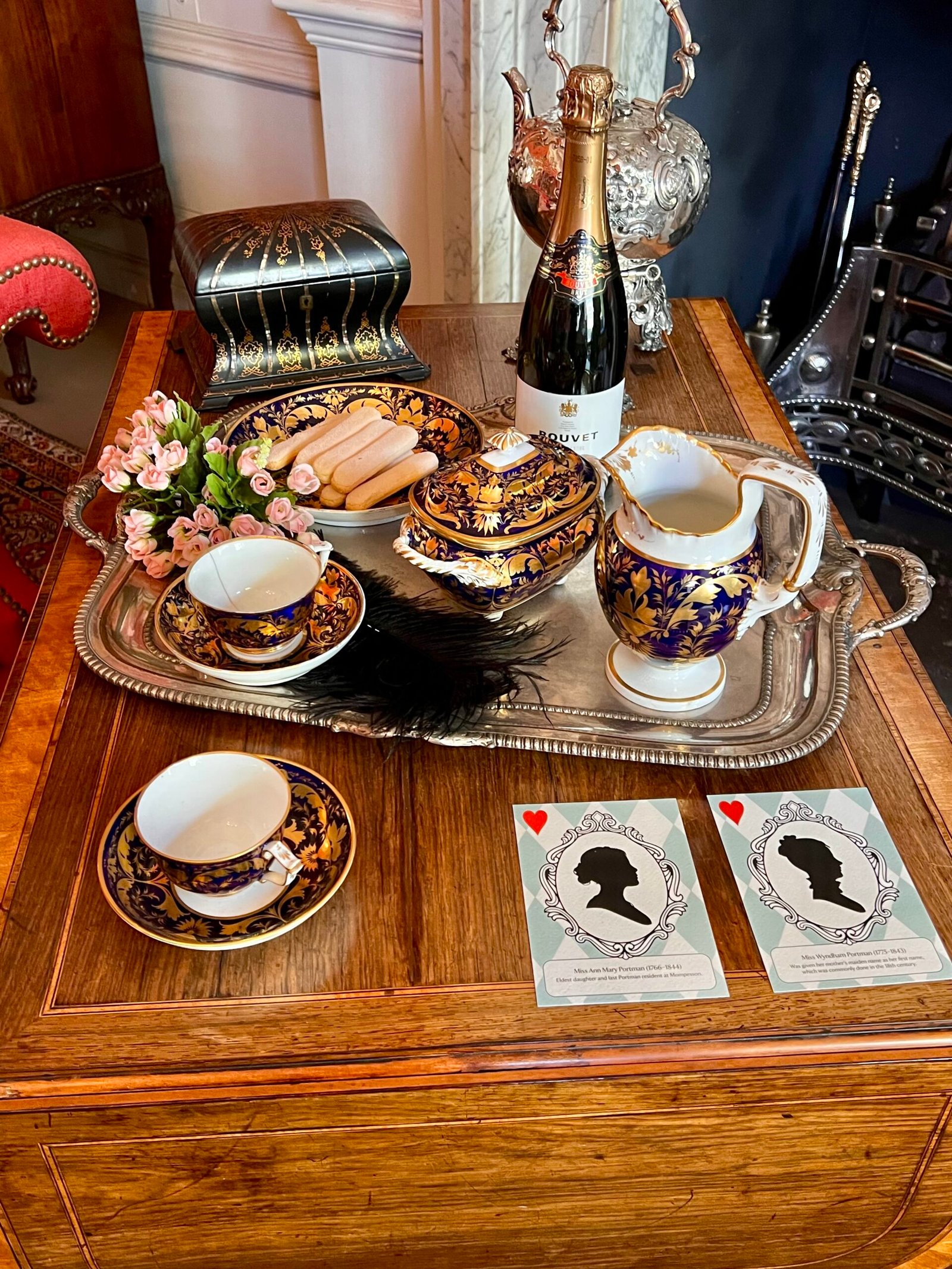
Blue-and-gold china, a silver-coloured tray, flowers and treats were arranged to evoke entertaining during the 2026 social-season programme.
The formal dining table takes things a step further. Place settings, candlesticks, glassware and carefully arranged food remind us that dinner could be an occasion with rules of its own. In prosperous households, the timing of dinner moved later over the Georgian period, and an invitation told guests more than merely where the food would be served. There was conversation to navigate, seating to consider and the delicate matter of eating without upsetting the entire tablecloth.
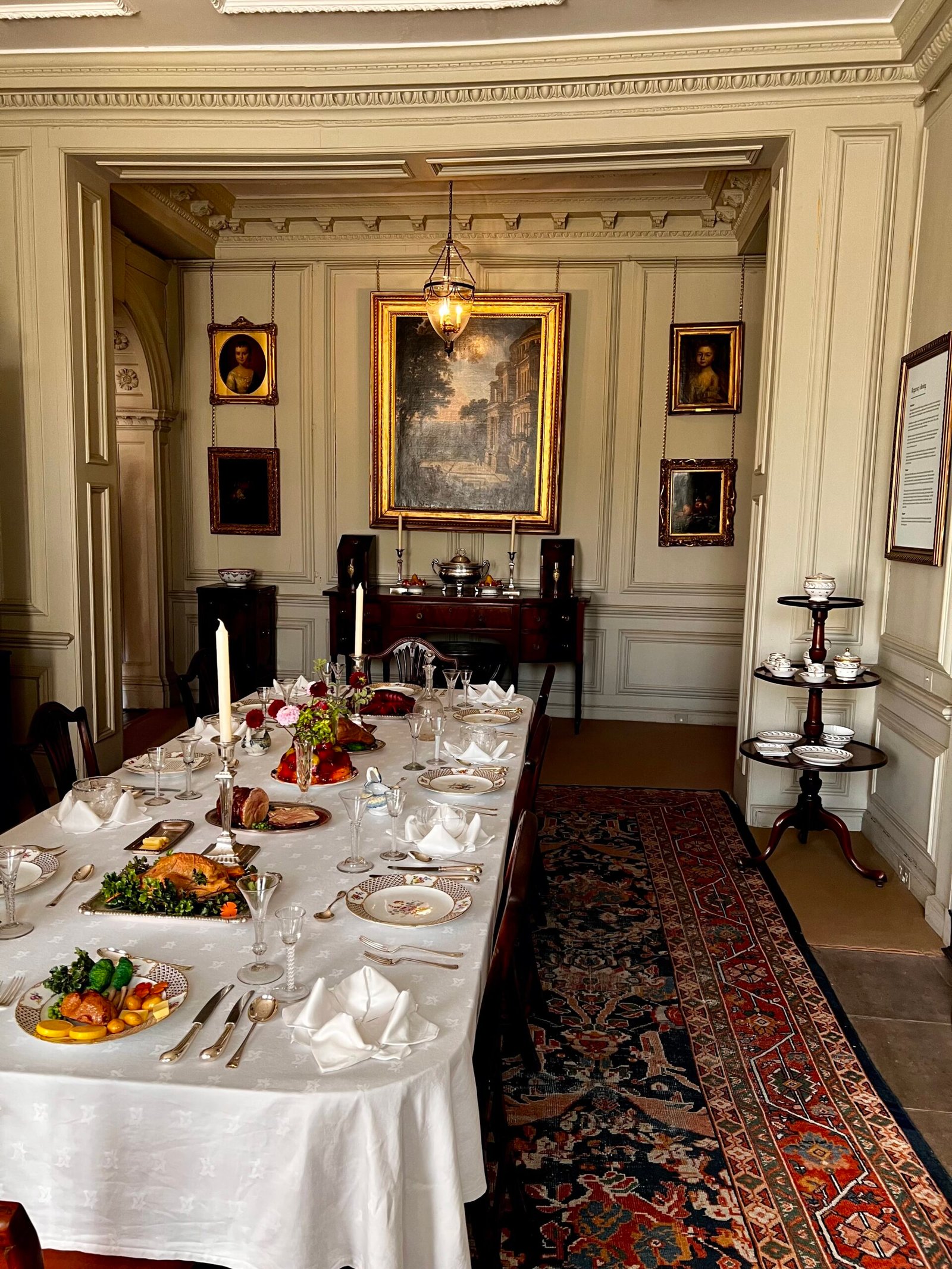
Formal place settings, candles and arranged food illustrate the elaborate rituals of entertaining in a well-to-do household.
The distinction between history and interpretation matters here. We can learn about the kind of social occasions the Portmans might have understood without claiming the precise displayed food, china or seating arrangement belonged to them. The effect is still wonderfully immediate: suddenly a room full of plates offers as much insight into the period as a portrait or a date carved above a door.
Regency childhood: not everybody was invited to dance
The programme also remembered younger members of a household. In a furnished upstairs room, a rocking horse and games suggested a very different routine from a formal ball. Children had toys and amusements, although access to them — and expectations about behaviour and education — varied enormously by class and circumstances. The National Trust’s 2026 Regency social season made room for family activities rather than treating history as an adults-only subject.
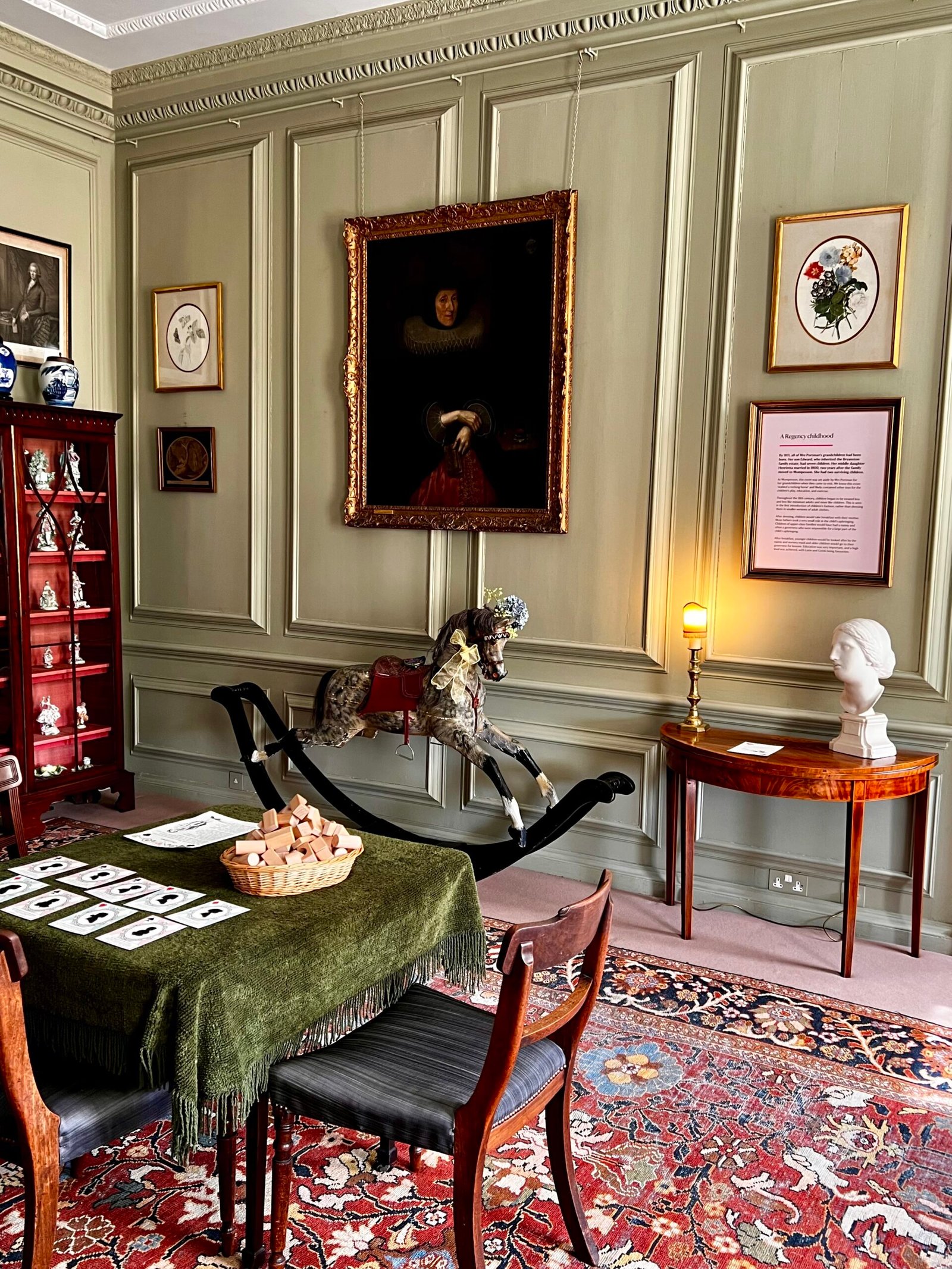
A rocking horse, cards and activity pieces help tell the story of Regency childhood in Mompesson House’s 2026 displays.
It’s easy to picture Regency society as endless dresses and witty remarks. Real households also relied on people cooking, cleaning and maintaining clothes. Behind every apparently effortless evening, somebody had almost certainly been working very hard.
Regency dancing at Mompesson House: a living history moment
Back in the garden, the dancers watched one another, followed sequences and shared the space. Costumes look lovely in photographs, but choreography tells a richer story about social conventions. No one needed an eighteenth-century instruction manual in hand, though I suspect rehearsals were involved.
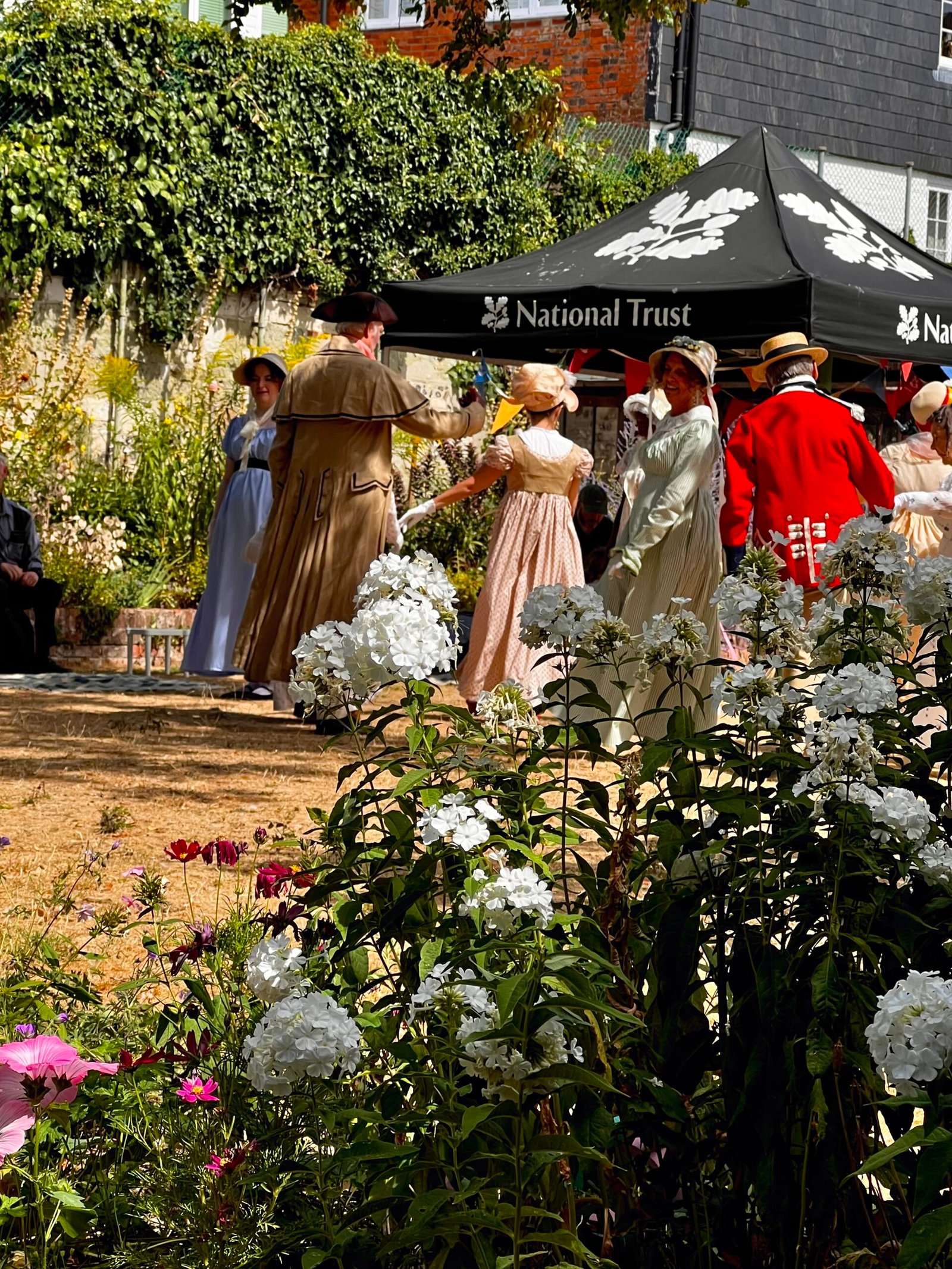
Costumed performers move through a dance beside the flowerbeds, with the National Trust’s garden gazebo visible behind them.
This was a special performance in August 2026, not a promise that the same date or programme returns every year. The Hampshire Regency Dancers regularly perform elsewhere and hold their own annual ball, but a future appearance at Mompesson House should be checked in the property’s current events calendar before planning a trip around it. I was lucky enough to catch a particularly lively day — which also gave me far more interesting photographs than a normal walk through the garden.
Visiting Mompesson House: parking, admission and access
For a future visit, head to Mompesson House, Salisbury Cathedral Close, SP1 2EL. My suggested car park is Culver Street multi-storey, SP1 2BQ, the same one used for a city-centre cathedral visit. It is paid parking; from there, walk towards the Cathedral Close and enter through the High Street Gate. The car park’s lift is advertised as available 9am–5pm only, so check the local Salisbury parking information and current charges before relying on it.
The National Trust has two advance-bookable Blue Badge spaces outside the house. Wheelchair visitors can use a ramped rear entrance with staff assistance, reach the accessible ground-floor rooms, and visit the garden and tea-room, but upstairs rooms are not wheelchair-accessible. An accessible courtyard toilet and images of the upstairs spaces on a tablet are available; check the official access and admission details when planning. The 8 August dance demonstration was free with normal house admission; National Trust members had their usual membership admission benefit. For a broader look at what that membership offers, read my National Trust membership review before deciding whether to join.
A performance like this is one reason I enjoy exploring National Trust places and keeping an eye on special heritage days across Wiltshire. For the building and its extraordinary interiors, my companion Mompesson House Georgian townhouse tour takes you through the rooms, collections and garden. You can also make a longer Salisbury day of it with my Salisbury Cathedral guide, only a short walk away in the Close.
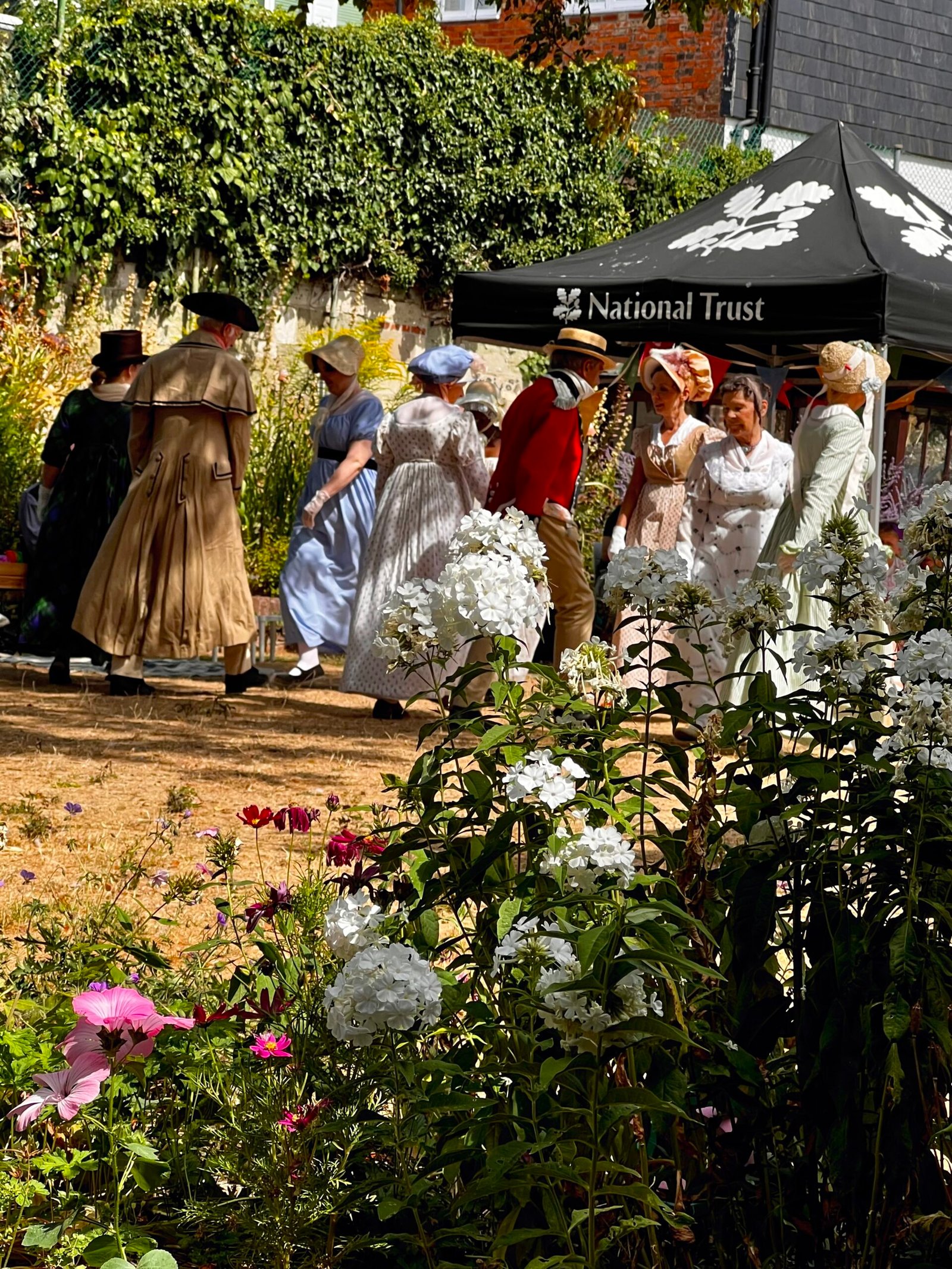
The Hampshire Regency Dancers continue their garden demonstration in colourful period-inspired dress, surrounded by flowers and summer sunshine.
I came for a historic house and got an afternoon with people who made its social world feel surprisingly immediate. There were beautiful clothes, carefully practised steps and just enough etiquette to make a modern visitor grateful for casual dress codes. Whether or not I could have survived Mrs Portman’s ball without an embarrassing mistake is another question entirely.
One journey. One story. One more stop.