
Historic Houses membership is slightly different from the other heritage memberships I use. Rather than one organisation owning and managing all the places you visit, Historic Houses represents independently owned historic houses, castles and gardens across the UK.
That difference was one of the things that attracted me to it.
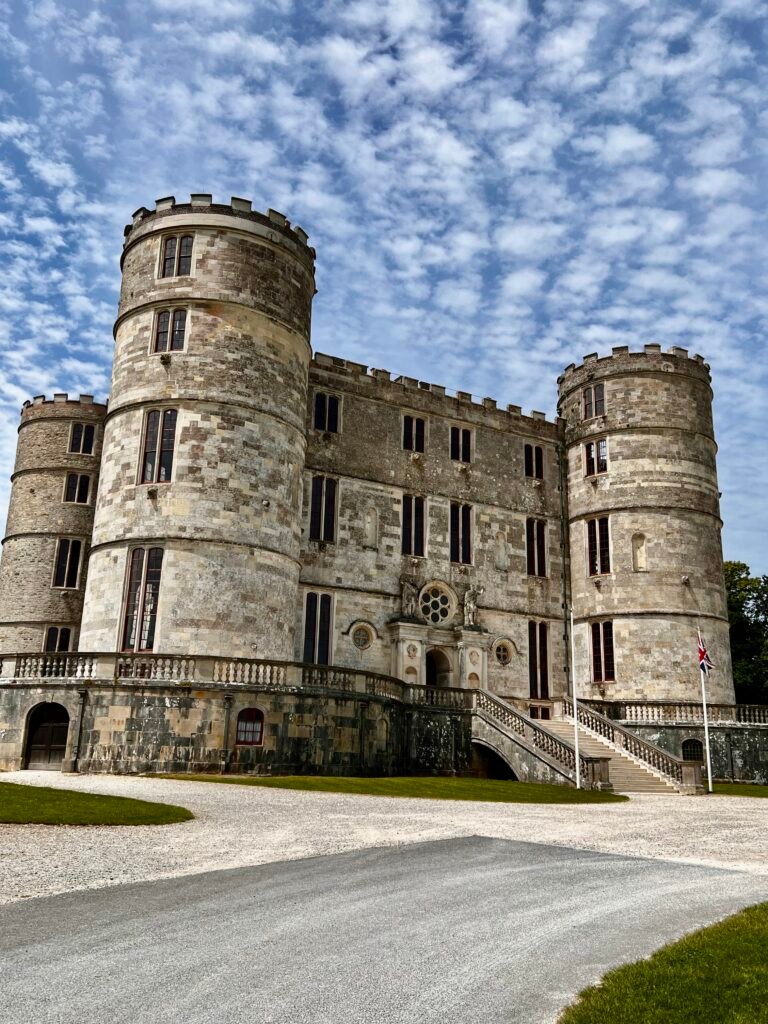
Since joining, I’ve used my membership to explore places including Athelhampton House, Breamore House, Lulworth Castle, Arundells and the Hospital of St Cross. They’re very different places, but that variety is exactly what I’ve started to enjoy about Historic Houses membership.
Some feel like traditional country-house days out, with historic interiors and gardens to explore. Others offer something completely different. At Arundells in Salisbury, for example, you can step into the former home of Sir Edward Heath and explore a much more recent chapter of British history.
Membership currently costs £71 a year for one person, so naturally the question is whether you’ll visit enough participating properties to make that worthwhile. Historic Houses says members receive free entry to hundreds of houses, castles and gardens around the UK, alongside benefits including its quarterly magazine, online content and opportunities to book exclusive tours.
For me, though, the appeal is becoming about more than simply recovering the membership fee.
I like discovering places that feel individual. Historic Houses properties don’t all provide the same kind of experience, and that’s part of their charm. One weekend might involve wandering through an old manor house and its gardens; another might take me somewhere I had barely heard of before I started looking through the membership.
So, is Historic Houses membership worth it? Based on my experience so far, I think the answer depends heavily on where you live, how willing you are to seek out participating properties, and whether independently owned historic places are the kind of days out you genuinely enjoy.
What Do You Actually Get With Historic Houses Membership?
Historic Houses membership works a little differently from National Trust or English Heritage membership. Historic Houses represents independently owned historic houses, castles and gardens rather than owning the properties itself. That means every visit can feel quite different — something I’ve already noticed from the places I’ve explored.
The main benefit is free entry to hundreds of participating Historic Houses properties across the UK. Not every property in the Historic Houses network offers free entry to members, so it’s worth checking the individual property listing before setting off.
Membership also includes a quarterly Historic House magazine, access to online lectures and other digital content, and opportunities to book exclusive member tours and events. Some of these give members access to properties, rooms or collections that aren’t normally open to the general public.
For me, though, free entry is still the benefit that matters most. Once the membership is paid for, I can look through the Historic Houses map, find somewhere interesting and turn it into a day out without having to justify another admission charge every weekend.
That has also encouraged me to visit places I might otherwise have overlooked — and occasionally those less obvious choices have turned out to be some of the most interesting.
How Much Does Historic Houses Membership Cost?
At the time of writing, an individual Historic Houses membership costs £71 a year, while joint membership for two adults costs £134. There are also options for younger members and families, so it’s worth checking the current prices before joining.
That puts Historic Houses membership in a similar conversation to National Trust and English Heritage membership, but I don’t think comparing the annual prices alone tells you very much. The three memberships offer quite different experiences — something I explore properly in a separate comparison guide mentioned below.
For Historic Houses, the important question is how many participating properties you are realistically going to visit. If you have several within comfortable travelling distance and enjoy historic houses, gardens and privately owned estates, the admission savings can begin to add up surprisingly quickly.
There is one important difference to remember, though: Historic Houses membership does not automatically mean free entry to every property associated with Historic Houses. Individual houses set their own arrangements, and opening dates can sometimes be more limited than you might expect from larger heritage organisations.
I’ve therefore got into the habit of checking the individual property page before planning a visit. It takes a minute and avoids turning up expecting free admission — or finding that a privately owned house isn’t open that day.
For current prices, membership options and benefits, check the official Historic Houses membership page before joining.
What Makes Historic Houses Different?
The biggest difference is right there in the name of the organisation: Historic Houses is an association of independently owned historic houses, castles and gardens, rather than an organisation that owns and manages one large collection of properties itself.
That independence gives the membership a noticeably different character.
Some properties are still connected to the families who have owned them for generations. Others are run by charitable trusts or foundations, while some have evolved into visitor attractions with very different stories to tell. Opening arrangements, photography rules and what you can actually see can therefore vary considerably from one property to another.
I actually quite like that unpredictability.
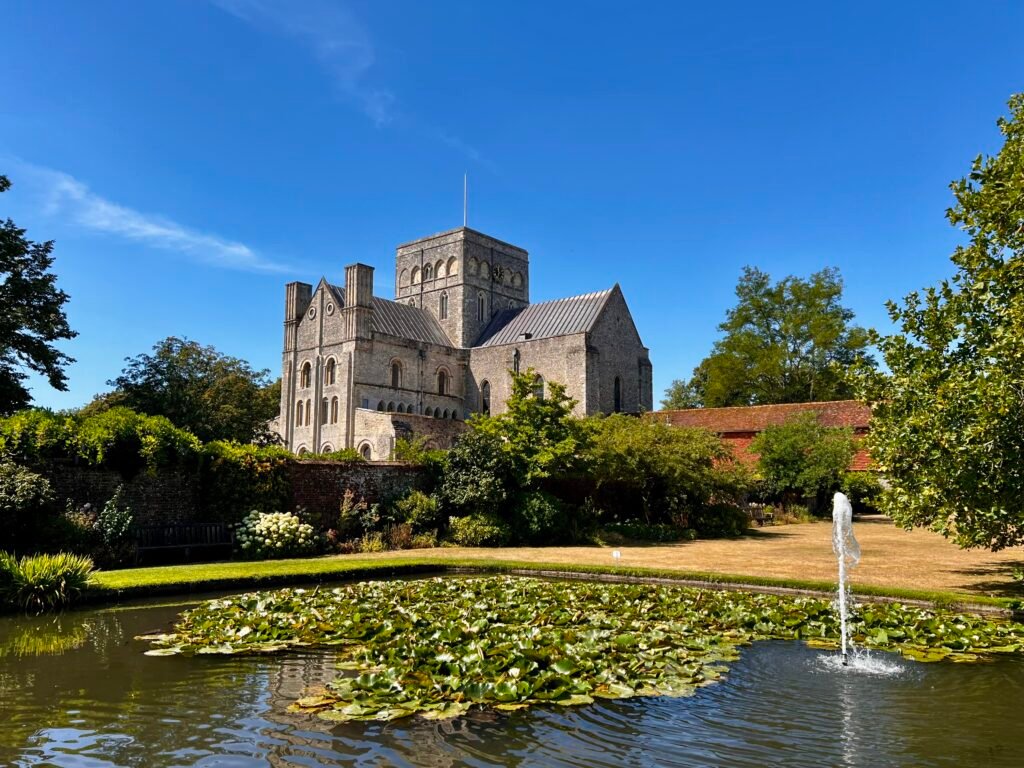
One of the best examples from my own visits was the Hospital of St Cross in Winchester. From the name, I genuinely wasn’t sure what I was going to find — I initially imagined some sort of old hospital building. Instead, I discovered a remarkable medieval charitable foundation with beautiful historic buildings and peaceful grounds.
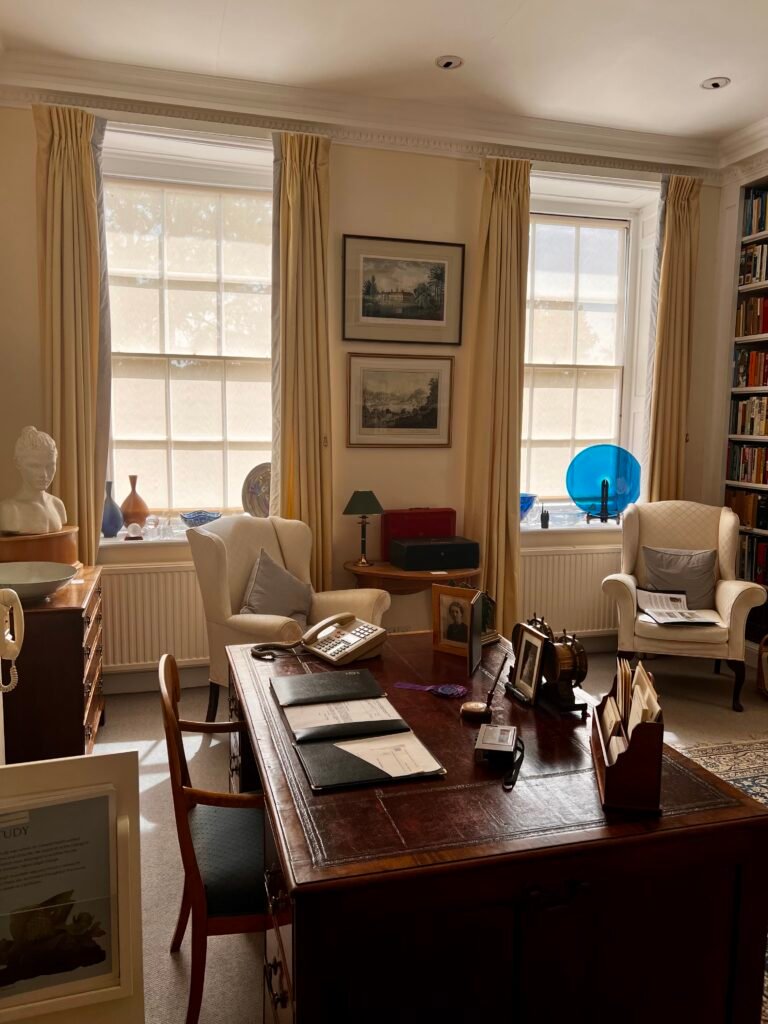
Then there’s Arundells in Salisbury, the former home of Prime Minister Sir Edward Heath. That visit was much more focused on modern history and Heath’s life and collections. Personally, that wasn’t as much my thing — I generally prefer older architecture, ruins and centuries of history — but it demonstrates just how broad the Historic Houses network can be.
That’s probably the biggest lesson I’ve learned from the membership so far: don’t assume every Historic Houses property will provide the same experience. Check what you’re actually going to see before travelling, especially if particular periods of history, interiors or gardens matter to you.
My Experience Using Historic Houses Membership
My experience with Historic Houses membership is still growing, but I’ve already visited a surprisingly varied collection of places. These include Breamore House, Lulworth Castle, Sherborne Castle, Highcliffe Castle, Athelhampton House, the Hospital of St Cross, Chawton House and Arundells.
And they’ve definitely not all felt the same.
Athelhampton House is much closer to what I imagined when I first thought about Historic Houses: a beautiful old house where the interiors, architecture and gardens all contribute to the visit. It’s the sort of place where I can happily spend time looking at the details rather than simply ticking another property off a list.
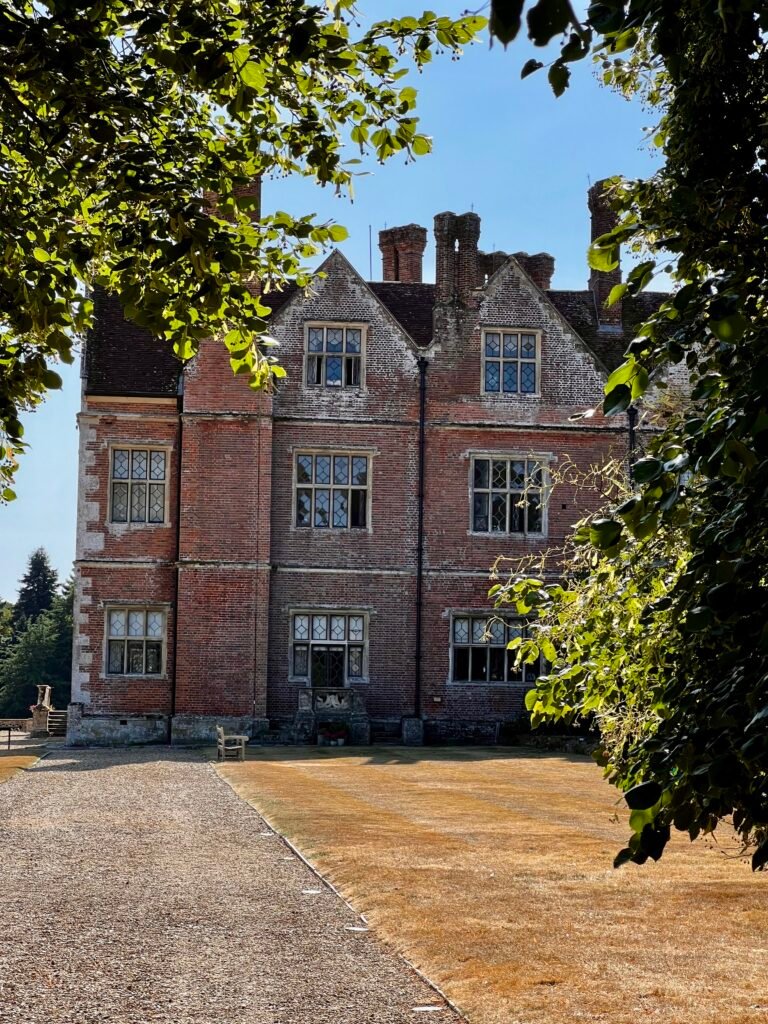
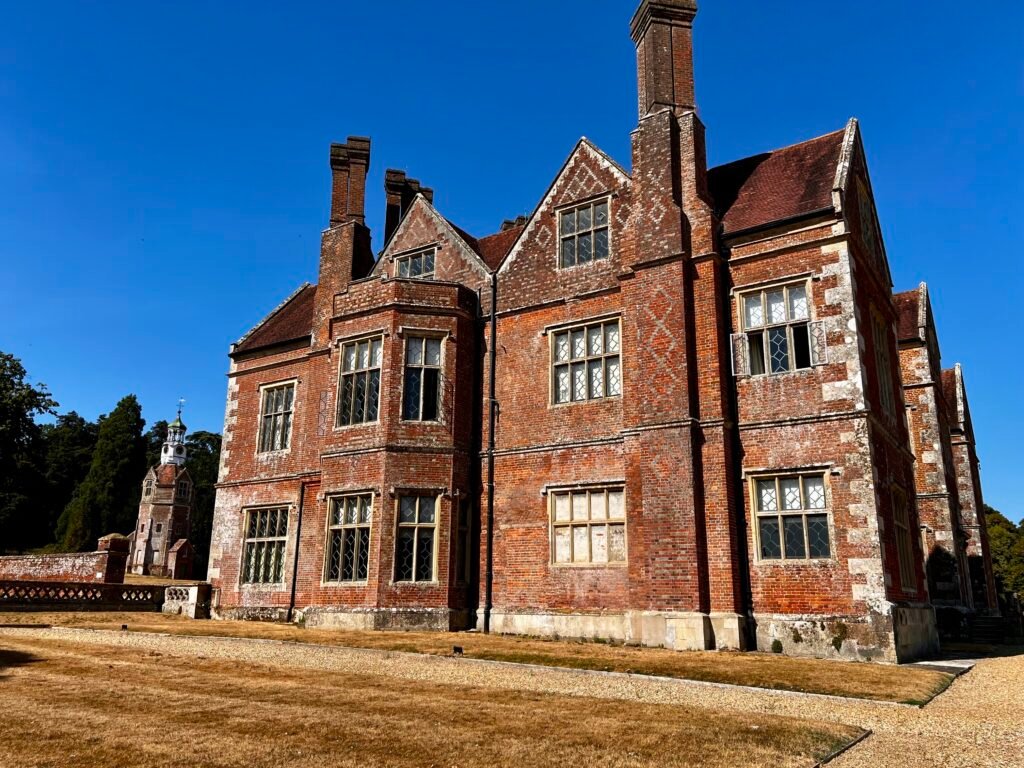
Breamore House and Lulworth Castle offer something different again, while the Hospital of St Cross was probably one of my nicest surprises so far. It wasn’t somewhere I knew much about beforehand, which made discovering it even better.
Not every visit has been equally memorable for me. Chawton House didn’t particularly wow me, while Arundells was interesting but its emphasis on relatively recent political history isn’t really what attracts me most to historic properties. That’s personal preference rather than a criticism of either place — someone interested in Jane Austen’s world or twentieth-century political history could understandably have a completely different experience.
And I think that’s actually useful when deciding whether Historic Houses membership is worth it. The membership gives you access; it doesn’t guarantee that every property will appeal equally to you. The more you understand what sort of historic places you enjoy, the easier it becomes to pick properties that are genuinely worth making the journey for.
Things to Know Before You Join Historic Houses
There are a few things I think are worth knowing before buying Historic Houses membership, particularly if you’re used to visiting National Trust or English Heritage properties.
The first is simply to check each property before you travel. Because the houses are independently owned and managed, opening days, seasonal hours and member admission arrangements can vary. Some have relatively limited opening periods, so Historic Houses requires a little more planning than simply choosing somewhere and turning up.
Photography can vary too. Some properties allow photography throughout, while others restrict it inside the house. That’s understandable when you’re visiting privately owned historic buildings, but it’s definitely something I’ll be checking beforehand when planning future visits — especially when I’m hoping to photograph somewhere for One More Stop.
It’s also worth looking at where participating properties are located around you before joining. A membership can look excellent on paper, but its real value depends on whether there are places you’re genuinely willing to travel to and whether their opening arrangements fit your free time.
For me, that’s particularly important because Historic Houses isn’t replacing my National Trust or English Heritage memberships. It complements them. Each gives me access to a different collection of places and a different type of day out.
How Does Historic Houses Compare With National Trust and English Heritage?
Having all three memberships has made me realise that Historic Houses, National Trust and English Heritage aren’t really interchangeable. There is some overlap in the kinds of places you can visit, but each organisation has a noticeably different character.
The National Trust gives me the broadest mixture of days out: historic houses, gardens, countryside, coast and landscapes. I’ve already found that useful when travelling because a National Trust property can become either the destination itself or simply another stop along the way.
English Heritage feels different again. Castles, ruins, abbeys, prehistoric sites and places such as Stonehenge and Kenilworth Castle are much closer to what I associate with it — and, personally, ruins and much older history are particularly appealing to me.
Historic Houses membership adds another layer. Its independently owned properties can feel more individual, and sometimes more personal, because you’re exploring places with their own rules, opening arrangements and stories rather than a collection managed in the same way by one organisation.
If you’re considering the other memberships as well, I’ve written separately about my experiences in Is National Trust Membership Worth It? and Is English Heritage Membership Worth It?.
I don’t think there’s a simple answer to which of the three is “best”, because it depends on what you actually enjoy visiting.
For a closer look, read my National Trust vs English Heritage vs Historic Houses comparison, covering what each membership offers, the kinds of places you can visit and who each one might suit.
Who Is Historic Houses Membership Best For?
I think Historic Houses membership makes the most sense if you genuinely enjoy seeking out historic houses and don’t mind doing a little planning before each visit.
It’s particularly appealing if you like the idea of discovering independently owned properties rather than visiting only the better-known heritage attractions. Some of the places I’ve discovered through Historic Houses weren’t necessarily destinations I would have thought about visiting before I joined.
It could be a particularly good fit if you:
- enjoy historic houses, architecture, interiors and gardens;
- like finding smaller or less obvious heritage attractions;
- are happy to check opening dates and admission arrangements before travelling;
- have several participating properties within reasonable travelling distance; and
- regularly build historic places into weekends or UK road trips.
On the other hand, if you mainly want castles, ruins and ancient monuments, English Heritage may naturally match those interests more closely. If countryside, coast, gardens and a huge variety of days out matter just as much as historic buildings, National Trust membership may offer a different kind of value.
That’s exactly why I don’t see my Historic Houses membership as replacing either of them. It fills a different gap.
For someone who only visits one or two historic properties a year, the annual fee may be difficult to justify purely through admission savings. But if you’re regularly looking for another historic place to explore at the weekend — which I very often am — having another collection of potential destinations becomes part of the value.
So, Is Historic Houses Membership Worth It?
For me, Historic Houses membership is worth it, although for slightly different reasons than my National Trust or English Heritage memberships.
I’m still relatively early in exploring everything it offers, so there are plenty of properties I haven’t visited yet. But that’s also part of the attraction. Every time I look through the Historic Houses listings, I seem to find somewhere else I’d never previously considered visiting.
The biggest appeal is the variety. I’ve explored grand historic buildings such as Lulworth Castle, wandered through the house and gardens at Athelhampton, discovered the medieval Hospital of St Cross and stepped into a much more recent chapter of British history at Arundells. Not every property has appealed to me equally, but I wouldn’t expect it to.
I also like the independence of the places. They don’t all feel as though they’re part of one uniform collection. Different opening arrangements, different stories and different ways of presenting their history can require a little more planning, but they also give individual properties much more of their own character.
Whether Historic Houses membership is worth it for you will ultimately depend on what’s available near you and how often you’re likely to visit. I’d definitely look through the participating properties before joining rather than deciding purely on the annual price.
For someone like me, though, who is constantly looking at a map and thinking “where else can I stop?”, it fits rather nicely.
And I’ve barely started exploring.
For current membership prices, participating properties and benefits, visit the official Historic Houses website.
One journey. One story. One more stop.