
Sometimes the best stops are the ones you barely planned at all.
We were driving home after visiting Chawton and The Vyne when we pulled into Whitchurch, Hampshire for what was supposed to be a quick break. Stretch the legs, have a little walk, then get back on the road.
That was the plan.
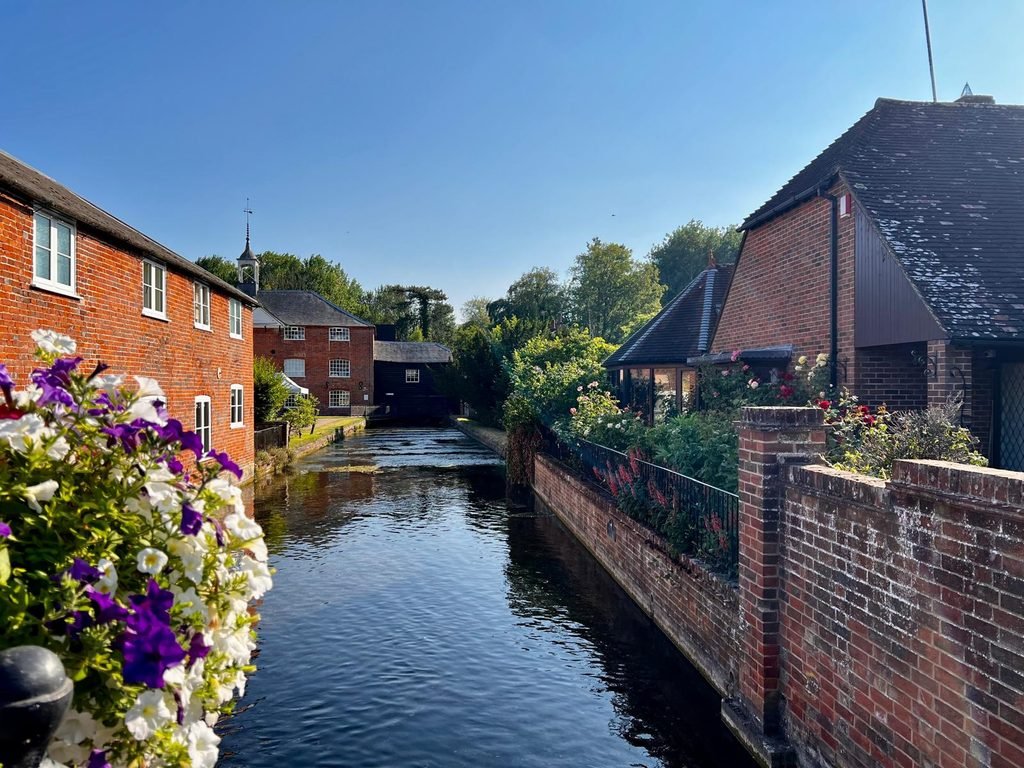
Instead, we found ourselves sitting beside the River Test watching ducks, wandering through a surprisingly pretty little town and eventually discovering a historic silk mill tucked right beside the water.
There was just one small problem.
It was closed.
Of course it was. 😂
Still, Whitchurch turned out to be exactly the kind of place One More Stop exists for — somewhere I probably wouldn’t have planned an entire day around, but somewhere I’m very glad we stopped.
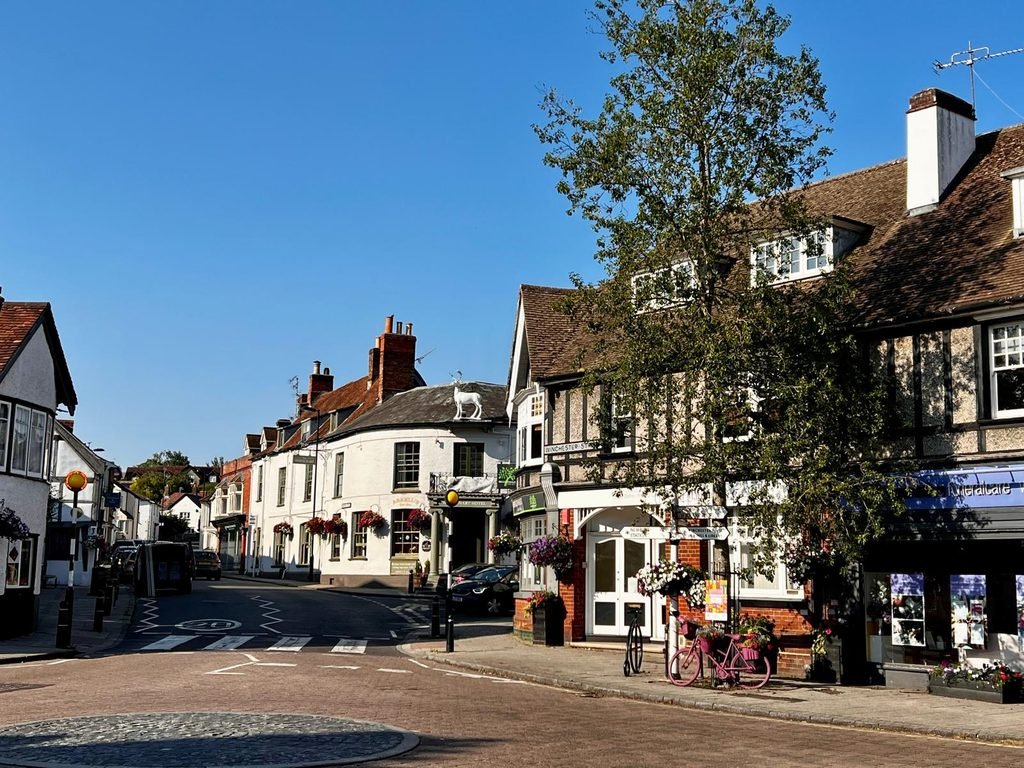
A little town built around a very special river
Whitchurch is small, but it has been settled for a very long time. Archaeological evidence around the town goes back to around 400 BC, while its position on old routes later helped it develop as a market, coaching and sheep-trading centre.
What caught my attention much more quickly, though, was the water.
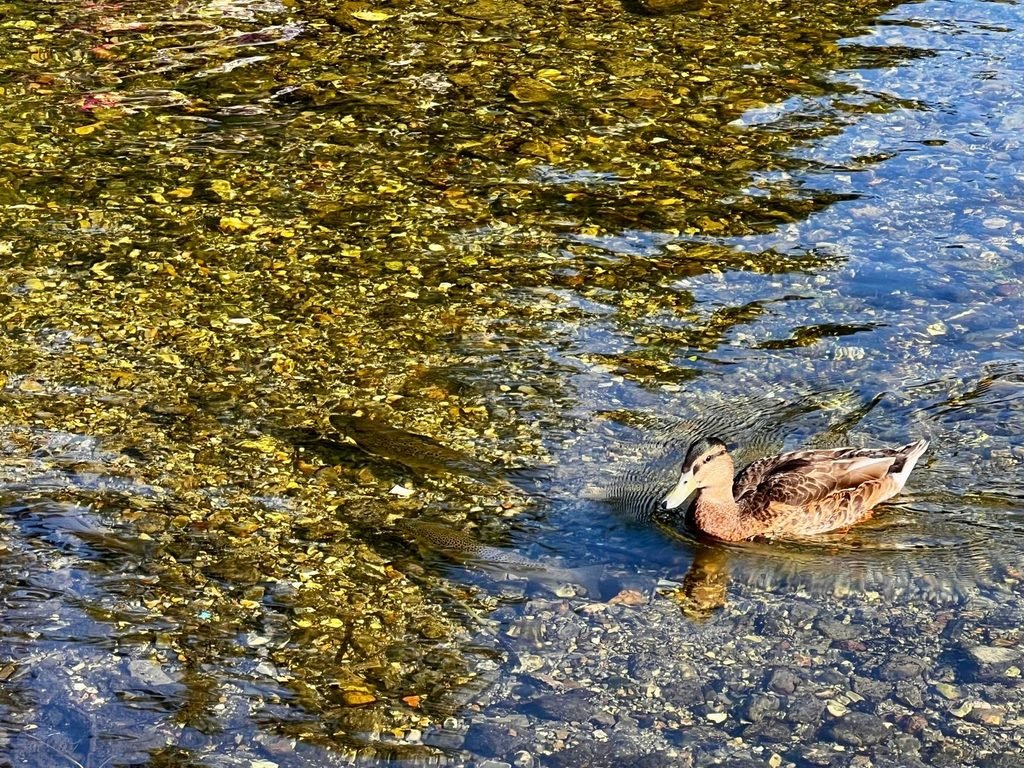
The River Test runs straight through Whitchurch, and it isn’t just a pretty river to sit beside with a few ducks. It is one of England’s famous chalk streams — rivers fed largely by water filtered through chalk aquifers rather than simply by surface rainfall.
That filtration is why the water can look so unusually clear. Chalk streams tend to stay cool, mineral-rich and relatively stable in temperature, creating habitat for species such as brown trout, water voles and aquatic plants. Around 85% of the world’s chalk streams are found in England, making places like the Test much rarer globally than they first appear.
I didn’t know any of that when we sat down beside it.
At the time my scientific assessment was essentially:
Very clear water. Lots of ducks. Nice place to sit. 😂
And frankly, that still holds up.
Then we found the Silk Mill
Following the water led us to the most interesting building of the stop: Whitchurch Silk Mill.
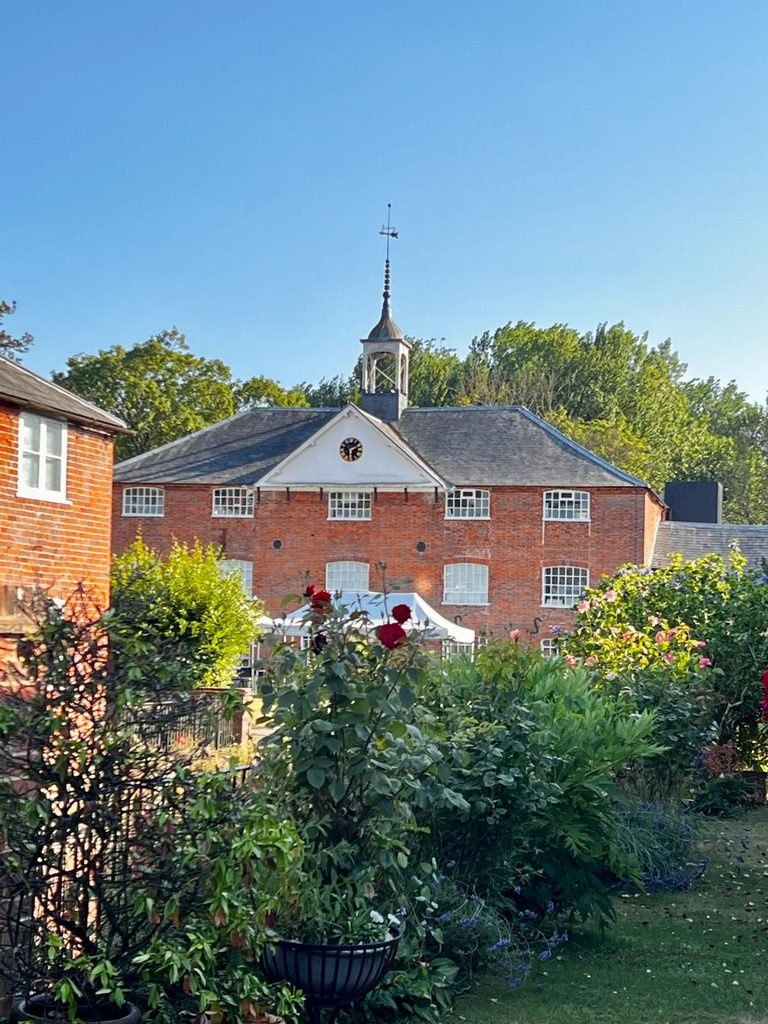
From the outside, it looks like an attractive Georgian brick mill beside the river. What I hadn’t realised was that it is still a working mill — and a particularly unusual survivor.
Historic England records that the building was constructed between 1813 and 1815, originally as a water-powered sawmill and furniture factory. It was converted for silk production between 1817 and 1819. Today it is Grade II* listed and still contains working machinery, including late-19th-century looms and winding frames.
The mill itself describes Whitchurch as the oldest silk mill in the UK still weaving silk in its original building. Its team continues to wind, warp and weave cloth using traditional methods and historic machinery, including looms dating back to the 1890s.
That distinction is worth wording carefully because it is stronger and more precise than simply saying “Britain’s oldest silk mill.”
And there’s another detail I really like: the mill still uses the River Test to power its historic waterwheel. The current cast-iron wheel dates from the 1890s, and the river passes beneath it before gears and shafts transmit that movement through the building.
So this isn’t really a preserved industrial shell.
It still works.
Which would have been fascinating to see.
Had we arrived while it was open.
Naturally. 😂
Planning a visit? Check the official Whitchurch Silk Mill website for current opening times, admission prices and information about seeing the mill in operation.
Meanwhile, back at the river…
Not being able to get inside the mill left us with the considerably less educational activity of sitting beside the River Test and watching the ducks.
There are worse ways to spend an afternoon.
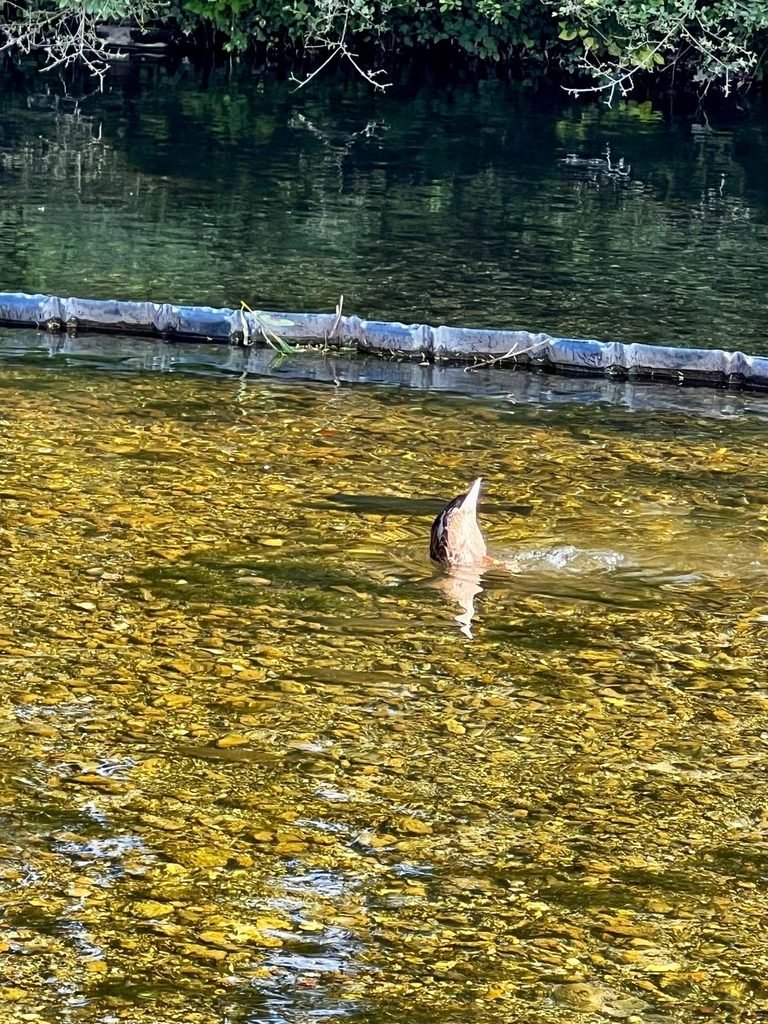
The water was remarkably clear, and you could see straight through to the gravel riverbed below. At one point, one of the ducks apparently decided there might be something more interesting underneath it.
The result was considerably less picturesque than the rest of Whitchurch.
Is Whitchurch actually worth stopping for?
If you’re wondering whether Whitchurch Hampshire is worth stopping for, it depends on what you’re looking for.
If you’re expecting a major sightseeing destination packed with attractions, probably not.
But that isn’t really the appeal.
Whitchurch worked for me because it was small enough to explore without a plan. Within a short walk we had old streets, the River Test, ducks, flowers, the Silk Mill and somewhere peaceful enough to sit for a while before continuing the drive.
And if you want to make more of a visit, there are longer walks around the surrounding chalk-stream countryside, including routes following the Test and nearby River Dever.
For us, though, an hour or so was enough to make the stop worthwhile.
Well, almost enough.
I would still like to go back when the Silk Mill is actually open. 😆
See Whitchurch in 30 seconds
A quick look at our accidental stop — the River Test, Whitchurch Silk Mill, pretty streets and, inevitably, quite a lot of ducks.
See the full Whitchurch photo gallery
There were far more photos from Whitchurch Hampshire than I wanted to squeeze into one article. If you’d like to see more of the town, the River Test, Whitchurch Silk Mill — and a few more ducks — you can browse the full photo collection.
→ View the Whitchurch, Hampshire photo gallery
One more stop?
Whitchurch Hampshire wasn’t somewhere we had planned to visit that day, and I think that’s partly why I liked it.
There was no checklist and no pressure to see everything. We walked, watched the river, fed some ducks, found a building we knew almost nothing about and discovered that it happened to contain one of Britain’s more unusual pieces of working industrial heritage.
Then we carried on home.
Sometimes that is enough.
And next time, I’m checking the Silk Mill opening hours first. 😂
Related stops
Loved an unexpected stop? My visit to Broadway Tower was supposed to be another stop on a busy Cotswolds weekend — and ended up becoming one of my favourite places of the entire trip.
→ Read: Broadway Tower: The Cotswolds Stop I Didn’t Want to Leave
Prefer somewhere with a little more going on? Stratford-upon-Avon was a very different experience — Shakespeare, centuries of history, beautiful buildings and considerably more people than I encountered beside the River Test. 😂
→ Read: Stratford-upon-Avon: Shakespeare, History & More People Than I Expected