
If you’re planning a Jane Austen day in Hampshire, there is one surprisingly easy mistake to make: Chawton House and Jane Austen’s House are not the same place.
They sit in the same small village and are only around a five-minute walk apart, but the experience inside each is completely different. One is the intimate cottage where Austen lived and worked; the other is the much grander manor associated with her brother Edward.
I visited both, and seeing them together makes the contrast much more interesting than choosing between two similarly named attractions.
Chawton House and Jane Austen’s House are not the same place
Jane Austen’s House is the red-brick cottage in the village. Jane moved there in July 1809 with her sister Cassandra, their mother and family friend Martha Lloyd after her brother Edward offered them the house rent-free.
Chawton House, meanwhile, is the “Great House” Austen knew just up the road. The manor was built by the Knight family in the 1580s and eventually came to Jane’s brother Edward after wealthy relatives Thomas and Catherine Knight made him their heir. Edward offered the nearby bailiff’s residence to his mother and sisters — the building we now visit as Jane Austen’s House.
So no, Jane did not live in the grand manor.
That would have made the story considerably simpler for modern visitors, but apparently Chawton likes to keep us on our toes.
Jane Austen’s House: where the novels came together
The smaller house is the more personal of the two. This was Austen’s home from 1809 until she left Chawton for medical treatment in Winchester on 24 May 1817. She died in Winchester on 18 July that year.
More importantly for readers, Chawton was extraordinarily productive. Austen revised Sense and Sensibility, Pride and Prejudice and Northanger Abbey here, while Mansfield Park, Emma and Persuasion were written here.
Today, Jane Austen’s House preserves a remarkable collection connected with her, including letters, jewellery, first editions and personal objects.
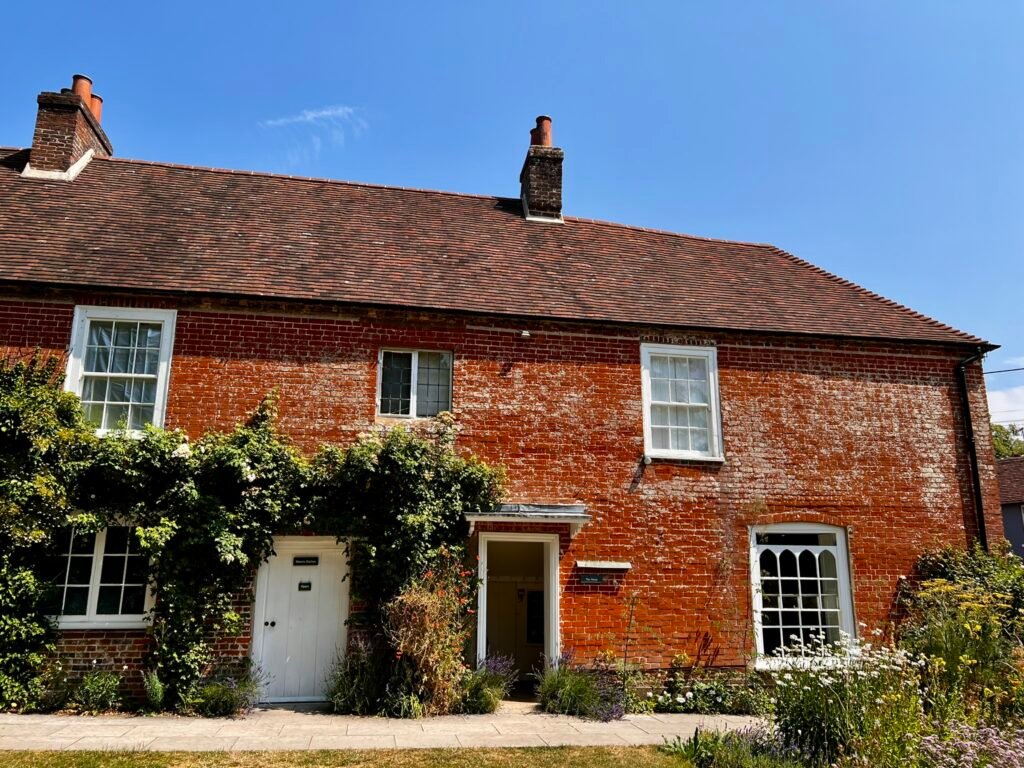
It feels less like visiting a grand heritage attraction and more like stepping into the scale of Austen’s everyday world.
Chawton House: the “Great House” up the road
Walk about five minutes and the scale changes rather dramatically.
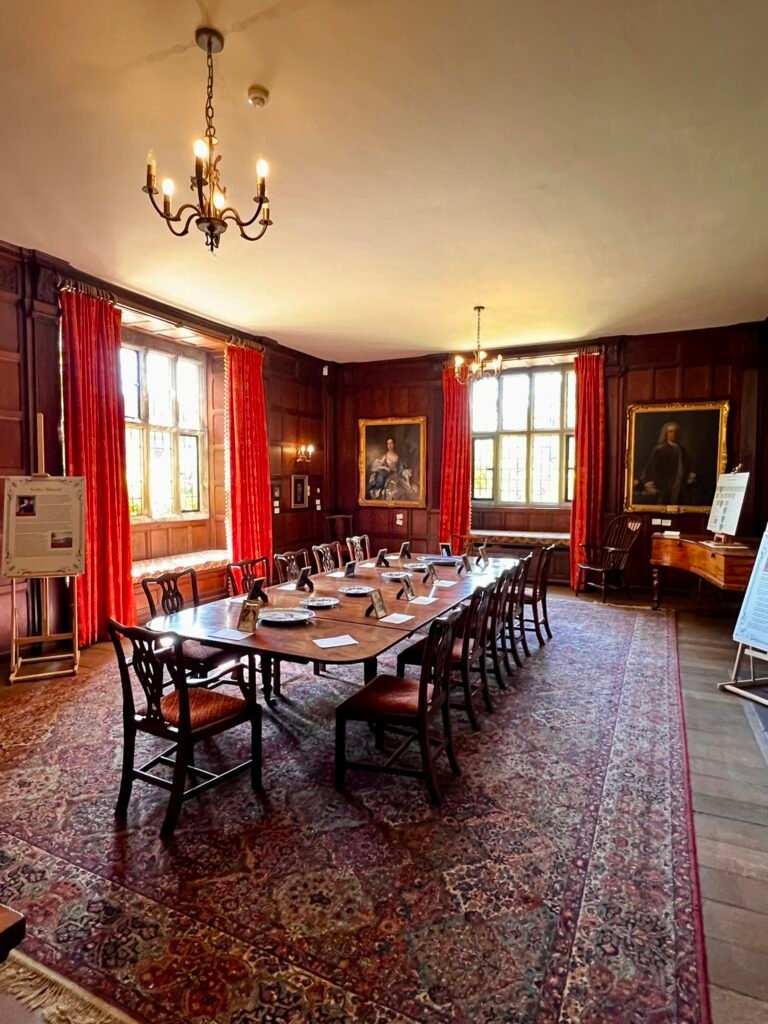
Chawton House is more than 400 years old, with panelled rooms, portraits, gardens and the sort of architecture that makes you instinctively slow down and start inspecting fireplaces. There are some wonderfully odd details too, including historic graffiti on paintings and protective “witch marks” on the walls.
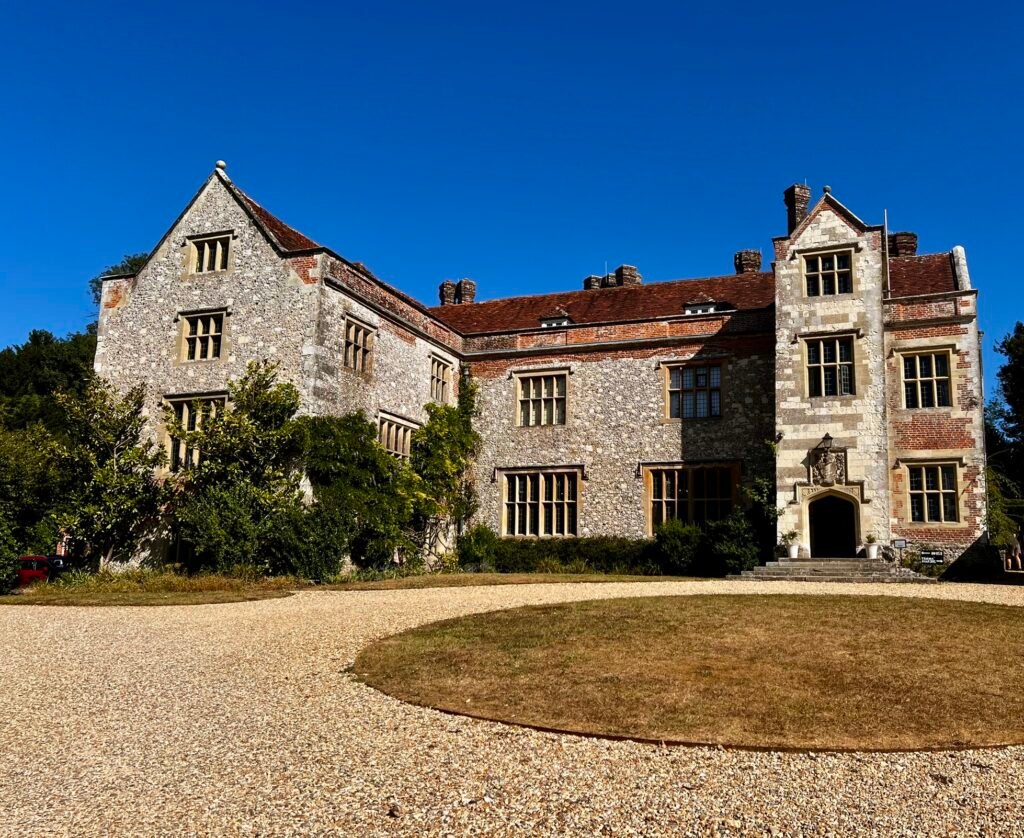
The Austen connection is important, but it isn’t the whole story. Jane visited the house, dined there and knew the Knight family library. Today Chawton House also holds a collection of more than 4,500 rare and early editions of works by women writers, concentrating on the period from 1660 to 1860.
That makes Chawton House worth exploring beyond its famous Austen connection.
The tiny writing table that stopped me
For all the history in Chawton, one of the objects that stayed with me was ridiculously small.
Jane Austen’s twelve-sided writing table sits beside a window at her former home. Jane Austen’s House identifies this little table as the place where she wrote, rewrote, revised and edited her novels during her years at Chawton.
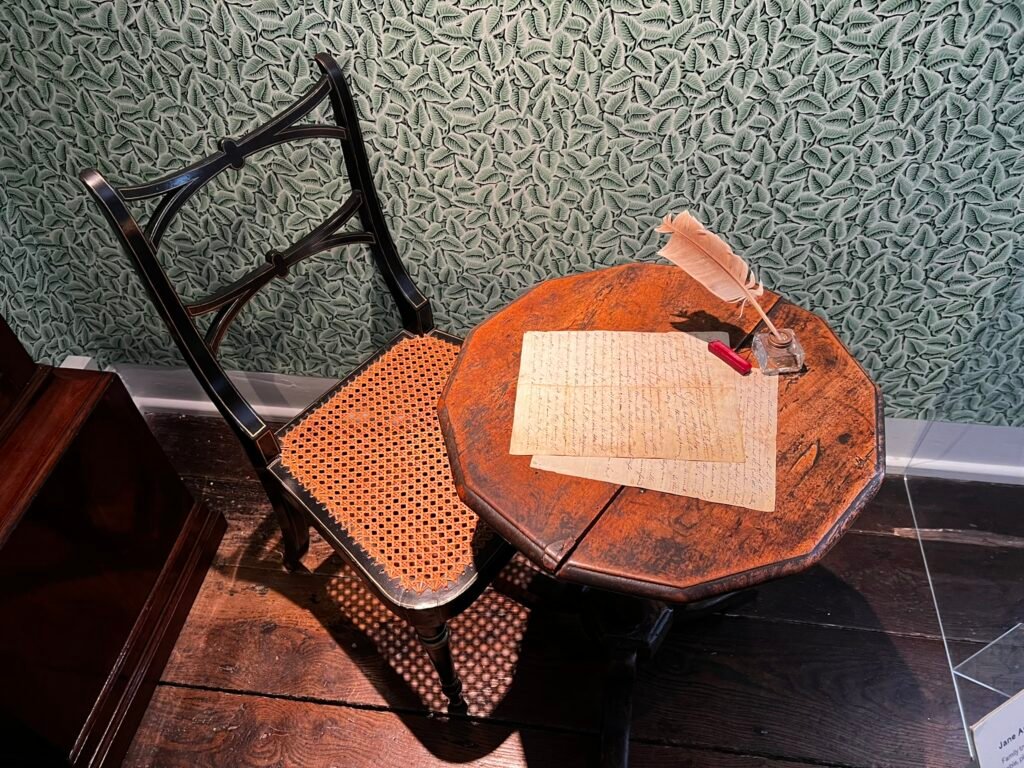
Against everything that came from it — characters, marriages, misunderstandings and several centuries of people arguing about Mr Darcy — it looks almost absurdly modest.
Sometimes historic objects need a long explanation before they mean anything.
This one really doesn’t.
Can you visit both in one day?
Absolutely. In fact, if you have the time, visiting both makes more sense than treating them as alternatives.
The two attractions are separately run, and admission to one does not include the other. Chawton House describes Jane Austen’s House as roughly a five-minute walk away, so you certainly don’t need to get back in the car just to travel between them.
Opening days vary during the year, so check the official Jane Austen’s House visitor information and Chawton House visitor information before travelling.
One useful detail if you have a heritage membership: Historic Houses members currently receive free general admission to Chawton House, but that does not include Jane Austen’s House. I’ve written more about how that membership works in my Historic Houses membership review.
Chawton House also appears in my 7 historic houses to visit this autumn, including the latest seasonal exhibition information.
Which one should you visit?
If your main reason for coming to Chawton is Jane Austen herself, Jane Austen’s House gives you the closest connection to her daily life and writing.
Chawton House feels broader: part Austen family history, part country house, part garden visit and part celebration of women’s writing. It is the grander building, but oddly enough, the little cottage contains the object I remember most.
If time allows, I wouldn’t turn it into an either/or decision. They are five minutes apart and tell two sides of the same story: the modest home where Austen worked and the “Great House” belonging to the family circumstances that helped bring her to Chawton.
Two houses, one village, and enough literary history to make a supposedly quick stop considerably less quick.
One journey. One story. One more stop.