
There are some places where you arrive, look around and immediately think: yes, this is exactly what I hoped the New Forest would look like.
Hatchet Pond was one of those places for me.
Water stretching across the landscape. Purple heather. Open heathland. Ponies casually grazing as though having their photograph taken against a ridiculously pretty backdrop is simply part of their daily routine.
And the best thing?
You really don’t have to turn it into a massive day out.
Hatchet Pond works perfectly as one of those “I’ll just stop here for a bit” places — which, admittedly, is how quite a lot of my journeys seem to go.
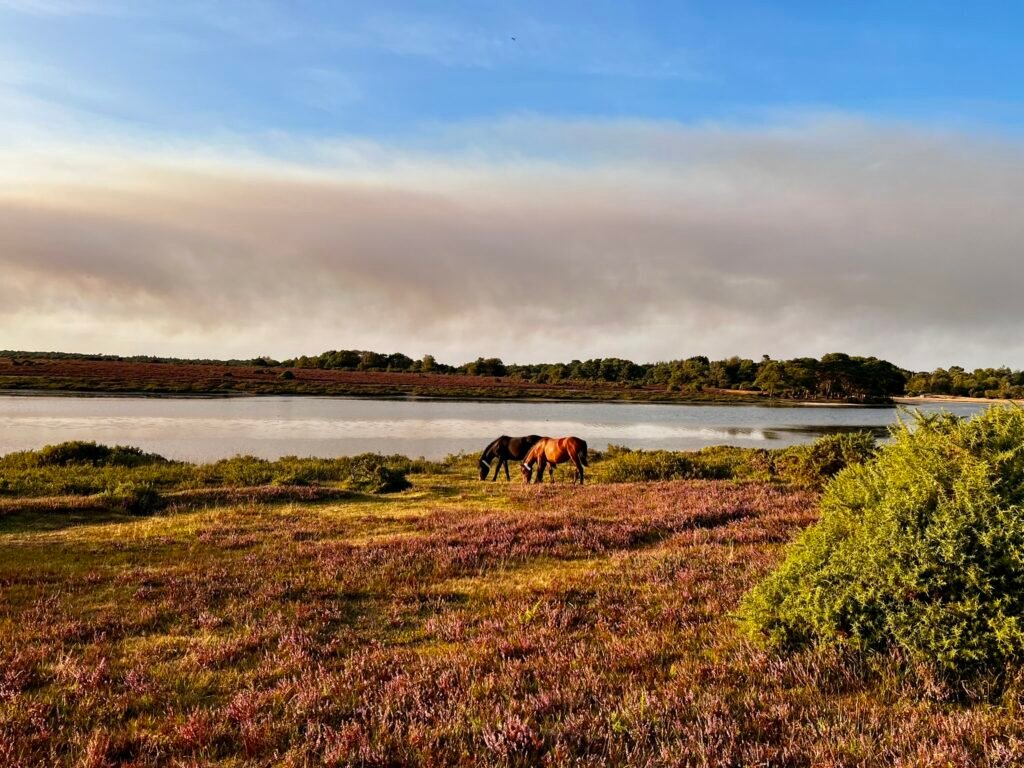
Forestry England describes Hatchet Pond as the largest body of fresh water in the New Forest. It is also much more important ecologically than its peaceful appearance might suggest, with the highest conservation protection as both a Site of Special Scientific Interest and part of a Special Area of Conservation.
But you don’t need to know any of that to enjoy your first few minutes here.
You can simply get out of the car and look.
That works surprisingly well too.
A Pond That Feels Much Bigger Than a Quick Stop
Despite the name, Hatchet Pond doesn’t feel like somebody’s little village duck pond.
The water opens out across a broad landscape of heathland and trees, and there are plenty of places where you can wander away from the car park and find a different view.
On my visit, the late-summer colour made it particularly beautiful.
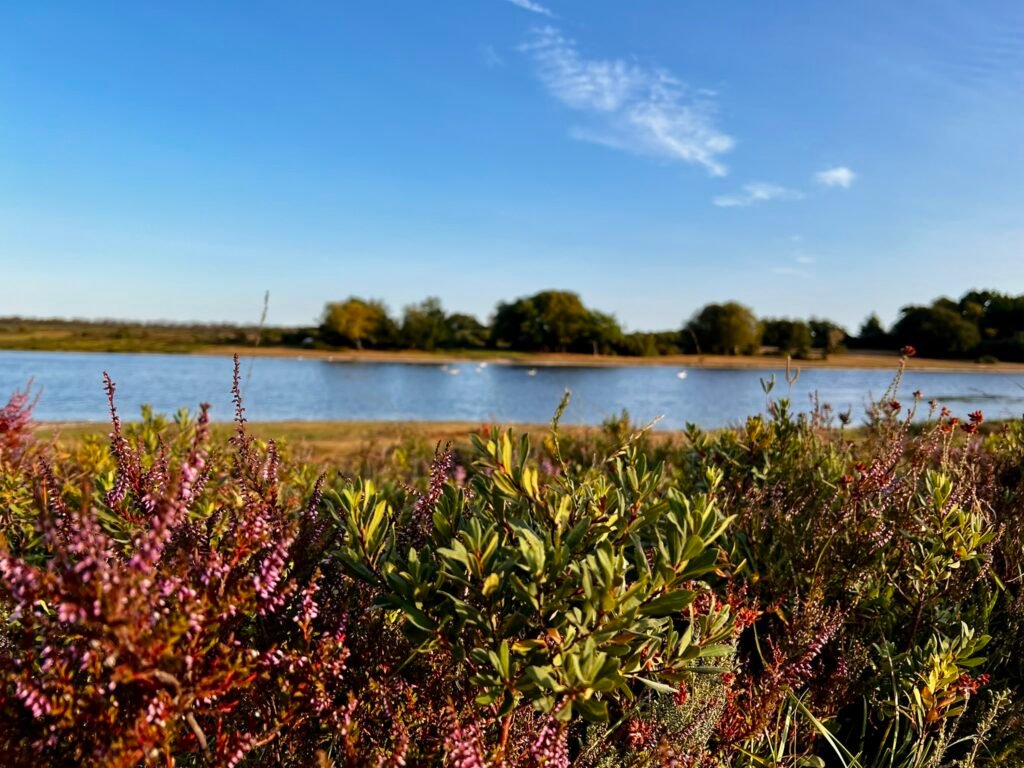
The purple heather against the blue water gave the whole place that unmistakable New Forest look, while the changing evening light seemed to alter the landscape every few minutes.
And Hatchet Pond isn’t just pretty.
Forestry England says this small, shallow lake is one of the most wildlife-rich of its kind remaining in lowland England and is home to almost 90% of the UK’s rarest wetland plants. It also supports species including great crested newts and the rare southern damselfly.
Which makes the next point rather important.
This isn’t a swimming lake.
Swimming and boating aren’t permitted, and Forestry England specifically asks visitors — and their dogs — to stay out of the water because of the pond’s sensitive ecology.
So this is somewhere to walk beside, photograph and enjoy, rather than jump into.
Probably for the best.
There are leeches.
We’ll move swiftly on. 😆
Then Come the Ponies
Obviously, I was hoping to see New Forest ponies.
What I wasn’t expecting was to find a whole group grazing across the heath in beautiful evening light looking as though somebody had arranged them specifically for my camera.
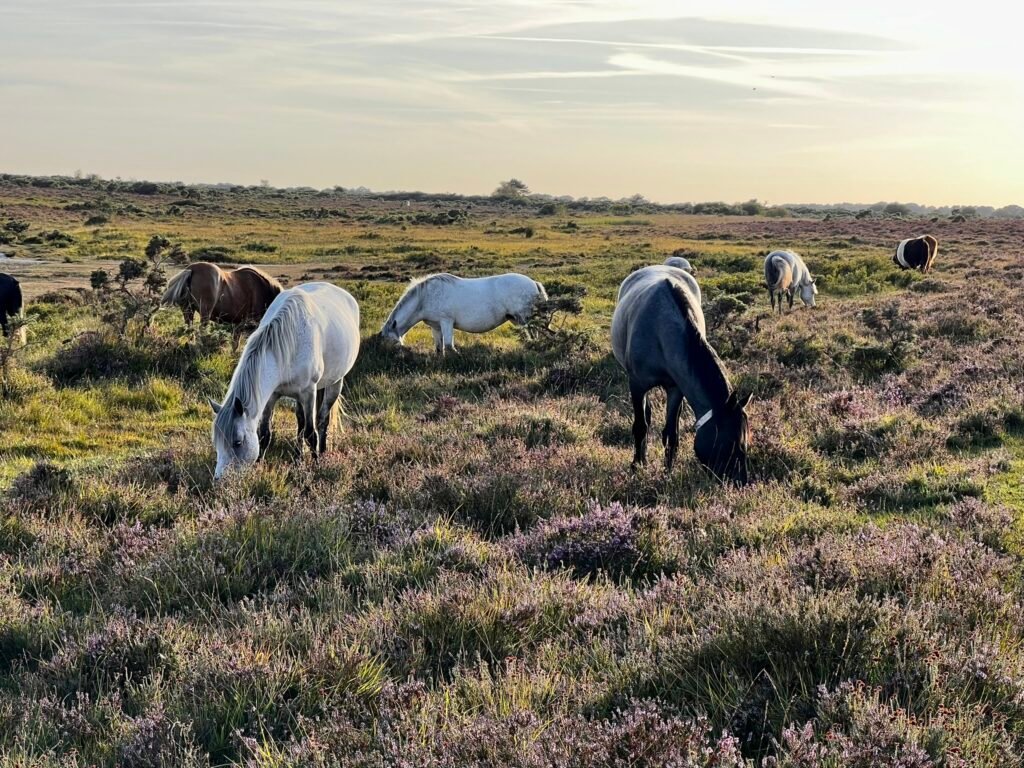
They are one of those sights that immediately make the New Forest feel different from an ordinary country park.
But there’s an important distinction: these aren’t tame visitor-attraction ponies.
The free-roaming animals belong to local commoners, and their grazing plays an important role in shaping the New Forest landscape. The National Park Authority sometimes describes them as the “architects of the Forest” because their grazing helps create and maintain its characteristic habitats.
So admire them.
Photograph them.
Become mildly obsessed with getting the perfect pony-and-heather composition.
Just don’t feed or pet them.
Feeding or touching New Forest ponies and donkeys is prohibited, with a £100 fixed penalty possible, and the animals can bite or kick despite appearing relaxed around people.
Watching them wander around freely was probably my favourite part of the visit.
They weren’t performing.
They weren’t waiting for tourists.
They were just getting on with being ponies while the rest of us stood around thinking they looked magnificent.
Which seems like a pretty good arrangement.
Wander a Little Further
It would be easy to park, photograph the pond and ponies, and leave.
But wander a little further and Hatchet Pond starts changing character.
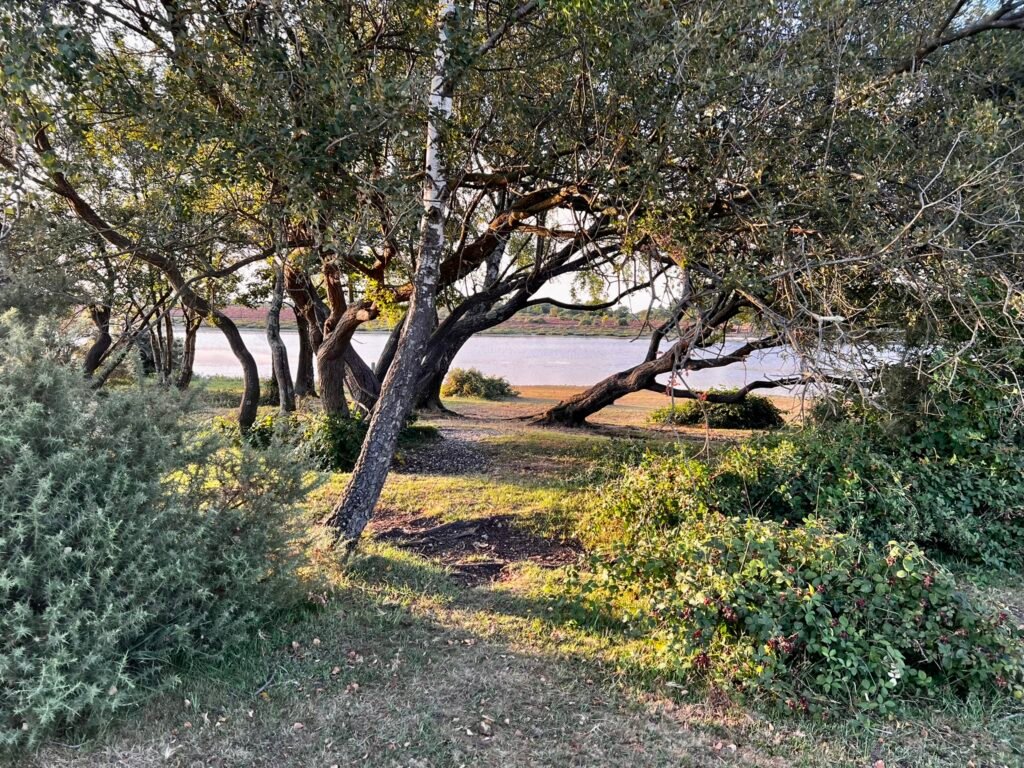
There are more sheltered areas beneath the trees as well as the exposed heathland around the water, so even a relatively short wander gives you more variety than you might expect.
This is one reason I like places like Hatchet Pond.
There isn’t necessarily a giant attraction you’re trying to reach.
You’re not marching towards a castle entrance before last admission.
There’s no timetable.
You can simply explore until you feel you’ve seen enough.
For another easy nature escape closer to Bournemouth, my Stour Valley Nature Reserve Walk has a similar “how is this so close to town?” feeling — although its unexpected wildlife star was an enormous elephant hawk-moth caterpillar rather than a herd of ponies.
That is perhaps not a competition the caterpillar was expecting to enter.
Stay for Sunset If You Can
If you’re visiting later in the day, I wouldn’t rush away.
As the sun dropped during my visit, the bright heathland colours softened and the pond became much more atmospheric.
Then a swan wandered into exactly the right part of the water.
Because apparently the ponies hadn’t provided enough material already.
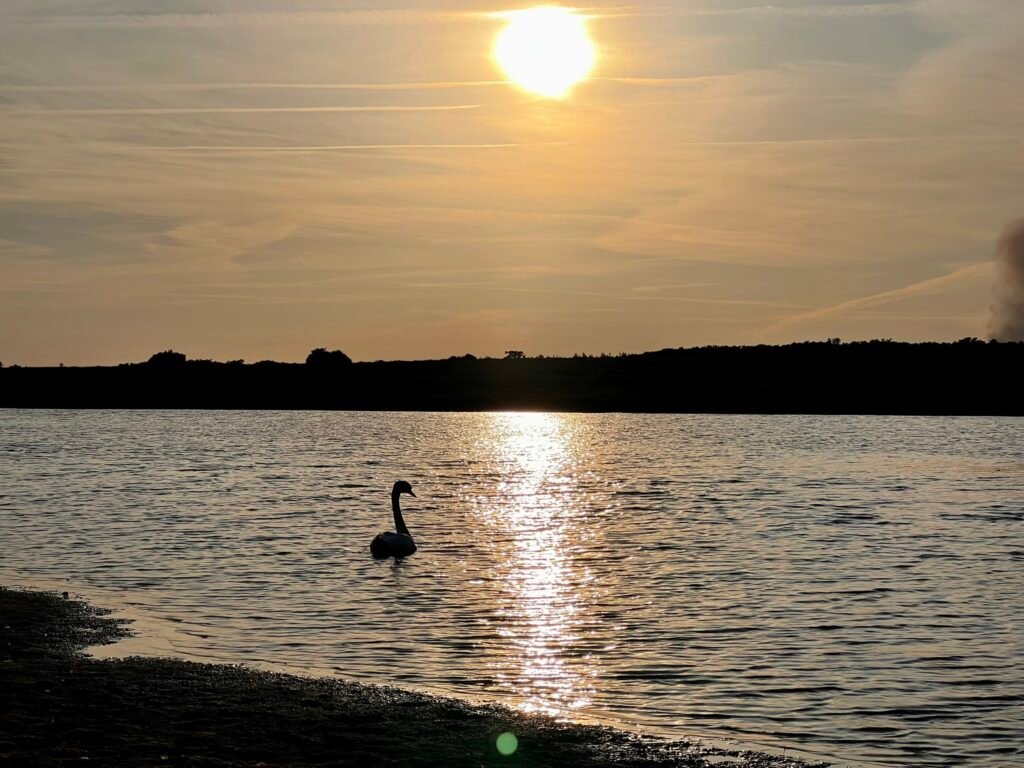
Sometimes travel photography requires planning, patience and careful composition.
Sometimes a swan just turns up underneath the sunset.
I’ll happily take either.
Hatchet Pond Parking and Practical Information
Hatchet Pond is near East Boldre, just off the B3055 between the Beaulieu and Brockenhurst area.
The postcode given by Forestry England is SO42 7WE. The car park currently has around 50 spaces, including five accessible spaces, and is open for parking between 4am and 11pm. Current charges are £1.50 for one hour, £3 for two hours, £5 for four hours and £8 for more than four hours. Payment options include RingGo.
One useful thing to know before arriving: there are no toilets at Hatchet Pond. Forestry England points visitors towards facilities in nearby Beaulieu or Brockenhurst instead.
I’d also wear sensible shoes if you’re planning to explore beyond the immediate car park area. This is open countryside rather than a paved lakeside promenade.
And remember that you’re sharing it with livestock and wildlife: keep your distance from the animals, keep dogs under control and stay on the main tracks where requested.
Is Hatchet Pond Worth Stopping At?
For me, Hatchet Pond works because it asks very little of you.
You don’t need tickets.
You don’t need half a day.
You don’t need to study a map before arriving.
You can stop for an hour, wander beside the water, watch the ponies grazing across the heath and — if your timing is right — stay long enough to watch the sun drop across the pond.
It isn’t the sort of place where you rush around trying to tick off ten things.
It’s somewhere you slow down.
And perhaps that’s why my intended quick stop lasted rather longer than expected.
Again.
One journey. One story. One more stop.