
Some places are so ridiculously picturesque that you start wondering whether somebody designed them specifically for postcards. Castle Combe, tucked into a wooded valley in Wiltshire, is one of those places. Honey-coloured cottages, medieval stonework, a babbling brook and streets that seem determined to avoid the 21st century. If a film director asked for the perfect English village, this would probably arrive gift-wrapped.
And yes, it really does look like that. Although the cars, occasional traffic jams and crowds of photographers are useful reminders that we haven’t accidentally travelled back to the Middle Ages.
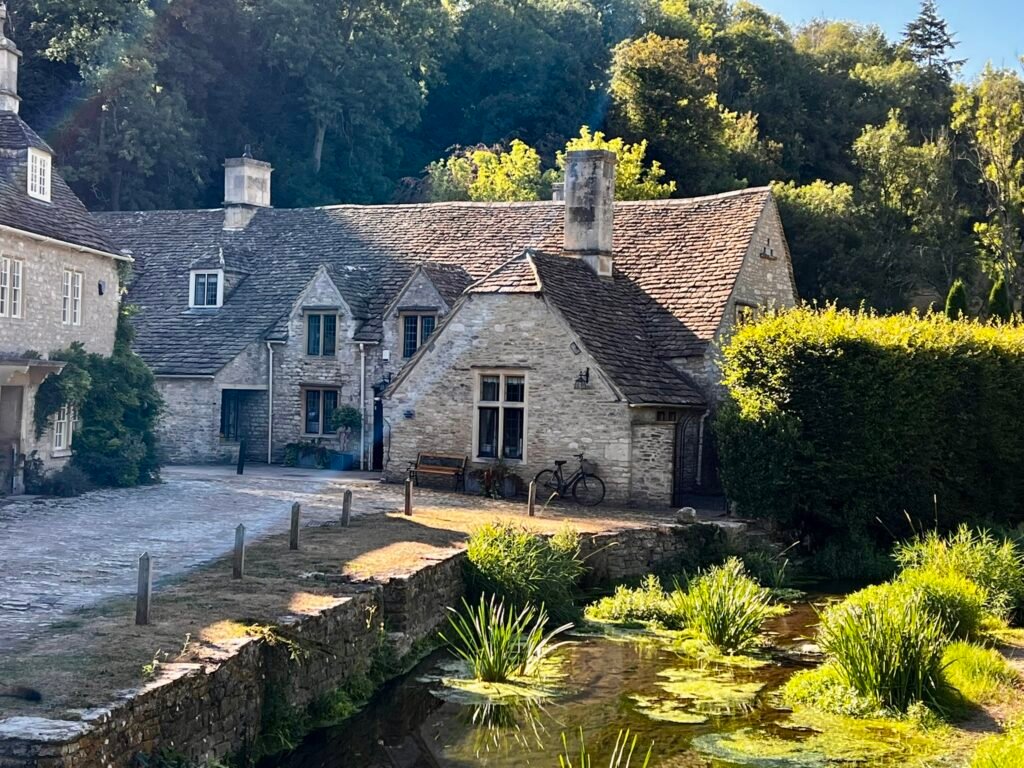
Castle Combe, Wiltshire: A Village Built on Wool, Not Fairy Tales
Castle Combe sits at the southern edge of the Cotswolds, around 12 miles from Bath. Despite its fairy-tale appearance, this isn’t a purpose-built tourist attraction. It’s a genuine historic village, shaped by centuries of trade, architecture and daily life.
During the Middle Ages, Castle Combe became a prosperous centre for wool and cloth production. Its stream, By Brook, provided water power for local mills, while weavers and other craftspeople worked in the surrounding cottages.
In other words, these lovely old buildings weren’t originally designed to make Instagram users emotional. People actually worked here.
The wool trade brought considerable wealth, and that prosperity left its mark on the village. Sturdy limestone houses, impressive stone details and an elaborate Market Cross all tell the story of a settlement that was once rather more commercially important than its modest size might suggest.
Today, Castle Combe is quieter in industrial terms. The looms have stopped, the mills no longer dominate the local economy, and the biggest concentration of activity is often around somebody trying to photograph a cottage without a parked car in front of it.
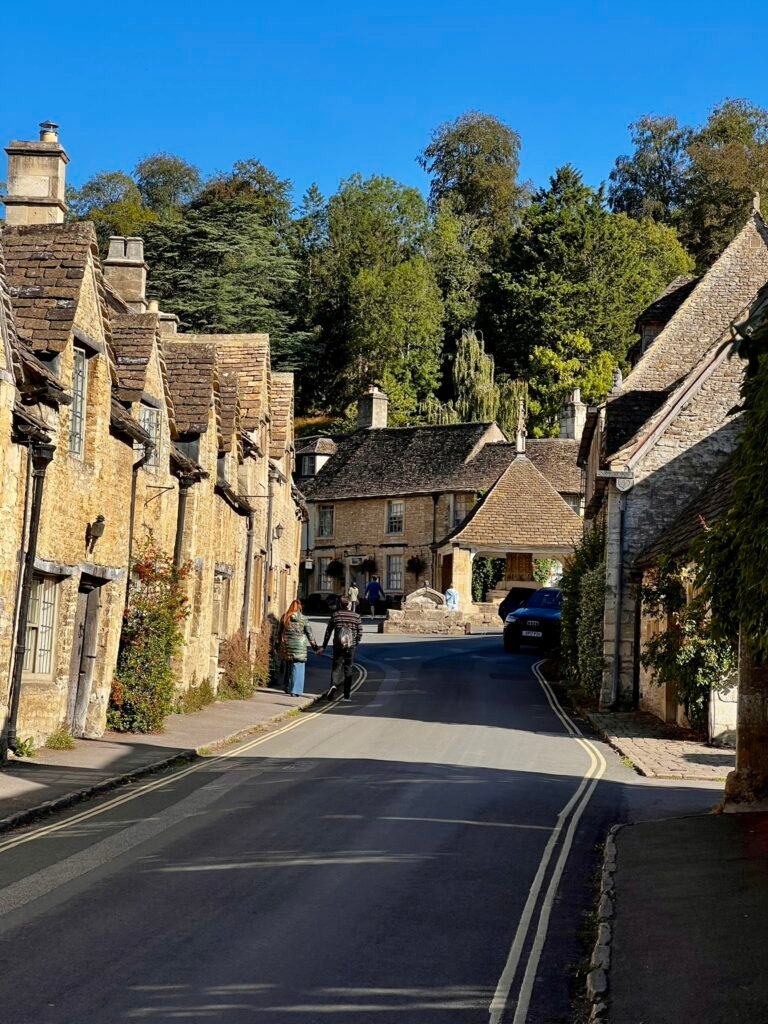
Where Is the Castle in Castle Combe?
An excellent question. Particularly if you’ve arrived expecting battlements, towers and a gift shop selling miniature swords.
There really was a castle, but it hasn’t survived as a recognisable building.
Its site lies on higher ground northwest of the present village, overlooking the By Brook valley. The location had earlier defensive significance, and a Norman castle subsequently occupied the site.
Today, earthworks and some remains survive, but much of the area is overgrown and lies within privately owned golf-course land. It’s not a public castle attraction where you can wander through ruined halls.
So Castle Combe has managed to become famous despite misplacing the very thing in its name.
Fortunately, its streets and historic buildings offer plenty to explore without needing a castle at all.
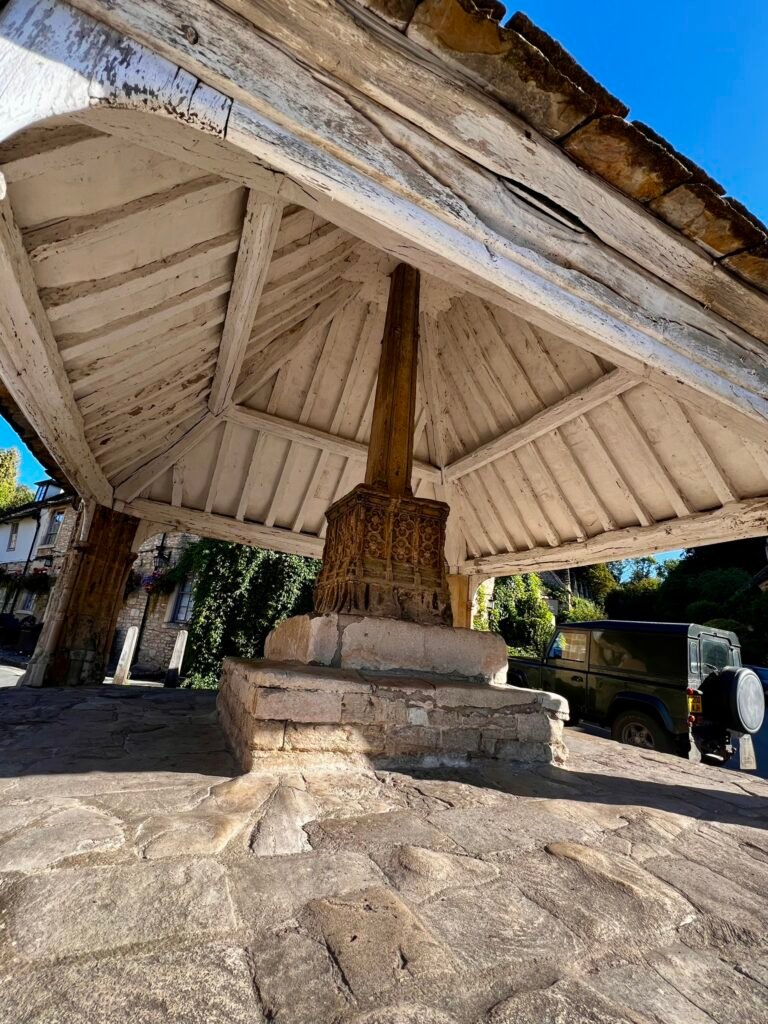
Castle Combe Market Cross: Medieval Shopping With Better Architecture
At the centre of the village stands one of its most interesting historical survivors: the Castle Combe Market Cross.
This elaborate medieval structure consists of a raised stone platform, carved stone supports and a steep, stone-tiled timber roof. It has stood at the heart of the settlement since the late medieval period, when local trade helped make Castle Combe prosperous.
Look closely at the central stone pillar. Its decorative panels include carved roses, shields and quatrefoils — the kind of detailing that makes an ordinary shopping shelter look rather spectacular.
The Market Cross was repaired by villagers in 1590 and originally stood beside a market house, which was demolished around 1840 to widen the road.
Imagine having to explain that to the medieval builders.
“Wonderful structure. Beautiful craftsmanship. Unfortunately, the traffic needs more space.”
The cross remains in its original position and is now protected as an important historic monument.
You can explore the architectural details and historical significance through Historic England’s official Market Cross record.
A Village That Hollywood Couldn’t Resist
If Castle Combe looks familiar, there’s a reasonable chance you’ve already seen it without realising.
Its remarkably preserved streets have appeared in several productions, including Doctor Dolittle (1967), Stardust (2007) and Steven Spielberg’s War Horse (2011).
Film crews love places where they don’t need to hide too many modern buildings. Castle Combe provides exactly that: old stone cottages, traditional rooftops and a setting that can convincingly pretend the last few centuries haven’t happened.
Of course, filming is temporary. The residents still have to live here after the cameras disappear.
That’s worth remembering when exploring the famous streets. These are real homes, not a permanent outdoor film set where every doorway is available for a photoshoot.
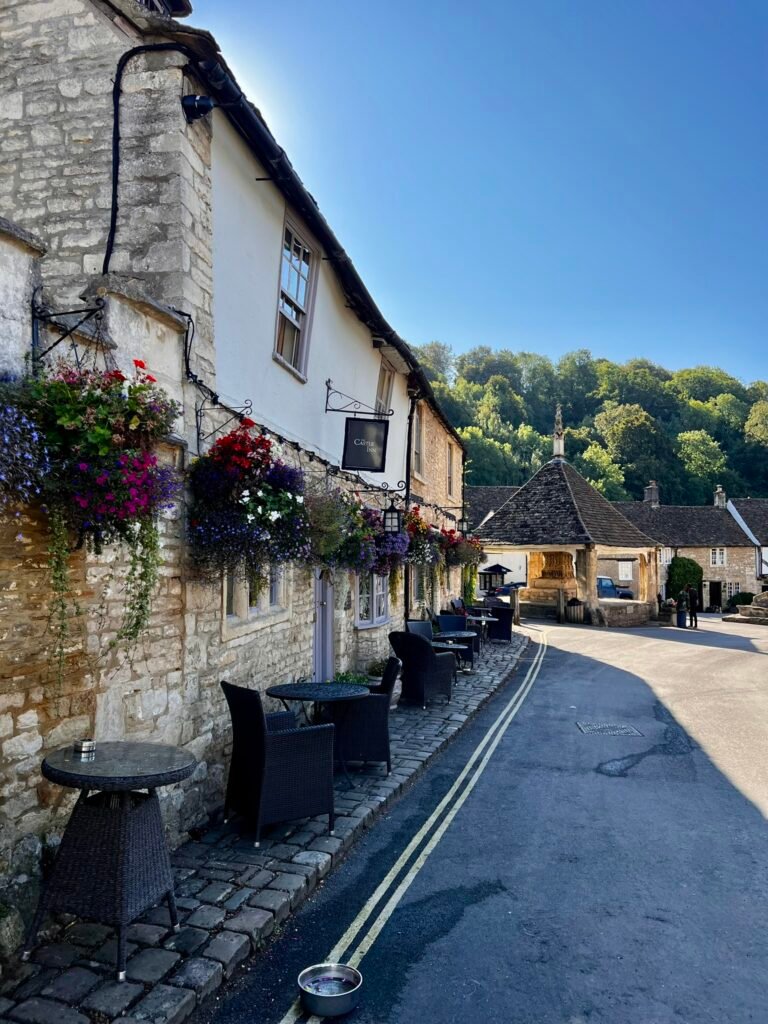
Things to Do in Castle Combe Beyond the Famous View
The best thing to do in Castle Combe is also the simplest: wander.
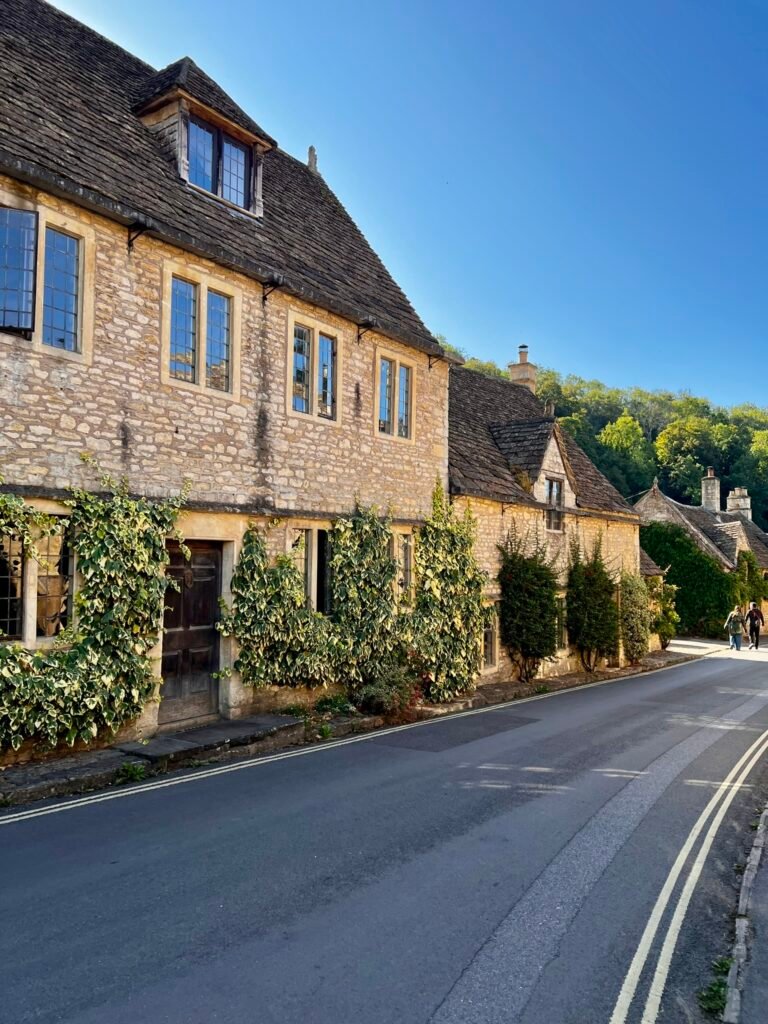
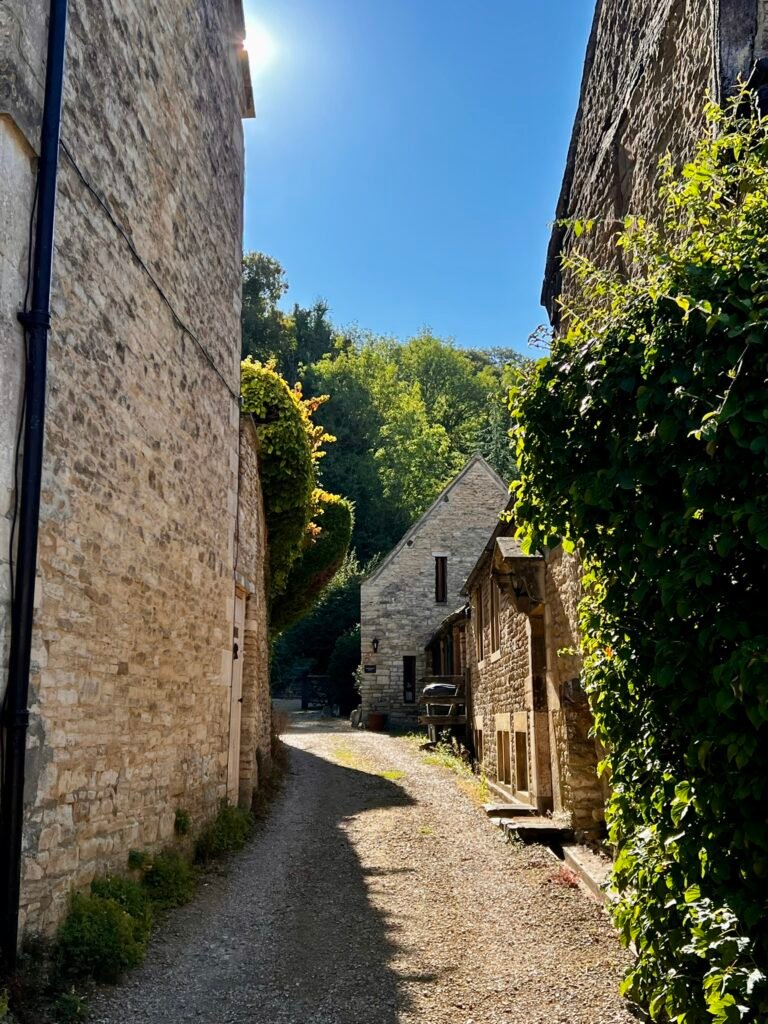
Follow the main road between the cottages, admire the old stone-tiled roofs, and look for the details that make individual buildings interesting. Weathered doors, climbing plants, stone-mullioned windows and tiny side lanes all contribute to the atmosphere.
And don’t rush straight from one famous photograph location to another.
Some of the most appealing corners are away from the main village centre, where narrow paths disappear between limestone walls and sunlight catches the buildings at unexpected angles.
The lower village, around By Brook and the stone bridge, is especially beautiful. The stream flows through a landscape that once supported the local mills and now provides one of Castle Combe’s most recognisable views.
For another perspective on attractive Cotswold settlements, explore Snowshill, a fairy-tale village with a quieter atmosphere.
And if you enjoy impossibly pretty stone villages, Upper Slaughter deserves a place on your next itinerary too.
St Andrew’s Church: The Village’s Unexpected Treasure
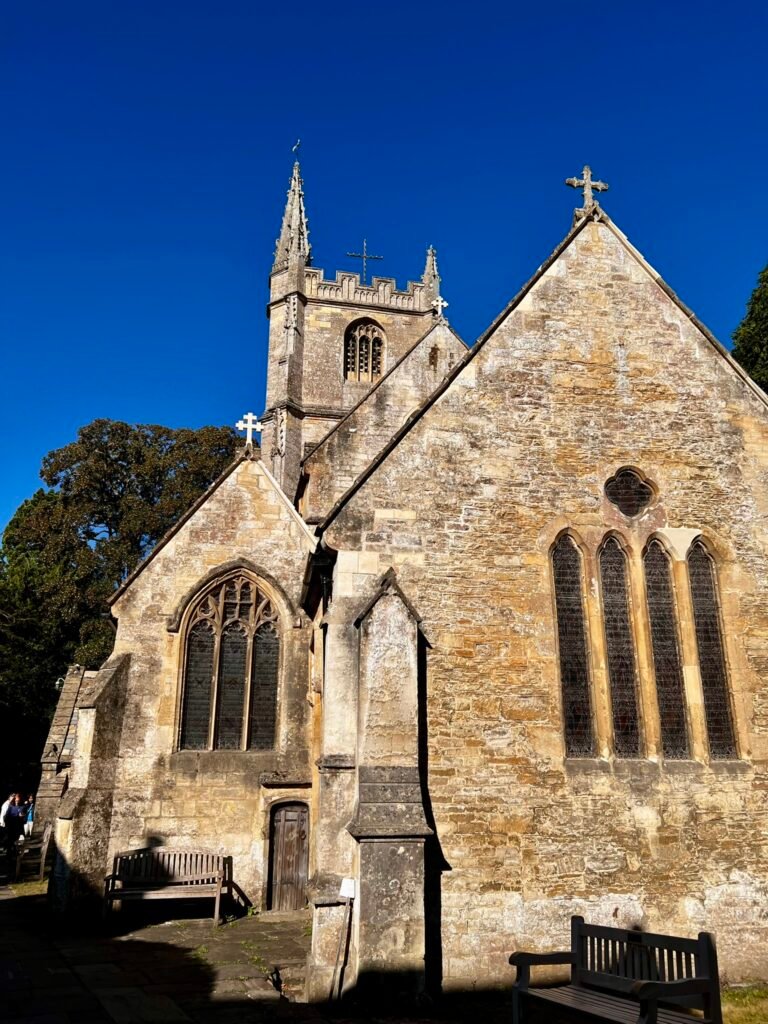
Just across from the Market Cross stands St Andrew’s Church, and it’s far more interesting than simply being another attractive old building.
Originally founded in the 13th century, the church expanded as the village prospered. Its nave dates from the 14th century, while construction of the tower began in 1434, supported by wealthy local wool merchants and money from the estate of Sir John Fastolf.
The tower was completed in the 16th century, and significant restoration followed in 1850–51.
So the church you see today isn’t one untouched medieval building. It’s a collection of architectural chapters, built and rebuilt by different generations.
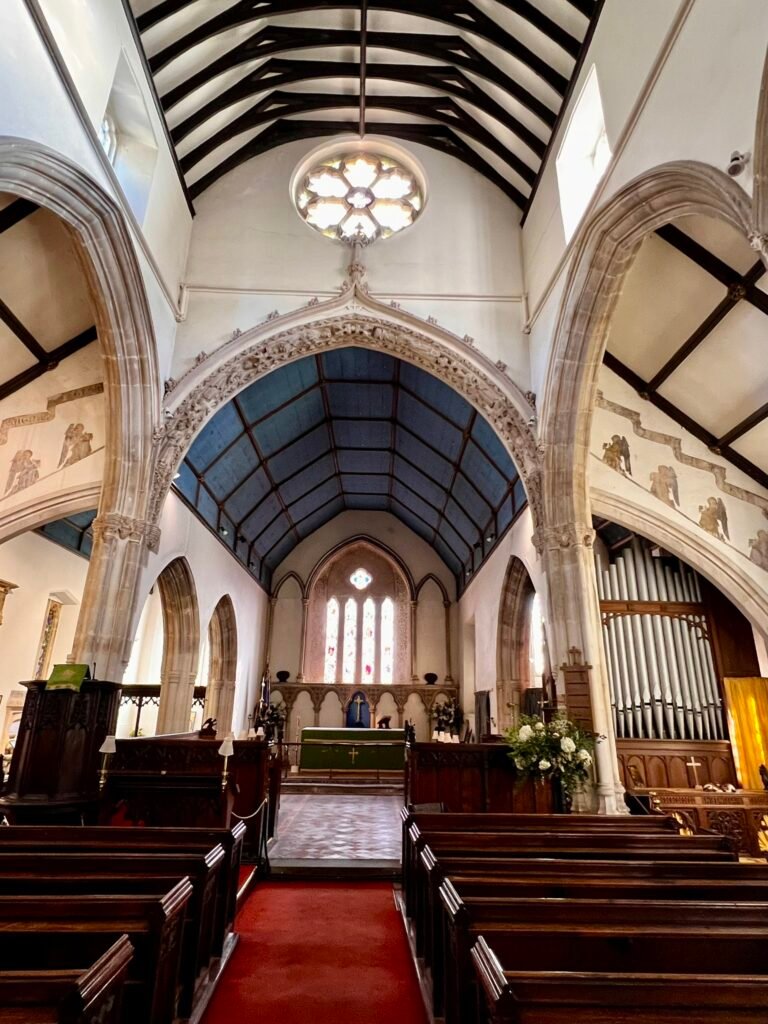
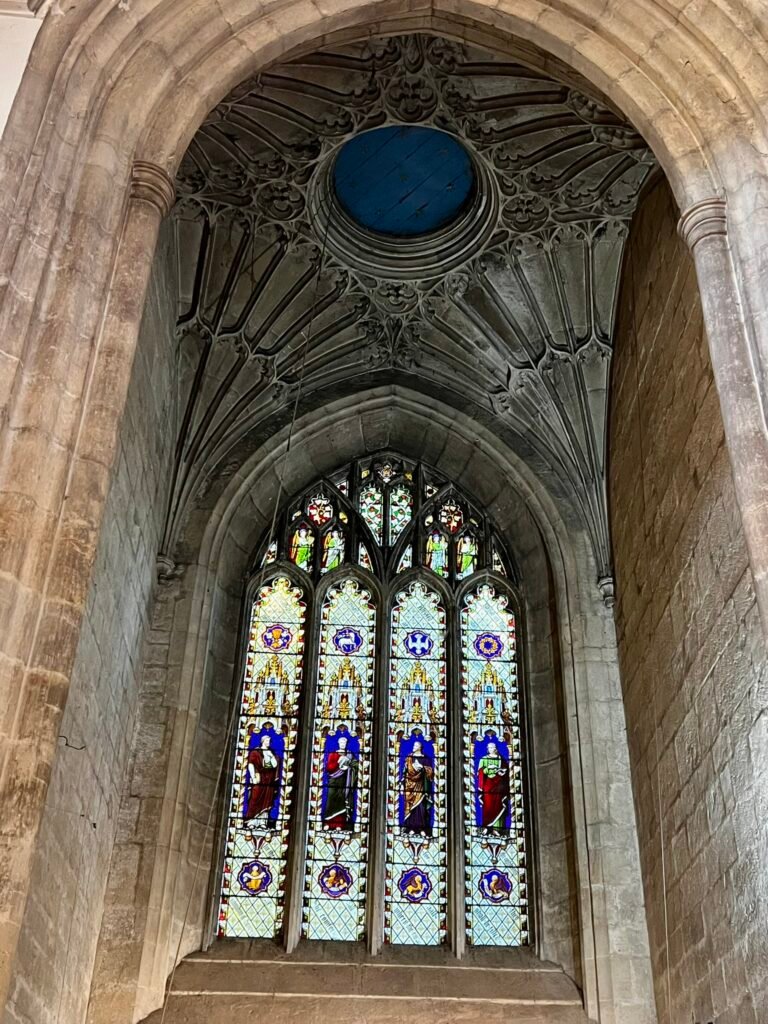
Inside, you’ll find Gothic arches, stained-glass windows, interesting monuments and beautiful stone carving.
One notable monument commemorates Sir Walter de Dunstanville, a medieval lord of Castle Combe who died in 1270.
Not bad for a village where you might otherwise spend your entire visit looking at cottages.
The Clock That Doesn’t Have a Face
Now here’s something rather wonderful.
St Andrew’s Church houses one of the oldest working faceless medieval clocks in England.
Yes, a clock without a face.
Before everyone carried a mobile phone, church bells served as an important way of announcing the time to the surrounding community. A large visible dial wasn’t necessarily essential when you could simply listen for the bell.
The clock is thought to date from the 15th century and is traditionally associated with a local blacksmith.
It’s an extraordinary survivor of medieval engineering — and arguably the perfect invention for people who are terrible at reading analogue clocks.
The church also contains an impressive fan-vaulted ceiling in the tower, where beautifully carved stone ribs spread into an intricate pattern overhead.
It’s a good reminder to look upwards occasionally. There is much more to Castle Combe than the buildings at street level.
You can learn more through St Andrew’s Church’s official history.
Parking in Castle Combe: The Hill Comes Free
For visitors arriving by car, the recommended parking is Dunns Lane Visitor Car Park in Upper Castle Combe, reached from the B4039.
It’s the official visitor car park used in our original Cotswolds road-trip itinerary.
The car park is paid, with charges applying daily from 7 am to 7 pm. Under Wiltshire Council’s published 2026 tariff, parking costs 50p for one hour, £1.30 for two hours, £2.40 for three hours or £6.60 for the full day.
For a relaxed village visit, two hours will usually be enough, especially if you’re stopping to explore the church.
The car park is roughly a ten-minute walk from the village centre, but there’s an important detail: the route goes downhill.
Which means, naturally, that coming back involves walking uphill.
Castle Combe apparently believes visitors should earn their refreshments.
There is very limited parking in the lower village, much of it occupied by residents. Don’t assume you’ll find a convenient free space beside the Market Cross.
Check current restrictions and facilities through Castle Combe’s official visitor parking guide.
Accessibility: Beautiful, but Not Entirely Easy
Castle Combe’s historic setting creates some genuine accessibility challenges.
The approach from Dunns Lane is steep, and the village has narrow roads without continuous pavements. Some smaller paths and older surfaces are uneven.
Wheelchair users, people with reduced mobility and anyone who struggles with hills should plan carefully. Although the village is beautiful, it’s not an entirely level or step-free destination.
St Andrew’s Church has accessible main areas, but it’s advisable to check individual entrances and facilities before visiting.
There are public toilets beyond the bridge, on Water Lane.
As for time, allow around 60–90 minutes for a straightforward village visit, or longer if you’d like to explore the church properly, take photographs or stop for refreshments.
You don’t need to buy a ticket to wander the public village streets.
Is Castle Combe Worth Visiting?
Absolutely — provided you know what you’re coming for.
Castle Combe isn’t packed with museums, major attractions or endless things to do. Its appeal is the village itself: centuries of history captured in limestone, a medieval market centre, a fascinating church and one of the most photogenic stretches of water in the Cotswolds.
It’s especially rewarding for anyone interested in photography, architecture or places where everyday history survives in the landscape.
And while its popularity can make the village busy, a quieter early-morning visit gives you a better opportunity to appreciate the atmosphere.
Castle Combe is a wonderful addition to a wider road trip rather than necessarily a full day out on its own.
For more places to combine with it, browse our Cotswolds travel and heritage collection.
The village may have lost its castle, but it has somehow kept almost everything else that makes people fall in love with historic England.
And really, who needs a castle when you’ve already got all this?
One journey. One story. One more stop.