
Some historic buildings survive wars, royal arguments and centuries of bad weather. Netley Abbey in Hampshire managed all of that, only to nearly disappear because somebody decided the stones might be worth more than the building.
And apparently, a ghost wasn’t particularly happy about it.
Just outside Southampton, this spectacular medieval ruin has enormous Gothic windows, beautiful vaulted chambers and a history involving Cistercian monks, Henry VIII, a Tudor mansion and one extremely unfortunate demolition worker.
Better still, you can explore it for free.
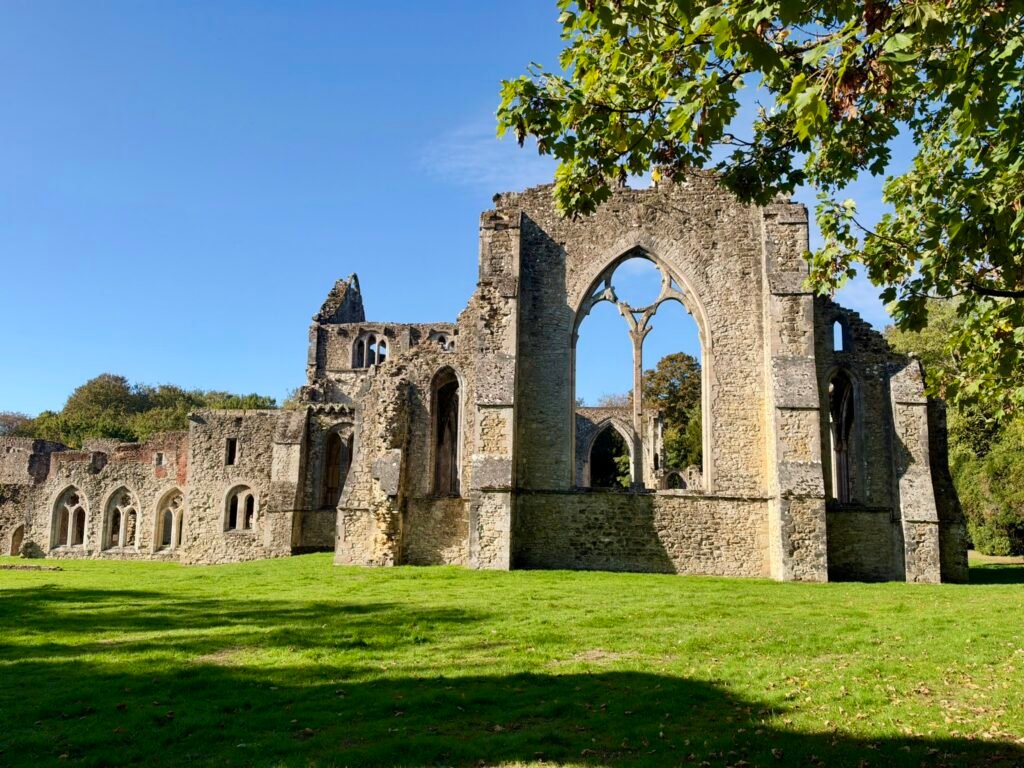
Netley Abbey: When Getting Up at 2am Was Perfectly Normal
Long before Netley Abbey became a picturesque ruin, it was home to a community of Cistercian monks.
The monastery was founded in 1238 by Peter des Roches, the powerful Bishop of Winchester. Unfortunately, he died before construction properly began, leaving somebody else to oversee his ambitious project.
Monks arrived from Beaulieu Abbey the following year, and King Henry III later became an important patron.
At its height, Netley was home to approximately 15 monks, along with around 30 lay brothers, officials and servants.
The buildings were impressive, but the daily routine was rather less appealing.
The monks attended eight religious services every day, with the first beginning at around 2am.
Two. In. The. Morning.
And I thought getting up early for work was bad.
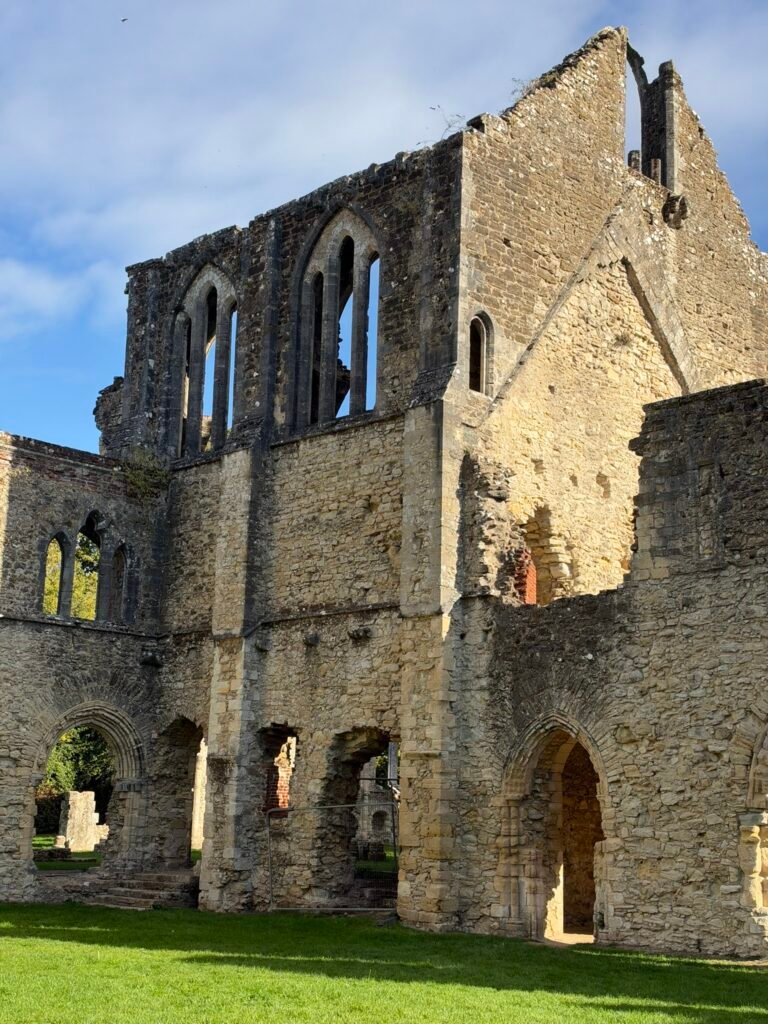
The enormous surviving walls give you some idea of how substantial this monastery once was. Nearly all the walls of its church remain, along with significant parts of the surrounding monastic buildings.
Even without the roof, the scale is remarkable.
Look upwards and you’ll find beautifully carved columns, pointed arches and intricate stone vaulting.
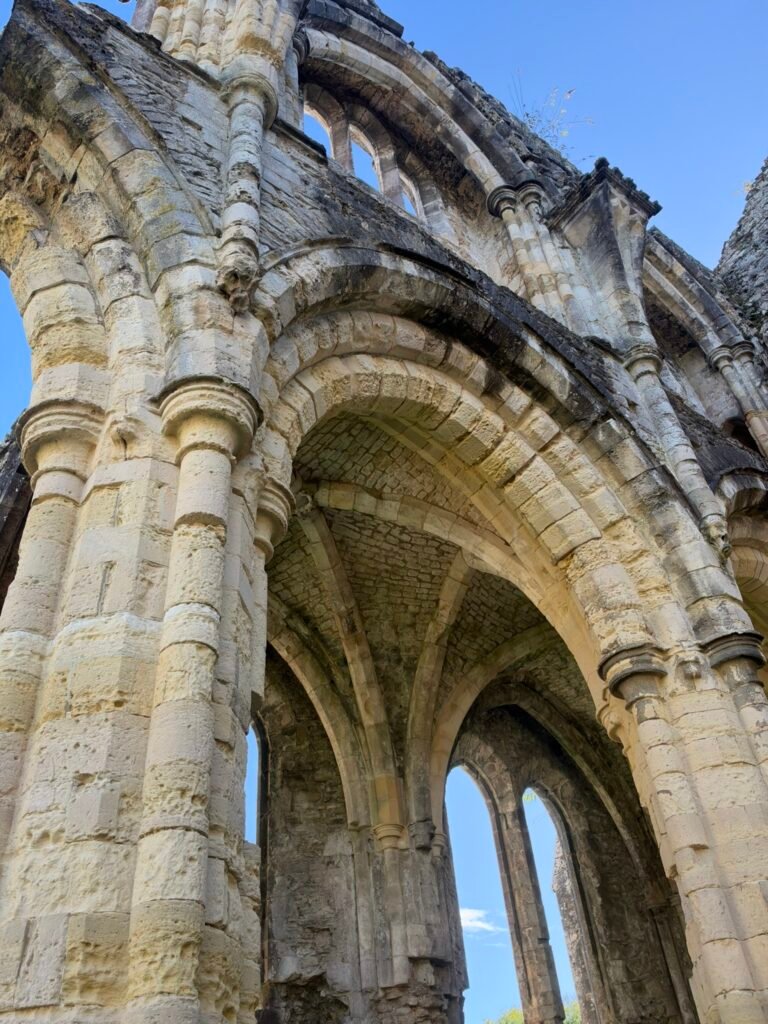
It’s worth remembering that all this was built without modern cranes, power tools or somebody complaining that the Wi-Fi wasn’t working.
The medieval craftsmen clearly knew what they were doing.
Then Henry VIII Decided the Monks Had to Go
For almost three centuries, religious life continued at Netley Abbey.
Then came 1536.
Henry VIII’s Suppression of the Monasteries brought the community’s existence to an abrupt end. The buildings were granted to Sir William Paulet, a powerful royal official who had rather different plans for the property.
He didn’t want a monastery.
He wanted a fashionable Tudor mansion.
Instead of completely demolishing the abbey, Paulet incorporated much of the existing architecture into his new residence.
The old church became part of a grand house, the cloister was transformed into a courtyard, and new rooms, windows, fireplaces and entrances appeared.
The monks’ refectory was demolished to make way for an impressive new gateway.
An extraordinary transformation, really.
One day, you’re living in a religious community devoted to prayer and simplicity. A little later, your former dining room has disappeared because somebody wants a more impressive driveway.
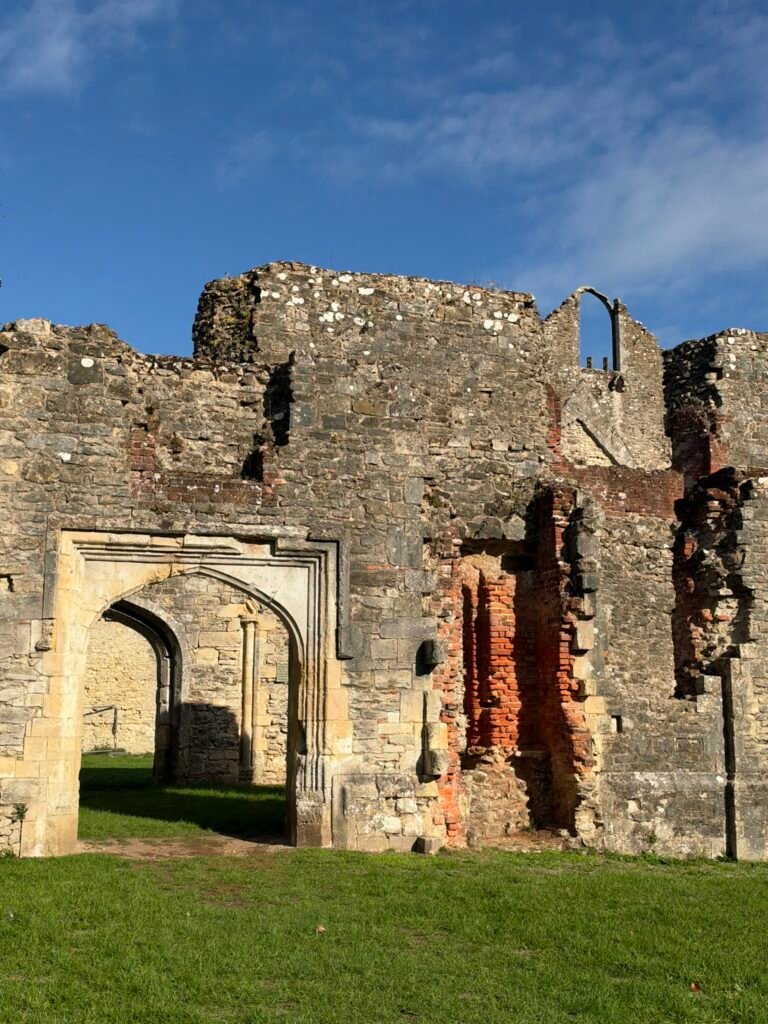
Look closely at the ruins and you’ll notice contrasts between the medieval stonework and later brick additions.
Much of Paulet’s Tudor work was subsequently removed, but traces of the building’s changing identity remain.
This wasn’t simply an abbey that fell into ruin. It became an entirely different sort of building before falling into ruin all over again.
Gothic Windows, Missing Roofs and Architectural Drama
One of the best things about exploring Netley Abbey is that you can wander through the surviving rooms and appreciate the architecture from completely different angles.
The remains of the church are especially impressive.
Tall walls surround open grass, sunlight pours through enormous windows, and arches that once supported substantial structures now frame the sky.
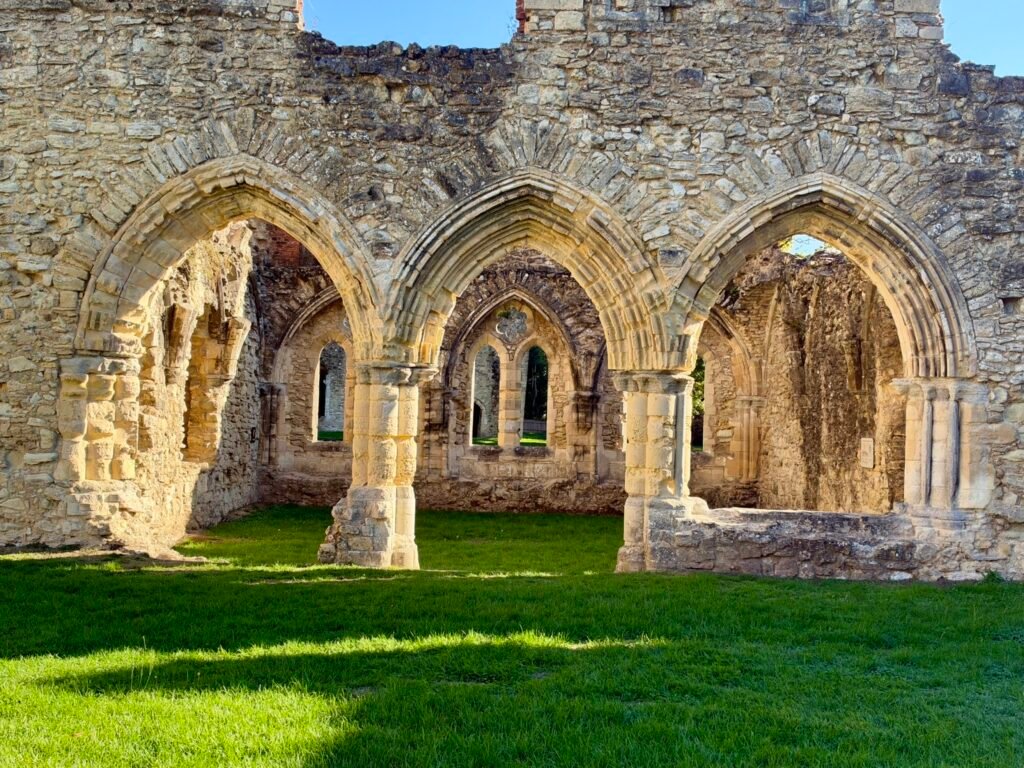
There’s something wonderfully theatrical about the place.
You don’t necessarily need to understand medieval architecture to appreciate it. The surviving shapes, textures and proportions are beautiful in their own right.
And some of the smaller details are just as interesting as the monumental walls.

Decorative stone tracery and pointed windows reveal how much thought went into the original design.
It’s also one of those places where every doorway seems to reveal another photograph waiting to happen.
Which is rather inconvenient if you’ve told yourself you’re only stopping for half an hour.
Even the Abbot Had Some Impressive Accommodation
Away from the main church, Netley Abbey also preserves the remains of a separate building traditionally identified as the Abbot’s Lodging.
This was associated with the monastery’s senior figure, and its surviving architecture includes rib-vaulted chambers beneath the former upper rooms.
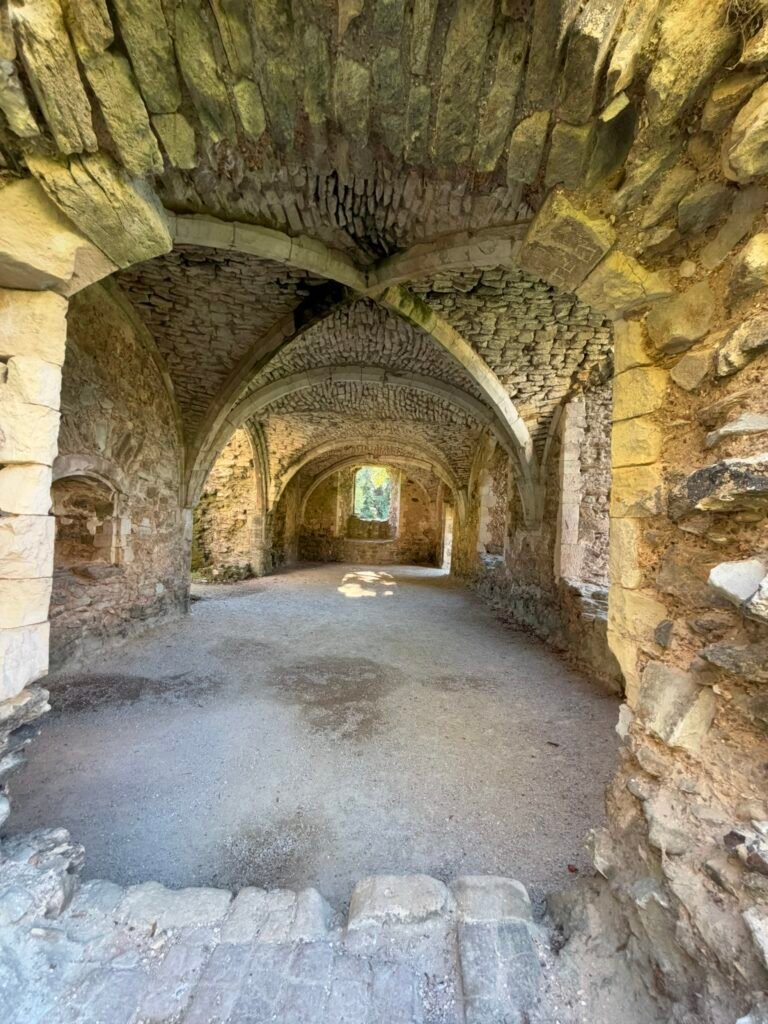
The surviving vaulted stonework is especially striking.
Historic England describes the Abbot’s Lodging as a two-storey building with vaulted undercrofts, smaller wings and other architectural features suggesting a substantial residence.
Standing inside one of its surviving chambers gives you a much more intimate impression of the medieval buildings than the enormous church walls.
The scale is smaller, the masonry feels closer, and the ceiling still demonstrates a remarkable level of craftsmanship.
Not a bad architectural legacy for a place where almost everything else has disappeared.
The Ghost Who Apparently Saved Netley Abbey
Now for my favourite part of the story.
After the Tudor mansion was abandoned, the property was sold for building materials in the early eighteenth century.
The plan was simple: dismantle the buildings and sell the valuable stone.
What could possibly go wrong?
Well, according to a legend recorded by the antiquary Browne Willis, a carpenter named Taylor was involved in dismantling the abbey when he experienced a disturbing dream.
A ghostly monk appeared and warned him that continuing the demolition would lead to his death.
Quite a clear warning, really.
Taylor apparently decided to ignore it.
According to the story, he continued the work and was subsequently killed by falling masonry.
That’s one way to discover that the previous occupants objected to your renovation plans.
The supernatural warning is, of course, folklore rather than a verified haunting. However, English Heritage records that a demolition worker’s death brought the destruction to a halt.
You can read more about the legend in English Heritage’s Haunted Monasteries feature.
Whether or not a ghost had anything to do with it, the result was rather fortunate for everyone who enjoys historic ruins today.
Netley Abbey survived.
And instead of being scattered across Hampshire as recycled building materials, it eventually became famous for being beautifully ruined.
From Abandoned Monastery to Romantic Paradise
By the eighteenth century, the abandoned buildings had become overgrown with trees and ivy.
What looked like neglect to one generation became a source of artistic inspiration to another.
Writers, poets and painters began visiting Netley Abbey to admire its dramatic atmosphere.
Horace Walpole was particularly enthusiastic. After visiting in 1755, he famously suggested the ruins resembled paradise rather than an ordinary ruined building.
John Constable also depicted Netley Abbey, while there are reports that Jane Austen visited the site. The Austen connection is often mentioned, although it shouldn’t be treated as a firmly documented source of inspiration for Northanger Abbey.
By the 1840s, the ruins had become a popular place for social outings, including tea, dancing and music.
Not everybody approved.
Apparently, some visitors felt that the noise of popping ginger beer bottles was ruining the romantic atmosphere.
Imagine surviving Henry VIII, centuries of neglect and a murderous ghost legend, only to have your peace disturbed by Victorian refreshments.
Over time, the overgrown ruins were cleared and conserved, creating the more open setting visitors enjoy today.
The atmosphere may be less wild than it was in Constable’s day, but those enormous Gothic windows are still magnificent.
And thankfully, photography is considerably less time-consuming than producing an oil painting.
Visiting Netley Abbey: Free Entry and Free Parking
One of the nicest surprises about Netley Abbey is that it’s an English Heritage property you can explore without paying admission.
You don’t need an English Heritage membership either.
Entry is currently free for everyone.
The abbey is on Abbey Hill, Netley, Hampshire, SO31 5FB, around four miles southeast of Southampton.
There’s also free on-site parking, although spaces are limited to approximately 10–12 cars.
If the small car park is full, English Heritage suggests alternative parking near Abbey Hall Recreation Ground, around five minutes’ walk away. Be careful crossing the main road.
The site is currently advertised as open daily from 10am to 4pm, except Christmas Day, but always check Netley Abbey’s official opening information before travelling. The on-site car park is locked when the abbey closes.
There are no toilets on site, and some surfaces are uneven, although much of the ruins can be explored by wheelchair users. Dogs on leads are welcome.
For a relaxed photographic visit, I’d allow around 45–90 minutes, depending on how often another beautiful archway persuades you to stop.
And there are quite a few of those.
Is Netley Abbey Worth Visiting?
Definitely, especially if you enjoy medieval architecture, atmospheric ruins and historic places where the story is much stranger than the surviving walls suggest.
Netley Abbey isn’t simply an old monastery.
It’s a building that became a Tudor mansion, nearly disappeared into a builder’s materials pile, survived a fatal demolition attempt and eventually became a celebrated Romantic ruin.
That’s an impressive career for a collection of roofless walls.
And if you enjoy historic sites with more than one identity, there’s another excellent Hampshire stop nearby.
Titchfield Abbey: From Medieval Monastery to Tudor Mansion has a remarkably similar transformation story, complete with a dramatic Tudor gatehouse.
You can also explore more historic destinations in the One More Stop Hampshire collection, or discover why some paid sites may justify membership in my English Heritage membership review.
But Netley Abbey itself doesn’t require a membership card, an admission ticket or even a particularly generous budget.
Just a little curiosity.
And perhaps some appreciation for the ghost who supposedly persuaded a demolition worker to stop.

Some places are worth visiting because they’re perfectly preserved.
Others are memorable precisely because they aren’t.
Netley Abbey belongs firmly in the second category.
One journey. One story. One more stop.