
There’s something slightly ridiculous about arriving in a beautiful Cotswolds village at 7 am. Most sensible people are still in bed, and even the local birds seem to be considering whether it’s worth getting up yet. But after experiencing some of the busier villages during our Cotswolds adventure, Stanton was a wonderful surprise. Golden stone cottages, gorgeous gardens, historic buildings and almost nobody around. Had we finally discovered the perfect peaceful village? Or had we simply arrived before everyone else?
Stanton at 7 am: Where Is Everybody?
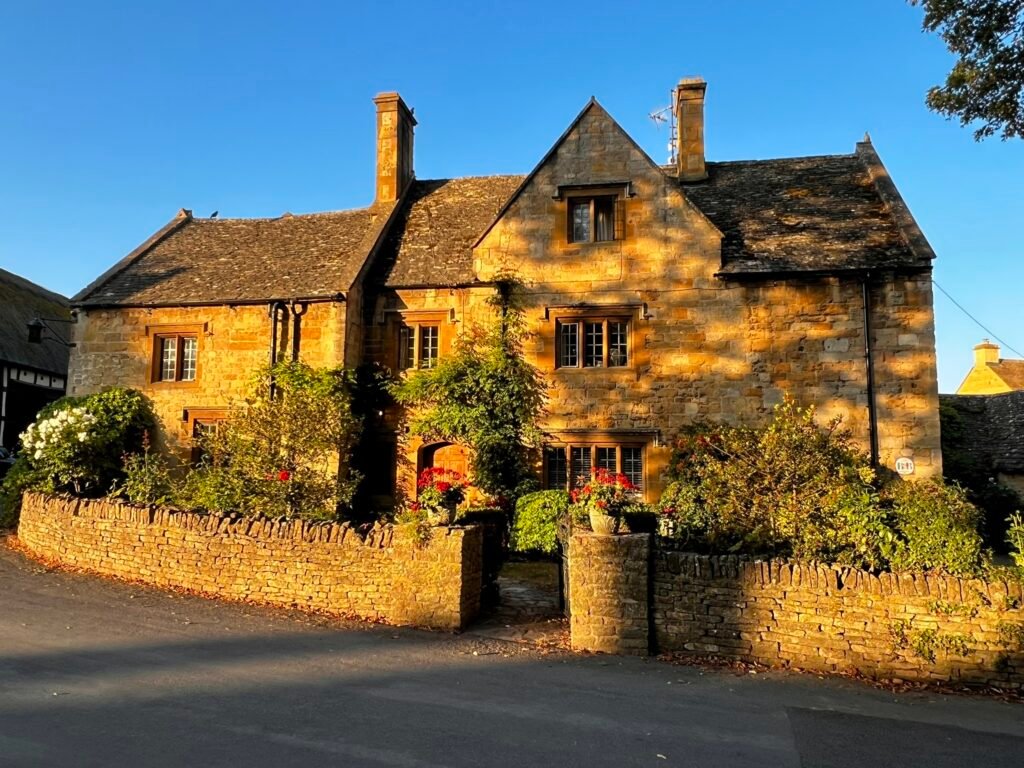
We arrived in Stanton, Gloucestershire, just after seven in the morning. The streets were beautifully calm, with only a couple of villagers and a few other visitors about.
There were no queues, no crowds blocking the photographs and no desperate search for a clear view of the cottages. Just the soft morning sunshine turning the famous Cotswold stone an almost ridiculous shade of gold.
After our rather different experience in Upper Slaughter, I was beginning to think we’d finally cracked the secret of visiting the Cotswolds.
Apparently, the secret might simply be getting out of bed before breakfast. 😂
But here’s an important distinction: Stanton was wonderfully peaceful when we visited at 7 am. That doesn’t mean it’s always like this. We have no idea how busy the village becomes later in the morning, especially during weekends or holidays.
What I can say is that our early start gave us a lovely opportunity to appreciate the place without feeling rushed.
And there was a surprising amount to discover.
A Village With Houses Older Than Your Family Tree
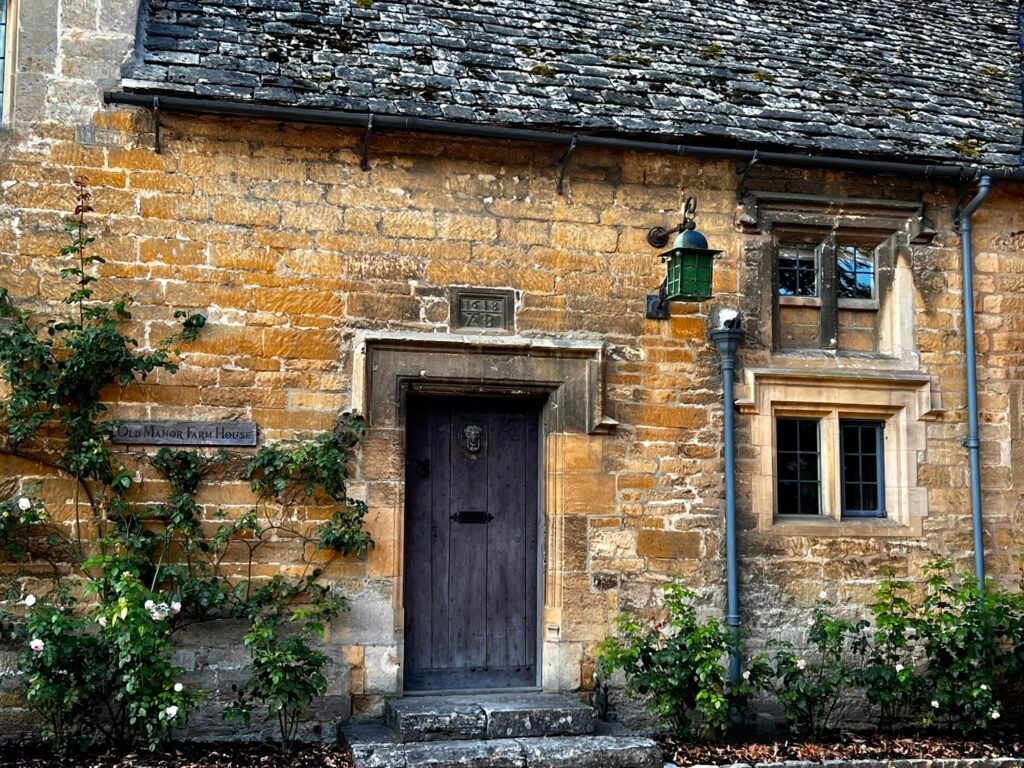
Walking along Stanton’s High Street, one particular doorway caught my attention.
Old Manor Farmhouse looks exactly like the sort of place where you’d expect someone to emerge wearing Tudor clothing and announce that the king is coming for dinner.
And it has the age to match.
Above the entrance is a datestone marked 1618. According to Historic England’s official listing, the Grade II* listed building contains several historical phases, with additional datestones from 1615 and 1622.
That’s more than four centuries of history behind one front door.
Imagine the maintenance bills.
The remarkable thing is that Stanton’s historic appearance isn’t entirely accidental. After acquiring the estate in 1906, architect Sir Philip Sidney Stott devoted considerable effort to restoring and improving the village.
He wasn’t simply preserving one grand mansion. His work helped protect the architectural character of the wider settlement.
In other words, some villages get modernised beyond recognition. Stanton had an architect determined to keep its character intact.
And judging by what we saw, he did a rather good job.
Thatched Roofs, Gorgeous Gardens and One Very Red Telephone Box
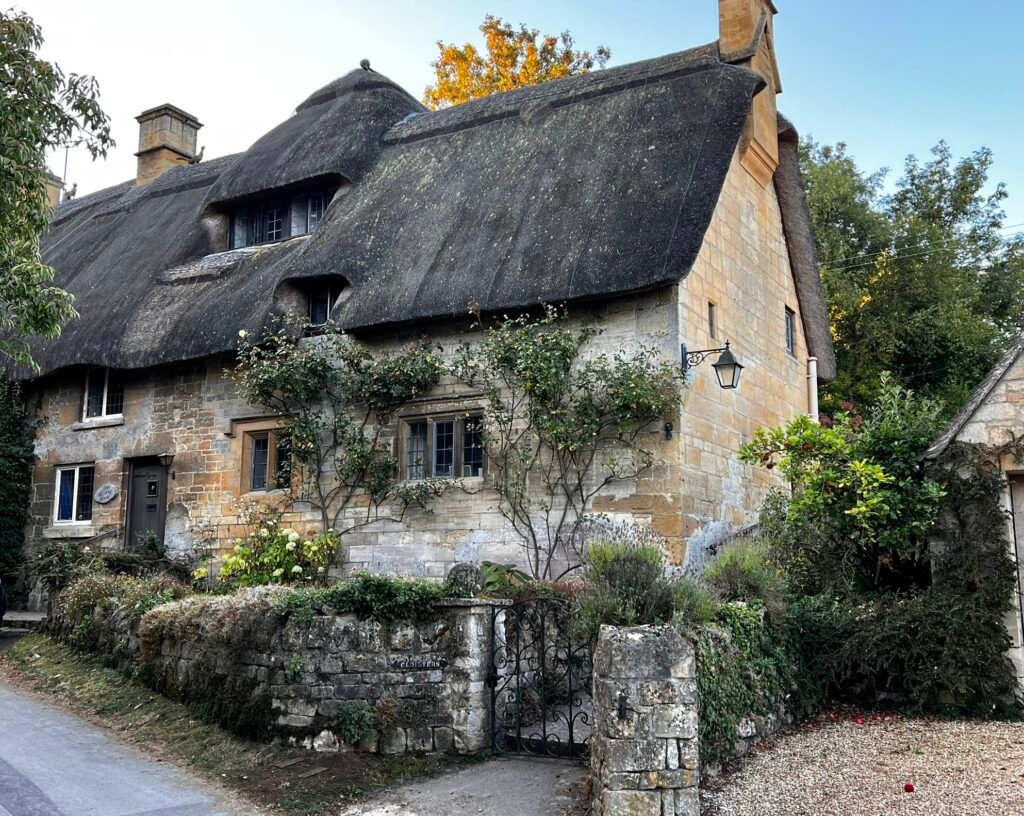
The next thing I noticed was the variety of the buildings.
Yes, Stanton has plenty of those familiar honey-coloured Cotswold cottages, complete with traditional stone roofs, mullioned windows and climbing plants.
But then there’s the occasional thatched cottage, looking as though it has wandered out of a completely different century.
The roofs, chimneys, small gardens and carefully maintained frontages give the village its distinctive appearance. Even the details deserve attention.
And if you enjoy photographing architecture, you’ll probably find yourself stopping every twenty metres.
I certainly did.
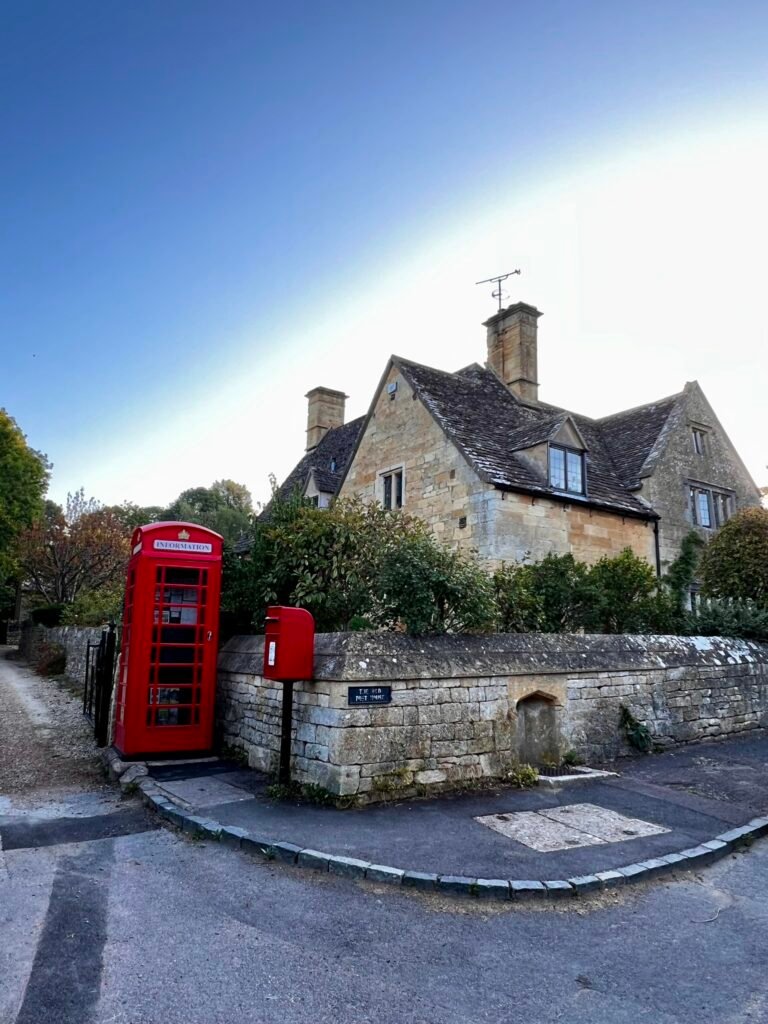
Then, among all that golden stone, there’s a wonderfully bright red telephone box beside the Old Post House.
You’d almost think someone had positioned it there specifically to improve the photographs.
Even better, this isn’t simply an abandoned telephone box waiting for someone to remember that mobile phones exist.
It has been repurposed as a village information point.
A lovely little example of keeping something familiar and useful rather than sending it to the scrapheap.
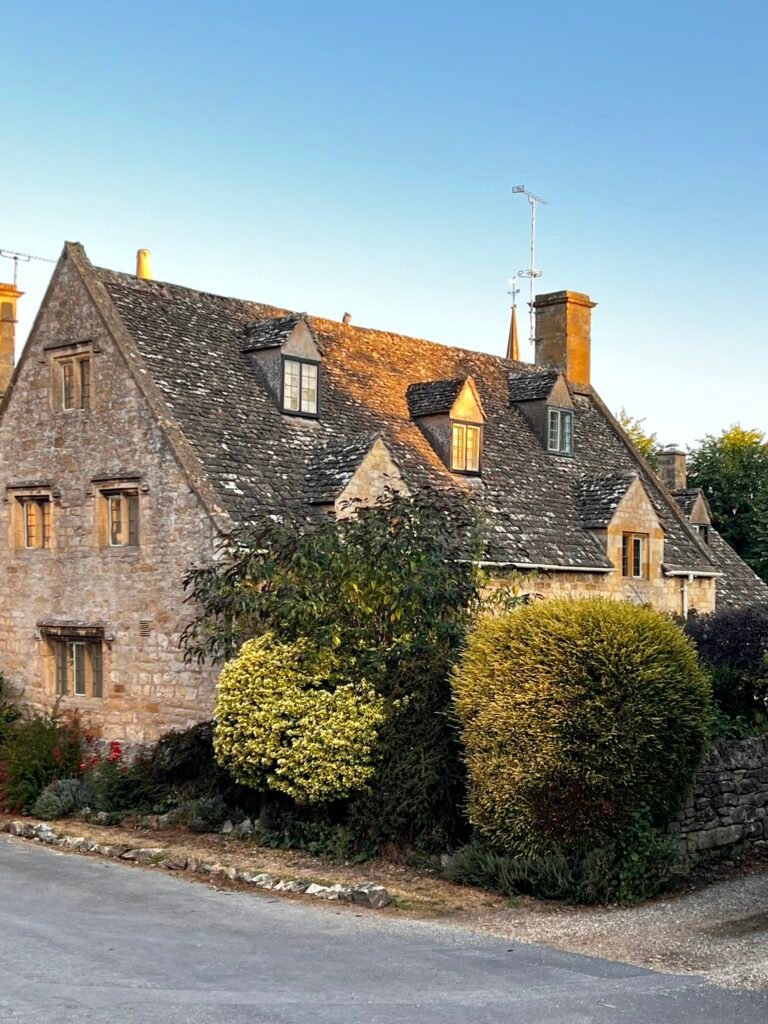
The surrounding houses are equally impressive, particularly the larger stone buildings with their carefully clipped topiary and beautifully maintained gardens.
It’s the sort of place where even the hedges appear to have better grooming habits than I do.
Although it’s tempting to photograph every doorway and garden, it’s worth remembering that these are mostly private homes. The residents live here, and probably don’t need strangers inspecting their windows at seven in the morning.
Admire the buildings from public roads and paths, but give people their privacy.
Stanton’s Historic Village Cross Has a Clever Little Secret
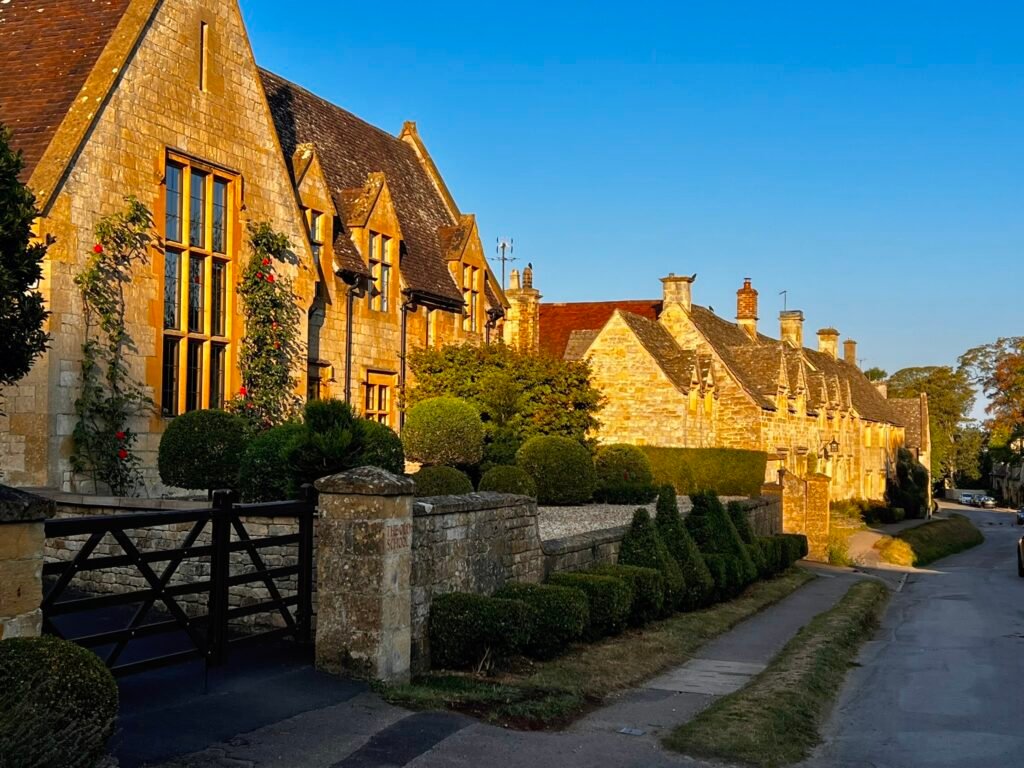
Near the centre, the former school building and surrounding cottages provide another lovely stretch of historic streetscape.
But there’s something even more interesting nearby.
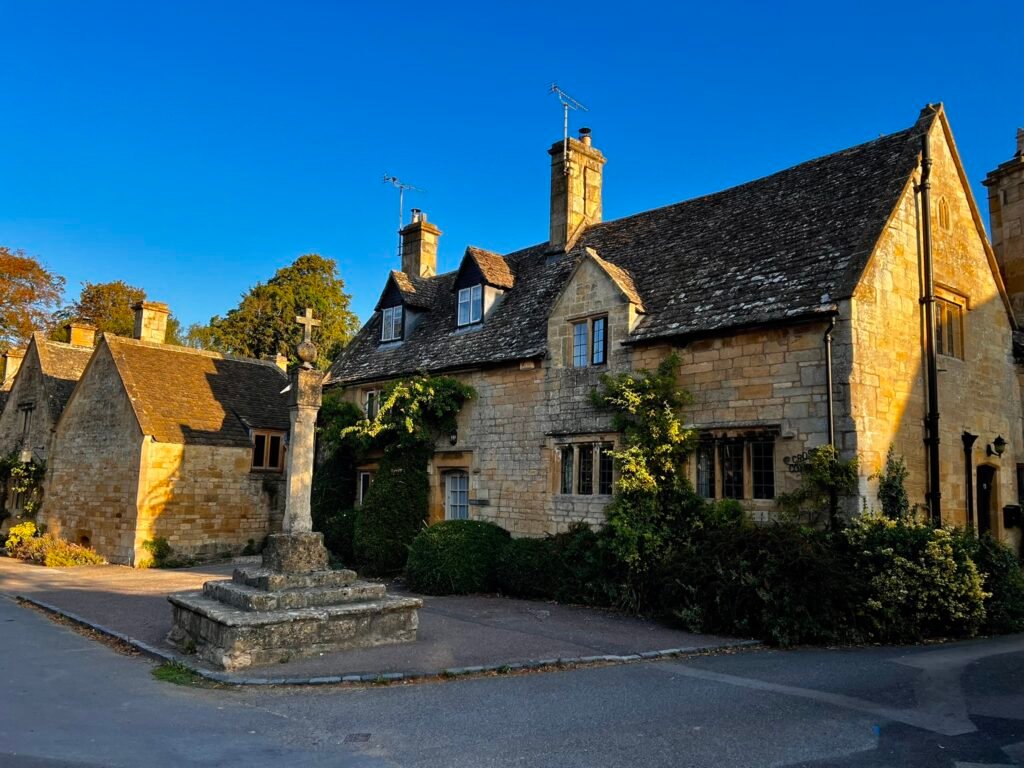
At the junction of High Street and Church Lane stands Stanton’s historic village cross.
At first glance, it might seem like another attractive old stone monument.
Look more closely.
The cross has medieval elements, although its upper sections were added later. And perched above the shaft is a sundial!
Before smartphones, smartwatches and people constantly checking whether they’re late, the villagers had a stone monument doing the job.
Admittedly, it was probably less helpful on a cloudy November afternoon.
According to Historic England’s scheduled monument record, the cross retains important medieval stonework and is thought to stand in approximately its original location.
So this isn’t simply village decoration. It’s a protected piece of history, still standing where generations of local people would have passed it.
St Michael’s Church: Nearly a Thousand Years of History
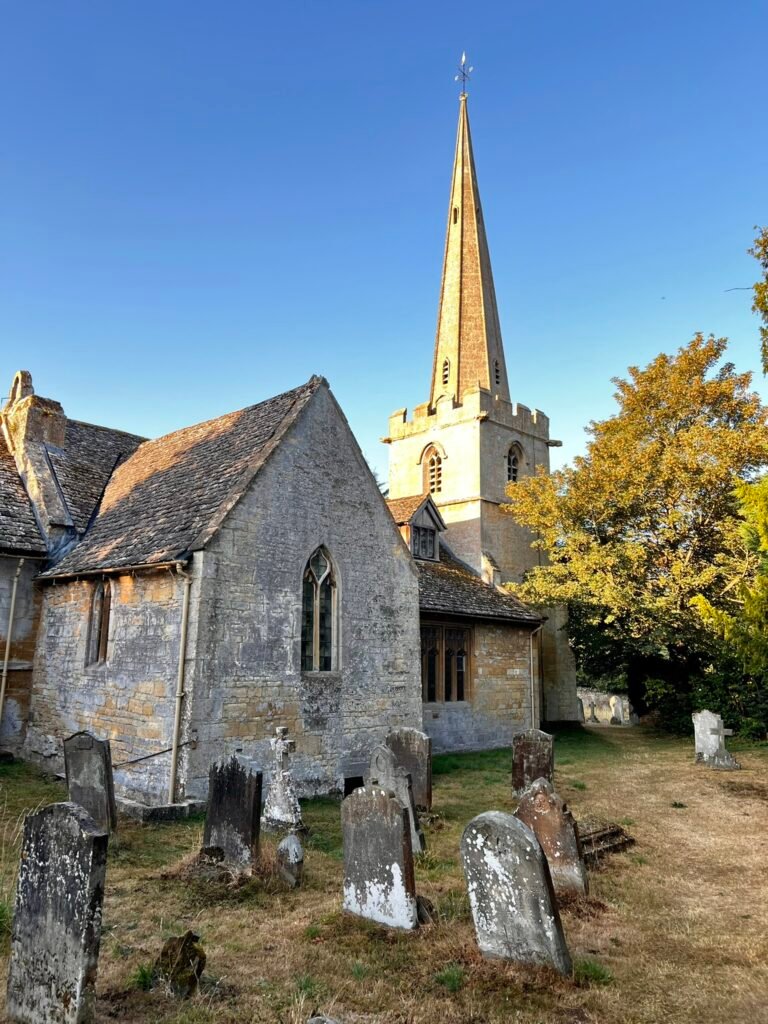
Just off the main street stands the Church of St Michael and All Angels, surrounded by old gravestones and mature trees.
Its slender spire makes a lovely addition to Stanton’s skyline, particularly in the early morning sunshine.
But the church is considerably more interesting than its peaceful exterior might suggest.
Parts date back to the 12th century, and the building preserves features from several later periods.
Inside are medieval wall paintings, historic timberwork and architectural details that tell the story of centuries of village worship.
And there’s another fascinating connection: the Methodist pioneers John and Charles Wesley were frequent visitors to Stanton, through their friendship with members of the rector’s family.
A tiny Gloucestershire village with links to a religious movement that would eventually spread around the world!
We concentrated on photographing the exterior during our visit, but I’d be interested in exploring the interior properly another time.
If you’re planning to visit, Historic England’s Grade I listing offers a fascinating introduction to what survives inside.
Visiting Stanton: Free Parking and Practical Tips
Now for something especially welcome during a Cotswolds road trip: free parking!
Stanton is around three and a half miles southwest of Broadway, just off the B4632 between Broadway and Winchcombe.
There is a small free public parking area near Stanton Village Club and the cricket ground, with the postcode WR12 7NE useful for navigation.
However, don’t confuse the public parking spaces with the club’s members-only area further back. Check the signs and stay within the designated public spaces.
The Cotswolds National Landscape walking guide also identifies the parish car park beside the cricket ground and specifically advises visitors not to park in the village centre.
From the car park, it’s a short walk into the historic streets. You don’t need to pay an entrance fee to explore Stanton’s public roads and paths.
Allow around 30–60 minutes for a leisurely village walk, longer if you’re anything like me and every interesting doorway becomes a photography emergency.
There are no extensive visitor facilities in the village, so don’t arrive expecting a shopping centre, a large tourist information office or a café on every corner.
The Mount Inn offers refreshments higher up the village, although its parking is intended for customers.
And if walking is more your thing, Stanton lies on the Cotswold Way. The official guide describes a longer circular route via Snowshill, with lovely countryside views and a few more hills than a quick village stroll.
Is Stanton Worth Visiting?
For me, absolutely.
Stanton doesn’t need a huge attraction, an admission ticket or an elaborate itinerary to make it worthwhile. Its appeal comes from exploring the streets, noticing the architecture and discovering the stories behind the buildings.
The history is surprisingly varied, too. There’s a 400-year-old farmhouse, an architect who helped preserve the village, a medieval cross with a sundial and a church with connections to the Wesley brothers.
And you can appreciate much of it for free.
Of course, if you’re planning a bigger Cotswolds adventure, Stanton is only one piece of the puzzle.
If you prefer riverside scenery and famous stone bridges, there’s Bourton-on-the-Water. For something dramatically different, Broadway Tower offers panoramic countryside views and an unusual architectural story.
You can also explore our growing collection of Cotswolds destinations and stories as we continue adding the stops from our travels.
But Stanton will always have one particular memory for me.
Arriving at seven in the morning, walking through those golden streets and wondering where everybody had gone.
Would it have felt the same at ten? I genuinely don’t know.
But for that early-morning visit, it was exactly the kind of unexpected stop I love discovering.
One journey. One story. One more stop.