
Some places make you work for a good photograph. Lulworth Cove in Dorset makes you climb a hill, question your fitness and then rewards you with a view so spectacular that you immediately forget the complaints. Almost. Your legs may have a different opinion.
I’ve visited the Lulworth area many times, but my October trip was a particularly lovely one. The weather was still surprisingly pleasant, the sea was blue, and the autumn light made the Jurassic Coast look magnificent. I parked near Durdle Door at around 3pm and decided to walk across to Lulworth Cove, explore the beach and village, then climb back up to the viewpoints before returning via Stair Hole. It sounded like a pleasant afternoon stroll. Dorset, naturally, had included a few hills in the small print.
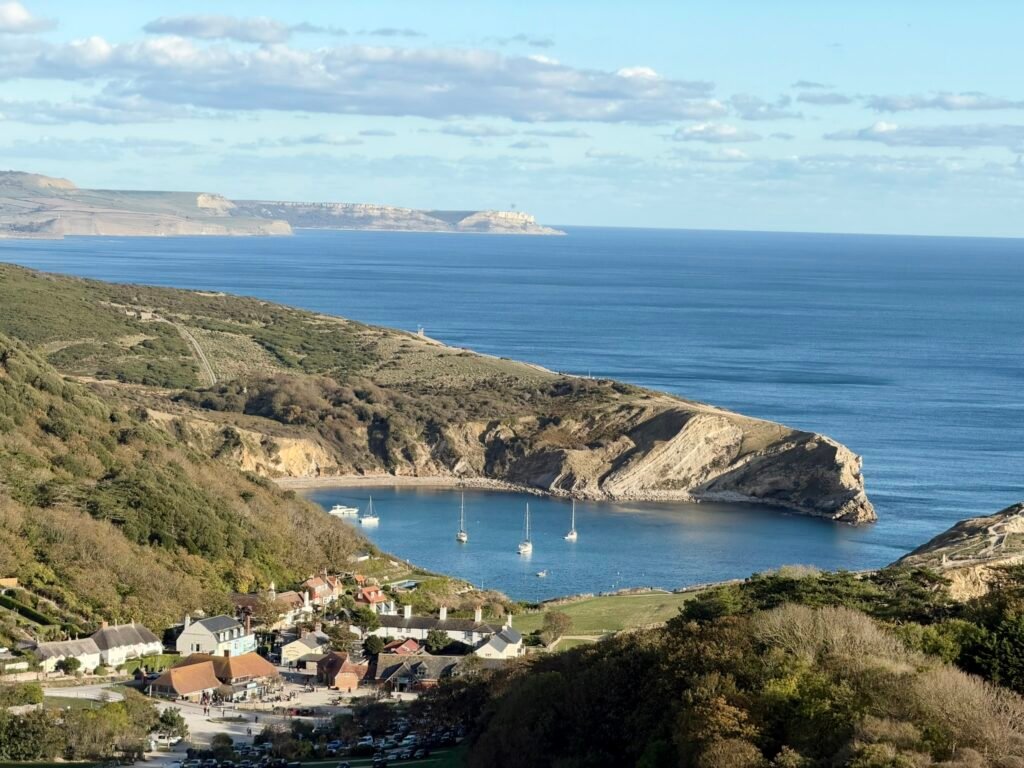
A sheltered horseshoe-shaped bay, little boats and a charming Dorset village, all surrounded by the dramatic Jurassic Coast. It’s a view worth climbing for!
Lulworth Cove: How Nature Created an Almost Perfect Circle
From above, Lulworth Cove looks as though someone has taken a giant compass, drawn a circle into the coastline and left a small opening for the sea. The famous horseshoe-shaped bay is one of the most recognisable sights in Dorset, but its remarkably neat shape wasn’t designed by anyone.
The explanation is geological. The sea broke through a resistant band of Portland limestone, reaching softer rocks behind it. Over thousands of years, erosion widened the opening into the rounded bay we see today, while harder rocks helped preserve the surrounding headlands.
The cove developed towards the end of the last Ice Age, roughly 10,000 years ago, although the rocks themselves are vastly older. There are several different rock formations packed into this small stretch of coastline, making Lulworth an extraordinary outdoor geology classroom.
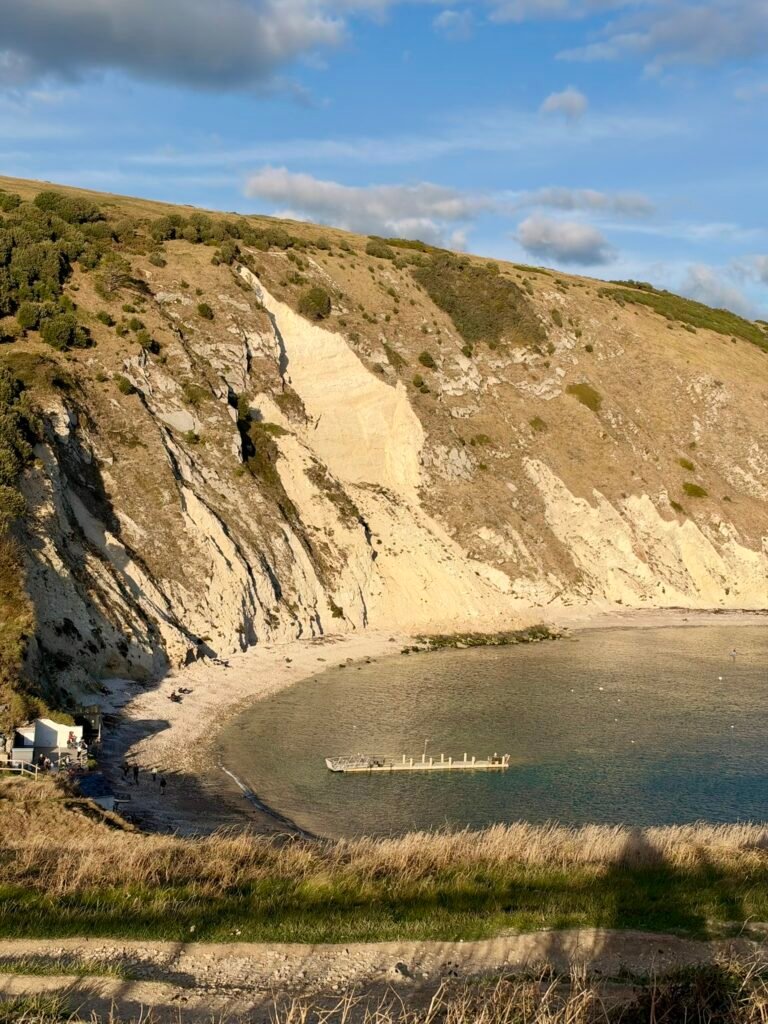
From this viewpoint, the sweeping shoreline and towering pale rock faces reveal just how beautifully nature has shaped Lulworth Cove.
You don’t need a geology degree to appreciate the result. Just look at the curved shoreline, the enormous cliffs and the narrow entrance to the English Channel. Nature has achieved something that would probably require three planning committees, six consultants and a rather expensive feasibility study today.
For a deeper explanation, the Lulworth Estate’s geology guide explains how the different rock layers shaped this extraordinary landscape.
Down to Lulworth Cove Beach: The Water Is Almost Ridiculously Clear
After descending from the Durdle Door direction, I reached the busy visitor-centre area and continued towards the shore. Despite it being October rather than the height of summer, there were still plenty of people enjoying the pleasant weather.
The beach itself is mainly pebbles and stones, not soft golden sand. Anyone planning to spread out a towel and build an enormous sandcastle should probably reconsider their equipment. But what Lulworth lacks in sand, it more than makes up for in scenery.
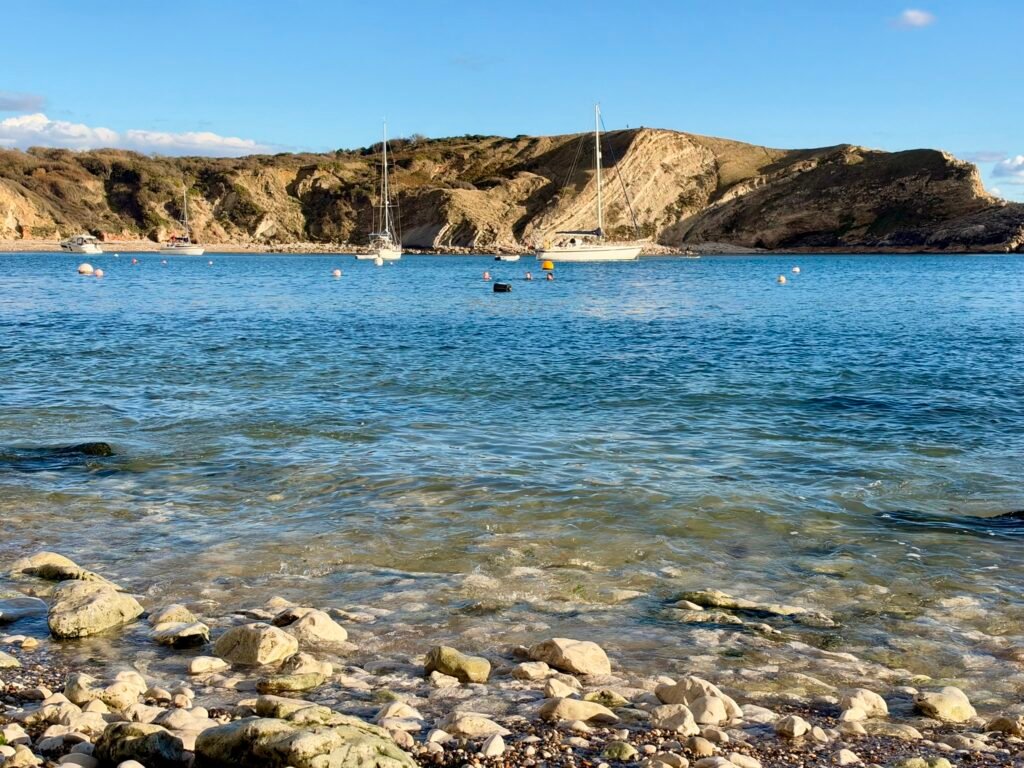
Clear water, sunlit pebbles and sailing boats make Lulworth Cove look wonderfully inviting, especially on a beautiful autumn afternoon.
The water was wonderfully clear, with stones visible beneath the shallows and sailing boats anchored further into the bay. On a sunny day, it’s easy to understand why people sometimes compare this little corner of Dorset with somewhere much further south.
Because the entrance is relatively narrow, the bay is often sheltered from the open sea. However, sheltered doesn’t automatically mean safe. Conditions can change, there are no guarantees of calm water, and visitors should always check the weather and sea conditions before swimming or taking part in water activities.
A Little Harbour Without the Usual Harbour
One of the interesting things about Lulworth Cove is that you can enjoy a traditional maritime atmosphere without a huge marina, towering harbour buildings or rows of luxury waterfront apartments.
A floating pontoon stretches into the water, while moored sailing boats add to the peaceful coastal scenery. It’s a rather lovely contrast to the enormous geological forces that created the place.

Beyond the calm blue water, the headlands frame the narrow opening that connects Lulworth Cove to the English Channel.
There’s something relaxing about standing beside the water and watching the boats. The cliffs provide a dramatic backdrop, the open sea appears through the gap between the headlands, and the whole place feels wonderfully removed from the traffic and everyday noise further inland.
The shoreline is also worth exploring slowly. Smooth pebbles, exposed rocks and little details you might overlook from the viewpoints become much more noticeable at ground level.

Small boats resting beside the shore add a wonderfully traditional seaside atmosphere, with sailing yachts enjoying the sheltered waters beyond.
It’s worth remembering that the Jurassic Coast is protected for its geology. Enjoy the rocks, take photographs and leave fossils and stones where you find them. The coastline has spent millions of years making this extraordinary collection; it would be nice not to dismantle it one souvenir at a time.
West Lulworth: Small Village, Plenty of Temptations
Away from the beach, West Lulworth is a charming little village with traditional buildings, narrow roads and a distinctly seaside atmosphere.
It might be small, but visitors are hardly going to suffer from a shortage of refreshments. You’ll find places selling food, coffee, drinks, ice cream, gifts and souvenirs. In other words, everything necessary to recover from a coastal walk and considerably more opportunities to spend money than you originally intended.
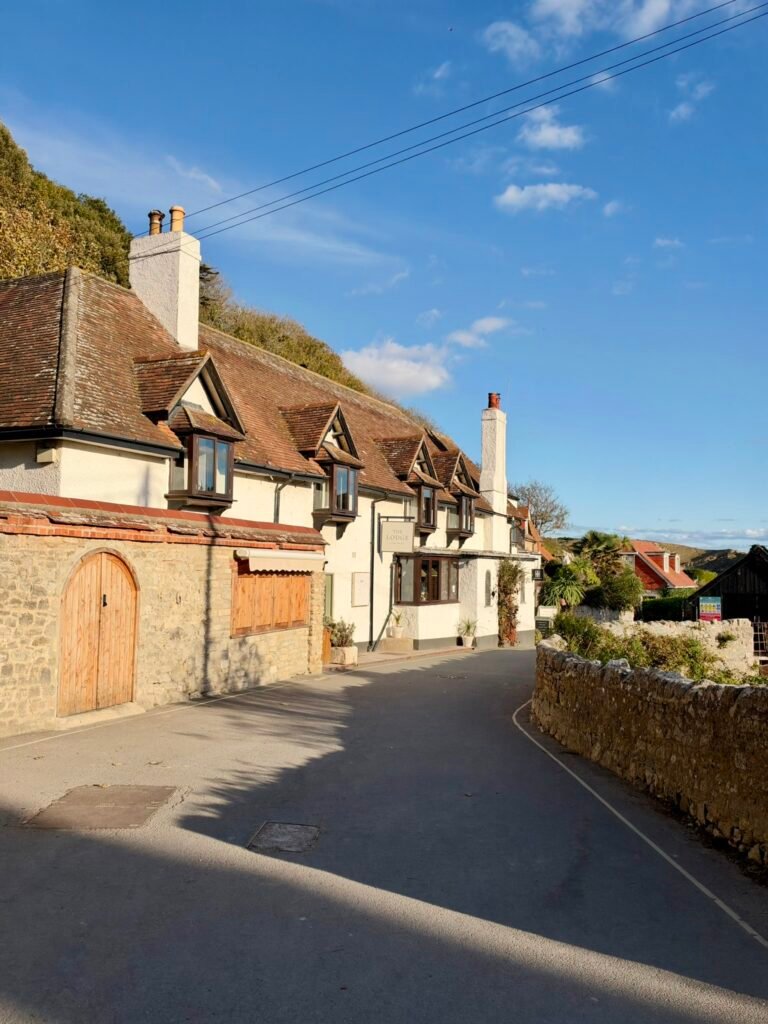
The little village has its own charm, with traditional buildings, places to eat and plenty of opportunities to stop for a coffee or ice cream.
The Lulworth Cove Visitor Centre is particularly worth knowing about. Entry is free, and the displays explain the fascinating geology of the coast through models, photographs and films. It’s an excellent place to understand what you’re looking at before heading out to explore.
The centre normally opens from 10am to 5pm in summer and closes at 4pm in winter, with Christmas Day excluded. It’s also useful for information about local routes, tides and conditions.
Personally, I love the contrast between the village and the surrounding landscape. One moment you’re passing traditional buildings and deciding whether you need an ice cream; a few minutes later you’re looking across cliffs that have been shaped by geological forces beyond anything we can realistically imagine.
The Lulworth Cove Walk: Lovely Views, Less Lovely for Your Calves
The walk between Durdle Door and Lulworth Cove deserves a little preparation. On my visit, it took approximately 25–30 minutes each way, although that depends on fitness, stopping for photographs and how determined you are to admire absolutely everything.
The distance isn’t enormous, but the changes in elevation certainly make themselves known. There are steep slopes, uneven surfaces and sections where the path can be challenging, especially when descending or climbing after rain.
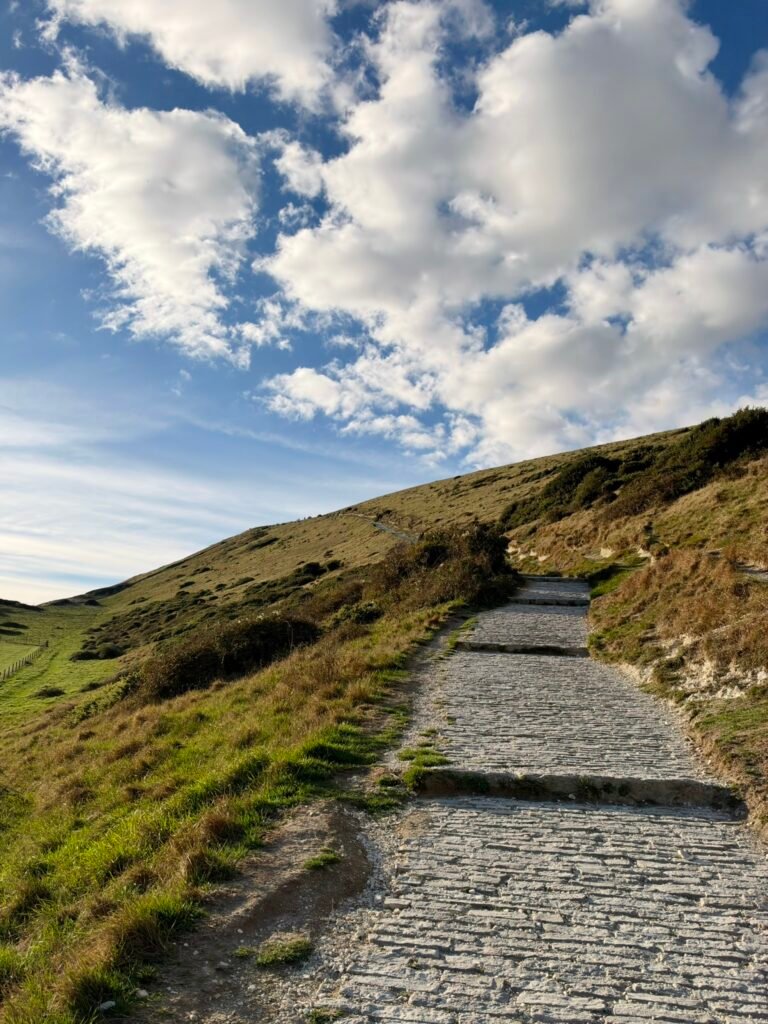
Some of the uphill paths around Lulworth Cove are surprisingly steep and uneven, so sensible footwear is considerably more useful than fashionable shoes.
My advice is simple: wear proper walking shoes, bring water and don’t rush. Some of the stone-paved sections have raised steps and uneven edges, while the higher paths are exposed to wind.
After exploring the beach, I climbed towards the viewpoints and headlands. That was where the landscape really began showing off. From higher up, you can appreciate the extraordinary shape of the cove and watch the little boats become tiny dots on the blue water.
For photographs, the elevated viewpoints are absolutely worth the effort. Just stay on the established paths, avoid the cliff edges and remember that a spectacular selfie isn’t worth a visit from the coastguard.
A Stone Celebrating 185 Million Years of History
During my walk above the cove, I came across a substantial stone monument overlooking the coastline. At first glance, it might look like an ordinary memorial, but its inscription tells a far bigger story.
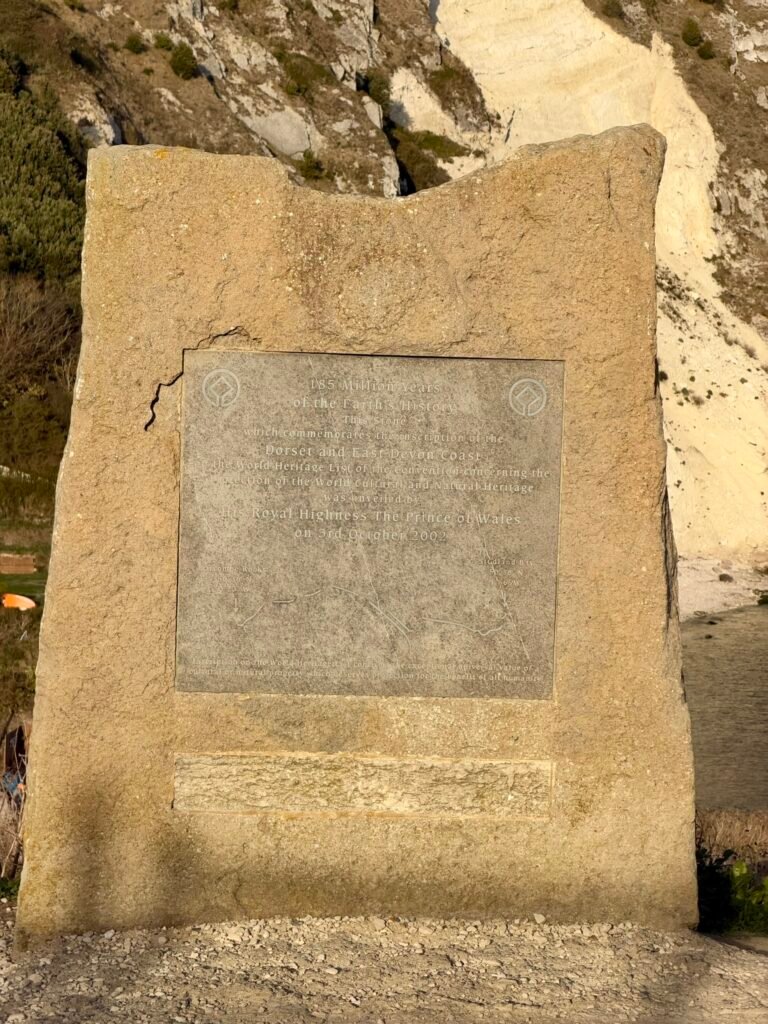
The monument marks the Jurassic Coast’s UNESCO World Heritage designation and was unveiled by the then Prince of Wales on 3 October 2002. Quite a lot of history for one afternoon walk!
The stone commemorates the designation of the Dorset and East Devon Coast as a UNESCO World Heritage Site in December 2001. According to the inscription, it was unveiled by the then Prince of Wales, now King Charles III, on 3 October 2002.
The Jurassic Coast stretches for approximately 95 miles, from Exmouth in East Devon to Studland Bay in Dorset. Along that coastline, the rocks preserve a record spanning around 185 million years of Earth’s history.
That’s what makes this place so remarkable. You’re not simply looking at a beautiful seaside destination; you’re standing beside an extraordinary geological record that helps explain how the landscape, climate and life on Earth have changed over immense periods of time.
And the little stone monument is a lovely reminder that this coastline belongs to a much bigger story than one attractive beach.
An Unexpected Little Heart on the Hillside ❤️
Not every memorable discovery needs to be historically important or millions of years old.
While looking across the surrounding hills, I noticed something rather sweet: a heart-shaped marking on the grassy slope near a white building overlooking the coast.

A little heart-shaped outline on the grass caught my attention below a white building overlooking the coastline. An unexpected and rather lovely discovery!
I don’t know who created the heart or why it was there, and I couldn’t reliably identify the building. But I rather liked the discovery.
It’s easy to arrive at Lulworth with a checklist of famous viewpoints and geological landmarks, then miss the smaller details along the way. Occasionally, something as simple as a heart drawn into a hillside becomes part of what you remember about an afternoon.
Parking at Lulworth Cove and Durdle Door: Prepare Your Wallet
Now for the less romantic part of the adventure: parking.
I arrived at the Durdle Door car park at approximately 3pm and left around 6:30pm. My parking cost roughly £15, which felt rather expensive for a late-afternoon visit.
I initially thought I’d paid the full-day rate. However, the published tariffs explain that £15 covers up to six hours at Durdle Door. So it wasn’t the full-day ticket after all, but it was still the minimum standard car tariff for my visit.
According to the official Lulworth Estate parking information, the published car charges are:
- Durdle Door: £15 for up to six hours; £25 for up to nine hours.
- Lulworth Cove: £9 for up to three hours; £17 for up to six hours; £25 for up to nine hours.
Personally, I think more flexible hourly pricing would be fairer, particularly for people arriving later in the day or planning a relatively short stop. I understand that maintaining footpaths, visitor facilities and a protected coastline costs money, but £15 for around three and a half hours still feels steep.
The useful distinction is that the two car parks have different tariffs. For a short visit focused only on Lulworth Cove, parking directly at the cove may be a better choice. If you want to explore Durdle Door, walk to the cove and enjoy the viewpoints, parking at Durdle Door makes sense.
Always check the current charges and operating conditions before travelling.
Accessibility, Toilets and Other Practical Advice
Lulworth Cove is easier to visit than some of the more demanding locations along the Jurassic Coast, but there is a considerable difference between visiting the village and beach area and tackling the higher coastal paths.
The main car park at Lulworth Cove is closer to the visitor facilities, and the Visitor Centre has step-free access, accessible toilets and designated accessible parking. The Estate also offers a Tramper all-terrain mobility scooter service, which should be arranged in advance through the Visitor Centre.
The pebble beach itself may be difficult for wheelchairs or anyone with reduced mobility. The steep, stepped hill routes towards Durdle Door are a different proposition altogether and aren’t suitable for everyone.
Toilets are available around the Lulworth Cove Visitor Centre and at the Durdle Door car park area. This is particularly useful if you’re planning to walk between the two, rather than just visiting one location.
For navigation, use BH20 5RQ for Lulworth Cove or BH20 5PU for Durdle Door. Public transport is also possible, although services and seasonal connections should be checked before setting out. The nearest railway stations include Wool and Wareham.
The official Lulworth Cove accessibility guide is worth consulting if you need more detailed information about paths, facilities or mobility assistance.
One More Stop: Stair Hole and the Wider Jurassic Coast
After visiting the cove and climbing to the viewpoints, I continued towards nearby Stair Hole before heading back to the Durdle Door car park.
Stair Hole is a completely different geological spectacle, with dramatic folded rocks and natural sea arches. I’ve covered it separately in Stair Hole, Dorset: Where the Jurassic Coast Got All Twisted, including the extraordinary Lulworth Crumple.
There’s plenty more to discover around this part of Purbeck. For something with a very different kind of history, the nearby Tyneham ghost village is another memorable stop, although access depends on military range opening arrangements.
You can also find more beautiful coastlines, historic places and lesser-known destinations in my Dorset travel collection.
Is Lulworth Cove Worth Visiting?
Absolutely. In fact, I’d go further: if you live in Dorset, you really should experience Lulworth Cove at least once. And if you’re visiting the county for the first time, it deserves a place near the top of your itinerary.
The parking could be more visitor-friendly, the hills can be exhausting and the village becomes busy, but none of that takes away from the extraordinary beauty of the landscape.
I’ve visited this area many times, and I still find something worth photographing whenever I return. On this particular October afternoon, it was the clear water, the magnificent views, a monument celebrating millions of years of history and an unexpected little heart on the hillside.
That’s the joy of exploring places like Lulworth Cove. You arrive expecting one famous view and leave remembering an entire afternoon.
One journey. One story. One more stop.