
Just when you think the Jurassic Coast can’t possibly get any more dramatic, along comes Stair Hole in Dorset — a spectacular little cove where the cliffs look as though someone grabbed the rocks, folded them like a bedsheet and forgot to straighten them out.
There are twisted limestone layers, natural sea arches, turquoise water and a geological story millions of years in the making. And the best part? It’s practically next door to Lulworth Cove, yet many visitors don’t even realise it’s there.
The famous horseshoe-shaped bay might get most of the attention, but Stair Hole has something rather extraordinary up its sleeve.
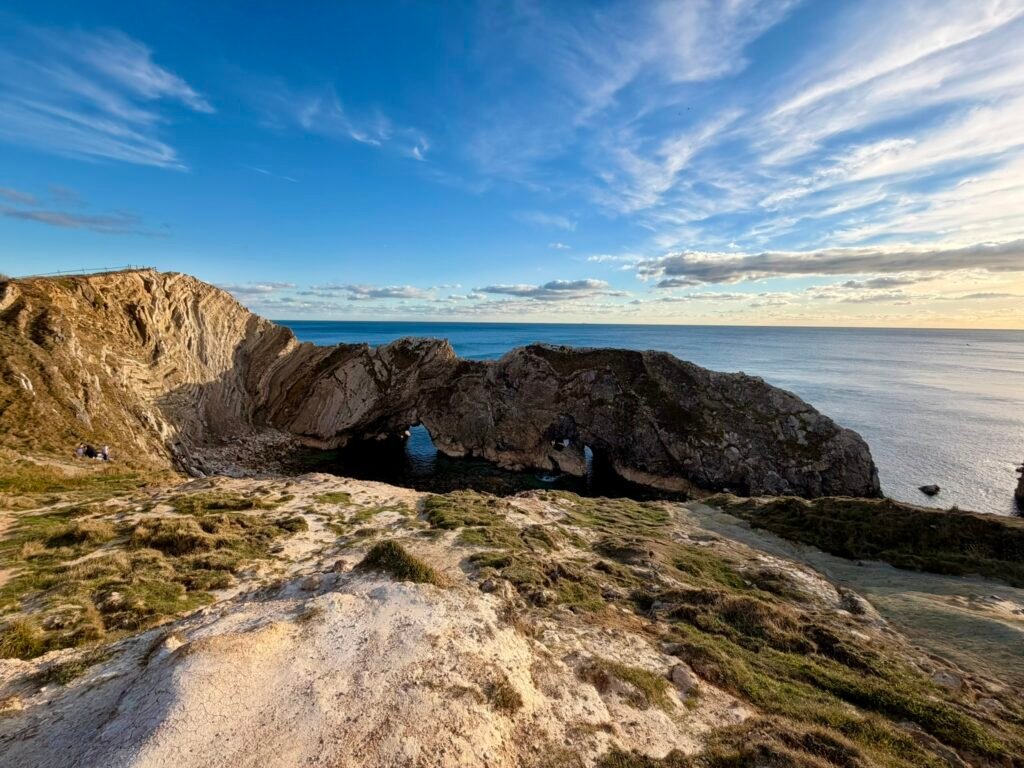
Stair Hole: A Little Cove with an Enormous Geological Personality
Stair Hole sits immediately west of Lulworth Cove, along Dorset’s UNESCO-listed Jurassic Coast. From above, it looks like a rocky coastal experiment that somebody abandoned halfway through.
And in a way, that’s exactly what it is.
Stair Hole is an embryonic cove — a smaller, developing version of the much more famous neighbour beside it. The sea has broken through a resistant band of limestone and begun eroding the softer rocks behind it, gradually creating a hollow in the coastline.
Lulworth Estate suggests that what we’re looking at today resembles an early stage in Lulworth Cove’s development, perhaps around 10,000 years ago.
It’s rather like watching the opening episode of a geological television series when you’ve already seen the finale next door.
Except this particular series has been running for thousands of years, and nobody seems remotely interested in speeding up production.
The Lulworth Crumple: When the Earth Decided to Fold Everything
If there’s one feature that makes Stair Hole genuinely extraordinary, it’s the Lulworth Crumple.
Look at the cliffs and you’ll notice layers of rock bending into enormous curves, some almost vertical and others seemingly folded back on themselves.
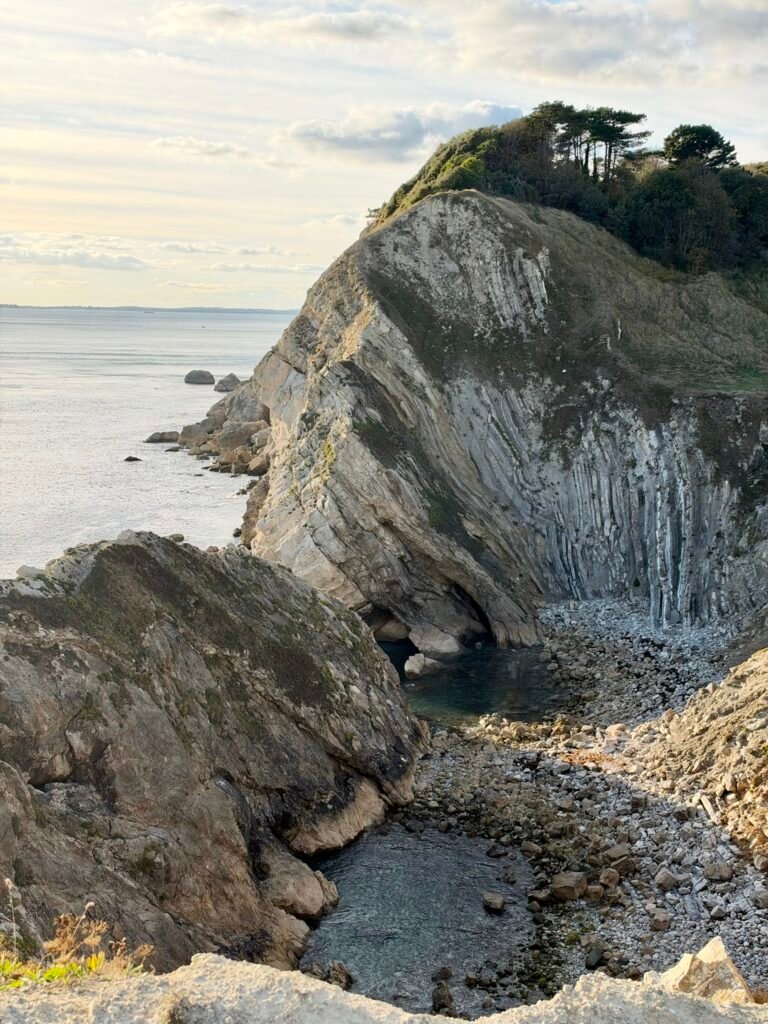
These aren’t the result of some unfortunate landslide. They’re evidence of powerful geological forces that acted on rocks originally deposited in relatively flat layers.
During the mountain-building processes associated with the formation of the Alps, enormous pressures affected southern England. At Stair Hole, those forces compressed and deformed the sedimentary rocks.
Different materials reacted differently. The harder limestone layers fractured and bent, while softer mudstones were squeezed and displaced between them.
The result is an astonishing display of geological origami.
And unlike the kind you make with paper, this took millions of years, extraordinary pressure and an impressive amount of patience.
The British Geological Survey identifies the Lulworth Crumple as one of the Jurassic Coast’s remarkable geological structures. It’s a visible reminder that apparently solid, immovable landscapes have experienced some spectacular upheavals.
All without making a sound that we can hear today.
Caves, Arches and the Sea’s Very Slow Demolition Project
Folding the rocks wasn’t enough. Once the coastline had developed its extraordinary shape, the sea began doing some remodelling of its own.
Waves exploited cracks and weaknesses in the limestone, gradually enlarging them into caves and openings. Some became natural arches, allowing seawater to move through the rock.
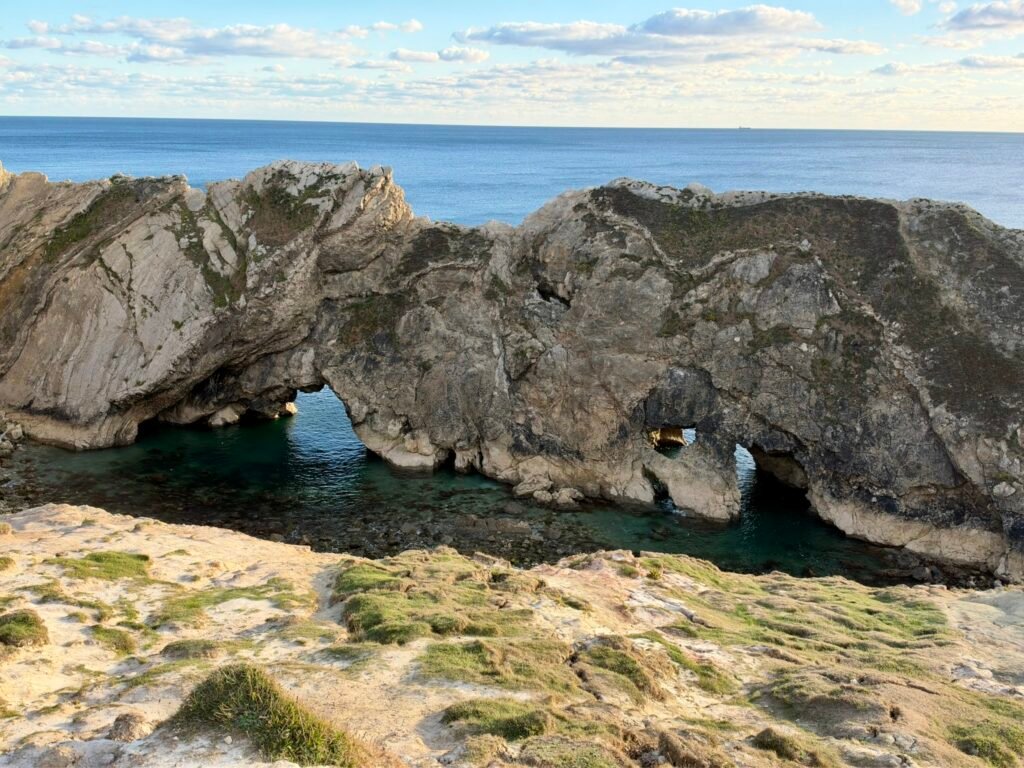
At the Stair Hole viewpoint, you can see several stages of coastal erosion remarkably close together.
It’s one of those rare places where a geography textbook suddenly becomes considerably more interesting.
Instead of diagrams showing how caves become arches and eventually collapse, you can look straight at real examples.
Over sufficiently long periods, erosion may cause arches to collapse, leaving isolated stacks that can eventually wear down into stumps.
Nobody knows exactly when an individual feature at Stair Hole will change, and predicting a particular collapse would be impossible.
But the coastline is certainly not finished evolving.
This is one renovation project where the contractor is the English Channel, and the completion date is approximately never.
Finding the Stair Hole Viewpoint
The most satisfying way to appreciate Stair Hole is from the elevated viewpoint above the cove.
From Lulworth Cove’s main visitor area, follow the paths towards the western headland. The walk is relatively short, although the approach is uphill and the ground becomes uneven.
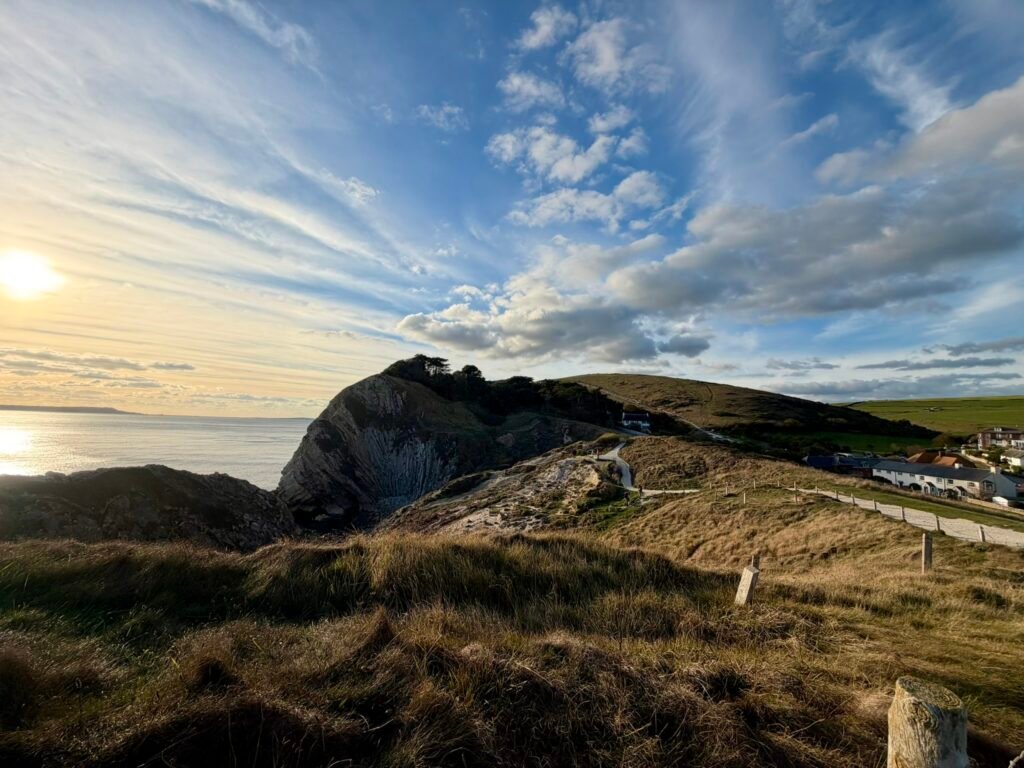
The change in scenery is striking. One moment you’re near the village, visitor facilities and the well-known cove. Shortly afterwards, you’re looking down into a rocky landscape that could hardly be more different.
There’s an interpretation panel at the viewpoint explaining the geology, which is particularly useful if you’d rather not spend the afternoon wondering which rock formation is doing what.
The surrounding headland also provides views towards the sea and across the nearby landscape.
However, don’t confuse the viewpoint with an invitation to scramble down into the cove itself.
The cliffs are steep, unstable in places and potentially dangerous. Enjoy the spectacle from established paths and safe viewing positions, rather than attempting to reach the rocks or water below.
A photograph is never worth an unexpected and extremely rapid descent.
Another Opening to the Sea
One particularly photogenic part of Stair Hole is the narrow opening between the rocky cliffs, where the sea becomes visible beyond the headland.
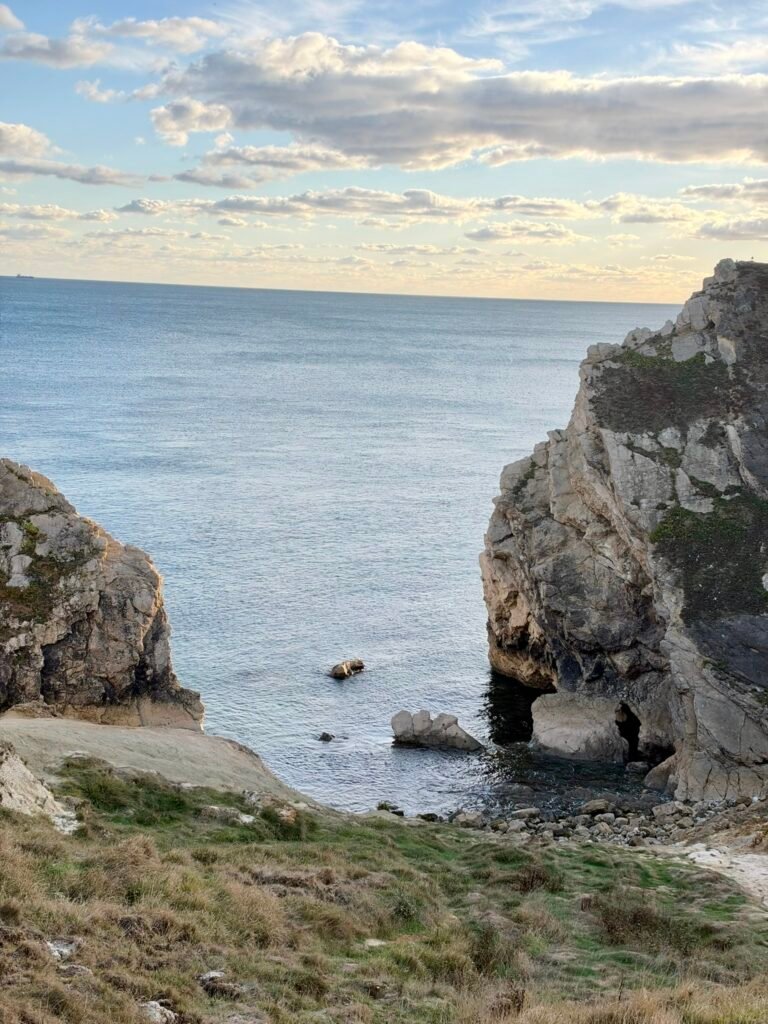
It’s a different perspective from the main view of the crumpled limestone.
Here, the landscape seems almost to frame the water, with weathered rock on either side and grassy slopes leading towards the shoreline.
At lower water levels, more of the rocky shoreline and the smaller openings around the base of the cliffs may become visible. Conditions change with the tides, waves and weather, so the scene won’t necessarily look identical on every visit.
Stair Hole isn’t a conventional beach destination. It’s better treated as somewhere to stop, observe and admire the forces that have shaped this coastline.
And perhaps take several photographs of almost exactly the same view before eventually admitting that the first one was probably the best.
Visiting Stair Hole: Parking, Access and Practical Information
Stair Hole is free to view, with no separate admission ticket required. The main expense for drivers is parking.
The most convenient option is Lulworth Cove Car Park, West Lulworth, BH20 5RQ. Lulworth Estate’s published car tariffs are currently £9 for up to three hours, £17 for up to six hours, £25 for up to nine hours and £32 for a longer stay.
Charges apply throughout the year, including weekends and bank holidays. Check Lulworth Estate’s official parking information before travelling, as tariffs and conditions may change.
Allow around 20–40 minutes specifically for the Stair Hole viewpoint, or longer if you’re interested in geology or photography. It’s sensible to combine the visit with Lulworth Cove rather than pay for parking just to take a quick look.
For accessibility, the uphill paths, uneven ground and cliff-top setting make the viewpoint unsuitable for many standard wheelchairs and mobility scooters. Visit Dorset advises that an all-terrain Tramper is required to reach the viewpoints and notes that one is available for hire at Lulworth Cove; check availability in advance.
Accessible toilets are located near the main car park and Heritage Centre, not at the exposed viewpoint itself.
Wear shoes with good grip, especially after rain, and take particular care in windy conditions. The cliffs can crumble, and some nearby coastal areas are subject to wildlife-protection restrictions.
The sea and rock formations are best admired from above. There’s no need to become part of the geological record.
Is Stair Hole Worth Visiting?
Absolutely. In fact, for anyone fascinated by unusual landscapes, Stair Hole may be one of the most interesting small stops along this stretch of Dorset’s coast.
It’s compact, visually spectacular and packed with geological features that would usually require several textbook chapters to explain.
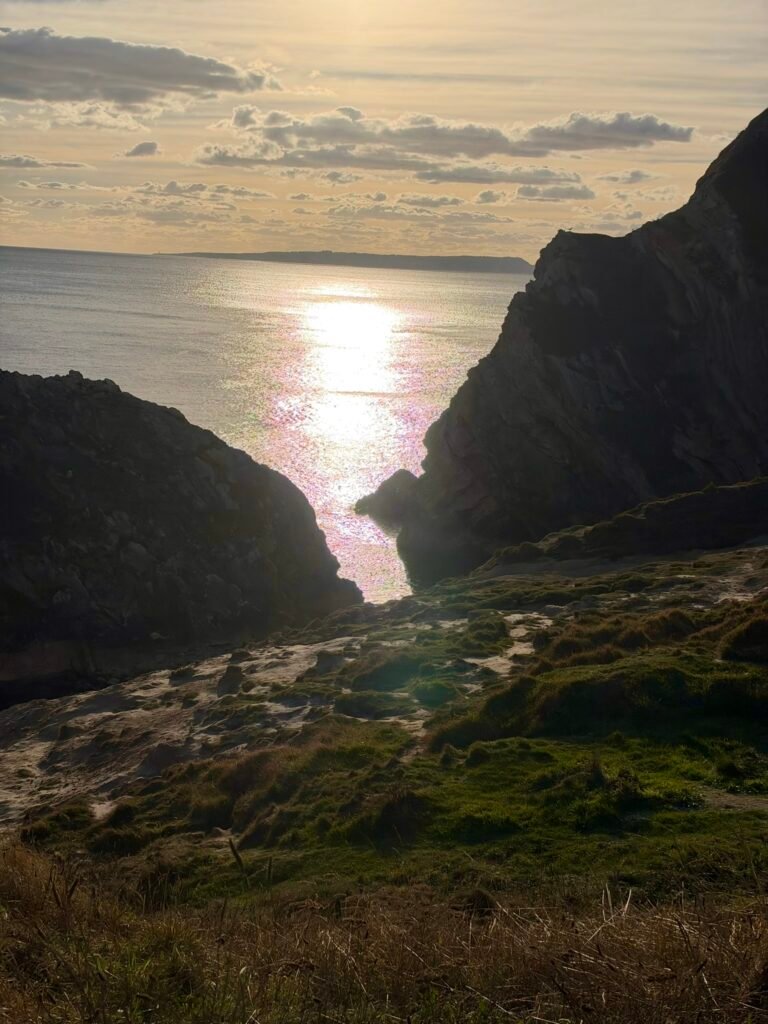
The scenery can be especially atmospheric when the sun is low and the shadows begin spreading across the cliffs.
Stair Hole is only a short walk from the famous cove, so it’s well worth exploring both. Our Lulworth Cove guide takes you around the horseshoe-shaped bay, through the little village and up to the spectacular viewpoints, with practical tips on parking and the steep walk towards Durdle Door. Durdle Door and Lulworth Estate and Castle will have their own stories to come.
For another unusual destination in the surrounding Purbeck countryside, there’s Tyneham Village, the ghost village you can actually visit, along with the remarkable wartime story behind the village that never went home.
And if you’re exploring further afield, there are plenty more places to discover in our Dorset collection.
Stair Hole might be small compared with the famous landmarks around it, but it proves that a place doesn’t need to be enormous to have an extraordinary story.
Sometimes all it takes is a few million years, a little pressure and a sea with absolutely no respect for straight lines.
One journey. One story. One more stop.