
The war ended. The people of Tyneham never came home.
The history of Tyneham village in Dorset reaches back to medieval England, but it was a decision made in November 1943 that gave this quiet Purbeck valley its extraordinary modern story. Residents were ordered to leave so the Army could use the surrounding countryside for wartime training. They expected the move to be temporary.
Today, roofless cottages stand among green fields, while the church and school survive as reminders of the community that once lived here. I visited in October 2026, drawn by the ruins and their unusual setting. What stayed with me was not only the evacuation, but the discovery that Tyneham has many centuries of history beneath its twentieth-century silence.
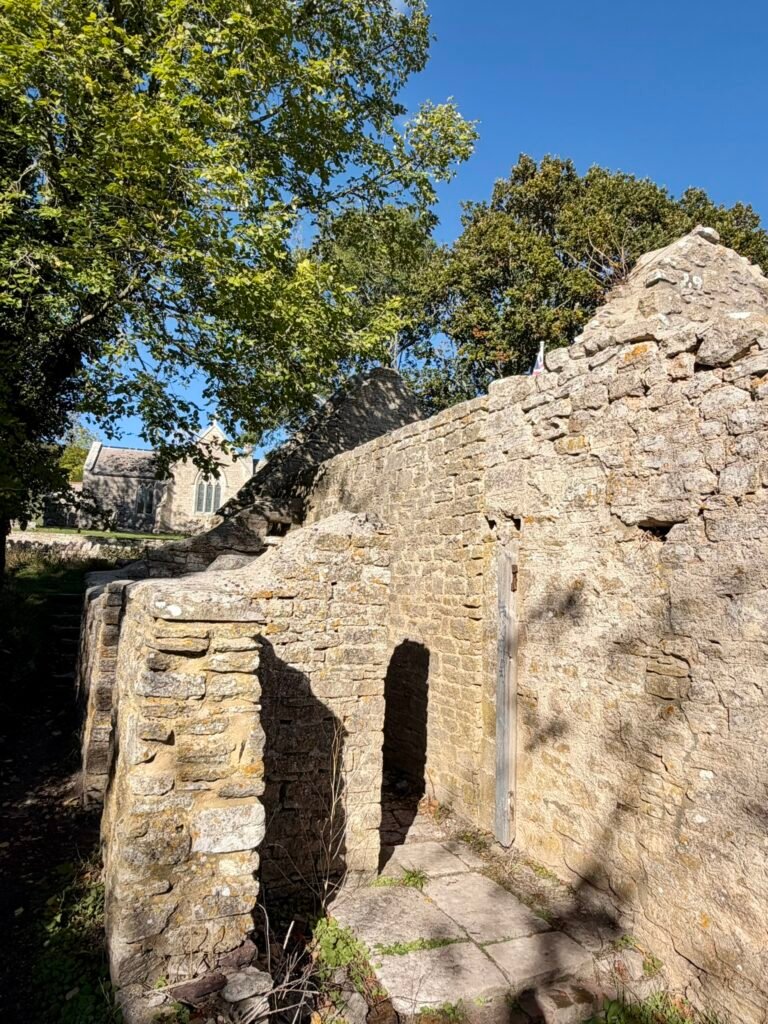
Tyneham before 1943: a village with medieval roots
Tyneham was recorded as Tigeham in the Domesday Book of 1086. Its history stretches back much further than the familiar photographs of empty cottages: the surrounding landscape contains traces of prehistoric activity, and the settlement itself developed through the medieval period.
St Mary’s Church is an especially tangible link with that past. Parts of its nave and north transept date from the thirteenth century, while the west porch has fourteenth-century origins. Later generations altered the building, but the medieval fabric remains. Historic England’s listing of St Mary’s Church explains how its architecture evolved.
Even more remarkable is Tyneham House. Its surviving medieval hall dates from the fourteenth century, with later Elizabethan additions transforming the manor. The remains are now protected as a Grade II* listed building. The house is outside the public visitor area, but its history is documented in Historic England’s detailed record of the medieval manor.
These older layers change how I see the village. Tyneham is often presented as a place where time stopped in 1943, yet its stones tell a story spanning Norman England, medieval manor life, centuries of estate ownership and rural change.
The village school: a quieter ending before the evacuation
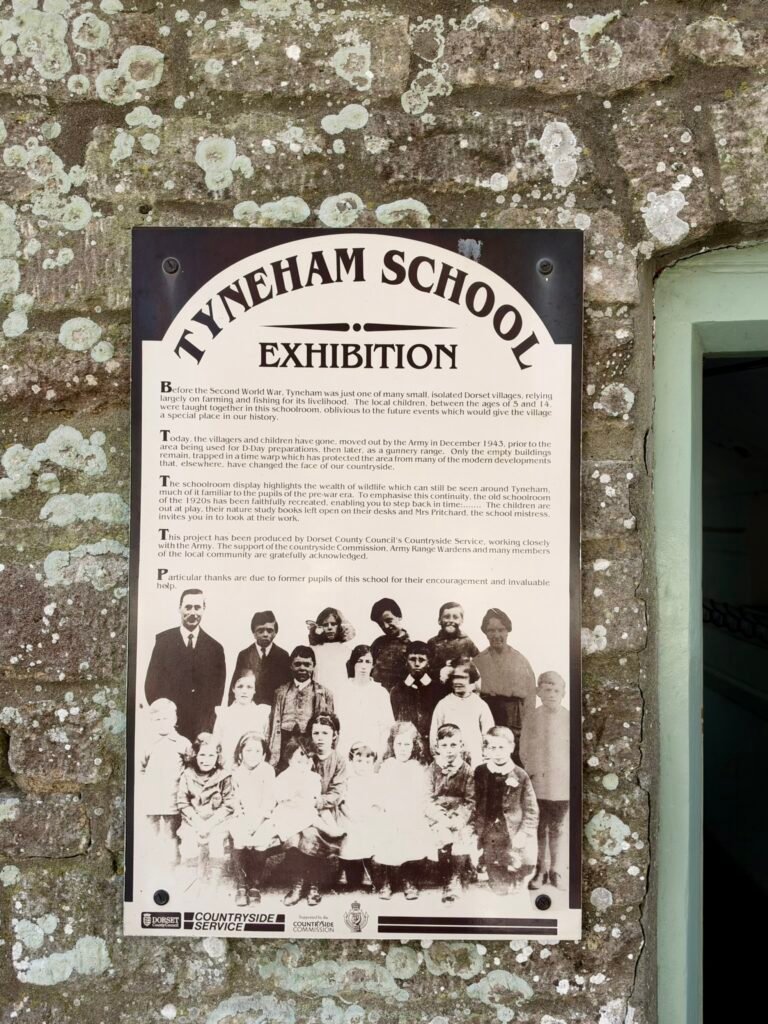
The old school offers a glimpse of Tyneham before the Army arrived. Built in the nineteenth century, it served local children in a single classroom, with different ages learning alongside one another. Photographs of former pupils now form part of the exhibition.
By the early twentieth century the community was already shrinking. The nearby Worbarrow coastguard station closed in 1910, and changing employment patterns reduced the number of local children. Tyneham School closed in 1932 and was later used as a village hall — more than a decade before the wartime evacuation.
Its survival matters for architectural as well as social history. The building is Grade II listed, and Historic England records its significance as part of the historic village alongside the church.
A post office, ration books and an unexpected discovery
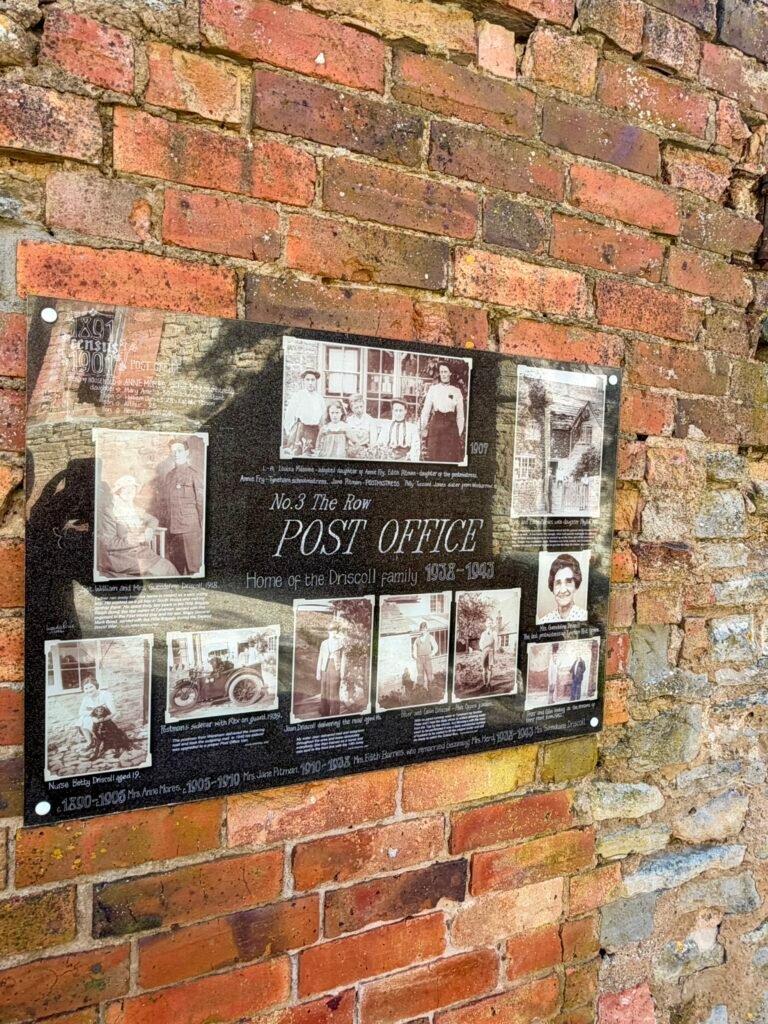
The former post office was one of the places connecting Tyneham with the world beyond the valley. Colin Driscoll served as postmaster during the Second World War, and the family’s history is remembered in an exhibition at the site.
In 1975, old wartime ration books were discovered in a former shed behind the post office. Some still carried the names of villagers. They were ordinary administrative documents, but their survival made them a rare record of a community that had been dispersed more than thirty years earlier.
I find details like this more revealing than dramatic reconstructions. A building can show where someone lived; a name on a ration book can help show who was there. The discovery is described in Tyneham’s historical archive.
The Bond family and Tyneham House
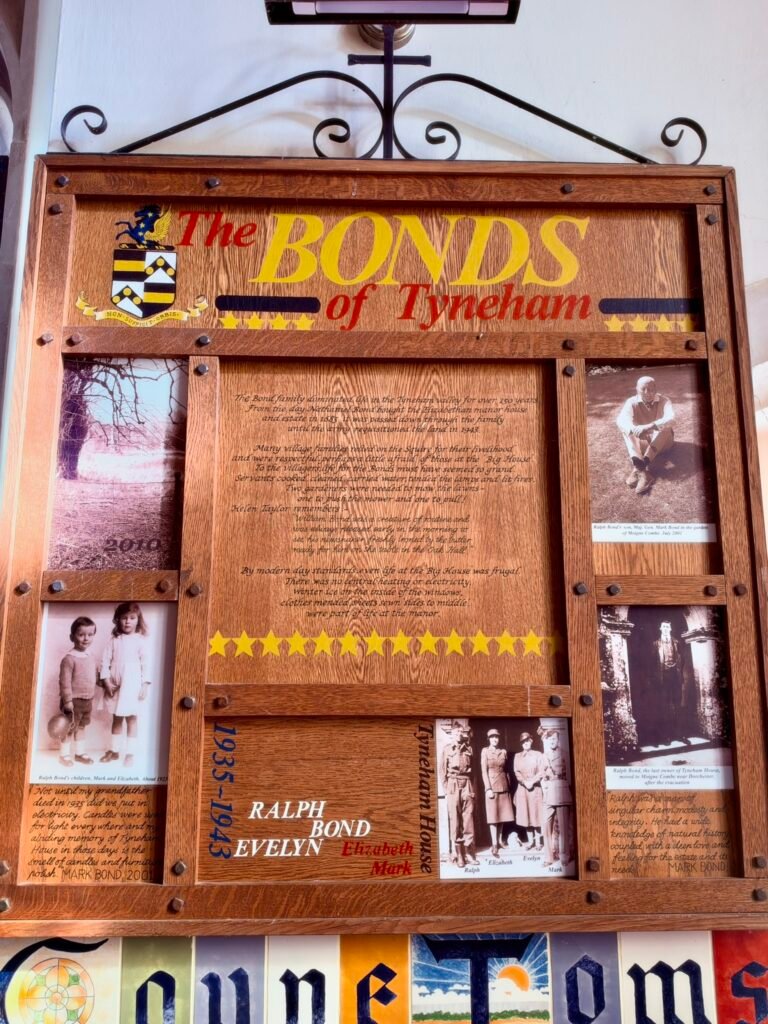
The Bond family acquired the Tyneham estate in 1683, beginning an association that lasted for more than two and a half centuries. Their influence can be seen in the history of the manor house, church and village buildings.
The estate itself had much older foundations. The fourteenth-century hall of Tyneham House was adapted when the main Elizabethan range was built in the late sixteenth century. Later extensions and alterations changed its appearance again. The surviving medieval structure is particularly important because it preserves evidence of how a high-status domestic building was used and transformed over time.
Tyneham House is now ruinous and strictly off limits, so it should not be mistaken for one of the accessible cottages. The exhibition about the Bonds nevertheless gives visitors a sense of the estate’s long history — a reminder that the story did not begin with the Second World War.
The farms and the working landscape
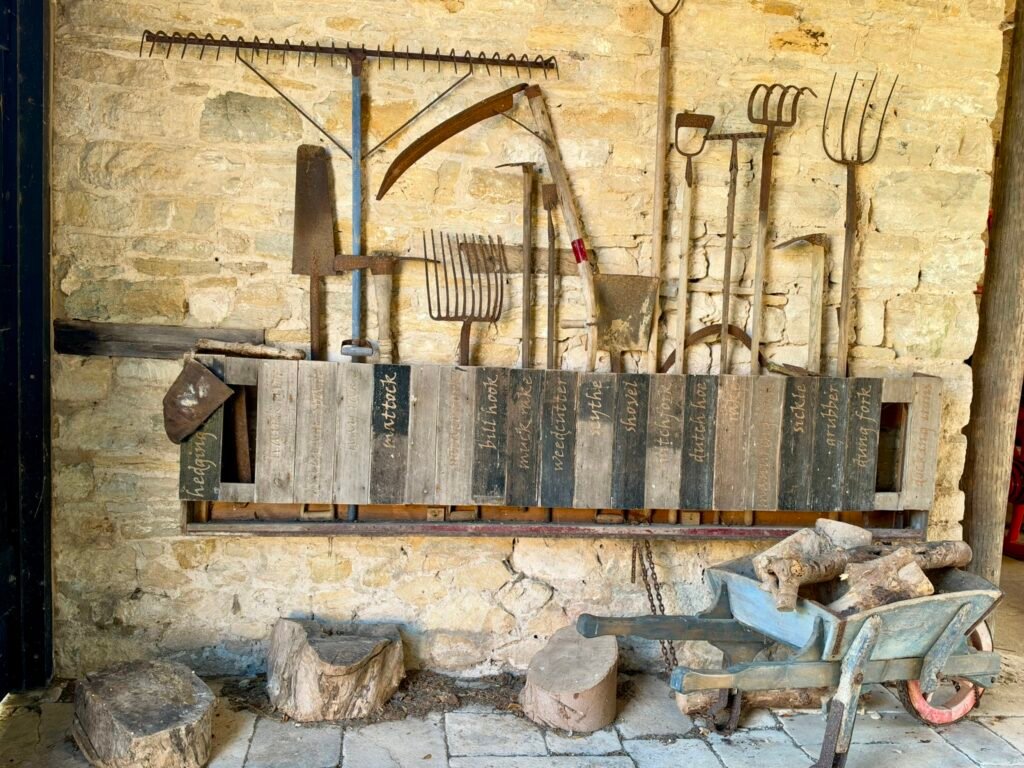
The stone farm buildings and traditional tools at Tyneham are reminders that the valley was once a working landscape. Fields, livestock and seasonal agricultural tasks shaped the routines of people living here.
Tyneham Farm has since been restored as part of the visitor experience. Its displays help explain the practical side of rural life, complementing the school, post office and church. Together, these places show a community that was changing even before the evacuation.
November 1943: the order to leave
During the Second World War, the Army needed additional land for live-fire training. The countryside between East Lulworth and Kimmeridge was selected, and the civilian population was told to leave.
On 16 November 1943, Southern Command issued an official evacuation notice. It stated that the military would take over the area on 19 December 1943 and that all civilians had to be gone by that date. Residents therefore had a little more than a month to arrange their departure, just as winter approached.
The notice acknowledged that the move was a serious sacrifice and referred to compensation and help finding alternative accommodation. It did not, however, give a written guarantee of return. The villagers nevertheless understood the requisition as a wartime measure and hoped to come back when the fighting was over.
The reason for the decision was real: military training was crucial as Britain and its allies prepared for the next stage of the war. But understanding that context does not diminish the disruption caused to a small rural community.
The farewell message at St Mary’s Church
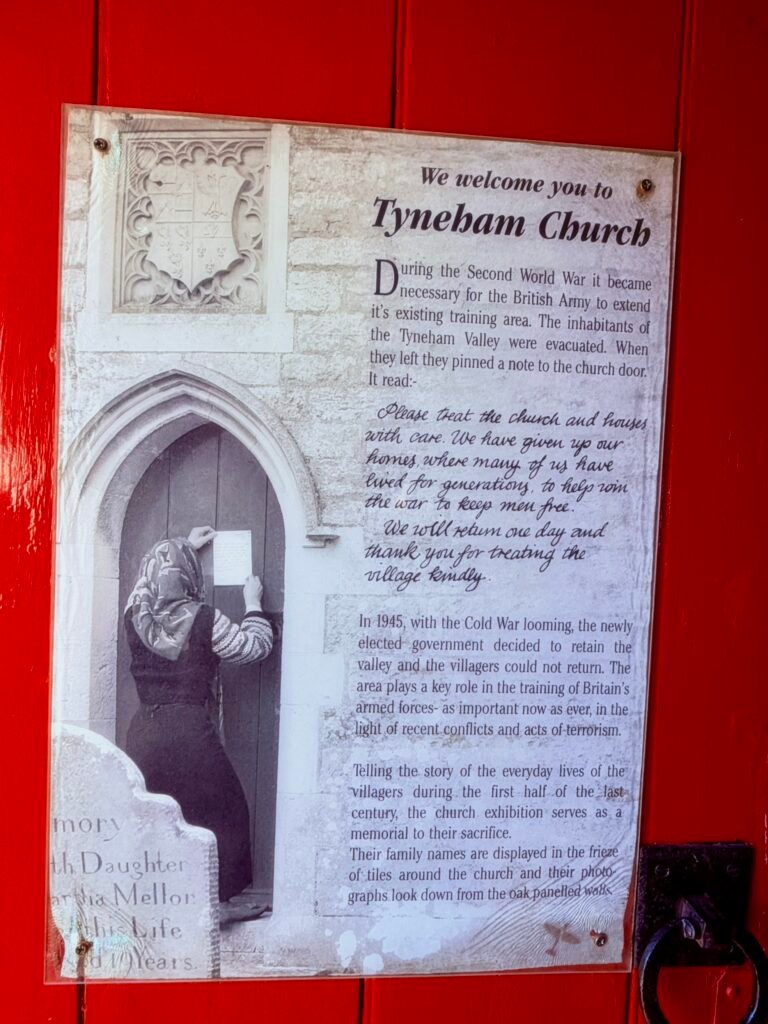
Before leaving, a message was placed on the door of St Mary’s Church. It asked that the church and houses be treated with care and expressed the residents’ hope that they would return one day.
The words are remembered because they are so restrained. There is no elaborate speech, only a request to look after the place until its people can come back. Different historical reproductions vary slightly in their wording, but the meaning is unmistakable.
By the December deadline, the village had been evacuated. The church door closed on one chapter of Tyneham’s history, while the surrounding land became part of the military training ranges.
The war ended. What happened to Tyneham?
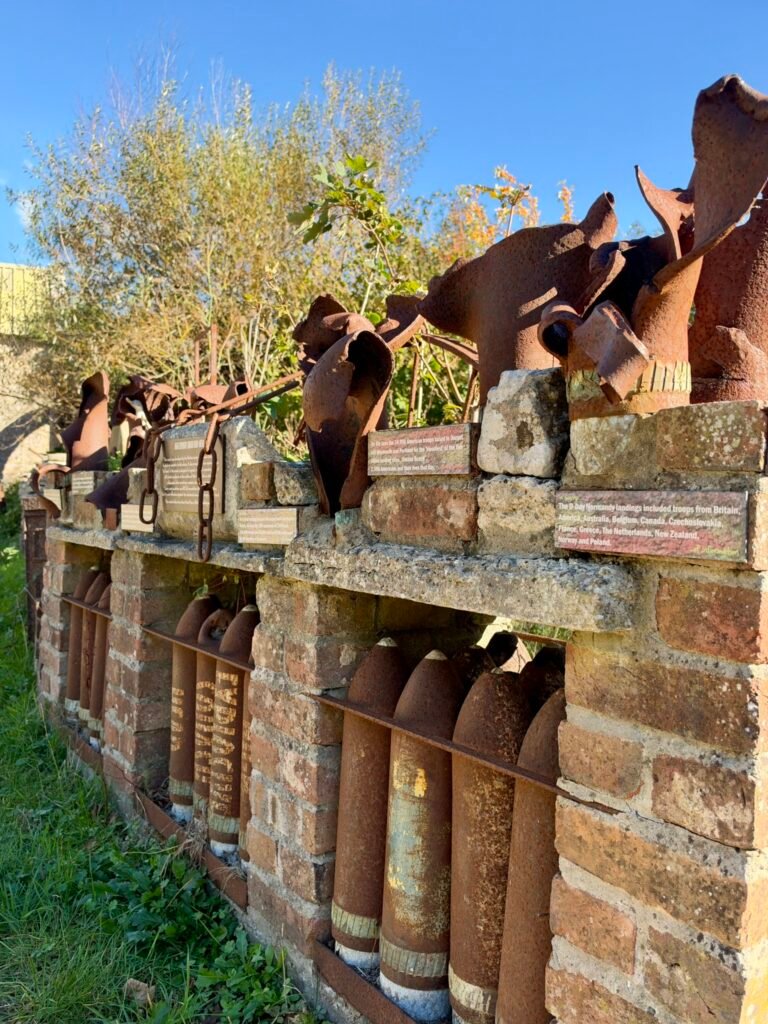
Victory in Europe came in May 1945, but the residents did not regain their village. The expanded Lulworth Ranges remained important to military training, and the government decided to retain the land.
The decision was challenged. A public inquiry took place in Wareham in 1948, and a compulsory purchase order relating to Tyneham House followed in 1952. Campaigns for the return of the village continued for decades, but permanent resettlement never happened. The Tyneham historical timeline traces those developments and the later campaigns for access.
This is the central sadness of the story: a departure made for a wartime emergency became permanent after the war. The buildings deteriorated, and a village with centuries of continuous history could no longer function as a living community.
From military range to preserved heritage
Tyneham did not disappear completely. Campaigners and historians kept public attention on the site, while efforts to improve access and preserve its surviving buildings gathered pace. In 1975, the Lulworth Range Walks were formally opened; later restoration work helped secure the church, school and farm exhibitions.
Today, Tyneham can be visited on designated days when the ranges are open. The ruined cottages are a powerful sight, but the surviving church, school and farm tell a broader story about architecture, rural work and the many generations who lived in the valley.
If you are planning to visit, my Tyneham Village Quick Stop covers parking, opening restrictions and what you can see. You can also explore more places with fascinating histories through the Dorset archive.
A final look across the valley
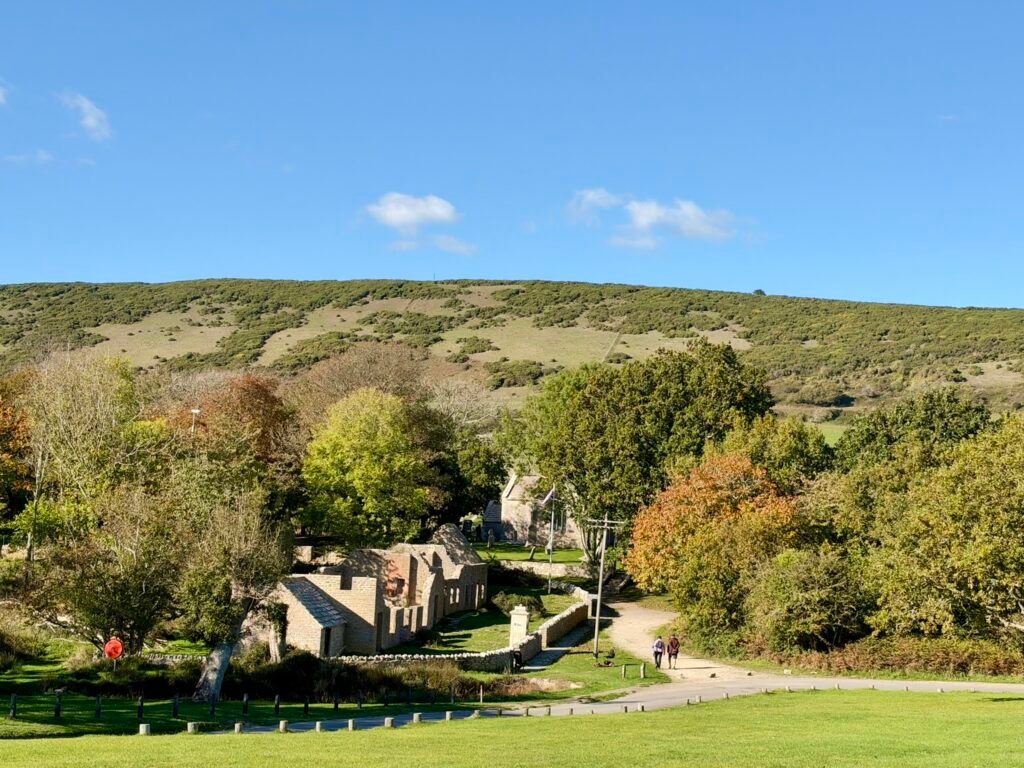
Before leaving, I looked back towards the Purbeck Hills. The ruined cottages and the church stood in a landscape that seemed almost untouched by the modern world. It would be easy to mistake Tyneham for a medieval ruin, but much of what we see was still a lived-in village in 1943.
Its story holds more than one kind of history: a medieval church, an extraordinary old manor house, generations of farming, a wartime evacuation and decades of campaigning to preserve what remained. The sadness is real, but so is the achievement of keeping these layers visible.
The villagers never returned to live here. Yet their village is no longer simply an abandoned place behind military gates. People can walk its lanes, study its buildings and understand something of the lives and centuries that shaped it.
The people of Tyneham never came home. But their village has never been forgotten.
One journey. One story. One more stop.