
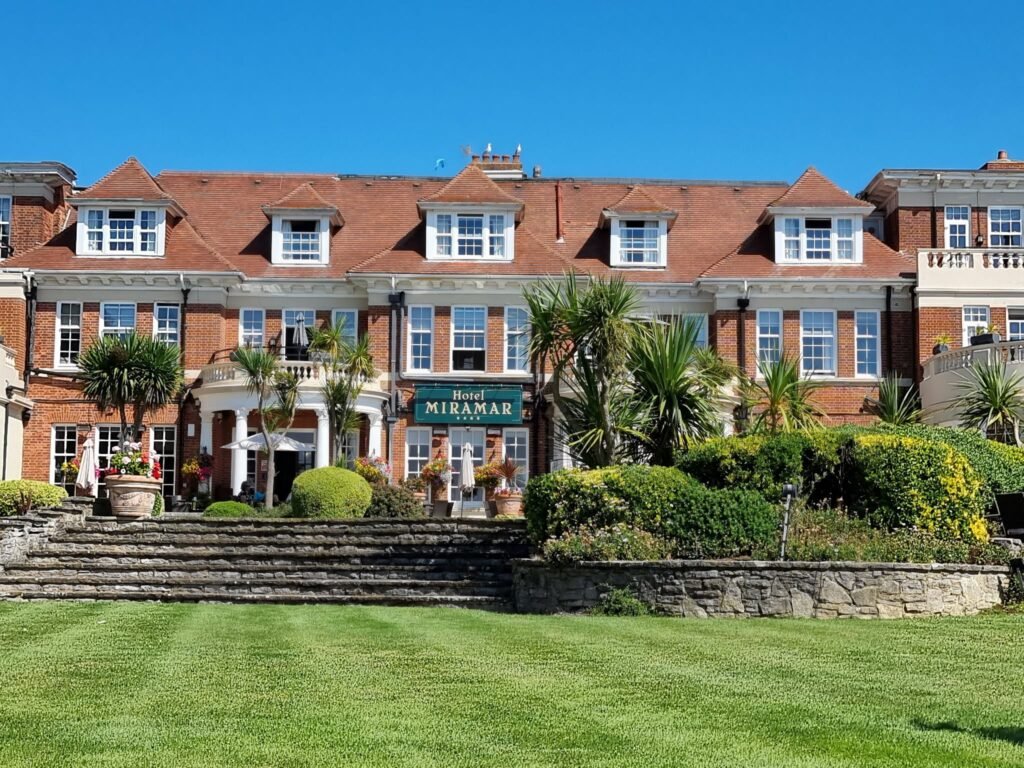
You probably know J.R.R. Tolkien as the man who gave us hobbits, wizards, dragons and the extraordinary world of Middle-earth. But did you know that one of his favourite places to escape to was a rather elegant seaside hotel in Bournemouth? Not Rivendell, not the Shire, but the Hotel Miramar, overlooking the English Channel. And the more I discovered about this beautiful Edwardian building, the more interesting the story became.
A Blue Plaque With a Rather Famous Name
There are plenty of handsome hotels along Bournemouth’s East Cliff, but how many can claim that the creator of The Lord of the Rings was once a regular guest?
Just outside the entrance to Hotel Miramar is a blue plaque commemorating John Ronald Reuel Tolkien, who stayed here regularly from the 1950s until 1972. It’s easy to walk past without giving it a second glance, especially when the gardens and sea views are competing for your attention.
But stop and think about that for a moment. One of the world’s most celebrated fantasy authors regularly came to Bournemouth for his holidays!
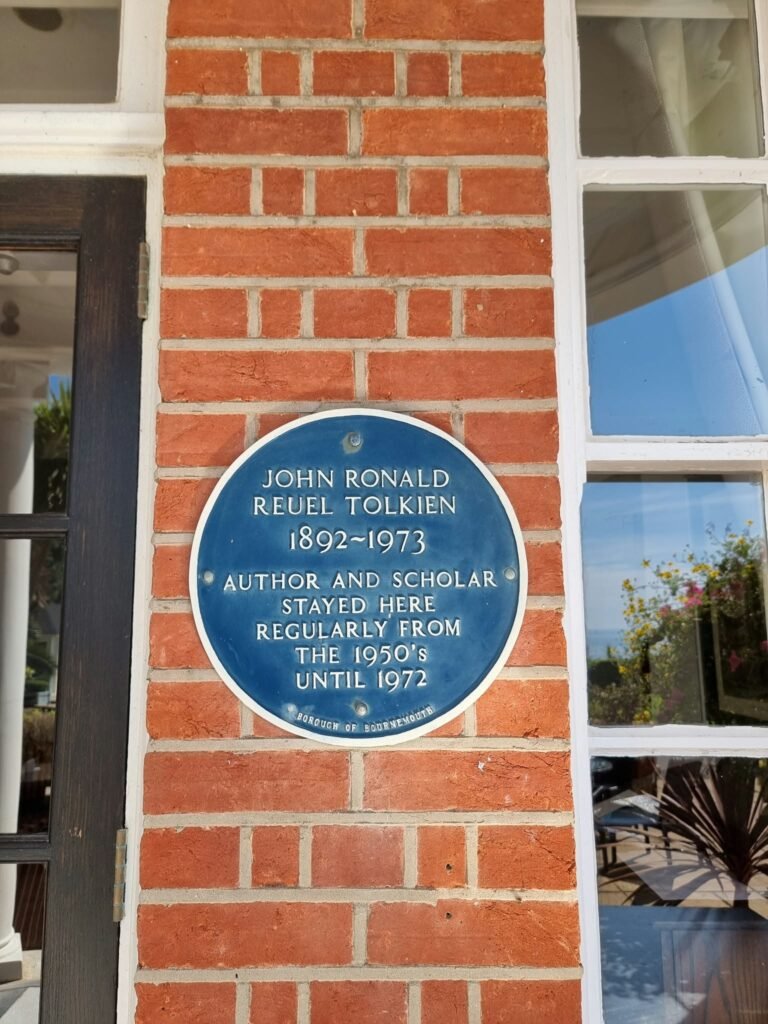
According to the hotel’s own history Tolkien and his wife Edith sometimes stayed for months at a time. They clearly enjoyed their seaside escapes rather more than the average weekend visitor.
And here’s my favourite detail: they booked two rooms.
One Room for Sleeping, Another for Writing!
Yes, apparently even Tolkien appreciated the importance of separating work from relaxation.
While one room was used for sleeping, another provided somewhere he could concentrate on his writing. The hotel identifies the latter with today’s Room 205, appropriately named The Tolkien Room.
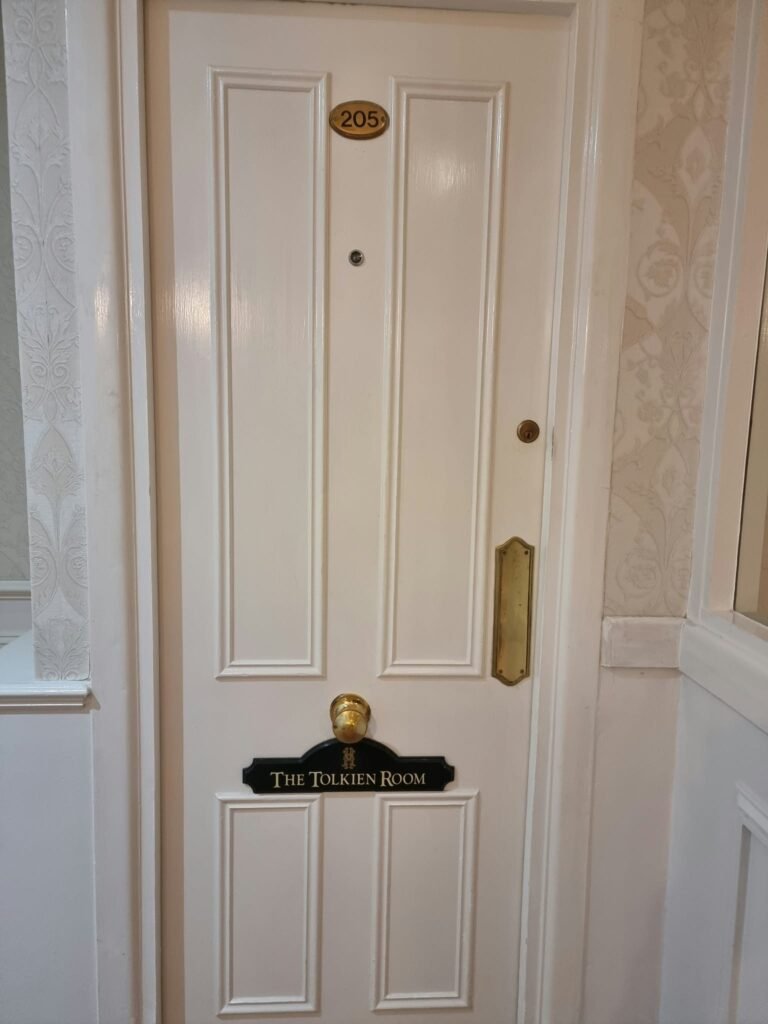
Imagine having a separate hotel room just for writing, with the sea outside to inspire you. That’s certainly a more appealing arrangement than balancing a laptop, a coffee and yesterday’s paperwork on the same desk. 😂
The distinction is important, though. This wasn’t where Tolkien originally dreamed up the entire story of The Lord of the Rings. His great trilogy was published in 1954–55, and much of its creation took place long before his later Bournemouth holidays. What makes the Miramar fascinating is its place in his everyday life, away from the Oxford academic world with which he is so closely associated.
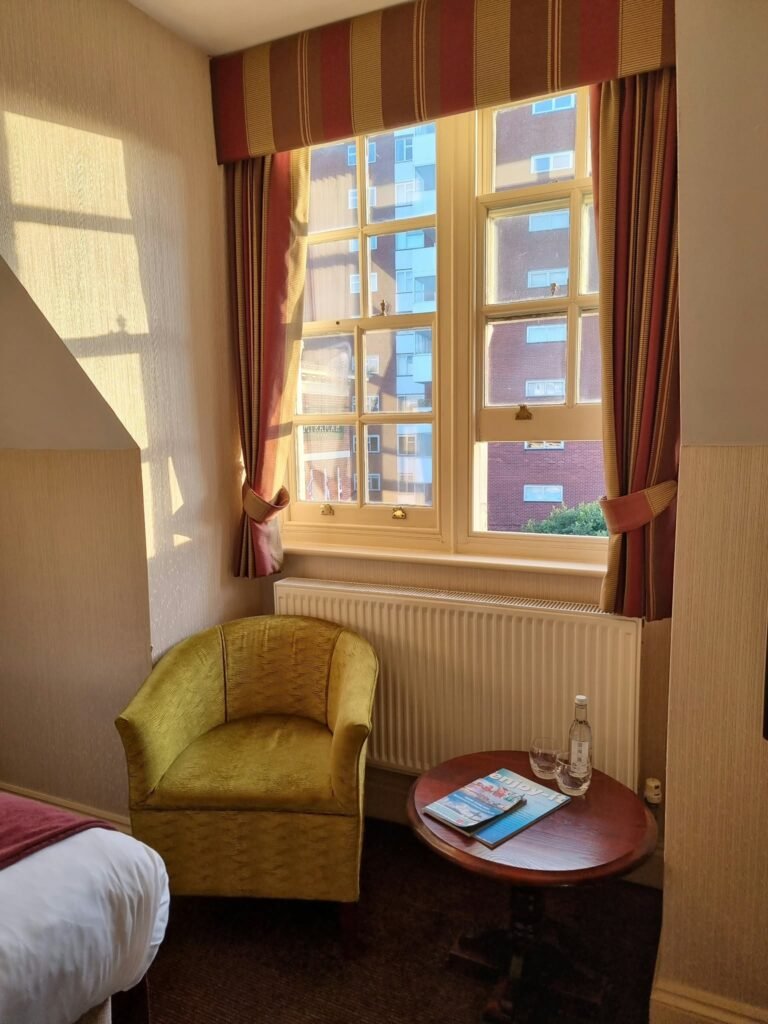
Today, the room is still part of a working hotel rather than a preserved author’s study. There aren’t shelves of ancient manuscripts or any secret passage to Mordor, unfortunately. But knowing the room’s association with Tolkien makes it rather more interesting than an ordinary hotel bedroom.
And there’s another wonderful piece of evidence for his connection to the place: the Tolkien Estate’s collection of photographs includes a photograph of him at Hotel Miramar in July 1965.
Suddenly, the story feels much less distant.
Before the Hobbits Came an Ambassador
Of course, the Miramar had a remarkable history before Tolkien ever arrived.
The original building was constructed in 1905 as an Arts and Crafts-style seaside villa for Count Albert von Mensdorff-Pouilly-Dietrichstein, the Austro-Hungarian ambassador to Britain. His family connections even extended to Queen Victoria’s relatives.
Not exactly an ordinary little holiday cottage, then!
In the 1920s, the property was transformed into a hotel, with its elegant curved wings added to the original house. Its name, Miramar, comes from Spanish and means view of the sea. Considering its position above Bournemouth’s coastline, somebody clearly understood the assignment.
During the Second World War, the hotel also served as an American Red Cross base, accommodating women working with American wartime organisations.
And just when you think the guest list couldn’t become more interesting, another famous writer enters the picture.
Playwright Terence Rattigan reportedly drew inspiration from observations in the Miramar’s dining room for his play Separate Tables, set in a fictional seaside hotel.
So this one Bournemouth building has connections to international diplomacy, wartime service, fantasy literature and British theatre.
That’s rather a lot of stories for a place where you can now sit down with a cup of tea.
A Garden Worth Escaping to
The gardens are another reason this place caught my attention.
With neatly maintained lawns, colourful flowers, palm-like trees and views towards the sea, the grounds feel surprisingly sheltered from the busier parts of Bournemouth. On a sunny day, you could almost forget that you’re just a short distance from the town centre.
And although we tend to associate Tolkien with forests, mountains and imaginary kingdoms, there’s something appealing about picturing him enjoying a perfectly ordinary British seaside holiday.
No epic quest required. Just a little sunshine, fresh air and perhaps a peaceful afternoon.
It was particularly important for Edith, who enjoyed Bournemouth’s social life and coastal surroundings. The couple eventually moved to nearby Poole in 1968, choosing a bungalow in the Branksome area for their retirement.
After Edith died in 1971, Tolkien returned to Oxford. He died in Bournemouth in September 1973 while visiting friends.
It’s a poignant final connection to a town that had become such a familiar part of their lives.
There’s More to Discover Around the East Cliff
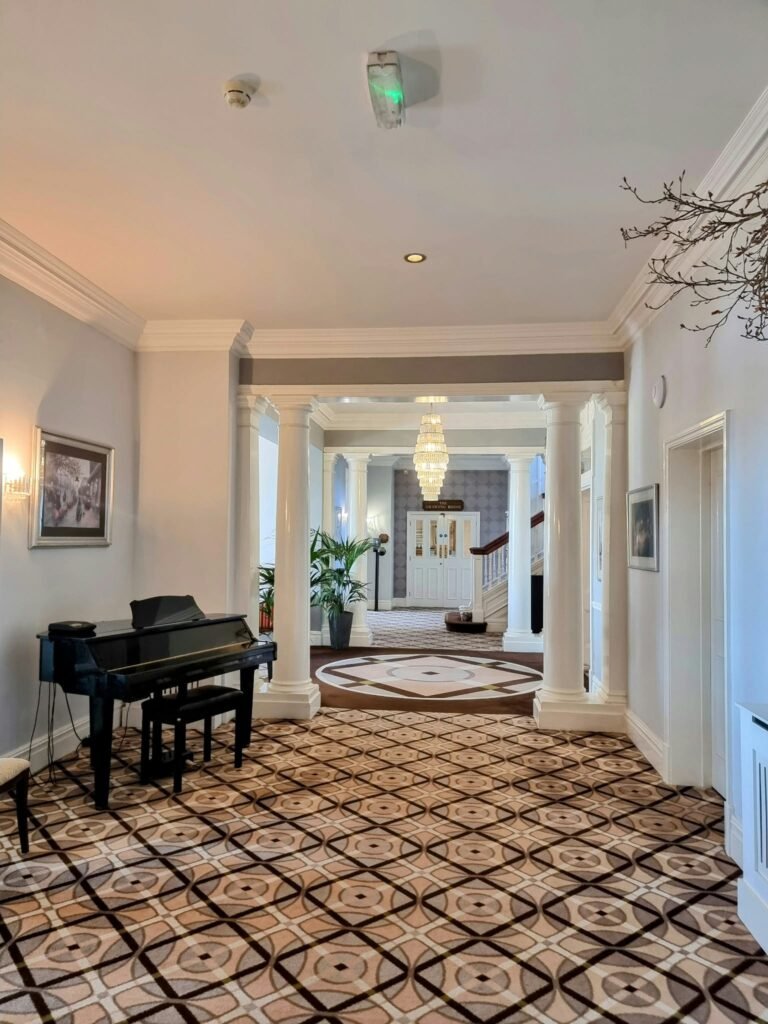
[IMAGE 6 – Elegant Hotel Miramar interior with the piano and entrance hall]
You don’t necessarily need to book a room to appreciate the building’s history. The blue plaque is an interesting little landmark in its own right, while the hotel offers dining and refreshments for visitors. If you’d like to explore the hotel or its grounds beyond the publicly accessible areas, it’s best to check with reception first.
Hotel Miramar is on East Overcliff Drive, just a short walk from the Russell-Cotes Art Gallery & Museum. The surrounding cliff-top paths offer lovely coastal views, and you can continue towards Bournemouth Pier if you fancy extending your walk.
There’s another meaningful local story nearby, too. The Jon Egging Memorial on Bournemouth’s East Cliff remembers a Red Arrows pilot and the remarkable charitable legacy created in his name.
For anyone interested in literary history, Explore BCP’s Tolkien Writers’ Trail is also worth discovering.
A Little Piece of Middle-earth in Bournemouth?
Perhaps the loveliest thing about Hotel Miramar’s Tolkien connection is how ordinary it really is.
We remember great writers for their extraordinary imaginations, but they still needed the same things the rest of us enjoy: a change of scenery, somewhere comfortable to sit, a good view and a break from everyday responsibilities.
Tolkien created an entire imaginary world, yet he kept returning to a very real corner of the Dorset coastline.
And I rather like that.
Next time you’re walking along Bournemouth’s East Cliff, look out for the blue plaque. That elegant red-brick hotel has witnessed more stories than its peaceful gardens might suggest.
Who knows? Perhaps your next brilliant idea will arrive over a cup of tea overlooking the sea. Mine will probably be deciding where to stop next. 😆
Looking for another local discovery? Explore more places in Bournemouth, from historic landmarks to hidden corners.
One journey. One story. One more stop.