
Imagine retiring to a beautiful medieval almshouse, with historic gardens, your own flat and a rather impressive dining hall. Sounds tempting, doesn’t it? But here’s the surprising part: you can actually apply to become a Brother at St Cross in Winchester today. And no, you don’t need to become a monk, take a vow of silence or spend the rest of your life wandering around in sandals. 😂
I discovered this while exploring the Hospital of St Cross. During a conversation with the porter, I learned that the people living behind those beautiful old doors weren’t simply part of the attraction’s history. They were keeping a centuries-old community alive. Suddenly, I was much more interested in what life here was really like.
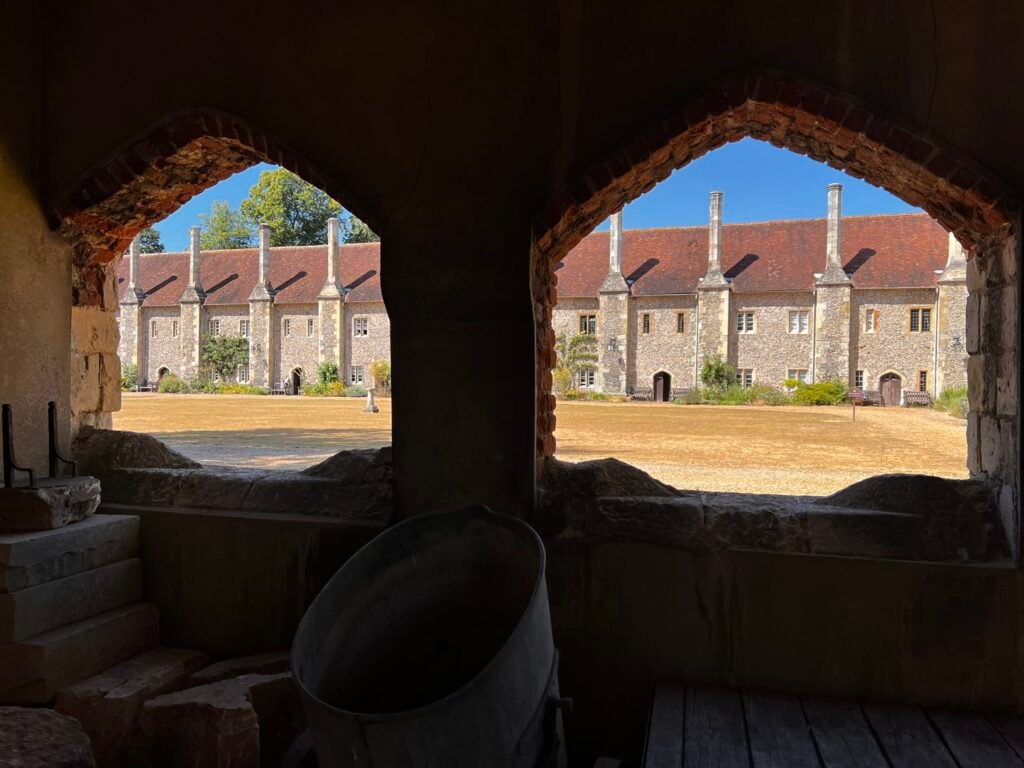
So, who are the Brothers of St Cross?
Despite the rather religious-sounding title, the Brothers aren’t monks. They’re retired men who live independently in accommodation provided by the Hospital’s charitable foundation.
There are places for 25 Brothers, each with his own self-contained flat. And we’re not talking about sleeping in a medieval dormitory with a candle and a straw mattress. The accommodation includes a bedroom, sitting room, kitchen and bathroom. The buildings may date back to the 15th century, but the residents have modern facilities.
What makes the arrangement unusual is the combination of independence, community and tradition. The Brothers have their own homes, but they’re also part of an institution with a shared history and religious life.
It made me look at the long row of chimneys and little front doors rather differently. What I’d initially admired as picturesque architecture was, for someone else, home.
Become a Brother at St Cross: Who Qualifies?
This was the question that fascinated me most. Could someone simply decide they’d quite like to retire here?
Well, not quite. There are some important conditions.
According to the Hospital’s official application information, applicants must be over State Pension age, no longer employed and able to live independently. They are usually single, divorced or widowed, and preference is given to people with low or limited incomes.
But it’s not purely about money. The Hospital also considers emotional need, including the benefits that belonging to a supportive community might provide.
I particularly liked discovering that part. Retirement isn’t necessarily easy for everyone. Having somewhere secure to live, people nearby and opportunities for companionship can make a tremendous difference.
If you’re genuinely interested, the process begins by contacting the Hospital for an initial conversation. It’s a proper application to a charitable residential community, not a holiday accommodation booking. So perhaps hold off on packing your suitcase just yet! 😆
The hall where centuries of community life unfolded
One of the most impressive places I explored was the Brethren’s Hall. Even its entrance looks like something from a medieval film set.
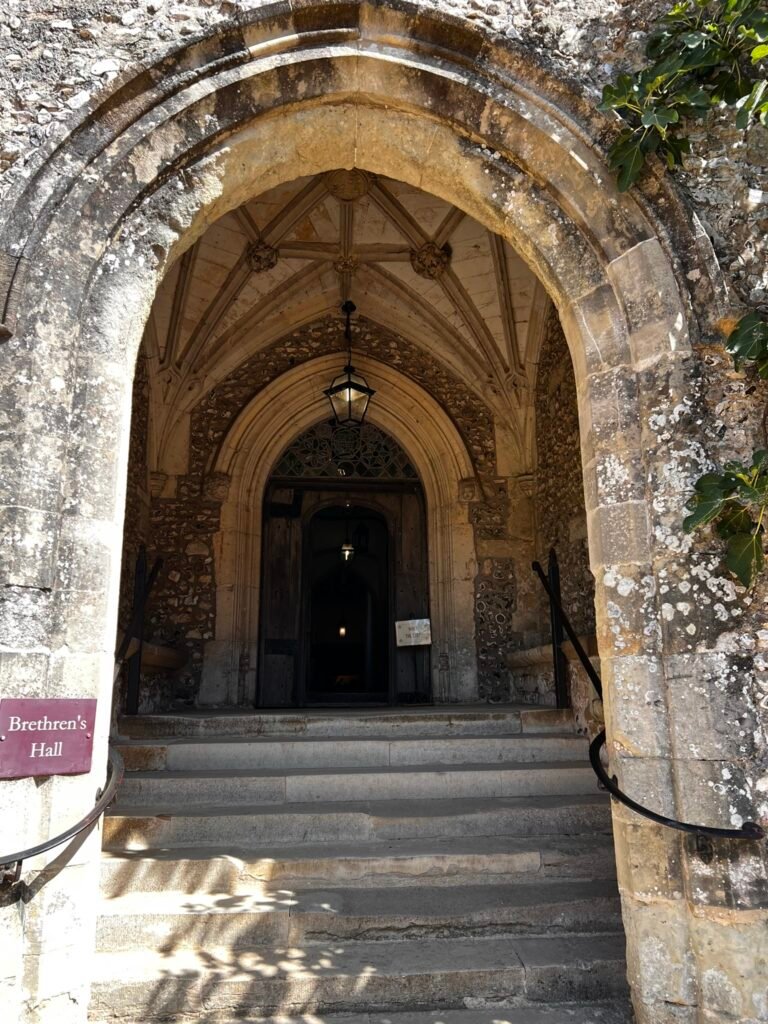
Inside, I found a magnificent timber roof, long tables, wooden panelling and windows that filled the room with daylight. Naturally, my camera came straight out again.
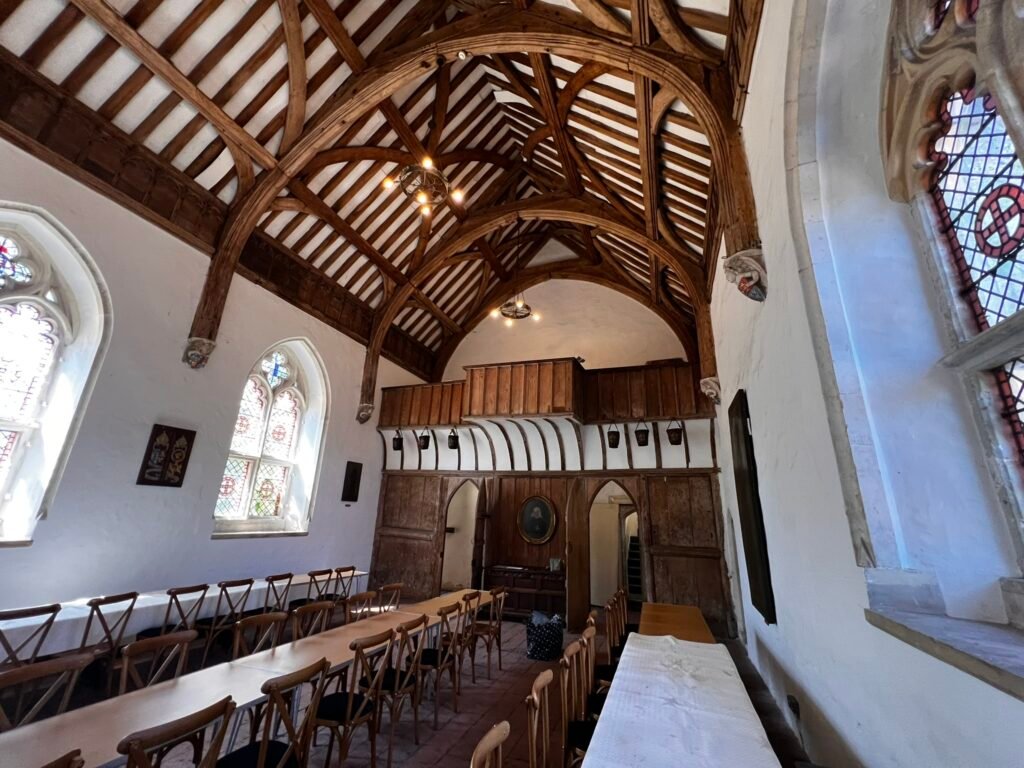
For centuries, this was where the Brothers gathered to eat together. The Hall still retains some remarkable historic features, including the site of its central hearth, a raised dais where the Master ate, and a musicians’ gallery.
Just imagine the conversations that must have taken place here over hundreds of years. Although, knowing people, I suspect someone was probably complaining about the dinner even in the Middle Ages. 😂
The Hall is still used for special occasions and celebrations. Everyday life has moved on, though: the Brothers now have subsidised weekday lunches available and can prepare their other meals in their own kitchens.
That’s what makes St Cross so interesting. The historic setting remains, but the people living here aren’t expected to recreate medieval life for the entertainment of visitors.
Black Brothers, Red Brothers — what’s the difference?
This is where things get particularly unusual.
St Cross has two historic Orders, reflecting its two charitable foundations. The original Order of the Hospital of St Cross dates from the 12th century. Its members are known as the Black Brothers, wearing black gowns with a silver Cross of Jerusalem.
The Red Brothers belong to the Order of Noble Poverty, established by Cardinal Henry Beaufort in 1445. Their robes are actually claret-coloured, with a silver badge recalling their founder.
So no, the colours aren’t competing teams, and becoming a Brother doesn’t involve choosing your favourite outfit. New residents are assigned to one of the Orders by the Master.
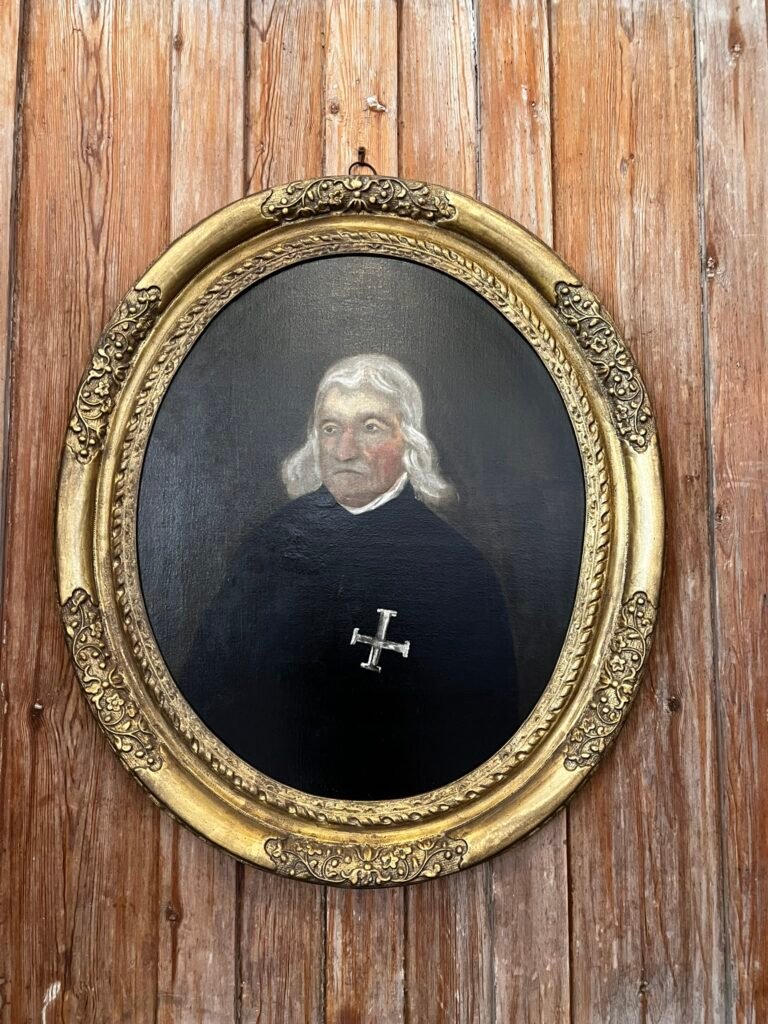
I photographed this rather fascinating portrait of a white-haired gentleman wearing a black robe with a cross. I haven’t been able to establish exactly who he was, but the clothing offers a lovely glimpse of the tradition still associated with the Black Brothers.
The Brothers wear their distinctive gowns for morning prayers in the Hospital’s extraordinary church, usually held at 10 am. Interestingly, they don’t belong to a religious order, even though the institution itself is Christian.
And that church deserves much more than a passing mention. I’ve explored its enormous arches, stained glass and remarkable medieval details in Inside the Church of St Cross: Winchester’s Hidden Masterpiece.
From medieval cellars to modern retirement
I loved exploring the practical side of St Cross as much as the grand buildings.
Down in the historic cellar, wooden barrels, old equipment and low beams offered a glimpse of how the place once operated.
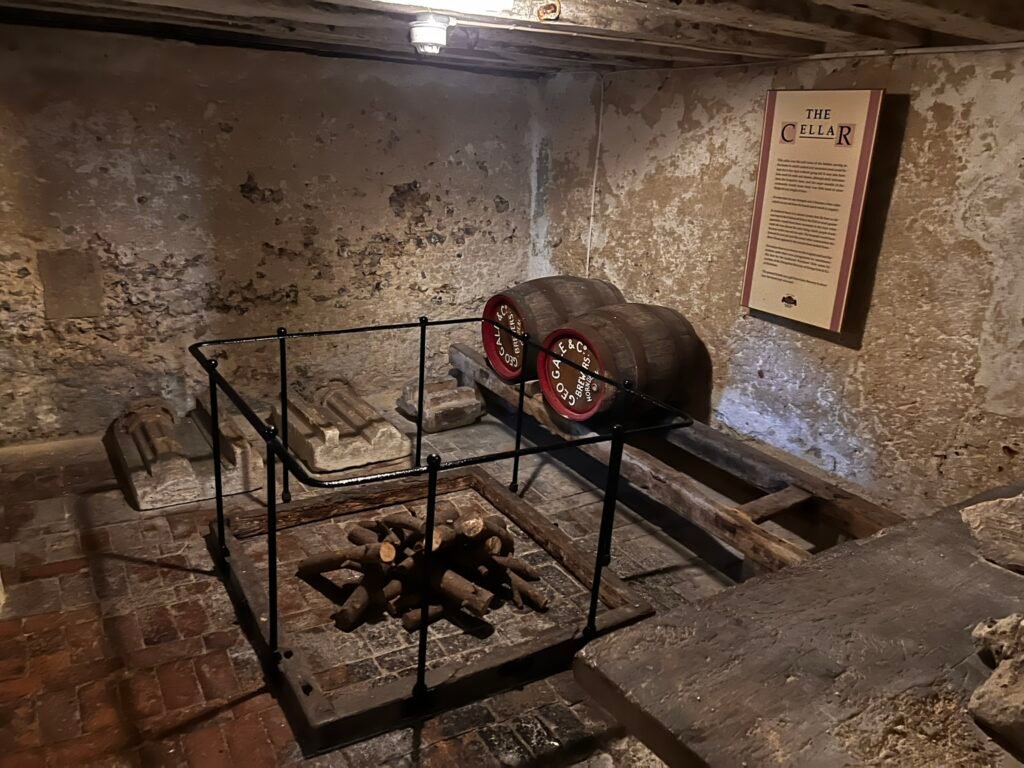
It was a fascinating contrast to the Brethren’s Hall upstairs. The impressive architecture might attract visitors, but institutions like this also needed kitchens, storage and plenty of everyday organisation to function.
One of the most charming traditions that survives is the Wayfarer’s Dole, a small serving of bread and ale offered to visitors who request it. I actually tried it, and you can see exactly what happened in Free Bread and Ale in Winchester: The Wayfarer’s Dole.
Modern life at St Cross is rather more comfortable than its old kitchen and cellar might suggest. There’s a resident warden, a porter and other staff providing support. The Brothers can enjoy their own gardens, and facilities include a communal laundry, with additional services available.
For me, the real attraction of the arrangement isn’t the historic costume or the beautiful surroundings. It’s the balance between having your own space and having people around you.
That’s something many people can appreciate, whatever their age.
Can visitors meet the Brothers?
Possibly! Some Brothers help welcome visitors and may conduct guided tours, although they are residents rather than museum exhibits.
You can explore the public rooms and look across the courtyard towards their historic accommodation, but their individual flats are private homes. It’s worth remembering that when you’re busy admiring the buildings and taking photographs.
For a proper introduction to the whole complex, including admission, parking, opening hours and the gardens, read my main guide, Hospital of St Cross in Winchester: No Doctors, but Free Ale? 🍺. The Hospital’s official visitor information also explains which historic areas are normally open.
And for anyone wondering whether almshouses are a thing of the past, the Almshouse Association explains how this form of charitable housing continues across Britain today. St Cross is an especially beautiful example, but the idea itself is far from extinct.
More than just beautiful old buildings
Before leaving the historic rooms, I spent some time admiring the Old Kitchen. The enormous cooking range, wooden table and display of traditional robes made it easy to imagine how different life must once have been.
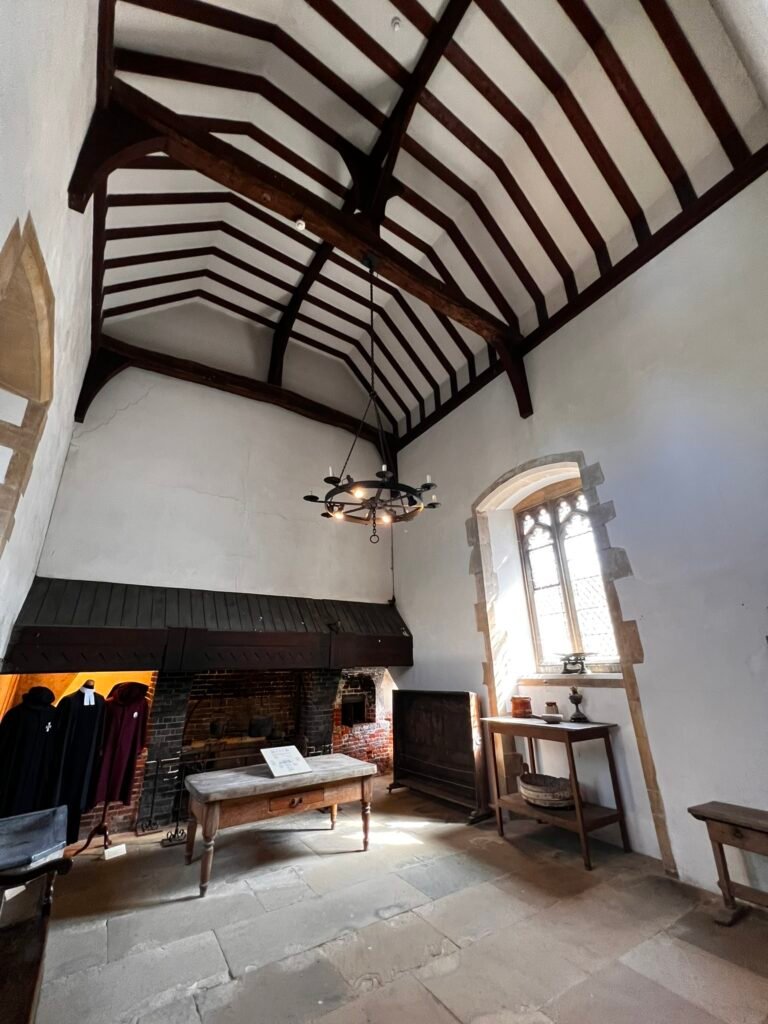
What stayed with me, though, wasn’t the kitchen or even that remarkable dining hall. It was the realisation that this beautiful medieval institution still has a meaningful purpose.
People don’t just come here to admire the past. Some people get to make a home here.
So, can you really become a Brother at St Cross? Yes, if you meet the eligibility requirements and are accepted. You won’t need a medieval haircut or a vow of silence, but you will become part of a very unusual community.
And I think that’s a rather wonderful way for nearly 900 years of history to remain alive.
One journey. One story. One more stop.