
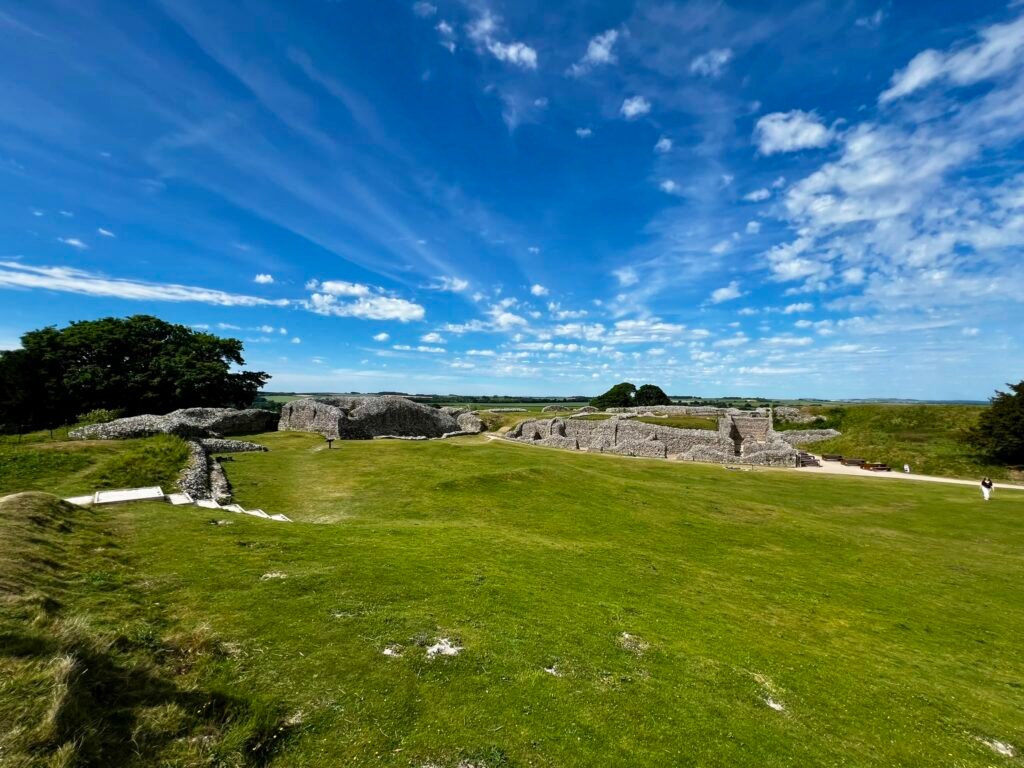
Old Sarum is the sort of place that looks fairly simple from the road: a huge grassy hill, some ruined walls and a lot of sky. Then you start reading the history and realise you are standing inside an Iron Age hillfort, a Norman royal castle, the remains of Salisbury’s first cathedral and a medieval centre of power.
That is quite a lot for one hill.
Before Salisbury, There Was Old Sarum
The enormous outer earthworks were first created as an Iron Age hillfort around 400 BC. The Romans later used the area, important roads converged nearby, and by the late Anglo-Saxon period Old Sarum even had a mint.
After the Norman Conquest, William the Conqueror saw exactly what generations before him had seen: this was a very useful hill. High, defensible and visible for miles, it was an ideal place to make a statement.
Around 1070, a royal castle was established inside the prehistoric defences. In 1086, William summoned major landholders here for the Oath of Sarum, a huge demonstration of royal authority.
The hill had already been useful for centuries. The Normans decided it could do with a castle as well.
A Castle Inside a Hillfort
Cross a bridge into the inner bailey and you walk between the surviving walls of the royal castle. There are no furnished chambers waiting behind them, so Old Sarum requires a little imagination.
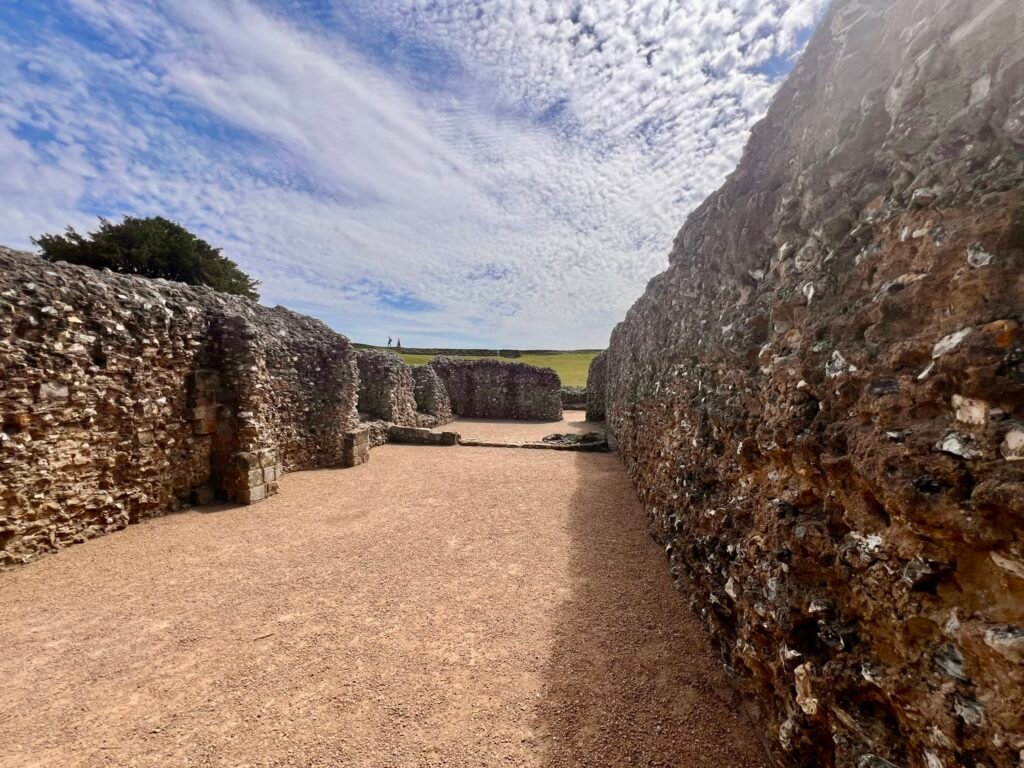
This was once a complex of towers, halls and royal apartments. Historic England’s official listing records the surviving castle and cathedral remains as Grade I listed, while the wider archaeological site is a scheduled monument.
If you enjoy ruins where the landscape is part of the story, Old Sarum works particularly well. Sometimes half the fun is mentally rebuilding the place while walking through what survives.
Salisbury Cathedral Started Up Here
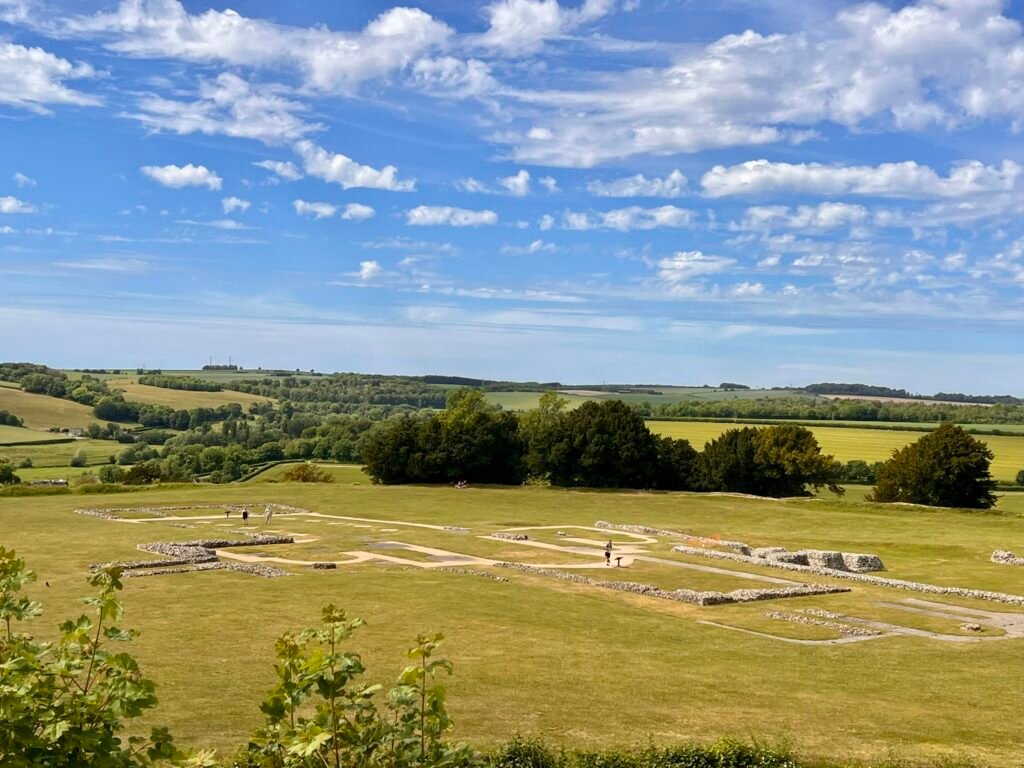
Salisbury’s original cathedral was built here after the episcopal see was moved to Old Sarum in 1075. It was consecrated in 1092 — and then damaged by a thunderstorm just five days later. Not exactly an encouraging opening week. The cathedral was subsequently repaired and greatly enlarged.
Sharing a windswept fortified hill with a royal garrison was not an arrangement destined for eternal harmony either.
Relations between the clergy and soldiers were difficult, water was a problem, and the exposed location did not help. Permission was eventually secured to move the cathedral into the valley below. The foundation stones of the present Salisbury Cathedral were laid in 1220, and in 1226 the remains of three bishops were transferred from Old Sarum to the new cathedral. Salisbury Cathedral tells the story of the move here.
The old cathedral was then dismantled, with stone reused elsewhere. What remains today is its footprint, laid out across the grass.
Moving house is stressful enough. Moving your cathedral and effectively taking the city with you is showing off.
The View Towards the New City
Walk around the ramparts and the reason Old Sarum still deserves a visit becomes obvious.
The hilltop position gives wide views across Wiltshire, and Salisbury Cathedral’s spire can be picked out in the distance. It connects the old settlement with the city that replaced it.
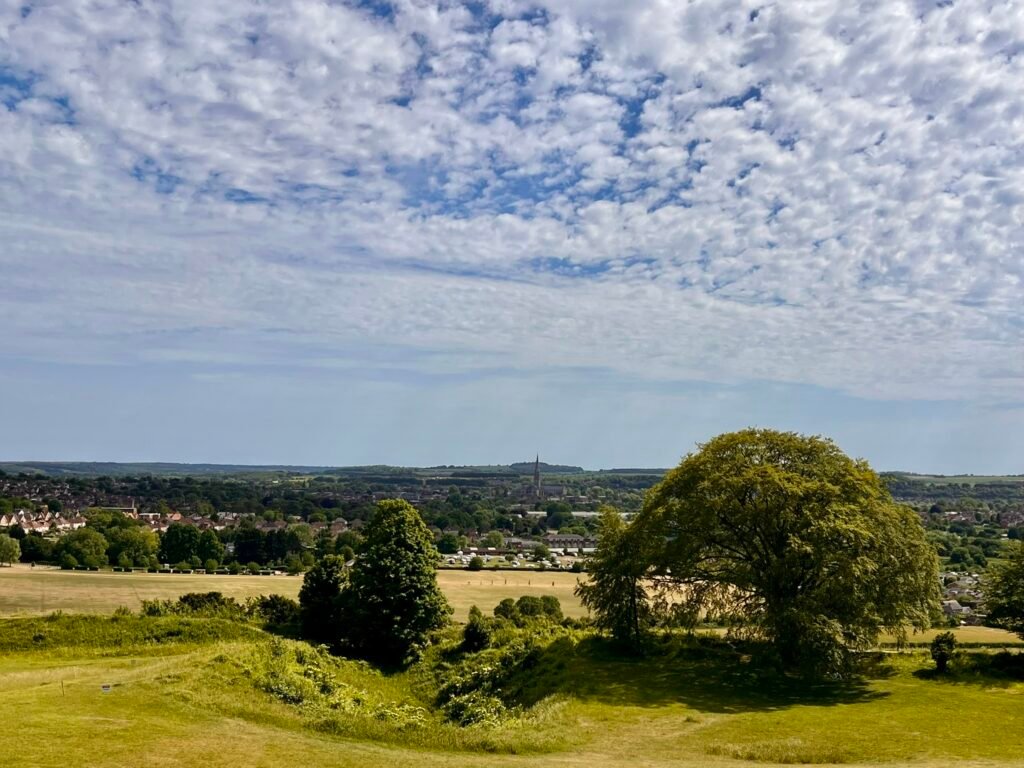
You can stand among the remains of the original cathedral, then look towards the successor that has dominated Salisbury’s skyline for centuries. The geography explains the history better than another list of dates.
The City Disappeared. Its MPs Didn’t
Old Sarum has one more wonderfully absurd chapter. By Tudor times the settlement had effectively vanished, yet it retained borough status and continued sending MPs to Parliament.
With almost nobody actually living there, it became one of the most notorious “rotten boroughs” in Britain. That electoral privilege finally ended with the Reform Act of 1832. The city had moved centuries earlier; its parliamentary seats were rather slower to get the message.
What Is Actually Left at Old Sarum?
Old Sarum is not a towering castle ruin. Much of what survives is low masonry, foundations, ditches and enormous earthworks.
That matters when deciding whether to visit. If you want intact rooms, spiral staircases and battlements, this probably will not scratch that particular castle itch. If you enjoy archaeology, layered history and reconstructing vanished places in your head, there is plenty here.
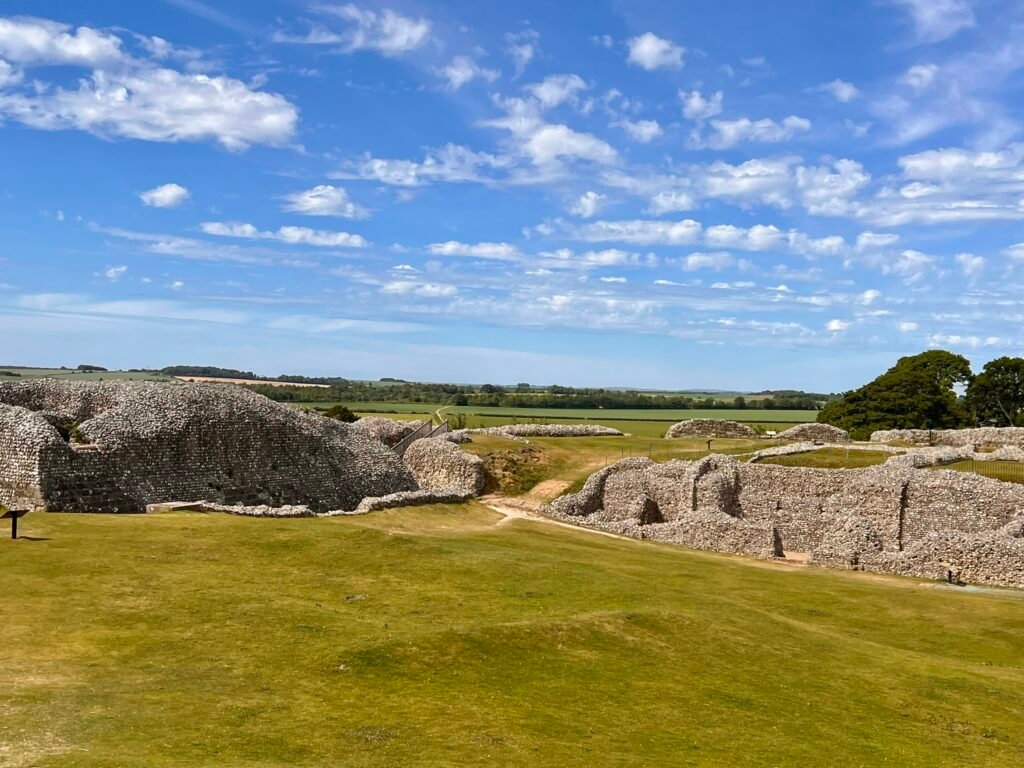
From the ramparts, the castle, cathedral site and prehistoric defences begin to fit together.
For another place where prehistoric earthworks and later history occupy the same landscape, my visit to Knowlton Church: A Medieval Ruin Inside a Prehistoric Henge makes an interesting companion read.
Planning a Visit to Old Sarum
Old Sarum is managed by English Heritage and sits just over two miles north of central Salisbury. English Heritage suggests around an hour for a typical group visit, although allow longer if you want to walk the ramparts, read the interpretation and take photographs.
There is parking about 200 metres from the admission point. It is free for English Heritage members displaying a valid car sticker, while non-members pay. There is no café, just a vending machine for drinks and snacks, so bringing a picnic looks like excellent strategic planning.
Check the official English Heritage Old Sarum visitor page for current opening times and ticket prices. English Heritage members receive free admission.
If you are considering joining, I have also written about my own experience of whether English Heritage membership is worth it.
One More Stop
Old Sarum makes much more sense once you stop thinking of it as simply a ruined castle.
This one hill has been an Iron Age fortress, used through the Roman and Anglo-Saxon periods, transformed into a Norman castle and cathedral city, and later survived as a notorious “rotten borough”. The buildings mostly disappeared, Salisbury moved downhill, and yet the shape of the place still tells the story.
Come for the ruins, walk the ramparts, find the cathedral spire on the horizon — and give yourself permission to stare at a few low walls while mentally constructing an entire medieval city.
One journey. One story. One more stop.