
I had never heard of Clavell Tower at Kimmeridge before I went there. That probably made seeing it for the first time even better.
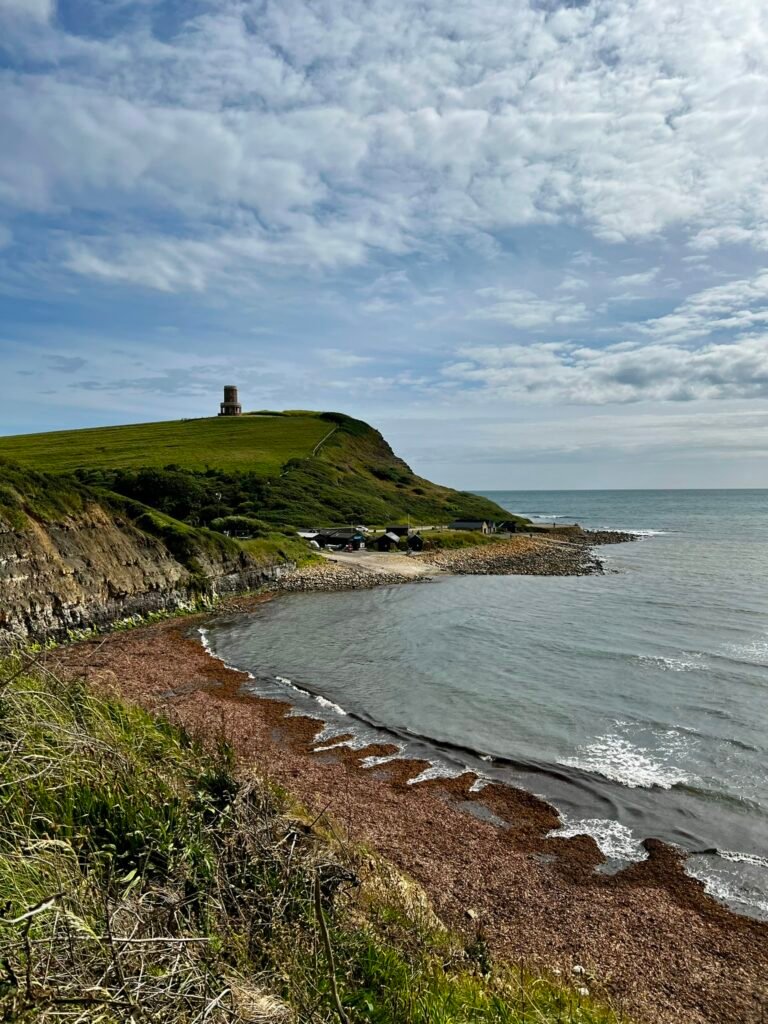
You can spot the tower from the road and from the car park below Kimmeridge Bay: a small, elegant building standing almost completely alone on top of the grassy headland. It isn’t enormous or particularly imposing. In fact, from a distance it looks surprisingly modest. But somehow, surrounded by all that open countryside, cliff and sea, it is impossible not to notice.
The tower was enough to make me curious. The view was what made me want to keep walking.
Unfortunately, the younger person I was visiting with apparently decided that walking uphill was far too sensible and started jogging towards the top. Naturally, I followed. Not because I wanted to jog up a steep coastal path, obviously, but because I had absolutely no intention of revealing how much older I was feeling. 😂
There are proper steps mixed with natural, uneven sections of path, and although the walk isn’t especially long, it climbs quickly. By the time we reached the top I felt as though I had probably lost a kilo on the way up — while doing my best to smile as if this was completely effortless and something I did every weekend.
And then I looked back at Kimmeridge Bay.
That was the moment the climb stopped mattering.
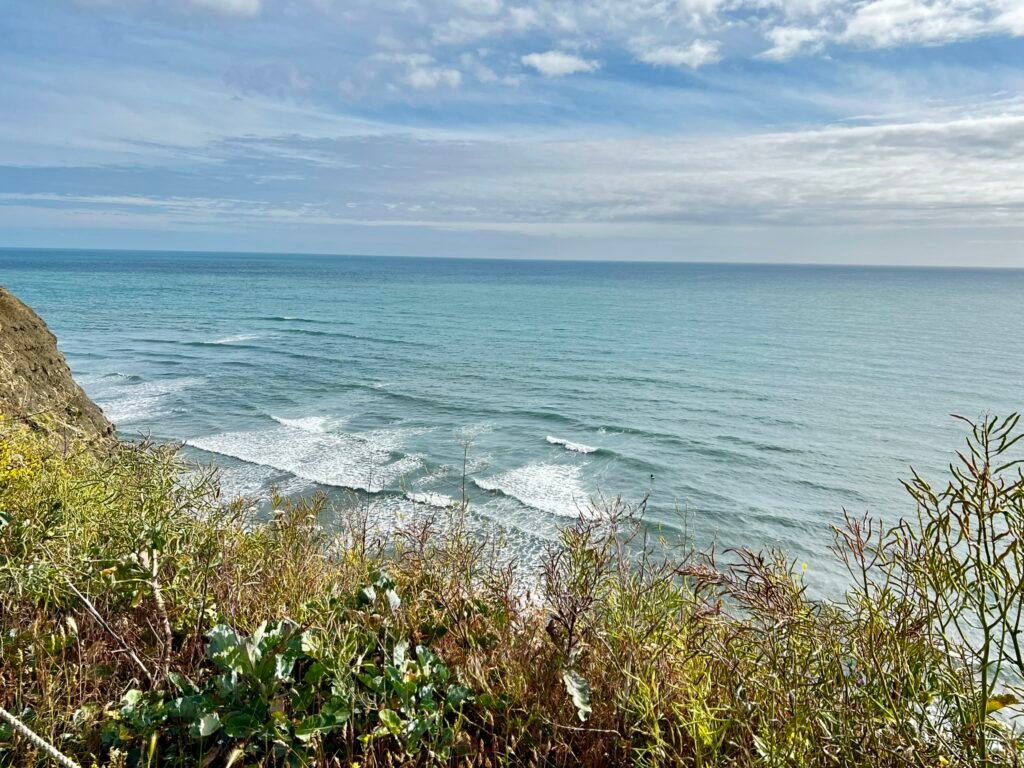
Below us were the dark, layered cliffs, the rocky shoreline and white lines of waves moving across the bay. Beyond them, the Dorset coast seemed to continue almost endlessly into the distance. The weather couldn’t quite decide what it wanted to do — sunshine one minute, darker clouds threatening rain the next — and the wind was strong enough that we both eventually reached for our hoodies.
It made the whole coastline feel even more dramatic.
Clavell Tower may have been what brought us up the hill, but it was the landscape around it that made me want to stay.
A Tower That Literally Had to Move
Clavell Tower has always looked slightly unusual, but its story is even stranger than its appearance.
The tower was built in 1830–31 for the Reverend John Richards Clavell, who owned the nearby Smedmore Estate. Historic England describes it as both a folly and an observatory, designed by Robert Vining of Weymouth. It may even have been built to mark Clavell’s 70th birthday.
For more than a century, the tower stood dramatically close to the edge of Hen Cliff above Kimmeridge Bay. That position was part of its charm, but it eventually became its biggest problem.
The cliffs here are constantly being reshaped by coastal erosion, and by the twentieth century the edge was getting uncomfortably close to the building. Eventually, leaving the tower where it stood was no longer realistic.
So instead of allowing it to disappear over the cliff, the entire structure was dismantled and rebuilt 25 metres further inland. The relocation and restoration took place between 2006 and 2008, preserving the tower while keeping its relationship with the landscape almost unchanged.
That probably explains why, when you see it today, the tower still looks as though it has always belonged exactly where it is.
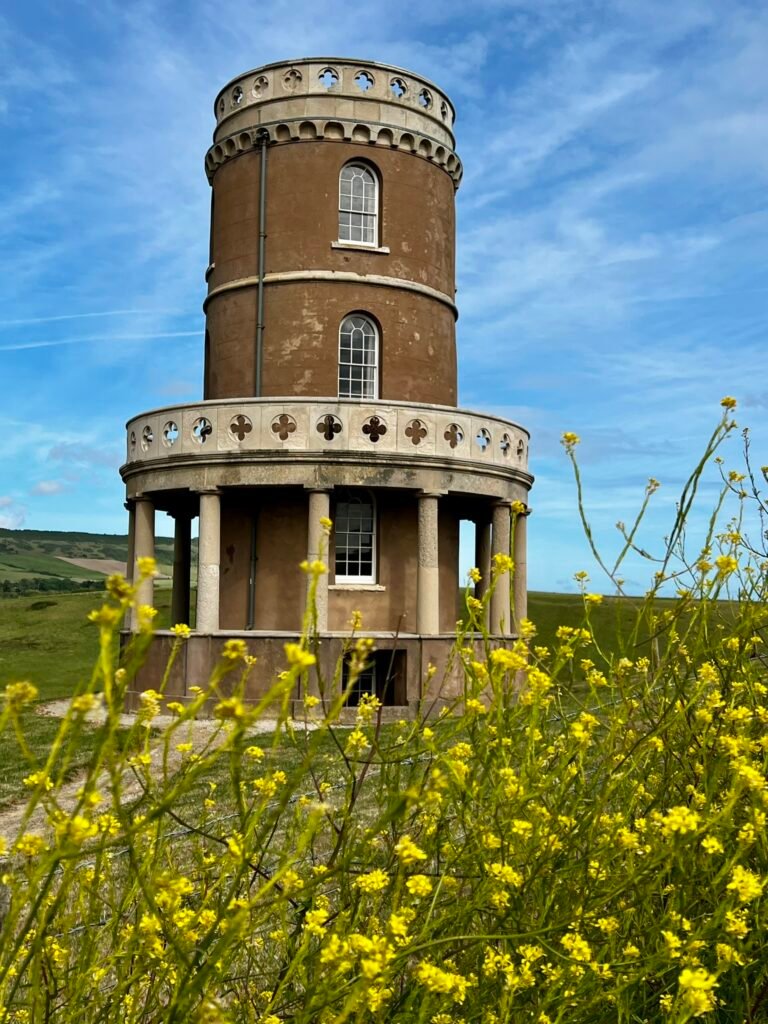
For me, that was part of its appeal. It isn’t a huge castle or some enormous monument dominating the horizon. It is relatively small, almost delicate, standing by itself above a much larger landscape.
And somehow that makes it more interesting.
It reminded me a little of Broadway Tower, another relatively small landmark whose setting does much of the work — although the rolling Cotswolds countryside gives it a completely different atmosphere from the exposed Dorset coast.
The building has also had a surprisingly varied life. Historic England records that it was used as a coastguard lookout from around the 1880s until shortly after the First World War, and it has inspired writers including Thomas Hardy and P. D. James. Today, after its restoration, it is maintained by the Landmark Trust and can even be stayed in as holiday accommodation.
But looking at it from the path, none of that history is immediately obvious.
What you notice first is simply a solitary tower, a lot of sky, and the Dorset coast dropping away behind it.
That contrast is what stayed with me most.
The Walk, the Wind and That View
The walk to Clavell Tower from Kimmeridge Bay is not especially long, but it definitely earns its views.
From the car park, the tower is already visible on the headland above you, which makes the route feel simple enough at first. Then the path starts climbing.
There are proper steps in places, mixed with more natural, uneven sections, and the gradient is steep enough that you notice it quickly — especially if the person you are with decides that jogging uphill is somehow a sensible idea.
I still maintain that I handled it with dignity. 😂
Once you reach the top, though, the effort disappears almost immediately.
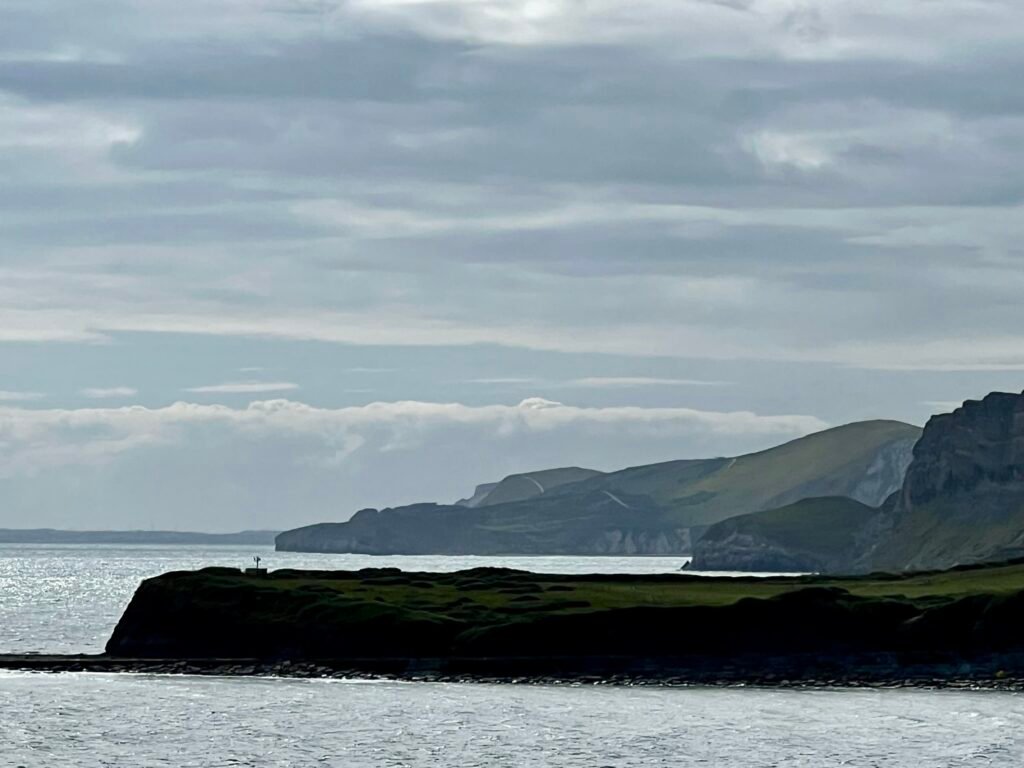
The view along the coast was the part I loved most. The cliffs seemed to stack one behind another into the distance, while below them the sea kept sending pale lines of surf towards the rocky shore.
The weather added to it.
It was comfortable enough for walking, but the sky looked uncertain and the wind was strong enough that we both ended up wearing hoodies. Every so often the light changed and the coast seemed to shift with it — brighter one minute, moodier the next.
There were also surprisingly few people around.
That made the whole place feel both dramatic and quiet. You could hear the wind and the sea without feeling as though you were sharing the experience with a crowd.
It also became one of those unexpectedly personal travel memories for me.
I was there with someone I had known for a long time, and while we were up on the headland we ended up having a proper conversation — the kind you remember later because you did not realise at the time that it might be the last one.
Nothing dramatic happened. We simply walked, talked, looked out across the coast and carried on with the afternoon.
Sometimes that is enough to make a place stick in your memory.
For me, Clavell Tower and Kimmeridge Bay became one of those places. Not because of one huge moment, but because the landscape, the weather, the walk and the company all came together at exactly the right time.
A Proper Walk, Not Just a Quick Photo Stop
Although Clavell Tower is visible before you even start climbing, I wouldn’t treat it as somewhere to rush up, take one photograph and immediately head back to the car.
The tower is only part of the experience.
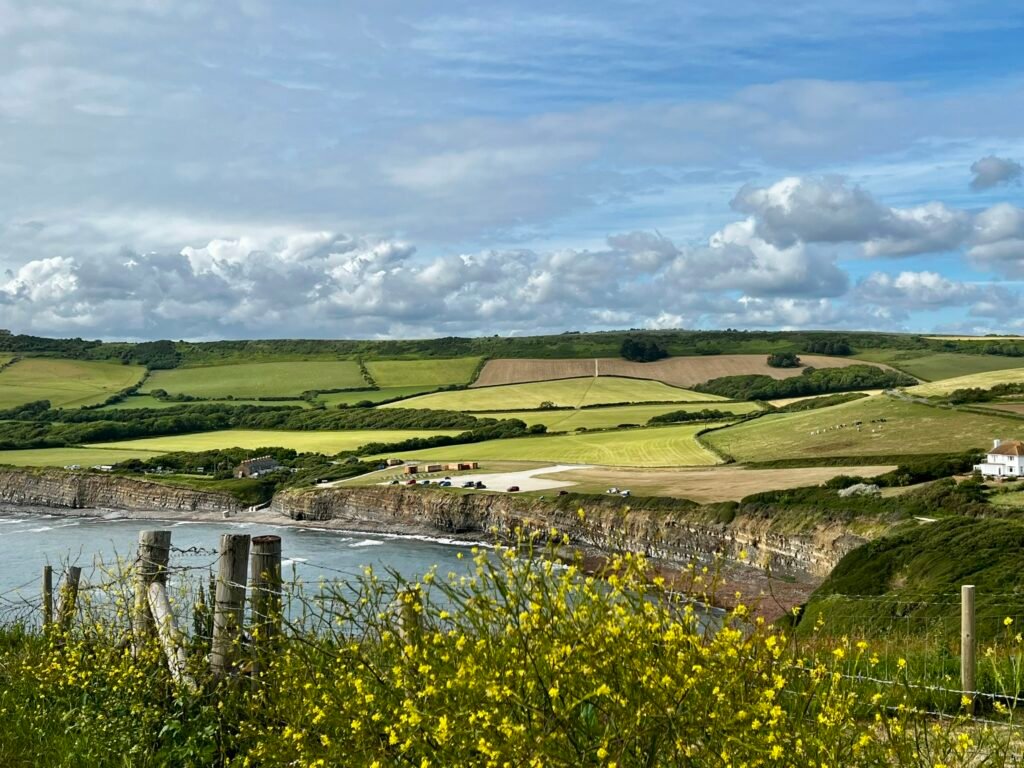
Once you are on the headland, the path opens onto views across Kimmeridge Bay and along the Jurassic Coast, and it is worth allowing yourself enough time to wander, stop and actually watch the sea for a while.
The official access to Clavell Tower is on foot from the parking area below. The Landmark Trust describes the route as approximately 250 metres along a very steep, exposed coastal path with numerous steps, and recommends sturdy footwear.
That sounds more dramatic than the distance itself — 250 metres is not far — but the climb is definitely noticeable. Especially if, like me, you somehow get talked into jogging part of it. 😂
Parking at Kimmeridge
When I visited, parking was straightforward and, for reasons I still don’t entirely understand, we happened to arrive on a day when we weren’t charged.
I would not rely on getting that lucky again.
For current visits, the Smedmore Estate parking area serving the coast and Clavell Tower is listed at £6 for the day, payable by card, and there is no general visitor parking in Kimmeridge village itself.
Because charges and access arrangements can change, it is worth checking the latest information before setting off.
Come Prepared for the Coast
The other thing I learned very quickly is not to trust the weather just because the day starts pleasantly.
Ours was neither particularly hot nor particularly cold, but the wind on the exposed headland made a hoodie very welcome. At one point the clouds looked as though they were preparing to soak us, only for the weather to change its mind again.
That unpredictability actually suited Kimmeridge.
The darker sky, pale waves and exposed cliffs gave the coastline much more atmosphere than a completely perfect blue-sky day might have done.
I’d bring comfortable walking shoes, an extra layer and enough time to turn the visit into a proper coastal walk rather than simply ticking the tower off a list.
Clavell Tower is the obvious landmark.
But once you are up there, it is very easy to forget that it was supposed to be the main attraction.
If you’re exploring more of Dorset’s historic coastline, Portland Castle makes a very different follow-up stop — less windswept folly and more serious coastal fortress, but still with the sea playing a huge part in the experience.
Why Clavell Tower Stayed With Me
Some places impress you because they are enormous, famous or packed with history.
Clavell Tower wasn’t like that for me.
It was smaller than I expected, somewhere I had never even heard of before, and visible almost casually from the road below. Yet once we climbed onto the headland, the tower suddenly made sense.
Standing there by itself above Kimmeridge Bay, it felt elegant and slightly lonely, surrounded by far more landscape than architecture.
And the landscape was what I remembered afterwards.
The dark cliffs stretching along the Dorset coast. The white waves moving towards the rocky shore. Yellow flowers beside the path. The wind forcing us into hoodies while the sky kept threatening rain without quite committing to it.
Even the ridiculous uphill jog became part of the memory.
There was also something more personal about that afternoon. I was visiting with someone I had known for a long time, and we ended up having one of those quiet conversations you don’t realise will matter until much later.
We never really spoke again after that.
I didn’t know that while we were standing above Kimmeridge Bay, of course. At the time it was simply a good afternoon: walking, talking, laughing at the climb and looking out over a coastline that seemed much bigger than either of us.
Maybe that is why Clavell Tower has stayed in my mind.
Not because it was the grandest historic place I have visited, but because it became attached to a particular afternoon that I can still picture clearly.
For me, that is one of the best things about travelling around the UK.
Sometimes you set out expecting to see a landmark.
Sometimes you come home with a memory instead.
One journey. One story. One more stop.