
Chichester turned out to be exactly my kind of stop: compact enough to explore on foot, but with far more tucked into the city centre than I expected.
I came for a wander and ended up moving between medieval streets, Chichester Cathedral, quiet cloisters, Bishop’s Palace Garden, sections of the old city walls and the elaborate Chichester Cross — all without needing to travel far between them.
If you’re looking for things to do in Chichester, this walk is an easy way to see several of the city’s highlights together. What I particularly liked was how quickly the atmosphere changed. One minute I was among shoppers in the busy pedestrian centre; a few streets later I was walking beside old stone walls or through a surprisingly peaceful garden.
And that contrast became even more noticeable later in the afternoon, when the streets began to empty and Chichester suddenly felt like a rather different place.
Starting My Walk in Chichester City Centre
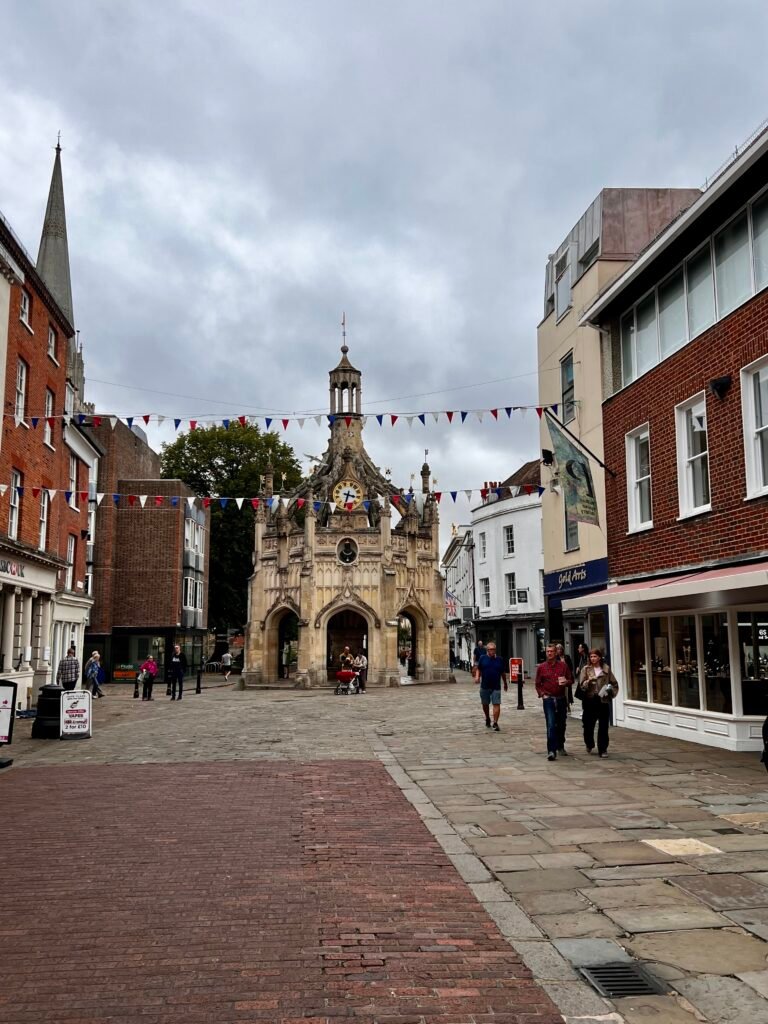
Chichester doesn’t make you wait long for its history. The pedestrianised centre is laid out around four main streets — North, South, East and West Street — which meet at one of the city’s most recognisable landmarks, the Chichester Cross.
When I arrived, though, my first impression wasn’t particularly quiet or historic. The centre was busy, with people shopping, eating outside and moving through the streets. The old buildings and cathedral spire were there, but mixed into an ordinary working city rather than separated off as a heritage attraction.
That actually made the later part of the walk more interesting. As I moved away from the busiest streets towards the cathedral, the modern shopping centre started giving way to older buildings, stonework and quieter corners.
Chichester Cathedral and the Story of St Richard
From the city centre, it doesn’t take long before Chichester Cathedral begins to dominate the view. Its spire appears between buildings and above the surrounding rooftops, but getting closer reveals far more than the skyline landmark.
The cathedral was founded in the 11th century after the seat of the bishop was moved from nearby Selsey to Chichester. What stands today has developed over centuries, surviving fires, rebuilding and even the collapse of its central tower and spire in 1861.
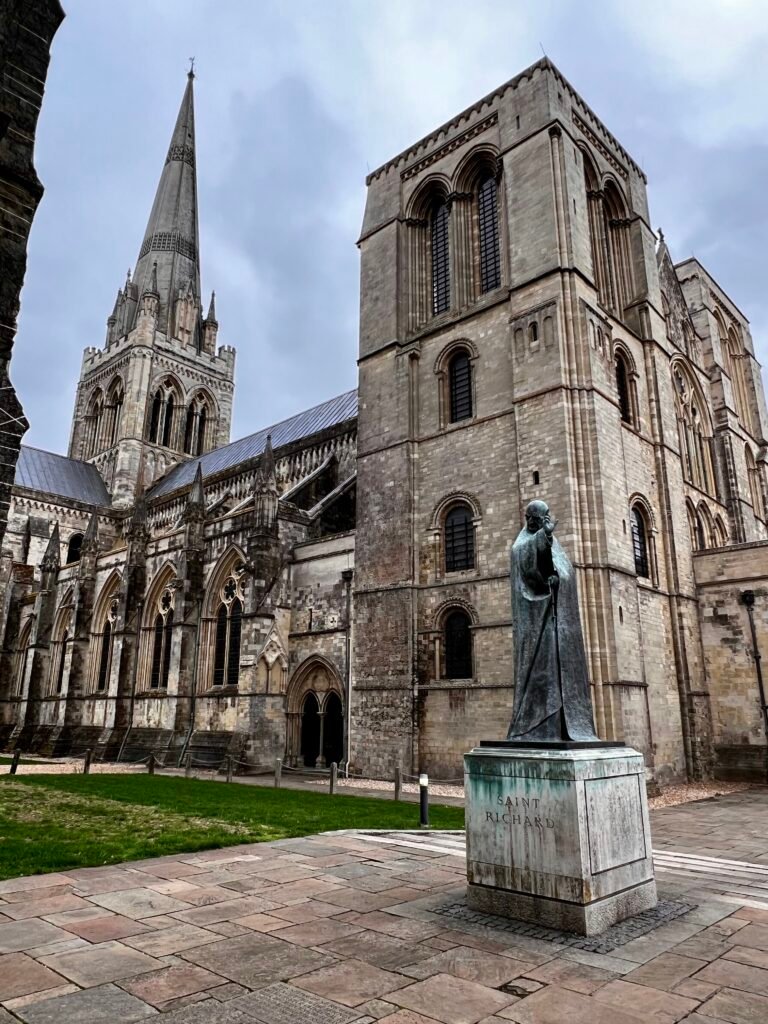
Before heading further around the cathedral, one figure is particularly difficult to miss: St Richard of Chichester.
Richard served as Bishop of Chichester in the 13th century and became closely associated with the cathedral after his death in 1253. His shrine became an important medieval pilgrimage destination, although it was later destroyed during the Reformation. Today, the statue outside the cathedral provides a striking reminder of that connection.
A Closer Look at Chichester Cathedral
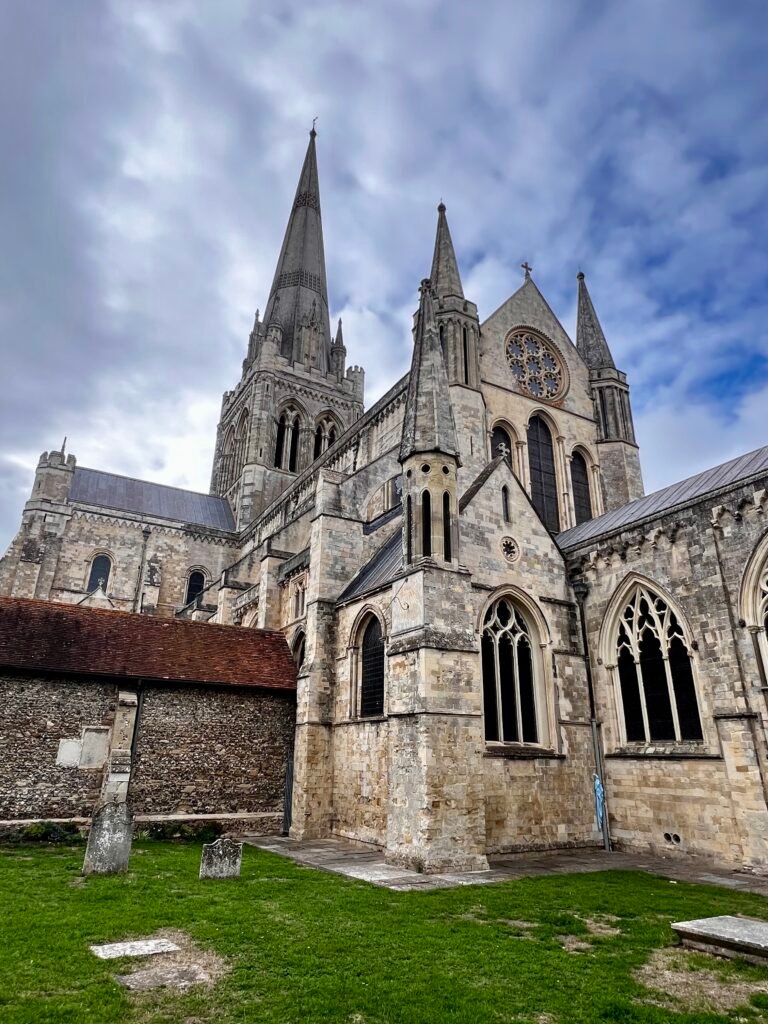
Walking around the cathedral is worthwhile rather than simply photographing the spire and moving on. From close up, the building becomes a collection of Gothic windows, buttresses, pinnacles and weathered stone, with different periods of its long history visible across the exterior.
One unusual thing about Chichester Cathedral is its detached medieval bell tower. It is the only surviving free-standing medieval cathedral bell tower in England, and is thought to have been built separately because the local ground was not considered suitable for supporting the additional weight of bells in the cathedral tower.
There is another distinction that’s easy to appreciate while exploring the city: Chichester Cathedral is often described as the only medieval English cathedral visible from the sea, its tall spire having served as a landmark far beyond the city itself.
But one of my favourite views wasn’t a grand, unobstructed photograph at all. Moving around the historic precinct gives you glimpses of the cathedral through passages and old stonework, making the spire appear almost unexpectedly between the surrounding buildings.
From here, the walk becomes quieter again. Instead of heading straight back towards the shops, I continued through the historic cathedral surroundings and towards one of the places I enjoyed most in Chichester: Bishop’s Palace Garden.
Bishop’s Palace Garden: A Quieter Side of Chichester
Just beyond the cathedral precinct, Bishop’s Palace Garden feels surprisingly removed from the busy streets only a few minutes away.
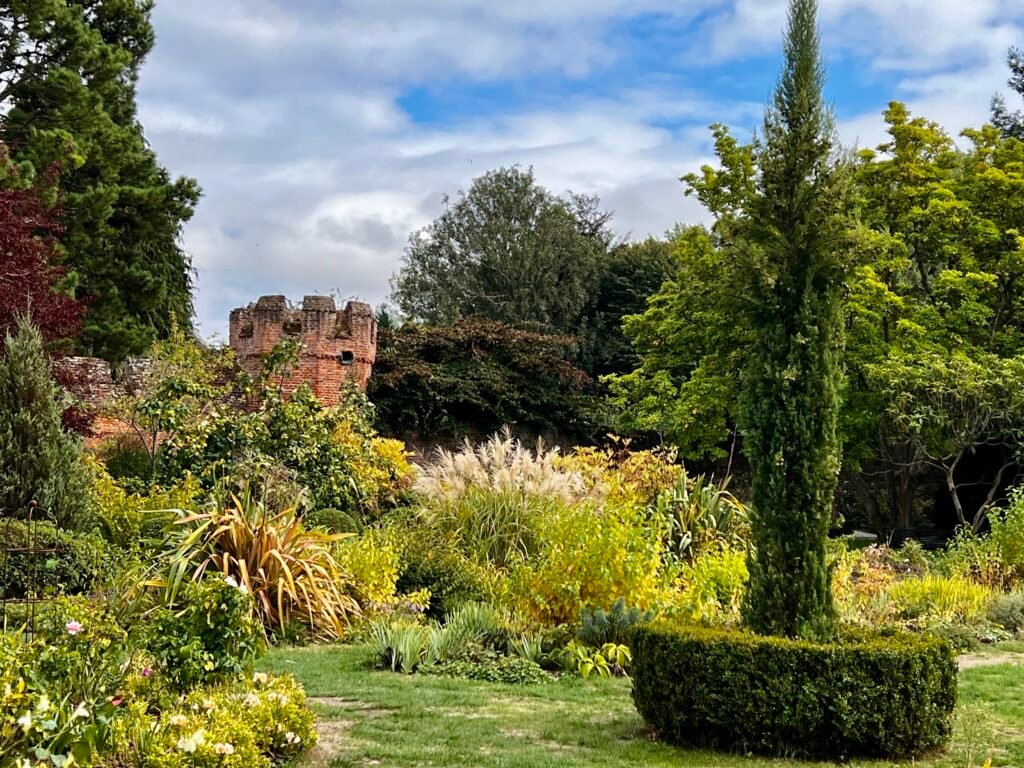
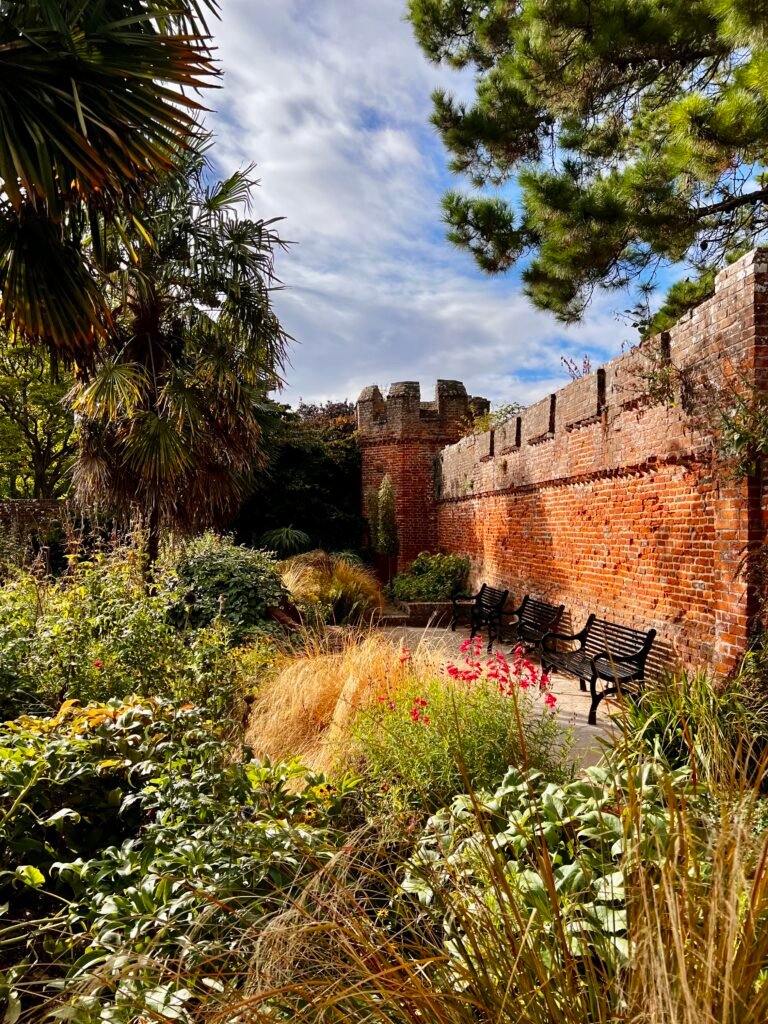
The garden sits beside the Bishop’s Palace and combines lawns, mature trees, colourful planting and sections of Chichester’s historic walls. After the stone architecture around the cathedral, it was a noticeable change of scenery — and one of those places where I ended up staying longer than I had expected.
There are formal areas, but it doesn’t feel overly manicured. Paths weave between flower beds and established trees, while fragments of old brick and stone architecture appear behind the planting.
Best of all, the garden is free to visit, making it an easy addition to a walk around central Chichester.
One of My Favourite Views of Chichester Cathedral
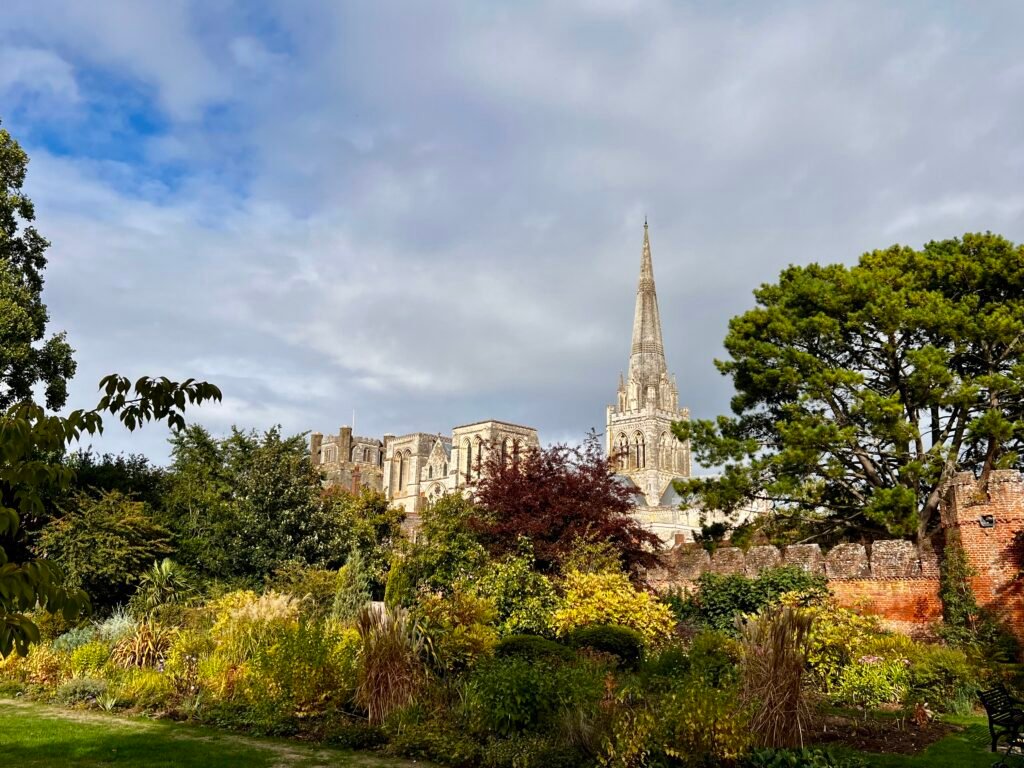
There is another reason I wouldn’t skip the garden: it gives you one of the loveliest views of Chichester Cathedral.
From among the trees and planting, the cathedral suddenly rises beyond the garden walls. I actually preferred seeing it from here to some of the closer viewpoints. You still get that unmistakable spire, but surrounded by greenery rather than streets and buildings.
That’s the view I chose for the featured photograph of this article — and probably the image that best sums up this stop for me.
Leaving the garden doesn’t mean leaving Chichester’s history behind. In fact, parts of something much older are still wrapped around the city.
The next part of my walk took me alongside the city walls, whose story stretches back almost two thousand years.
Walking Chichester’s Roman City Walls
One of the things that makes Chichester particularly easy to explore on foot is that traces of its much older history are never very far away.
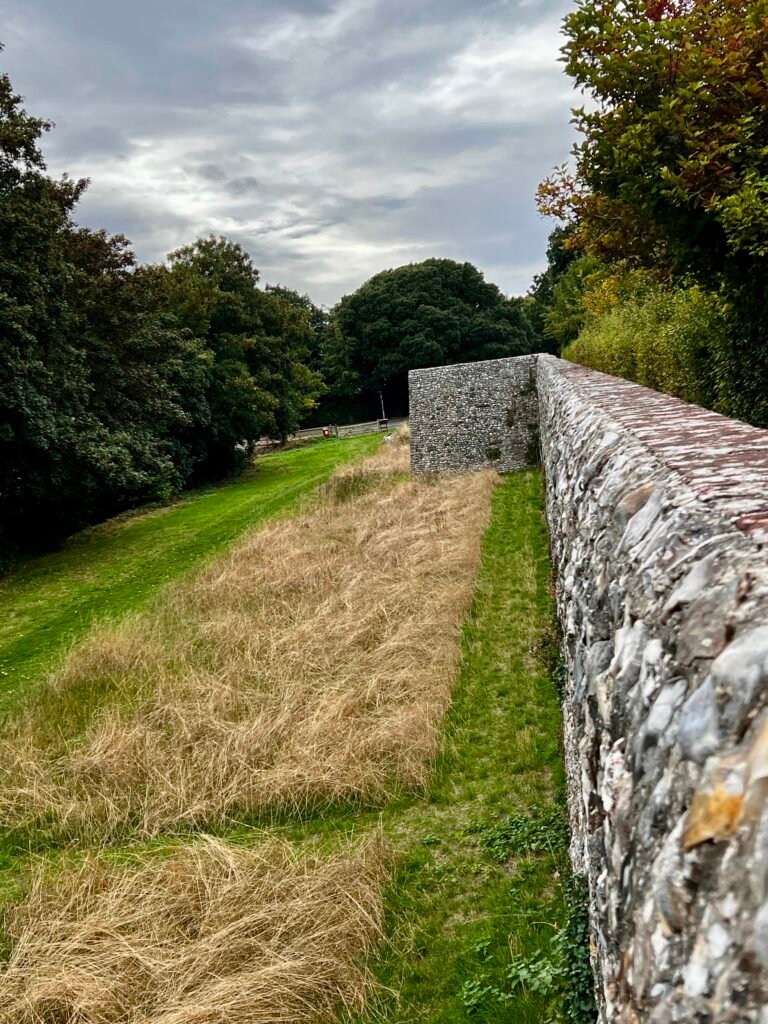
Long before the cathedral or medieval Cross appeared, this was Noviomagus Reginorum, an important Roman settlement established during the first century AD. Defensive walls were built around the city in the Roman period, and although what survives today has been repaired and altered many times over the centuries, the walls still broadly follow that ancient circuit.
You can walk much of their route today, turning what could easily be missed as a bit of old stonework into another free part of exploring Chichester.
Old Chichester Beyond the Main Streets
What I liked about following this part of the walk wasn’t simply the Roman history. It also led me into some of the quieter historic corners around the centre.
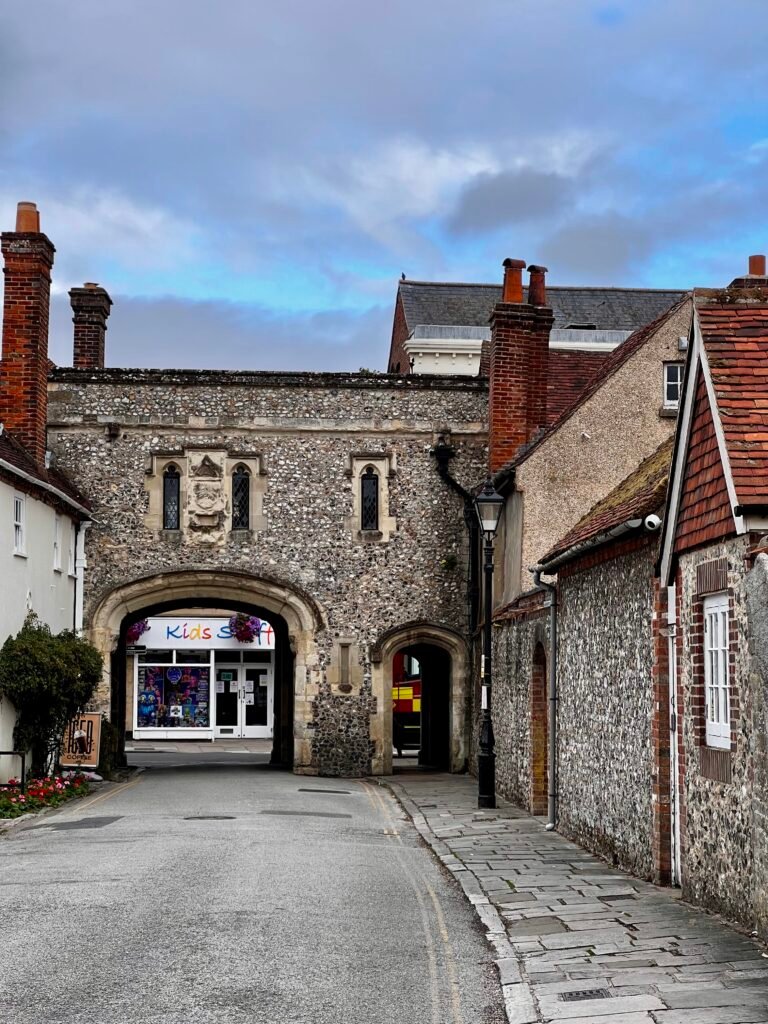
Flint walls, red brick, narrow streets and old gateways replace the busier shopfronts for a while. Chichester is compact enough that none of this feels particularly far away, but these little stretches can feel completely different from the four main shopping streets.
That contrast is probably one of the reasons I enjoyed wandering here: you don’t need a complicated itinerary. Turning down another street can be enough to find something interesting.
From here I eventually found myself heading back towards the heart of Chichester.
And that meant returning to the landmark I’d already passed earlier — except this time I stopped to look at it properly.
Chichester Cross: More Than a Meeting Point
Back at the centre of Chichester, the Market Cross is almost impossible to miss. North, South, East and West Streets meet around it, and with shops and people constantly passing by, it would be easy to treat it simply as an elaborate landmark in the middle of the pedestrianised centre.
But it deserves a closer look.
The Cross was built in the late 15th century, traditionally associated with Bishop Edward Story, to provide a sheltered place where merchants could sell their goods. Its open arches allowed people to pass through from different directions while remaining protected from the weather.
More than five centuries later, it still sits right at the heart of everyday Chichester.
Look Up at the Details
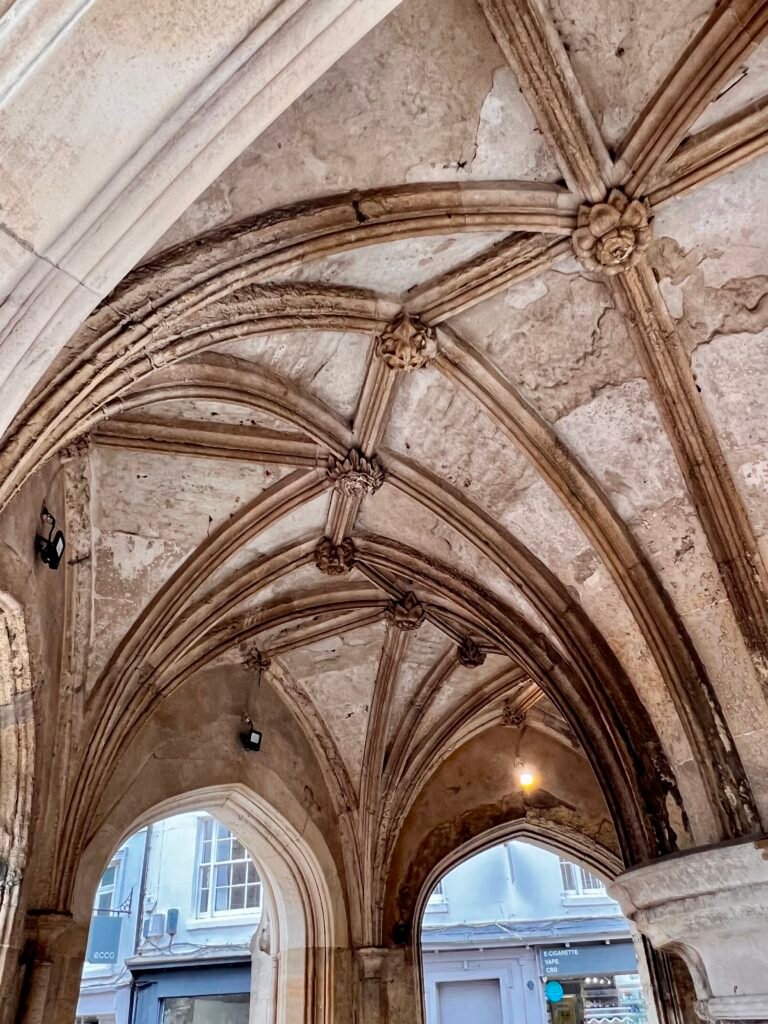
From across the street, the pinnacles and Gothic decoration give the Cross its distinctive silhouette. Standing underneath it, however, reveals details that aren’t nearly as obvious from a distance.
Above the arches are clocks and sculpted figures, including a series of crowned heads representing English monarchs, while underneath is the ribbed stone vaulting.
And by the time I returned here, something else had changed.
The centre that had been noticeably busy when I arrived at around 3pm was becoming much quieter after 4pm. With fewer people moving through the streets, the historic architecture suddenly became much easier to notice — and photograph.
The Same Streets, an Hour Later
This was probably the biggest surprise of my visit.
Earlier, Chichester had felt like a busy little shopping city. Later in the afternoon, some of those same streets felt almost completely different. There was more space to look around, the Cross stood out rather than disappearing among the crowds, and the cathedral spire kept appearing above the rooftops as I wandered back through the centre.
It was a good reminder that sometimes the atmosphere of a place depends as much on when you see it as what you see.
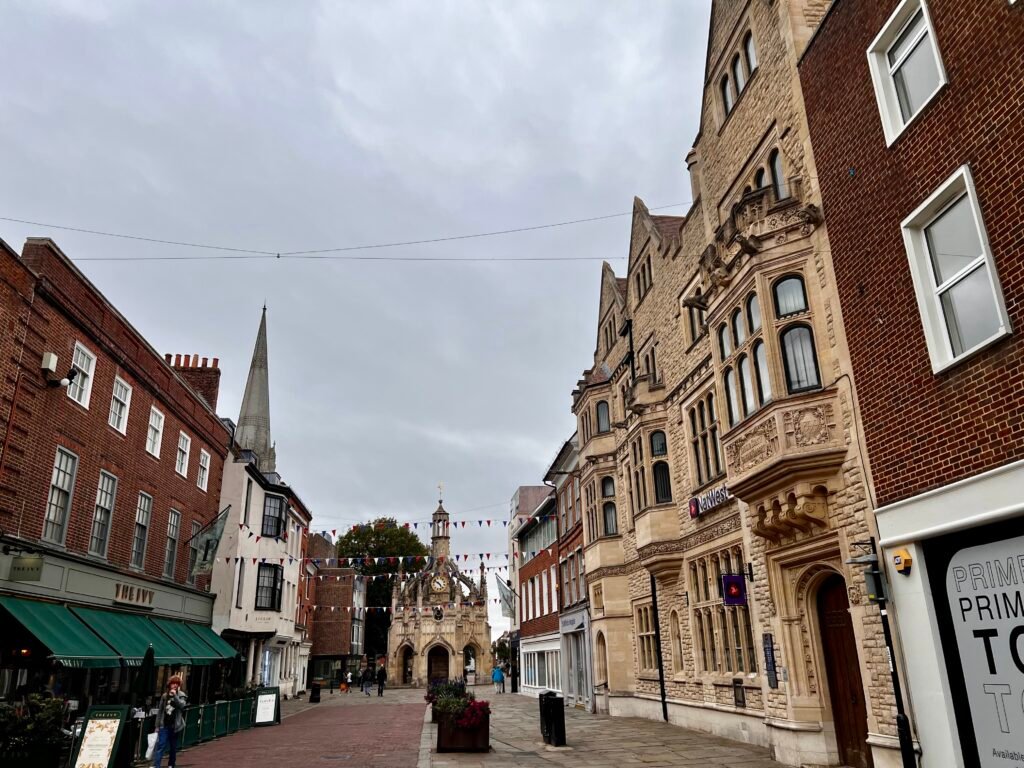
By this point, I’d gone from the busy shopping streets to a medieval cathedral, peaceful gardens, Roman walls and historic gateways before ending up almost exactly where I started.
All within a very walkable city centre — and much of what I’d seen hadn’t cost anything at all.
Is Chichester Worth Visiting?
For me, yes — particularly if you enjoy historic cities that you can explore comfortably on foot.
When it comes to things to do in Chichester, you don’t need to rush between a huge list of attractions. Its appeal is that so much is packed into a relatively small centre. The cathedral, Bishop’s Palace Garden, city walls, historic gateways and Market Cross can all form part of the same walk, with plenty of older buildings and quieter corners appearing in between.
I also liked that several of the most interesting parts of my visit were free. You can wander through Bishop’s Palace Garden, follow sections of the city walls, explore the historic streets and examine Chichester Cross without buying an attraction ticket.
For a solo wander like mine, that worked particularly well. I could simply follow whatever looked interesting rather than spending the day working through a rigid sightseeing checklist.
How Long Do You Need in Chichester?
I’d allow at least three or four hours if you want to explore at a relaxed pace rather than simply photograph the major landmarks.
That gives you time to wander around the cathedral precinct, explore Bishop’s Palace Garden, follow part of the walls and investigate the streets around the Cross without constantly watching the clock.
You could easily turn it into a full day if you want to spend longer inside attractions, stop somewhere for food or follow more of the city-wall circuit.
And based on my visit, staying into the later afternoon has another advantage: Chichester can become noticeably quieter once the daytime shopping crowds begin to disappear.
Free Things to Do in Chichester
If you’re visiting on a budget, quite a lot of this particular walk can be enjoyed without an admission charge:
- explore the streets around Chichester Cross
- walk through the cathedral precinct
- visit Bishop’s Palace Garden
- follow sections of the historic city walls
- wander through the old streets and gateways
- look for different views of the cathedral spire around the city
That makes Chichester particularly good for the kind of spontaneous stop where you don’t necessarily want to commit to several paid attractions.
My Favourite Part of Chichester
If I had to choose one part of the walk, I’d probably pick Bishop’s Palace Garden and the view back towards Chichester Cathedral.
The Cross may be the landmark at the physical centre of the city and the cathedral is obviously its great historic monument, but that garden view was the moment that stayed with me.
It also sums up why Chichester worked as a stop: history is everywhere, but some of the best views appear when you wander slightly away from the obvious ones.
Practical Tips for Visiting Chichester
Chichester city centre is compact and best explored on foot once you’ve parked. Comfortable shoes are worthwhile if you’re combining the centre with the walls, gardens and cathedral precinct, although this isn’t a particularly demanding walk.
If photography is part of the reason you’re visiting, I’d also consider later afternoon rather than concentrating everything around the busiest part of the day. On my visit, the difference between roughly 3pm and after 4pm was surprisingly noticeable.
And don’t just concentrate on the obvious landmarks. Look through gateways, walk around the cathedral rather than only approaching its main entrance, and look up when you reach Chichester Cross. Some of the details I found most interesting were the ones that would have been easiest to walk straight past.
Most of the things to do in Chichester on this walk are close enough together to explore comfortably on foot.
A Short Walk Around Chichester
Photographs capture the architecture, but they don’t quite show how quickly Chichester changes as you walk through it — from busy pedestrian streets to the cathedral precinct, gardens and much quieter historic corners.
I put together a short video from my visit so you can see some of those places as I actually encountered them.
▶ WATCH: My Chichester walk below
See More Photos from Chichester
There were far more photographs from this stop than I could sensibly fit into one article — particularly around the cathedral, Bishop’s Palace Garden and the details of Chichester Cross.
So I’ve put together a separate photo collection with more of what I saw along the way.
Explore the Chichester Photo Gallery
One More Stop?
Chichester reminded me why I like exploring places this way. I hadn’t needed a packed itinerary or a string of expensive attractions. I just started walking.
Within a relatively small part of the city I’d found a medieval cathedral, a peaceful garden, Roman history, old gateways and one very elaborate Market Cross — along with plenty of smaller details I probably wouldn’t have noticed if I’d been rushing between attractions.
And perhaps the nicest part was seeing the city change while I was there. The busy streets I’d arrived to were considerably quieter by the time I wandered back through them later in the afternoon.
Chichester was supposed to be another stop. It turned into a proper wander.
And those tend to be the ones I remember.
Keep Exploring
If Chichester has put you in the mood for another wander, here are two more of my UK stops:
→ Whitchurch, Hampshire — another smaller historic place that works particularly well for a relaxed wander, with the River Test adding something completely different.
→ Portland Castle, Dorset — swap city streets for a Tudor fortress on the Dorset coast, with plenty of history packed into a surprisingly compact site.
One journey. One story. One more stop.