
Imagine arriving in a Dorset village where the cottages have no roofs, the school has no pupils, and nobody has lived for more than 80 years. Welcome to Tyneham village, one of the most unusual places I’ve visited in Dorset. Hidden in a peaceful valley on the Isle of Purbeck, this abandoned village is free to explore — but there’s a rather important catch: the British Army still controls when you can visit.
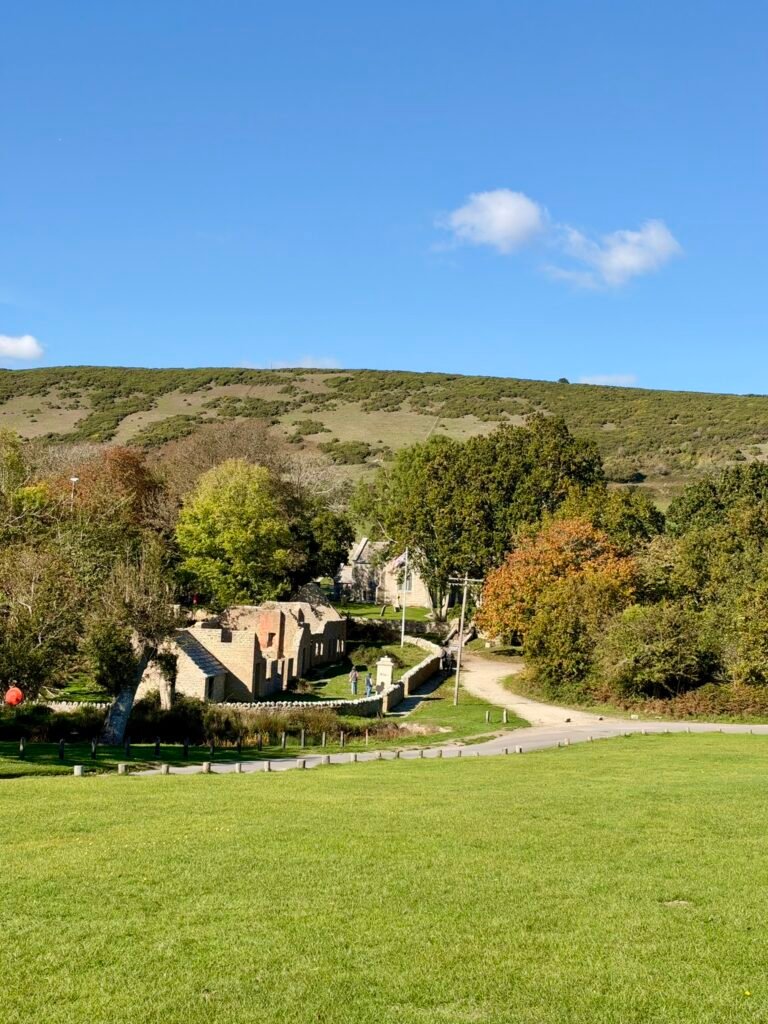
Tyneham wasn’t abandoned because people gradually moved away. Its residents were ordered to leave in 1943 so the surrounding land could be used for military training during the Second World War. They expected to return, but they never did. Today, you can walk past their former homes, step inside the old school and church, and discover what remains of the community.
It’s the sort of unexpected historical discovery that makes exploring Dorset so rewarding. And, as with several places in my guide to free things to do in Dorset, you don’t need an admission ticket to enjoy it.
What can you see at Tyneham village?
The abandoned cottages
The first thing that strikes you is how much of the village is still recognisable. Stone walls outline former homes, doorways open onto empty spaces, and the remains of cottages line the old village street.
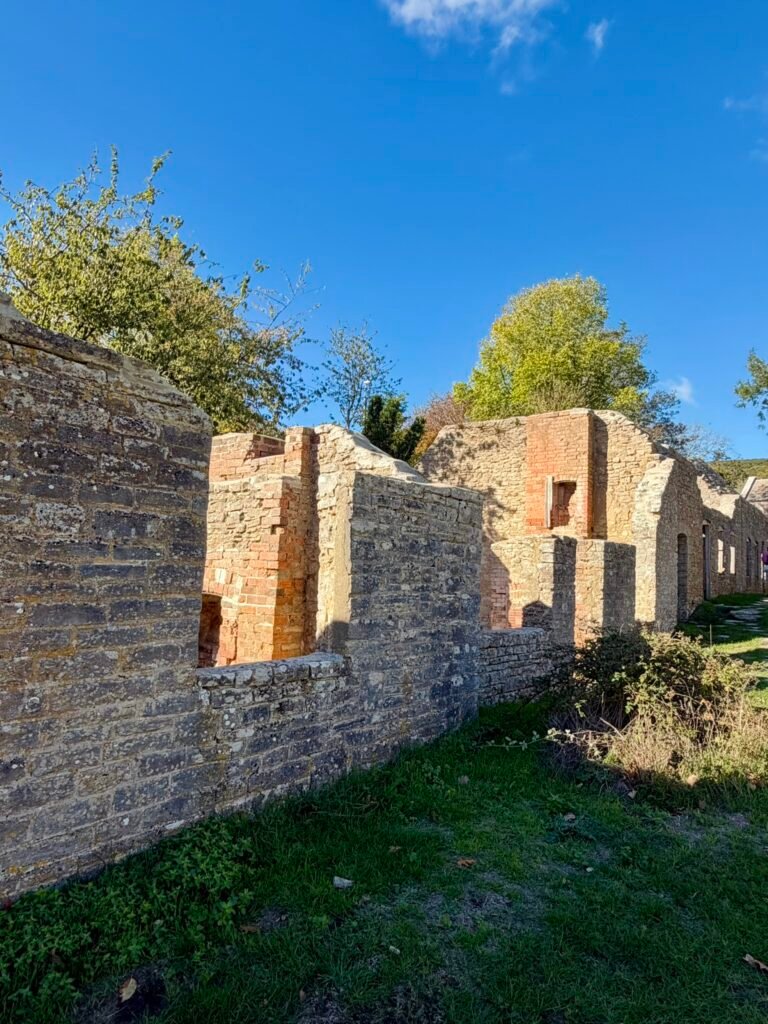
One of the most interesting areas is The Row, where the remains of terraced cottages give you a sense of how closely the villagers once lived. There are information displays explaining who occupied some of the buildings, turning what might initially look like a collection of ruins into something much more personal.
You can explore the accessible paths and view the buildings up close, although some structures are fenced off for safety. The place feels strangely peaceful. It’s hard to imagine the ordinary routines that once filled these empty spaces.
St Mary’s Church: the village’s surviving heart
While many of Tyneham’s homes have fallen into ruin, St Mary’s Church has survived and been restored. Inside, you’ll find displays about the former residents, their families and the events that changed the village forever.
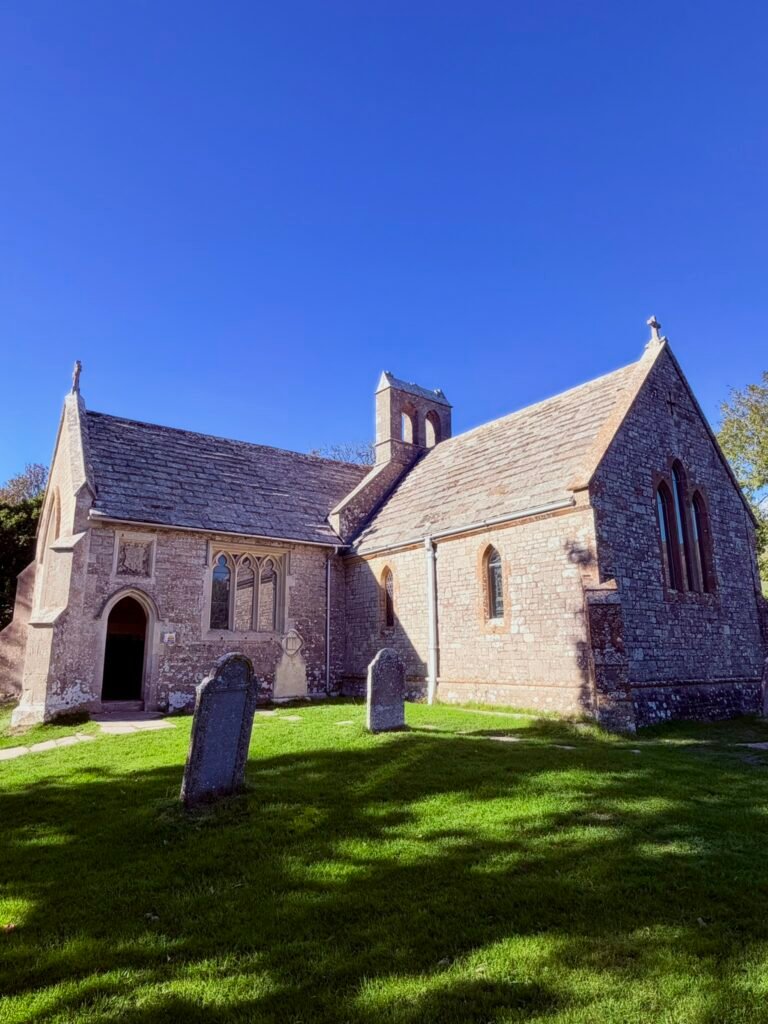
The church is also associated with the farewell message left when the villagers departed in December 1943. It’s one of the most moving parts of Tyneham’s story, especially when you remember that the people leaving their homes believed their absence would be temporary.
For the full story behind the 1943 evacuation and Tyneham’s much older medieval history, read Tyneham: The Village That Never Went Home. This Quick Stop focuses on what you can discover when you visit today.
The old village school
The former schoolroom is another highlight. Unlike the ruined cottages, the school building survives and contains an exhibition recreating the atmosphere of a classroom from an earlier age.
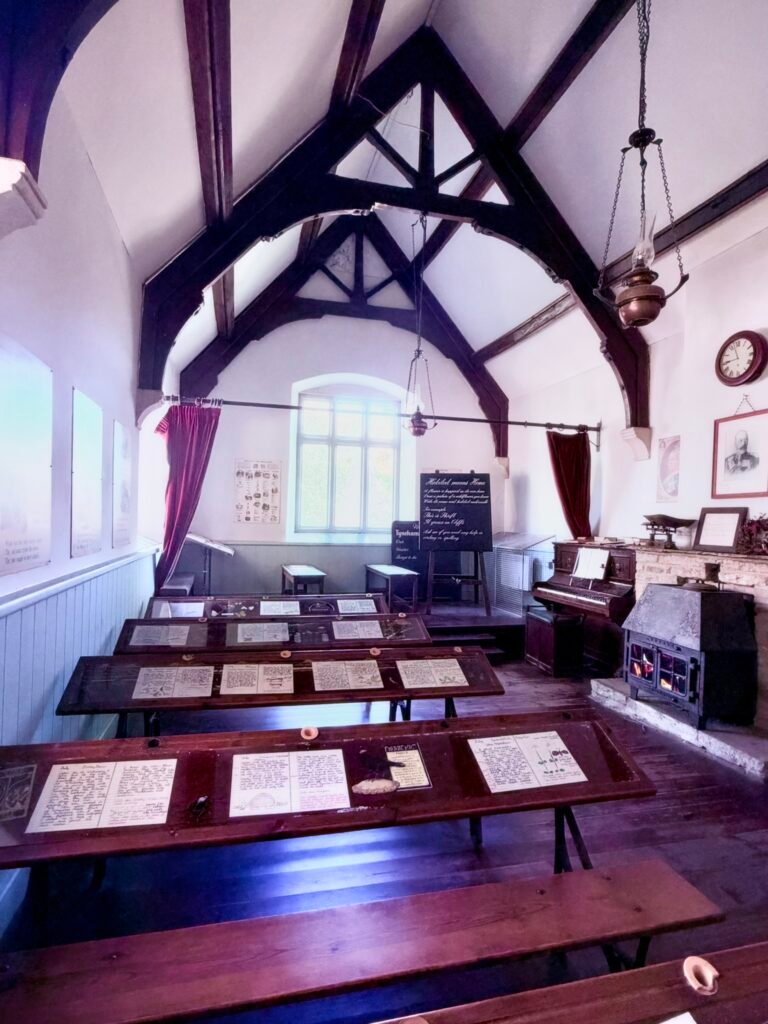
There are old-fashioned desks, educational displays and photographs connected with the village’s past. It’s a fascinating reminder that Tyneham was once an ordinary community, with children learning their lessons and families going about their daily lives.
Of all the buildings here, the school makes the passage of time particularly easy to imagine. You don’t need to know much about Tyneham’s history beforehand to appreciate it.
Tyneham Farm and its old machinery
Beyond the cottages, Tyneham Farm offers another glimpse into the village’s working past. Farming was central to life here, and the restored farm buildings contain displays of traditional equipment, tools and agricultural machinery.
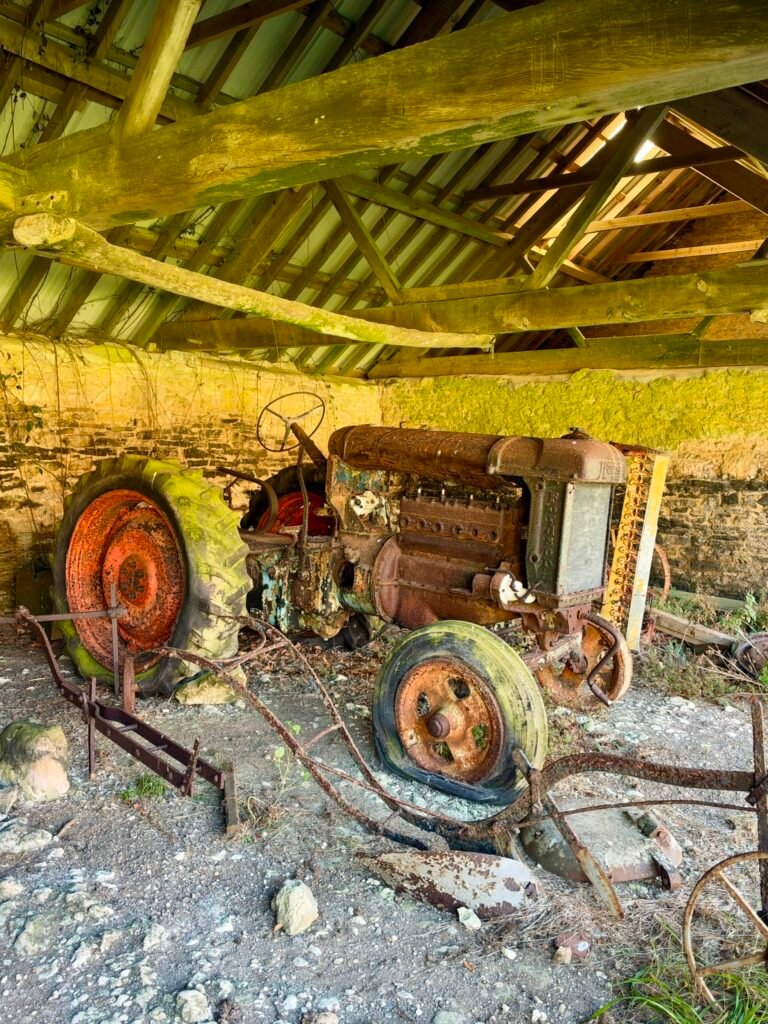
I particularly enjoyed seeing the old machinery. There’s something wonderfully atmospheric about finding a historic tractor surrounded by stone farm buildings and countryside. It’s a reminder that Tyneham wasn’t simply a picturesque village — people worked hard here to make a living.
The farm area also provides space to stop for a picnic before continuing your visit.
Parking at Tyneham: free, but donations are encouraged
There’s a visitor car park close to the village, so you don’t need to undertake a long walk just to reach the ruins.
Parking has no compulsory charge, although a £4 donation per car is encouraged to support conservation work. That makes Tyneham an affordable outing, particularly if you’re looking for somewhere interesting without paying an admission fee.
Getting there, however, can be a little more adventurous than expected.
When I visited, Google Maps wasn’t particularly helpful. It appeared to direct me towards fields rather than providing a usable route into the village! Following the actual Tyneham road signs proved much more reliable.
The approach is along narrow country roads, with a steep descent into the valley. Drive carefully, allow room for approaching vehicles and don’t rely entirely on your sat-nav.
For navigation, use BH20 5QH or the car park’s What3Words location: ///laws.processes.reflect.
When is Tyneham open?
This is the most important thing to check before travelling.
Tyneham lies within the Ministry of Defence’s Lulworth Ranges, an active military training area. Public access is normally available on most weekends and during designated holiday periods, but there are exceptions.
On days when the village is open, the vehicle entrance gate generally opens at 9am and closes at dusk. The exhibitions in the church, school and farm normally open from 10am to 4pm.
Always check the official Ministry of Defence opening calendar before setting off. Access arrangements can change, and finding a locked gate after driving into the Purbeck countryside would be a rather disappointing start to your adventure.
Tyneham is still part of a live military range. Stay within the permitted areas, follow marked paths and never touch suspicious metal objects or anything that could be unexploded ammunition.
Can you walk to Worbarrow Bay?
Yes! If you have more time, you can extend your visit with a walk to Worbarrow Bay, a beautiful and relatively secluded beach on Dorset’s Jurassic Coast.
The walk is approximately one mile each way, taking around 20–30 minutes in each direction, depending on your pace. The route passes through the valley towards the coast, with views of the surrounding Purbeck landscape.
Just remember that access to the bay is subject to the same military restrictions as Tyneham village. Keep to the designated paths, especially beyond the village.
Is Tyneham worth visiting?
Absolutely — particularly if you enjoy local history, unusual places and exploring somewhere that feels different from the usual tourist attractions.
You can easily spend an hour or two wandering around the village, reading the displays and visiting the church, school and farm. Allow longer if you want to walk to Worbarrow Bay.
There are toilets, but don’t expect a village café or shops. Bring water or a picnic, wear comfortable shoes and take your rubbish home.
What makes Tyneham memorable isn’t simply that it’s abandoned. It’s that so much of the village remains, allowing you to picture the community that once lived here. Behind every ruined doorway was somebody’s home.
For more places with fascinating stories, historic buildings and unexpected discoveries, explore my Dorset travel articles and Quick Stops.
Tyneham is a village that lost its residents, but it hasn’t lost its ability to tell their stories.
One journey. One story. One more stop.