
Puddletown.
Honestly, how could you drive past a village with a name like that and not be at least a little curious?
Is it permanently flooded? Does everyone own wellies? And who decided that Puddletown was a perfectly sensible name for somewhere to live?
Well, this little Dorset village turned out to be rather more interesting than its name suggests.
We stopped here on our way to Athelhampton, thinking it would be a pleasant little wander. Instead, we found pretty cottages, a magnificent old church, curious stone carvings, a miniature bookshop without a shopkeeper and a surprising connection to one of Britain’s greatest novelists.
Not bad for somewhere we hadn’t originally planned to spend much time.
Puddletown: A Name That’s Almost Too Good to Be True
Puddletown sits in the Piddle Valley, around five miles northeast of Dorchester. And yes, the River Piddle really does exist.
Older records sometimes call the village Piddletown, but the Puddletown spelling eventually won out.
Perhaps somebody decided the original name was causing too much giggling. Although, frankly, I’m not convinced the replacement helped very much.
The village has a long history, once supporting a market and serving as a small centre of local trade. Today, there’s a mixture of historic cottages, newer homes and everyday village life.
What appealed to me was that it didn’t feel like an attraction designed for visitors.
It’s simply a village where people live, work and go about their day — with some rather extraordinary history tucked between the houses.
Cottages With More Personality Than Most People
One of the pleasures of Puddletown is noticing how different the buildings are.
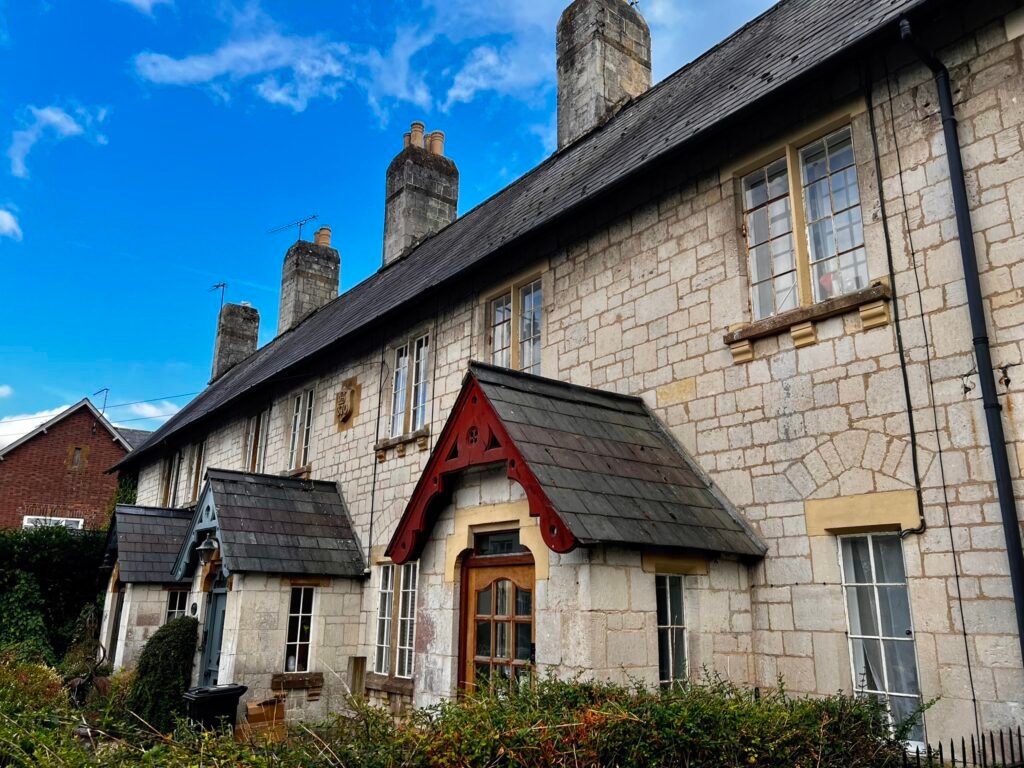
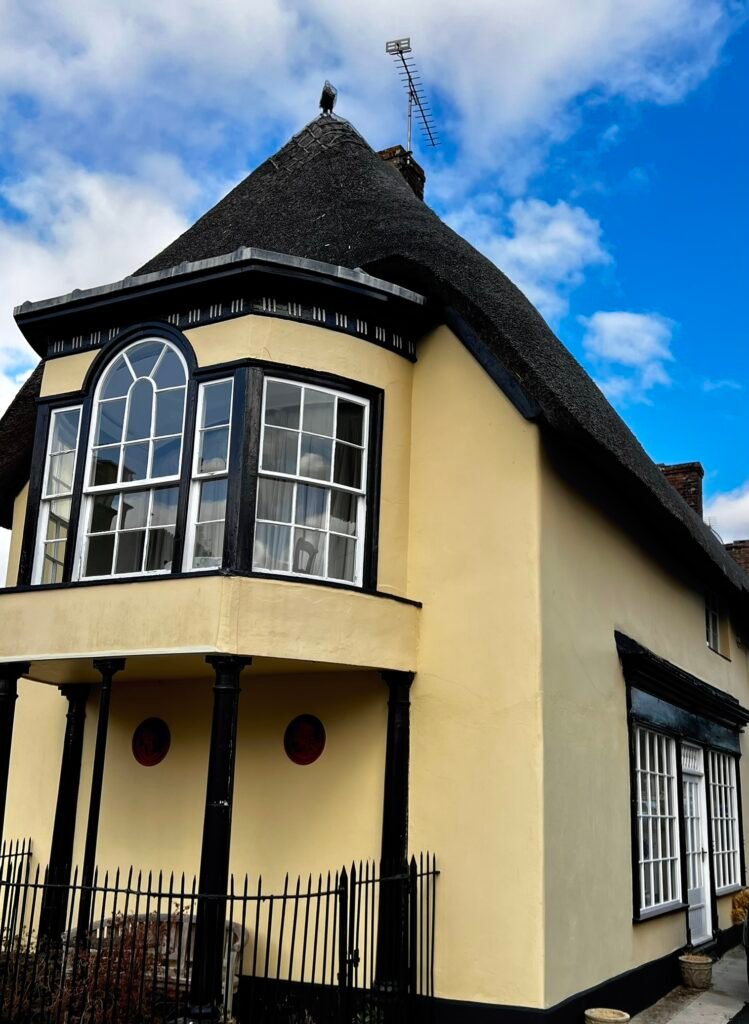
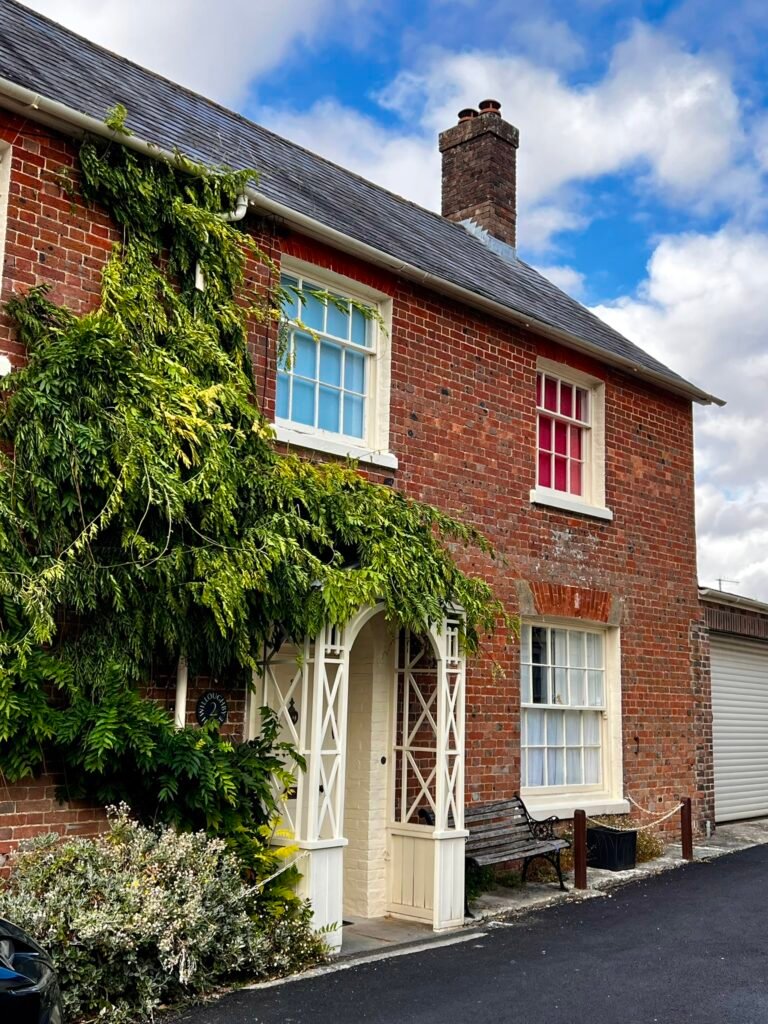
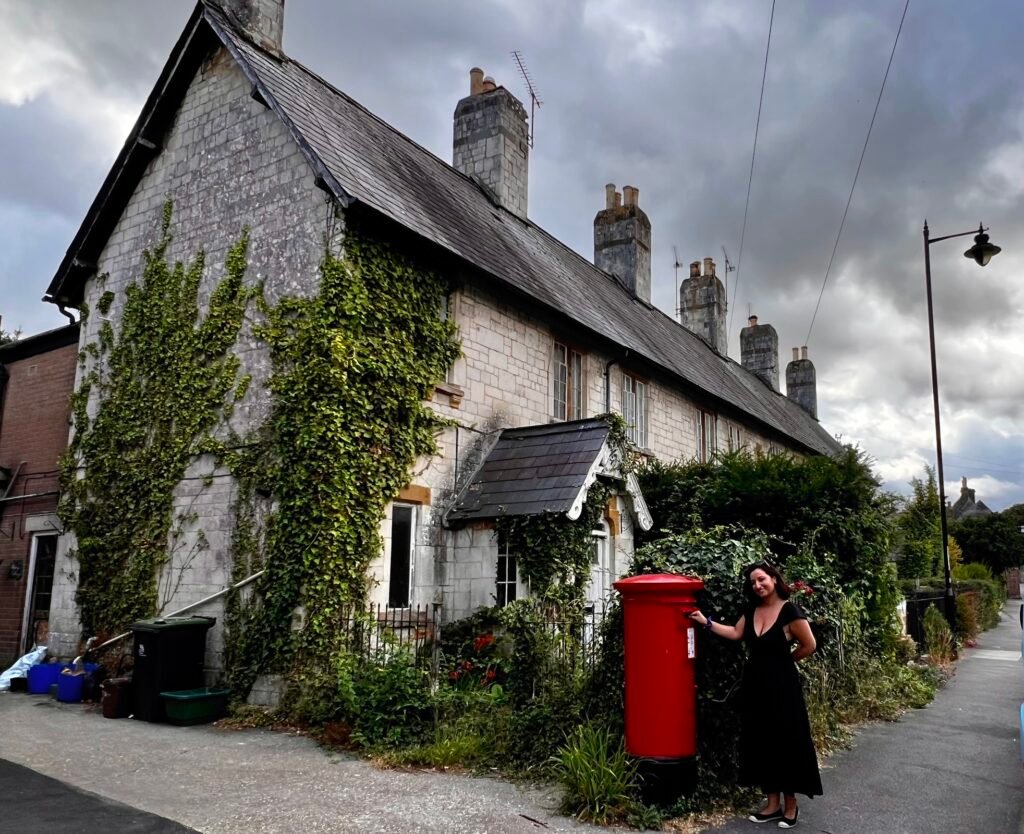
There’s no uniform row of picture-perfect chocolate-box cottages. Instead, you’ll find pale stone, red brick, thatched roofs, enormous chimneys and colourful front doors, sometimes all within a short stretch of road.
My favourite was a cheerful yellow cottage with a wonderfully oversized thatched roof.
Then there were the brick houses with their carefully tended gardens, climbing greenery and little entrance porches.
Somehow, even the chimneys seemed determined to compete for attention.
This is the sort of place where walking slowly makes a difference. Look beyond the obvious and you’ll notice carved details, old rooflines and little architectural surprises.
Just remember that these are people’s homes, not an open-air museum. The best discoveries can be admired perfectly well from the public pavement.
And if you enjoy old buildings, you’re in luck. Puddletown has something considerably older than most of its cottages.
St Mary’s Church: Puddletown’s Beautiful Old Treasure
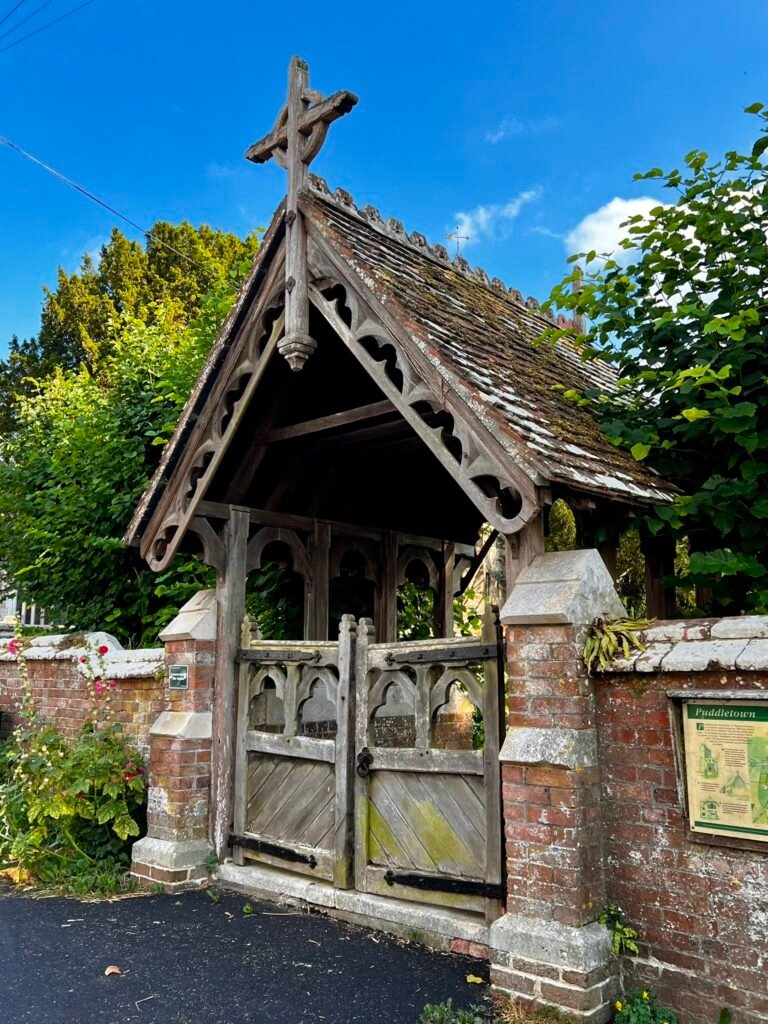
The first clue that St Mary’s Church is rather special appears before you even reach the building.
Its lovely wooden lychgate, topped by a steep tiled roof and cross, looks like something from a medieval storybook.
A lychgate traditionally marked the entrance to a churchyard and provided shelter for funeral processions. A beautiful structure, even if its original purpose wasn’t particularly cheerful.
Beyond it stands a church with origins in the twelfth century.
The building was enlarged and altered over the following centuries, leaving a fascinating mixture of medieval architecture. Today, St Mary’s is a Grade I listed church.
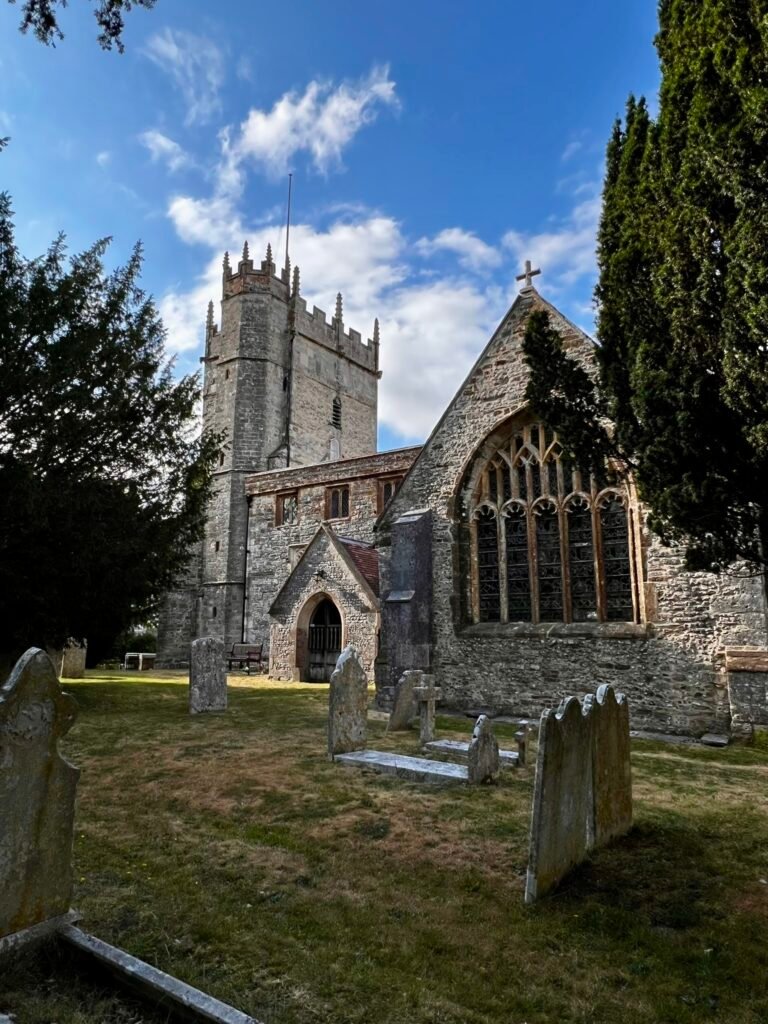
But here’s the really interesting part.
Inside St Mary’s are remarkable seventeenth-century wooden box pews — enclosed seating compartments where families once sat during services.
Think of them as private church seating, long before anybody invented premium tickets.
The church also preserves a carved twelfth-century font, a historic west gallery associated with church musicians, and elaborate memorials to the Martyn family, who were connected with nearby Athelhampton.
The church’s historic interior is so unusual that it’s worth looking inside if the building is open.
You can read more in the local community’s St Mary’s visitor guide.
And What’s That Strange Creature Up There?
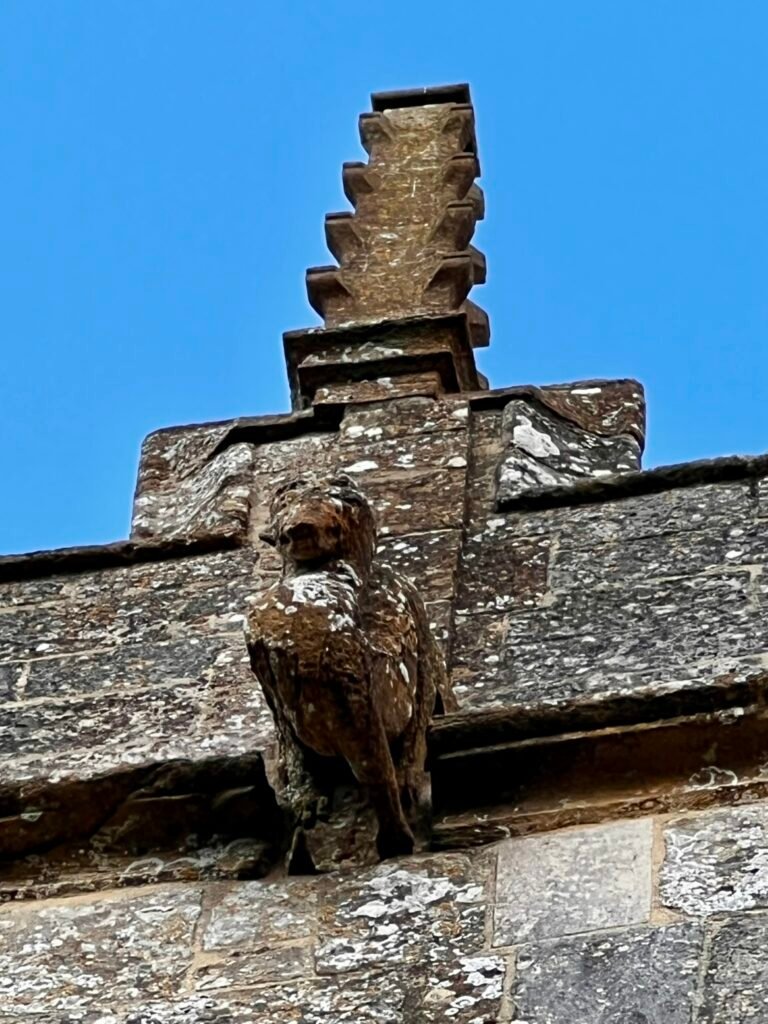
Look up!
High on the church exterior, a weathered little stone creature projects from the roofline.
It’s wonderfully strange. Part animal, part mystery, and definitely not the sort of decoration you’d expect to find on a modern building.
Churches sometimes feature grotesques — fantastic carved creatures that might be decorative, symbolic or, when designed to channel water, functional gargoyles.
I haven’t established exactly what this Puddletown carving represents, so I’m not going to invent a dramatic medieval legend about it.
Although I suspect it has been silently judging passers-by for a very long time.
And there’s an unexpected literary reason why a church carving like this feels especially appropriate here.
Why Puddletown Became Thomas Hardy’s Weatherbury
If you’ve read Thomas Hardy’s Far from the Madding Crowd, you may already know Puddletown without realising it.
Hardy transformed the real village into his fictional Weatherbury, home to Bathsheba Everdene and part of the novel’s wonderfully complicated rural drama.
Romance, jealousy, heartbreak, dreadful decisions…
Apparently, even beautiful Dorset villages couldn’t escape a good Victorian scandal.
Hardy had strong family connections with Puddletown. His grandfather and great-grandfather were associated with the village, and his grandfather played the bass viol and led the musicians at St Mary’s Church.
That connection helped inspire the traditional village music described in Hardy’s writing.
In Far from the Madding Crowd, Weatherbury Church and its churchyard play important roles. Sergeant Troy, Fanny Robin and the extraordinary rainstorm are part of the story.
One caution, though: the book’s famous grotesque rainwater carving shouldn’t automatically be identified with the little creature in our photograph. Hardy’s fictional details were drawn from more than one real location.
You can explore the literary connections in the excellent Puddletown Thomas Hardy history.
The Street Sign That Gives the Game Away
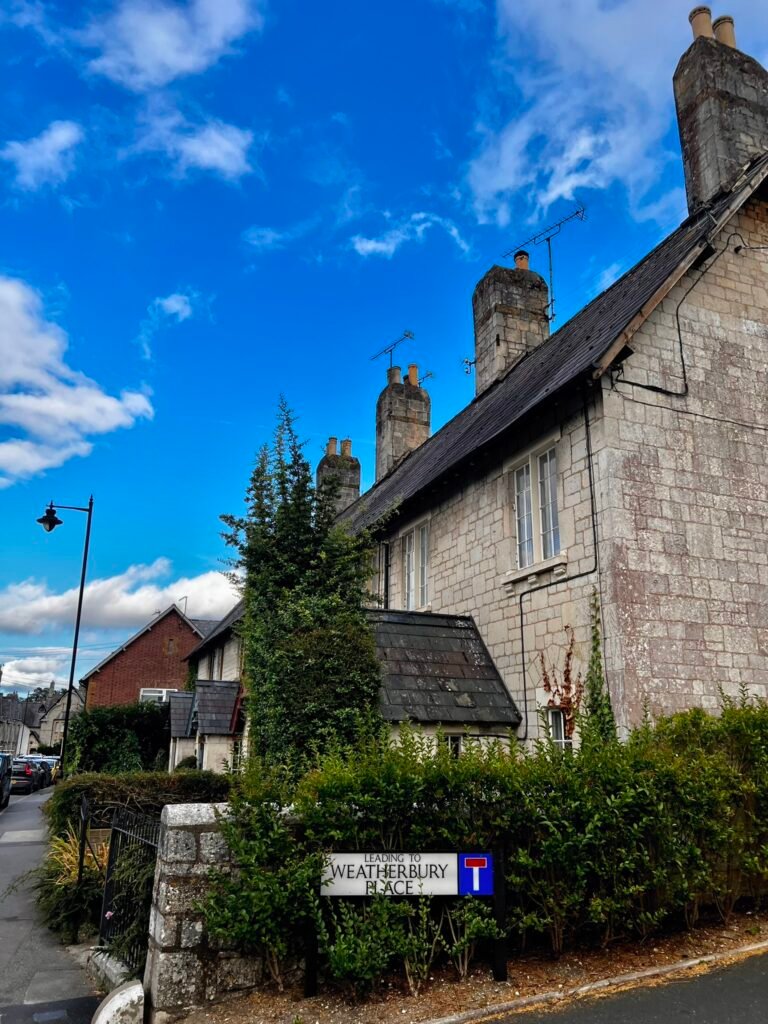
And then we found it.
A sign reading “Leading to Weatherbury Place” beside a row of traditional stone cottages.
I love little discoveries like this.
Without knowing the story, it’s just a street sign. Once you understand the Thomas Hardy connection, it becomes a lovely reminder that a fictional world can remain part of a real village’s identity.
Puddletown might be its official name, but Weatherbury is clearly still around.
A Bookshop Without a Shopkeeper?
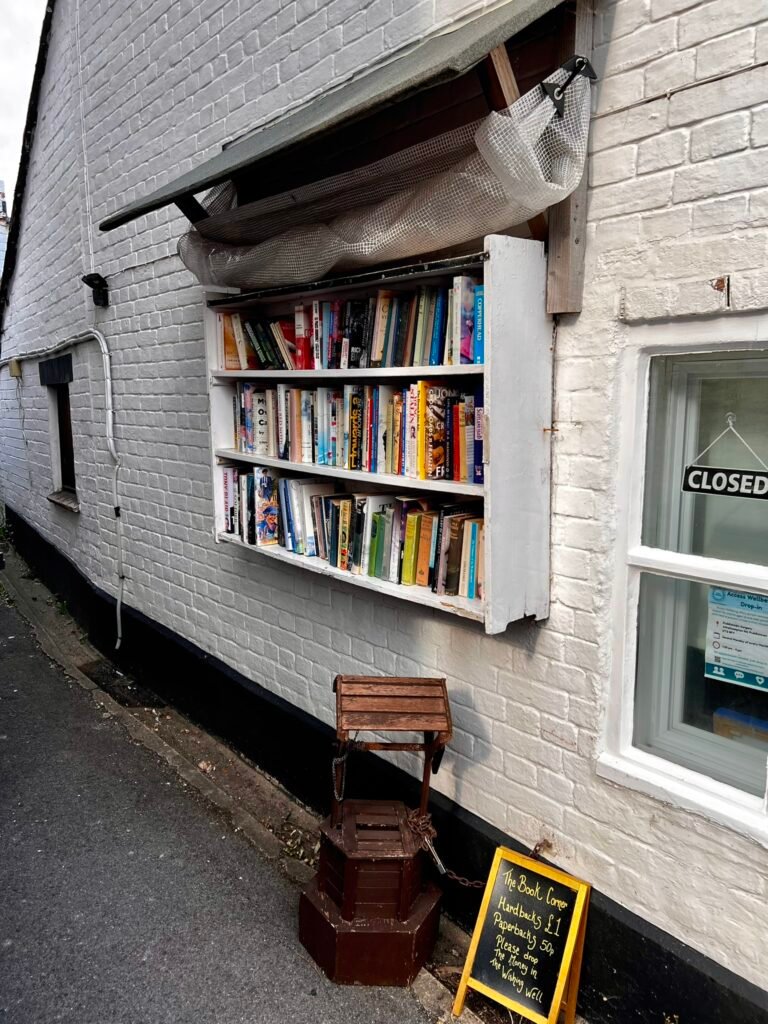
As if the village hadn’t already offered enough little surprises, we spotted a book corner built into the outside wall of a building.
Shelves full of second-hand books, a handwritten price board and a small place to leave payment.
No flashy advertising. No enormous bookshop. Just books and a little trust.
The sign even asked visitors to put their money in the Wishing Well.
It’s such a charming idea.
And considering Puddletown’s literary connections, a little village book corner feels particularly appropriate.
Hardy would probably have approved — although he might also have written an extremely tragic story about somebody borrowing the wrong paperback.
Visiting Puddletown: Parking, Access and Useful Details
Puddletown is best enjoyed as a short, unhurried village walk rather than a full-day attraction.
Location: Puddletown, near Dorchester, Dorset. St Mary’s Church is on The Square, DT2 8SL.
Admission and opening times: Exploring the public streets and admiring the village architecture costs nothing and isn’t restricted to attraction opening hours. St Mary’s is an active parish church, generally welcoming visitors when available, but I couldn’t verify guaranteed daily visitor-opening hours. Check the official St Mary’s church page if seeing the interior is important to you. No standard sightseeing admission charge is advertised.
Parking: The village has limited on-street parking, subject to road markings and local restrictions. The parish council also identifies a car park at Puddletown Recreation Ground, off Dorchester Road, but I couldn’t verify its general visitor-parking conditions, tariff or gate-opening hours. Check signs before leaving your car. Avoid blocking residents’ driveways or parking on the double yellow lines.
Toilets: Public toilets are at the Recreation Ground pavilion off Dorchester Road. According to the parish council, they open 9am–6pm daily from 1 April to 31 October, and at weekends only from 1 November to 31 March. There’s also a baby-changing facility. Check the parish council’s toilet information before relying on them.
Accessibility: This is a lived-in historic village, with some narrow pavements, roadside sections and uneven churchyard surfaces. The church entrances may also present difficulties for visitors using wheelchairs or mobility aids. I couldn’t verify a fully step-free church route or the specifications of an accessible toilet, so contact the parish in advance if you need those facilities. There is seating in parts of the churchyard.
Allow: Around 45–75 minutes for a relaxed village wander, potentially longer if you explore the church interior.
One More Stop Before Athelhampton
Puddletown was an unexpected stop for us on the way to Athelhampton, and that’s exactly why I enjoyed it.
It wasn’t a grand expedition or a destination we had carefully planned for weeks.
Just a pretty village, a little curiosity and the decision to stop and have a look.
If you’re heading towards Athelhampton House, Puddletown makes a lovely companion stop, with a completely different atmosphere from the grand historic manor and its gardens.
For more ideas, explore Day Trips from Bournemouth by Car or the One More Stop Dorset archive. The nearby story of Tolpuddle and the carefully arranged cottages of Milton Abbas make two very different additions to a Dorset village tour.
And the next time a village name makes you laugh, perhaps turn off the main road and have a wander.
You might discover something rather wonderful.
One journey. One story. One more stop.